· Sourcing & Quality · 25 min read
Written by our factory
OEM Lighting Team ·
Christmas Lights Manufacturer: What OEM Buyers Should Check
Christmas lights are the one consumer lighting category with its own federal hazard rule. What UL 588 pins down, the three characteristics 16 CFR 1120 makes non-negotiable, and eight documents to ask for before the purchase order.
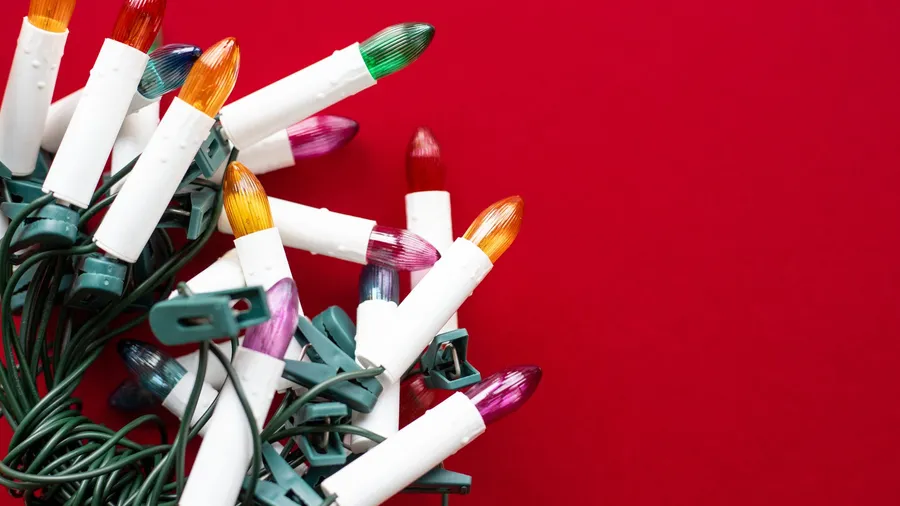
Two quotations for the same 100 metres of C9 string, same price, same photograph on the cover page. The difference is on the tag hanging 150 mm behind the plug, and inside the fuse holder nobody photographs.
Christmas lights are the only consumer lighting category in the United States with a hazard rule written specifically about them. Under 16 CFR 1120.3(c), a seasonal decorative lighting product that lacks any one of three characteristics is a substantial product hazard — which means a section 15(b) report, a recall under 15(c) and (d), and refusal of entry under 17(a)(4).
That changes the shape of a factory audit. You are not scoring a supplier out of ten. You are looking for evidence, on the sample, for three things a regulator already decided matter.
What the category covers, and where the border runs
UL 588 spells out its own scope, and it is narrower than the phrase “Christmas lights” suggests. The standard covers products up to 120 V, for temporary use, defined as installation and use not exceeding 90 days (1.1). Inside that:
- Factory-assembled series strings with push-in, midget-screw (E5) or miniature-screw (E10) lampholders.
- Factory-assembled parallel strings with candelabra or intermediate-screw lampholders.
- Decorative outfits: wreaths, stars, light sculptures, candles without shades, tree shapes up to 30 inches (762 mm), wreath shapes up to 48 inches (1219 mm), blow-moulded figures, animated figures, tree tops, controllers, tree stands, motorised displays (1.2).
The one premise shared by all of them: portable, not permanently connected to a power source.
The exclusions matter more than the inclusions, because this is where buyers get quietly misled. Battery-operated, solar, transformer or low-voltage supply, rope light with non-replaceable lamps sealed inside a polymeric extrusion, and portable lamps used to illuminate decorations all sit outside the rule — 16 CFR 1120.2(d) lists them almost identically.
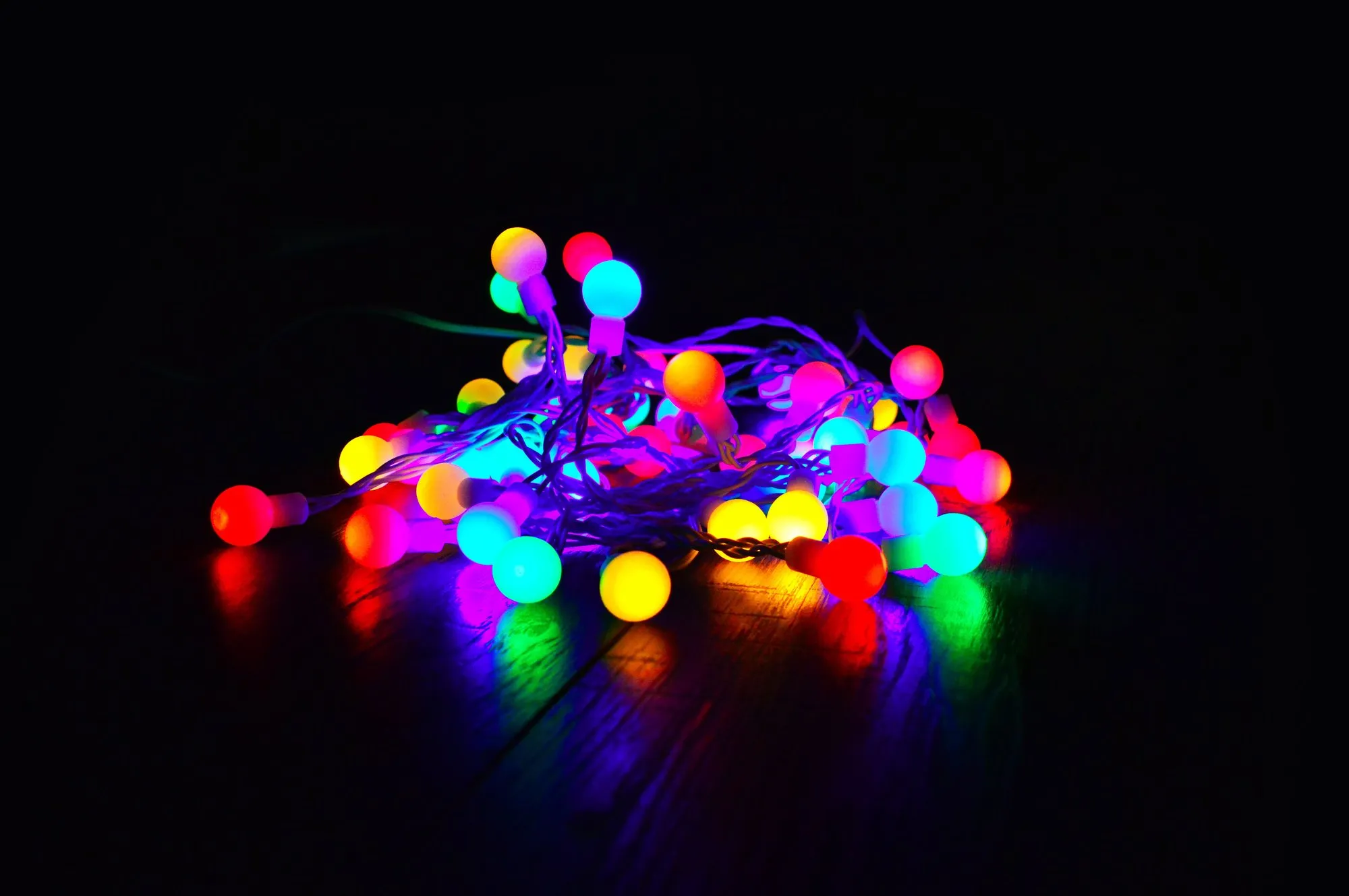
So a UL 588 report offered as proof for a 24 V or solar string proves nothing about that product. It is a different product with a different compliance path, and one of the most common things we see in quotation packs is a certificate that belongs to the factory’s best-selling mains-voltage line being used as a company-wide credential.
The document side of this — which of the four papers is which, which edition the US rule actually cites, and what a retailer wants to see for the EU, UK and Australia — is in Christmas lights certification. This article stays on the product and the factory.

The commercial buyer sits at the far end of this. A hotel lobby, a shopping centre atrium or a chain of 200 stores buys the same strings a household does, at 5,000 times the volume, and installs them for a fixed number of weeks before a facilities team takes them down. The 90-day figure is not a technicality for them — it is the operating assumption the whole product was designed around.
The three characteristics, and why one gap is enough
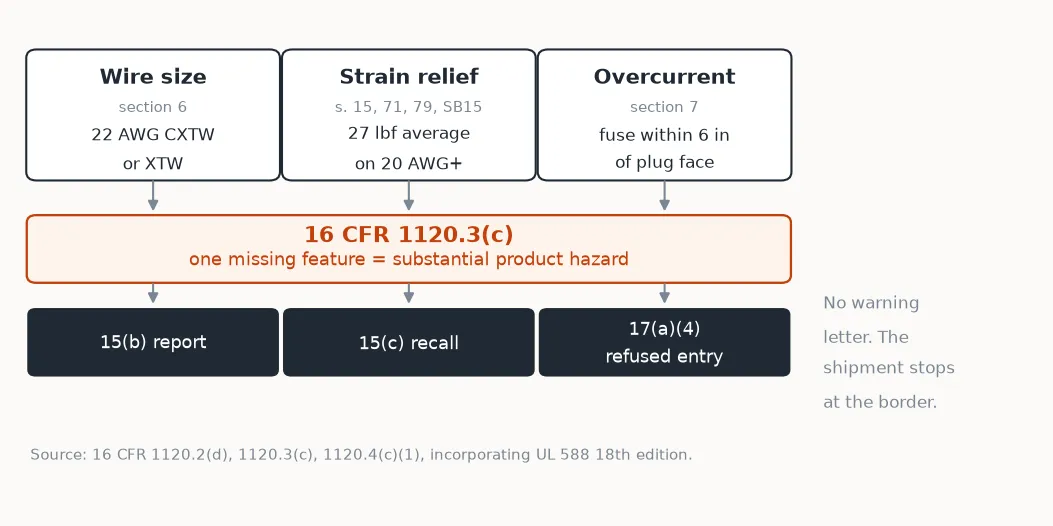
§1120.3(c) names three, and points at the UL 588 sections that define each:
- Minimum wire size — section 6.
- Sufficient strain relief — sections 15, 71, 79 and SB15.
- Overcurrent protection — section 7.
There is a detail in §1120.4(c)(1) that repays attention: the regulation incorporates UL 588, 18th edition, approved 21 August 2000, by reference. The standard has been revised many times since. The regulation did not move with it. That is not a loophole and it is not an accident — the three characteristics are fixed at that edition’s clause numbers, while the standard continues to tighten around them.
When a supplier says “we build to the latest edition,” they may be telling the truth and still be answering a different question than the one your customs broker will ask. Ask which edition the certificate references, and whether the file number covers the exact model on the quotation.
Section 7 has a geometric requirement that is easy to check and easy to fake. The overcurrent protection must be integral to the attachment plug or the current tap, or of through-cord design with no more than 6 inches (152 mm) between the face of the plug and the far side of the fuseholder (7.3). Where the fuseholder is in the cord, the wire between plug and fuse must be at least 20 AWG.
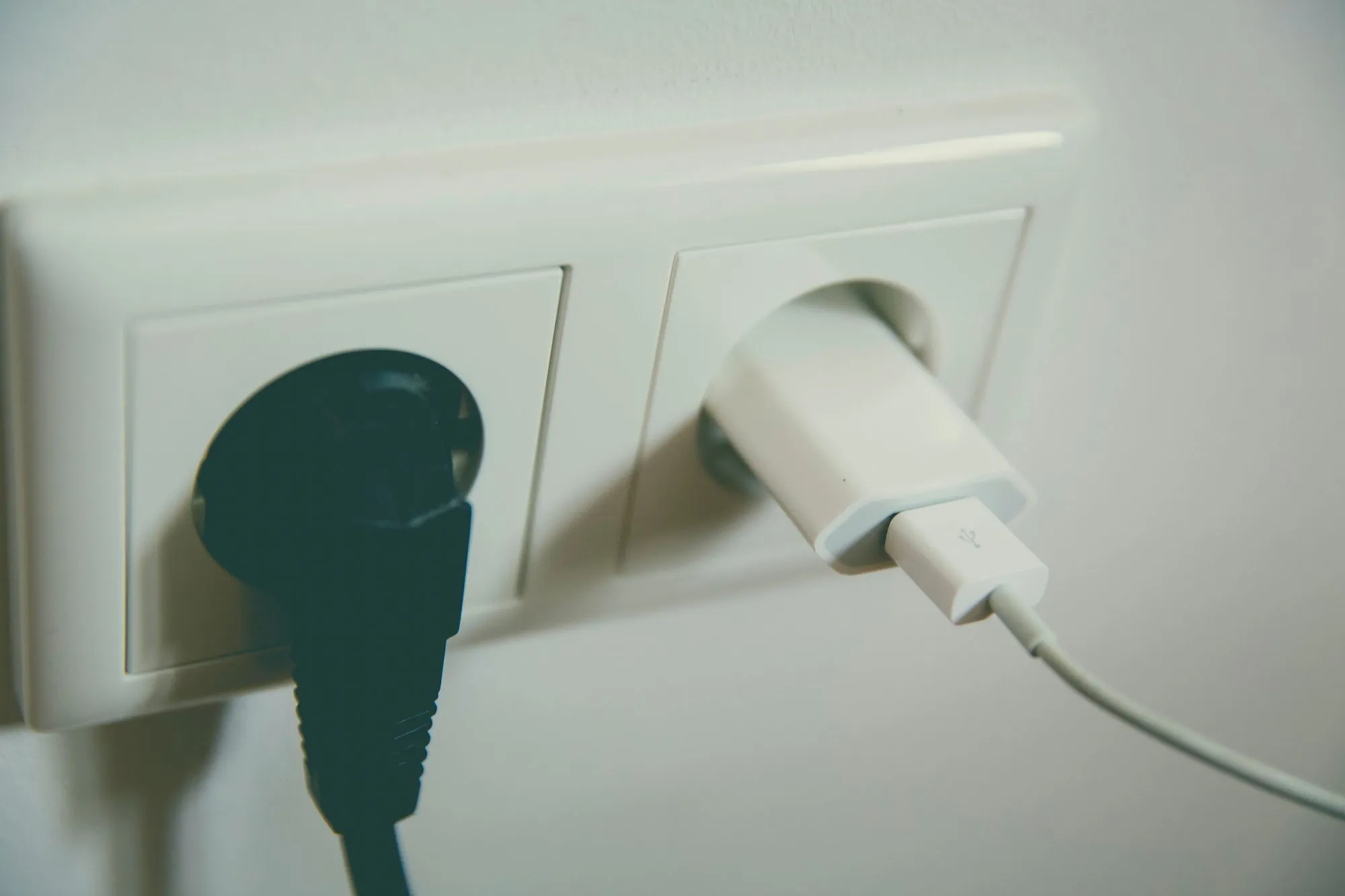
Six inches is a length you can measure with a thumb. If the fuse sits 300 mm down the cord because that is where the moulding was easiest, the product does not conform, whatever the certificate says.
The rating itself is fixed by the configuration rather than chosen: 3 A for the non-polarised series rows in Table 6.1, 5 A for the polarised row with a load fitting and for both parallel rows in Table 6.2. A supplier quoting a “bigger, safer fuse” is describing a product that no longer matches its own certificate, because the fuse protects the 22 AWG wire behind it and that wire has a 1.8 A ceiling.
Read the cord tag before you read the quotation
UL 588 sections 116 and 117 put the fastest audit in the category on a small piece of card. Within 6 inches of the plug face, or on the product itself, there must be a legible, permanent marking of:
- the manufacturer’s name or trademark;
- a distinctive catalog number;
- rated voltage, stated as “120 V”;
- rated current in amps and rated wattage;
- rated frequency;
- the month and year of manufacture (116.1.2).
Section 117 adds the temporary-use statement — “For temporary (90 days max) installation and use only”, or “This seasonal product is not intended for permanent installation” — plus “For indoor use only” or “For indoor and outdoor use”, and a CAUTION line where lamps are user-accessible.
Three checks follow, and each one has caught something real:
The date code. A date of manufacture tells you whether the container is this season’s build or last season’s leftover. Exception 1 allows an abbreviated or coded date covering no more than three consecutive months, provided the code does not repeat within 20 years and does not require the factory’s production records to decode. A code that can only be read by the factory is not a code; it is a way of not telling you.
The model number. Where a tag carries several catalog numbers, the applicable one must be marked by an arrow or equivalent (116.1.2 exception). Mixed tags are routine, and the failure mode is unglamorous: the SKU on the commercial invoice, the SKU on the carton and the SKU in the retailer’s system stop agreeing with each other, and the argument arrives three weeks after the vessel sails.
The factory code. If a manufacturer produces or assembles the same product at more than one factory, each finished unit must carry a distinctive marking identifying which factory made it (116.1.3). This is the clause an audited supplier least wants to discuss, because it exposes the gap between the site you visited and the site that shipped. Ask for the factory code on this batch in writing, then go and look at that building.
One more line worth memorising, because it separates assemblers from traders: 24.2 requires at least two spare lamps per lamp type for products with push-in, midget or miniature screw lampholders and user-replaceable lamps — two for LED, four for steady-illuminating push-in lamps without shunts. Ask how many spares, of how many types. Someone who runs the line answers in one sentence. Someone who resells a catalogue has to go and ask upstream, and the pause is the answer.
Wire gauge: the string’s rating is not the copper’s capacity
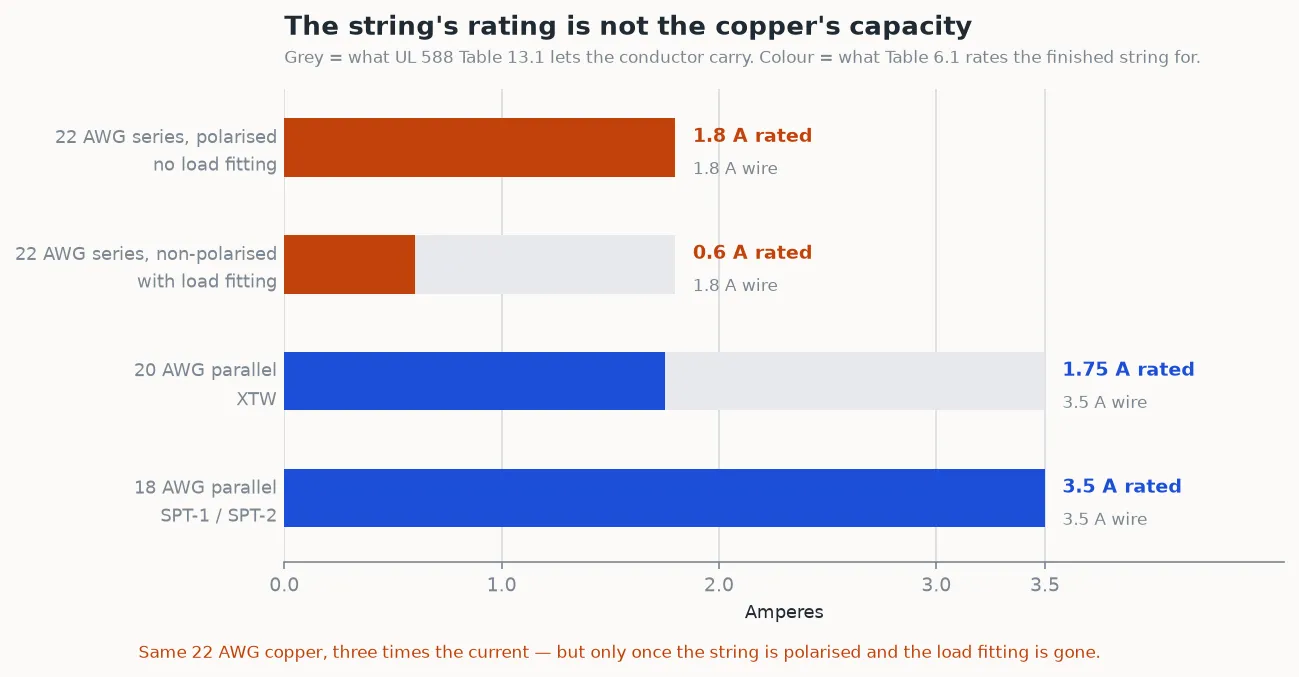
This is the part of the standard that surprises experienced buyers, so it is worth putting the two tables side by side.
Table 6.1, series-connected strings:
| Configuration | Min. wire | Max. current | Fuse · end-to-end max |
|---|---|---|---|
| Non-polarised, with load fitting | 22 AWG | 0.6 A | 3 A · 216 W |
| Non-polarised, no load fitting | 22 AWG | 0.6 A | 3 A · — |
| Polarised, with load fitting | 20 AWG | 0.6 A | 5 A · 432 W |
| Polarised, no load fitting | 22 AWG | 1.8 A | 3 A · — |
All four rows: CXTW or XTW wire, minimum insulation temperature 105 °C.
Table 6.2, parallel-connected strings: 20 AWG XTW at 1.75 A or 18 AWG SPT-1/SPT-2 at 3.5 A, both on a 5 A fuse. Footnote b is the one that decides whether a product survives a winter: wire for outdoor use has to be SPT-1W, SPT-2W, STW, SEW and so on — the W is part of the type designation, not a marketing suffix.
Now Table 13.1, maximum conductor current in a fully loaded product: 22 AWG = 1.8 A, 20 AWG = 3.5 A, 18 AWG = 3.5 A, 16 AWG = 8 A.
Read the last two rows of Table 6.1 against that. The same 22 AWG copper can carry 1.8 A, and the assembled product is only allowed 0.6 A unless it is polarised and has no load fitting. The factor of three is not the wire. It is the current path through the lampholder contacts and the terminals: polarise the fittings, remove the load fitting, and the path shortens and the contact area grows enough to use the conductor’s full capacity.

Two practical consequences. First, “copper wire” is not a specification. Ask for the type designation (CXTW, XTW, SPT-2W, SJTW) and the gauge, both printed on the jacket, and photograph the print. Second, ask how many sets may be connected end to end. The difference between 216 W and 432 W lives in that sentence, not in the lamp.
And a correction to a popular belief: the fuse protects the wire, not the bulbs. A 3 A fuse sits in front of a 0.6 A string and will never blow in normal service. “We have a fuse” is therefore close to worthless as a quality claim. What separates two factories is the strain relief and the terminal material.
Strain relief is where the inspection actually happens
Section 15 states the principle in one line: a pull on the supply cord must not be transmitted to terminals, splices or interior wiring. Sections 71 and 46 define the test for supply cords and string lampholders.
The lampholder numbers are unusually concrete (79.1.2, 79.1.3, SB15):
- For 20 AWG and larger: eight previously untested lampholders, average pull at least 27 lbf (120 N), no lampholder or connection damaged below 24 lbf (107 N), no conductor exposed outside the body.
- For conductors smaller than 20 AWG: average at least 9 lbf (40 N), no damage below 8 lbf (36 N).
- SB15 adds the line a buyer can actually use: the lead must not be displaced more than 1/16 inch (1.6 mm) from the point of entry.
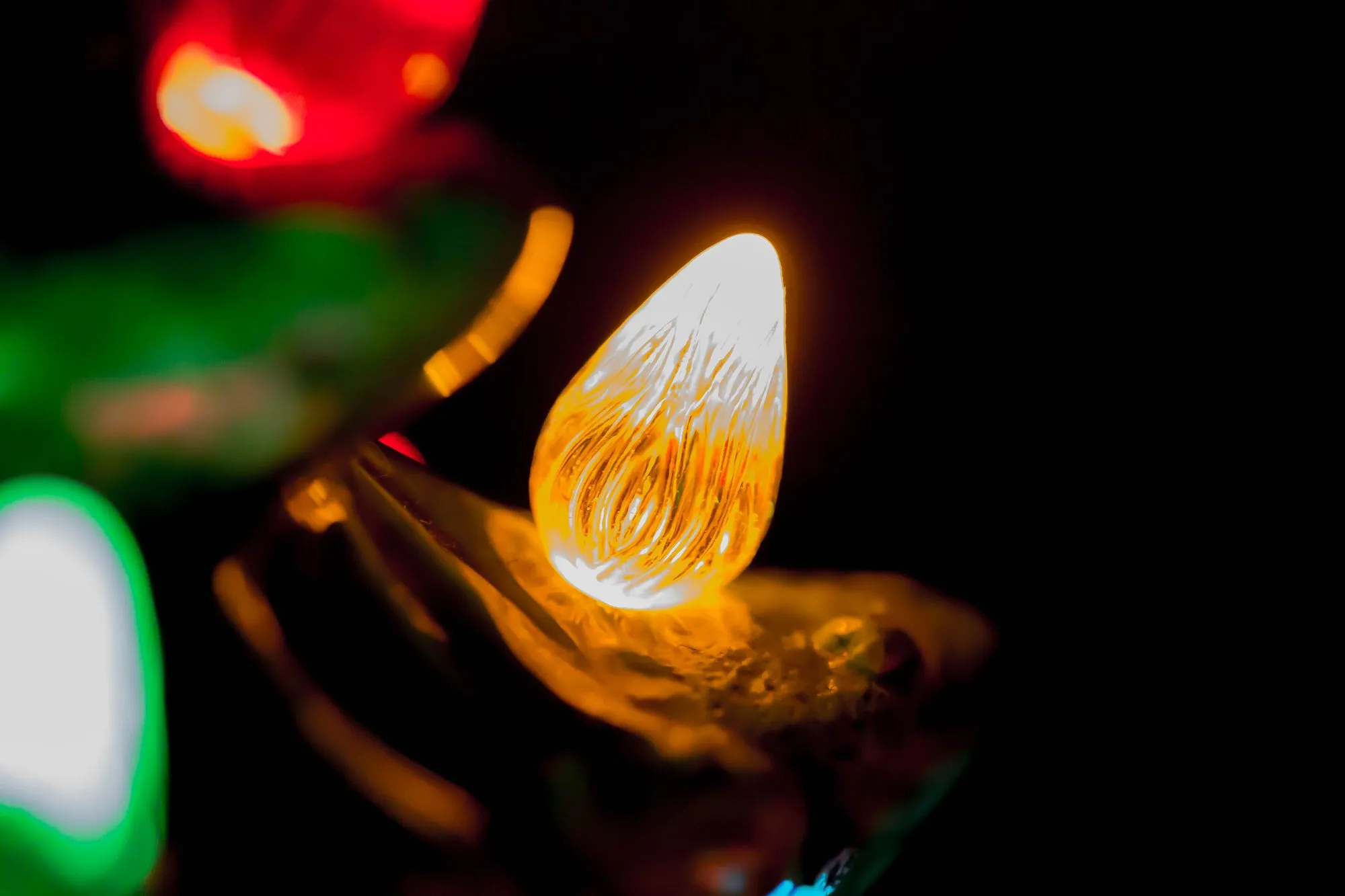
You do not need a tensile machine for the first pass. Take ten lampholders at random, hold the body, pull the lead firmly, and watch two things: whether the jacket slides more than a millimetre and a half at the entry point, and whether any conductor becomes visible. A good lampholder does not move. A cheap one gives you a few millimetres of travel, which is exactly the mechanism that eventually exposes live parts.
Material tells you the same story before the pull test. Section 14.1: terminals and conductive parts shall not be constructed of copper-plated steel. 14.3 restricts current-carrying parts to silver, copper, copper alloy or another acceptable material, and specifically bars plated steel for LED lamp leads. For outdoor series lampholders, 22.2.2.1 requires the screw shell or contacts to be copper or an alloy containing at least 80 percent copper.
That is why one string comes out of storage in year two with grey-green contacts and intermittent bulbs. It was not the weather. It was steel with a thin copper coat, and the coating did what thin coatings do.
Outdoor is a different product, not a checkbox
Outdoor versions of the same string carry a stack of tests that indoor versions never see:
- Rain test — section 85, or 85A for series strings (27.1).
- Drop test and cold impact at −35 ± 2 °C, conditioned for three hours and struck within 30 seconds of removal (27.2, section 61).
- UV exposure and water immersion for polymeric materials (27.2, section 89), unless the material is already evaluated to UL 746C.
- Drain holes or equivalent in series lampholders, designed so water does not collect in the cavity (22.2.2.2).

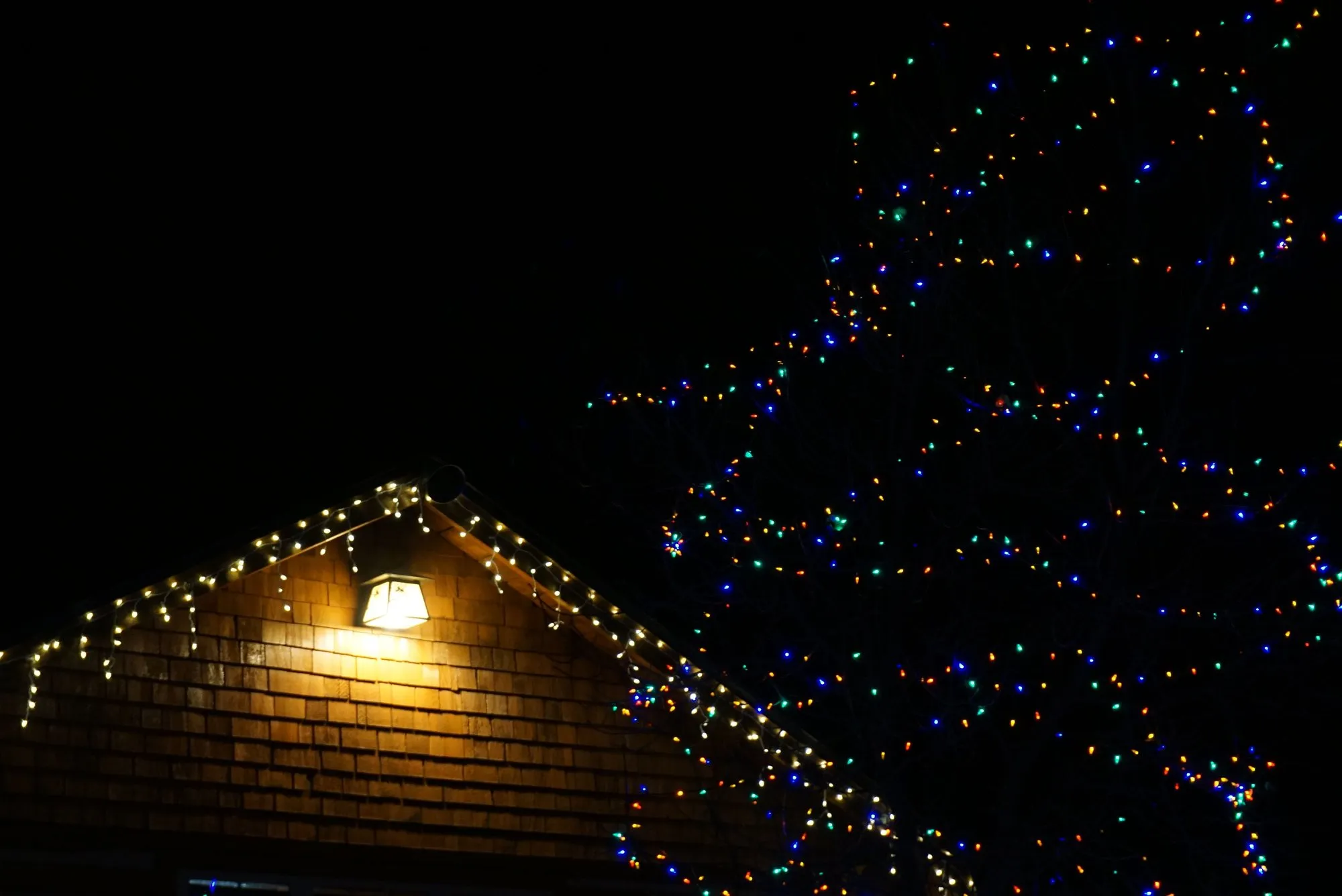
The commercial reading of that list is blunt: do not let indoor and outdoor share a part number. When they do, what usually sits behind the shared code is an indoor string with a rubber ring added and the paperwork adjusted. A factory that genuinely builds both has two BOMs, two moulds and two prices. If the two are quoted at the same price, the answer has already been given.
There is also a second failure that no test catches. A product can pass the rain test as a laboratory unit and still be sold with a photocopied report from a different model in the same family. Ask which model number appears on the report and whether the certificate scope includes the outdoor variant — a question we also walk through in ETL certification for lighting.
The certification map, market by market
| Market | Basis | What to hold |
|---|---|---|
| United States | UL 588 as incorporated by 16 CFR 1120 (18th edition) | A certificate whose scope names the exact model |
| Canada | CSA C22.2 No. 37 | cUL or CSA mark matching the invoice |
| European Union | LVD 2014/35/EU, EN 60598-2-20 and 2-21 | DoC and test report; EMC once a controller is involved |
| Australia, New Zealand | EESS, Risk Level 3, AS/NZS 60598.2.20 and 2.21 | RCM, an AU/NZ certificate, an EESS database entry |
Australia deserves a paragraph of its own, because a lot of suppliers get it half right. In the EESS In-scope Equipment Definitions, “Decorative lighting outfit” is listed in the Risk Level 3 column — high risk. Level 3 requires all four of the following: the equipment is electrically safe and meets the standard, it carries the RCM, it holds a valid certificate of conformity issued in Australia or New Zealand, and it is registered in the national EESS database and linked to the registered responsible supplier.
A product with an RCM logo and no database entry is not compliant, and the responsible supplier who has to answer for it is the importer, not the factory. We went through the same mechanism for accessories in SAA and RCM for Australia, and the logic does not change with the product category.
The tariff line is part of the sourcing decision
The US tariff schedule treats Christmas-tree lighting as its own heading rather than folding it into general luminaires:
| HTS | Description | General rate |
|---|---|---|
| 9405.31.00 | Lighting strings of a kind used for Christmas trees, designed for use solely with LED light sources | 8% |
| 9405.39.00 | The same, other than LED | 8% |
| 8539.22.40.00 / 8539.29.10.00 | Christmas-tree lamps | 5.8% |
Under 9405.31 the statistical suffixes split again: 9405.31.00.10 for miniature series wired sets and 9405.31.00.40 for other; 9405.39 mirrors the two.

Two things follow. Strings and lamps are different headings at different rates, so “it’s all Christmas lights” becomes two customs lines, two duty calculations and two sets of origin rules. And a shipment of replacement lamps declared under the string heading is a classification error someone will have to unwind, usually after the goods are already on the water.
We had the same lesson in a neighbouring category — see how ceiling fan lights split across headings according to whether the light and motor ship as one unit.
90 days of use, one shelf date, one order date
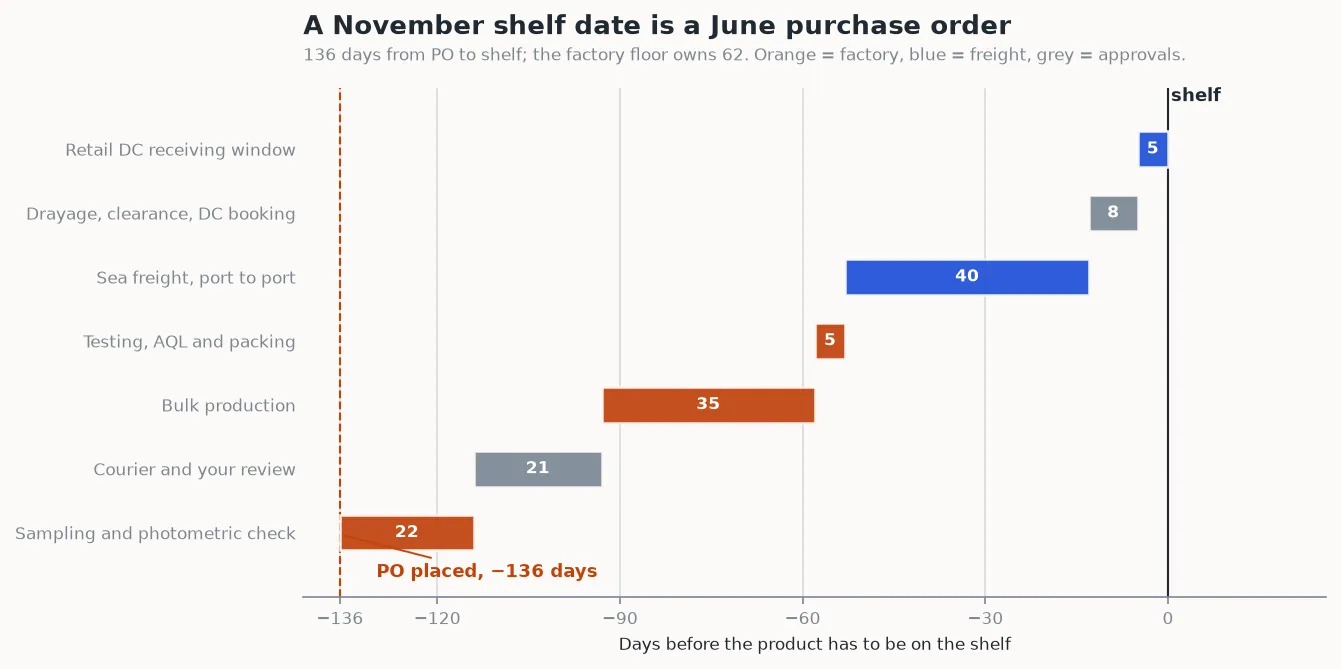
Here is the structural absurdity of the category: a product designed for 90 days of use has exactly one shelf window a year, and that window does not move because production ran late.
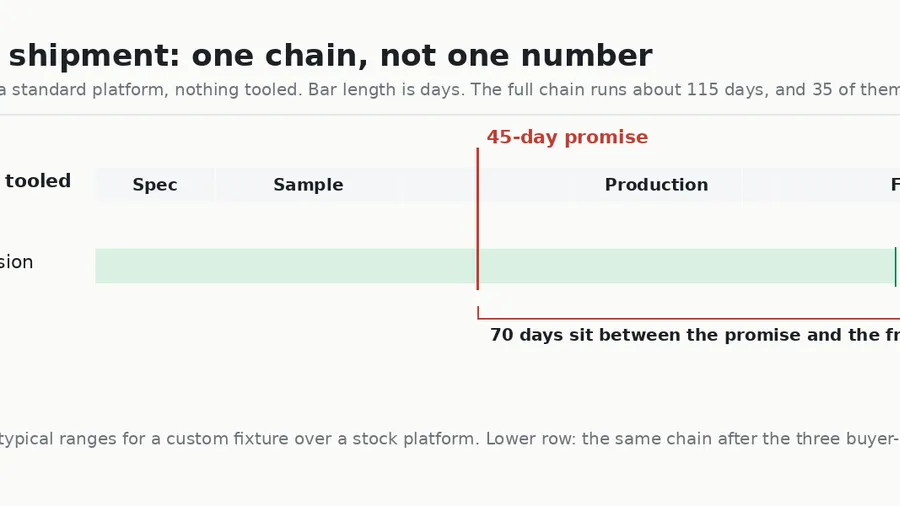
Reverse-schedule a first-time custom order from the shelf date. Sampling and photometric confirmation, 22 days. Courier and your own internal review, 21. Bulk production on an existing platform, 35. Testing, AQL sampling and packing, 5. Sea freight port to port, 40. Drayage, clearance and DC booking, 8. The retailer’s receiving window, 5. Total: 136 days, of which the factory floor owns 62.
In plain English: a November shelf date is a June purchase order. And June is when most overseas buyers are still comparing specifications.
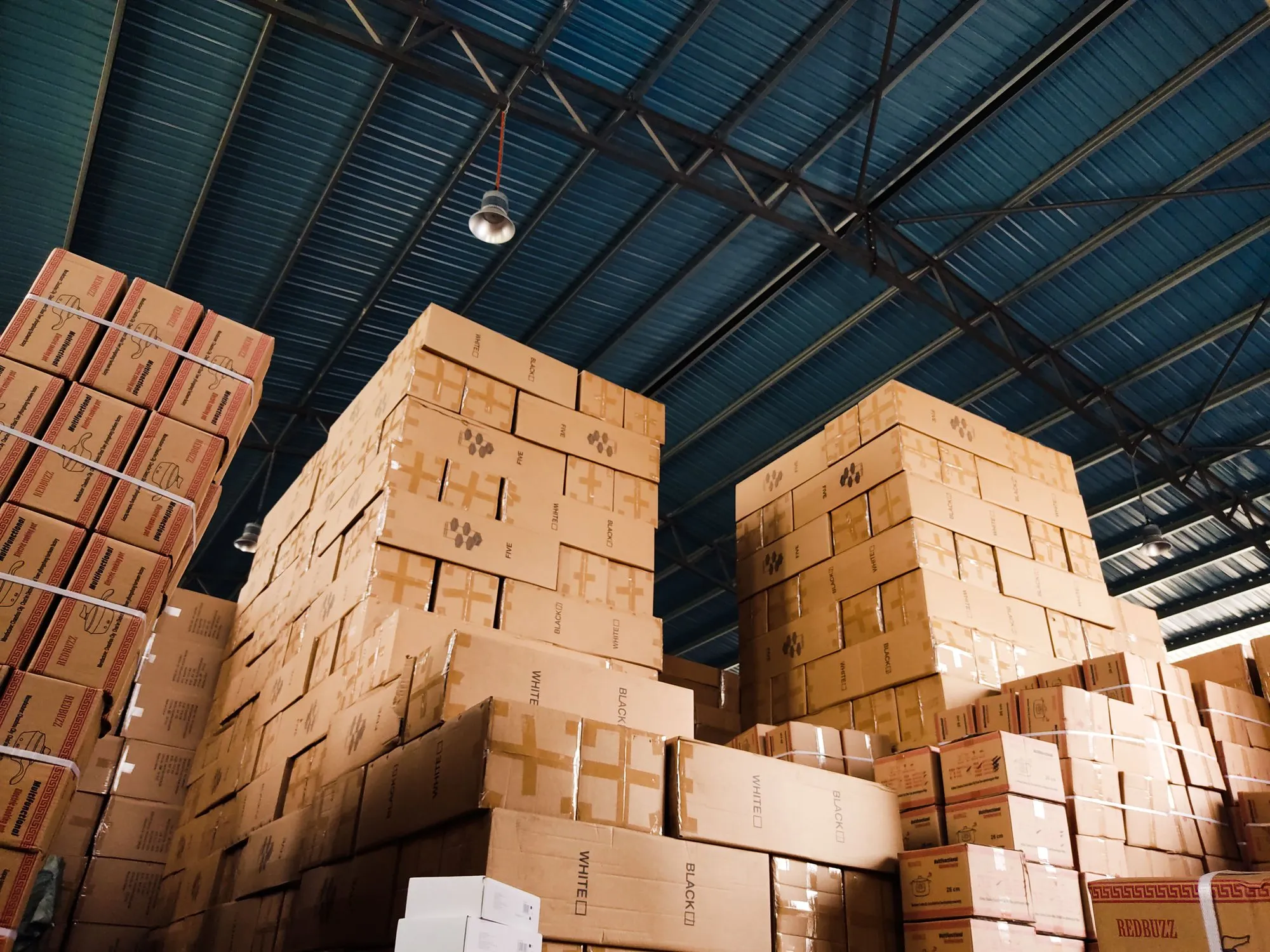
Two calendar facts stack on top of that. The six weeks around Chinese New Year are the only predictable delay in the year — workers travel, lines run short, forwarders run out of space, customs slows down. And a new certification adds a laboratory queue of three to six weeks that almost never appears on the supplier’s own schedule.
Which is why the useful question is not “what is your lead time” but “which week does this batch sit in your production plan, and when will the sample approval be signed off?” The first has a number attached to it. The second has a date.
Minimum order quantity obeys the same logic, and it is routinely misunderstood. In this category MOQ is rarely a policy — it is the smallest run that justifies one setup. Wire type, lampholder colour, lamp colour mix and cord-tag printing are four changeovers, and each one has a cost. A standard colourway at a small quantity is genuinely possible. Move to a custom jacket colour, a custom wire type and a private-label tag, and the number jumps by an order of magnitude. The mechanism is identical to what we described for MOQ on custom lighting, only the changeovers sit in moulding and cable rather than in anodising.
Eight things to ask for before the purchase order
Every item on this list is a photograph or a document, not a promise.
- A certificate of conformity whose scope names the model on the quotation.
- A photograph of the cord tag, legible enough to read the catalog number, the date of manufacture and the 90-day statement.
- Wire type and gauge in writing, plus a close-up of the print on the jacket.
- A photograph showing the fuse position relative to the plug face, with a ruler in frame.
- Lampholder material in writing: copper, an alloy with at least 80 percent copper, or copper-plated steel. The third answer ends the conversation.
- The spare lamp list, by type and quantity, against 24.2.
- For outdoor models: rain test, cold impact at −35 °C, and UV plus immersion reports, each naming the model.
- The factory code for this batch, against 116.1.3.
Eight items, all of them cheap to produce and impossible to invent on the spot. A supplier who needs three days to send the jacket print and the tag photograph is telling you something about where the goods were made.
Where we sit in this
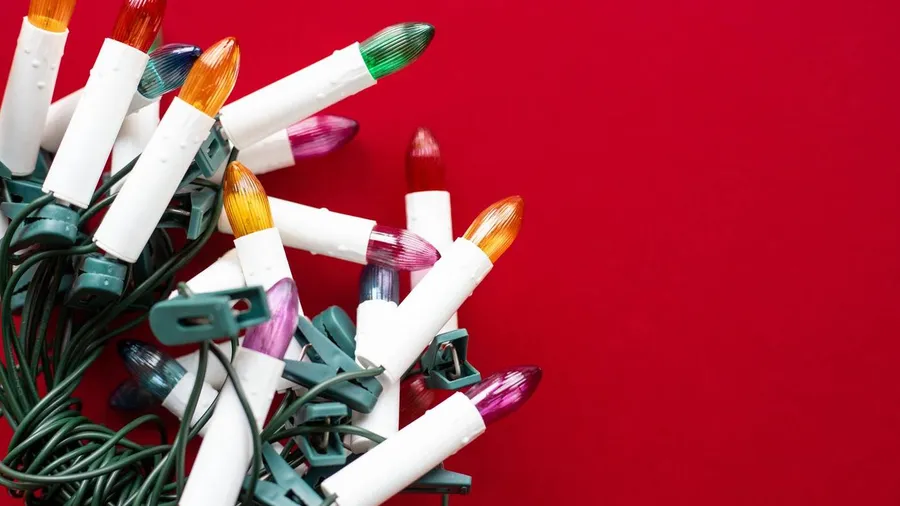
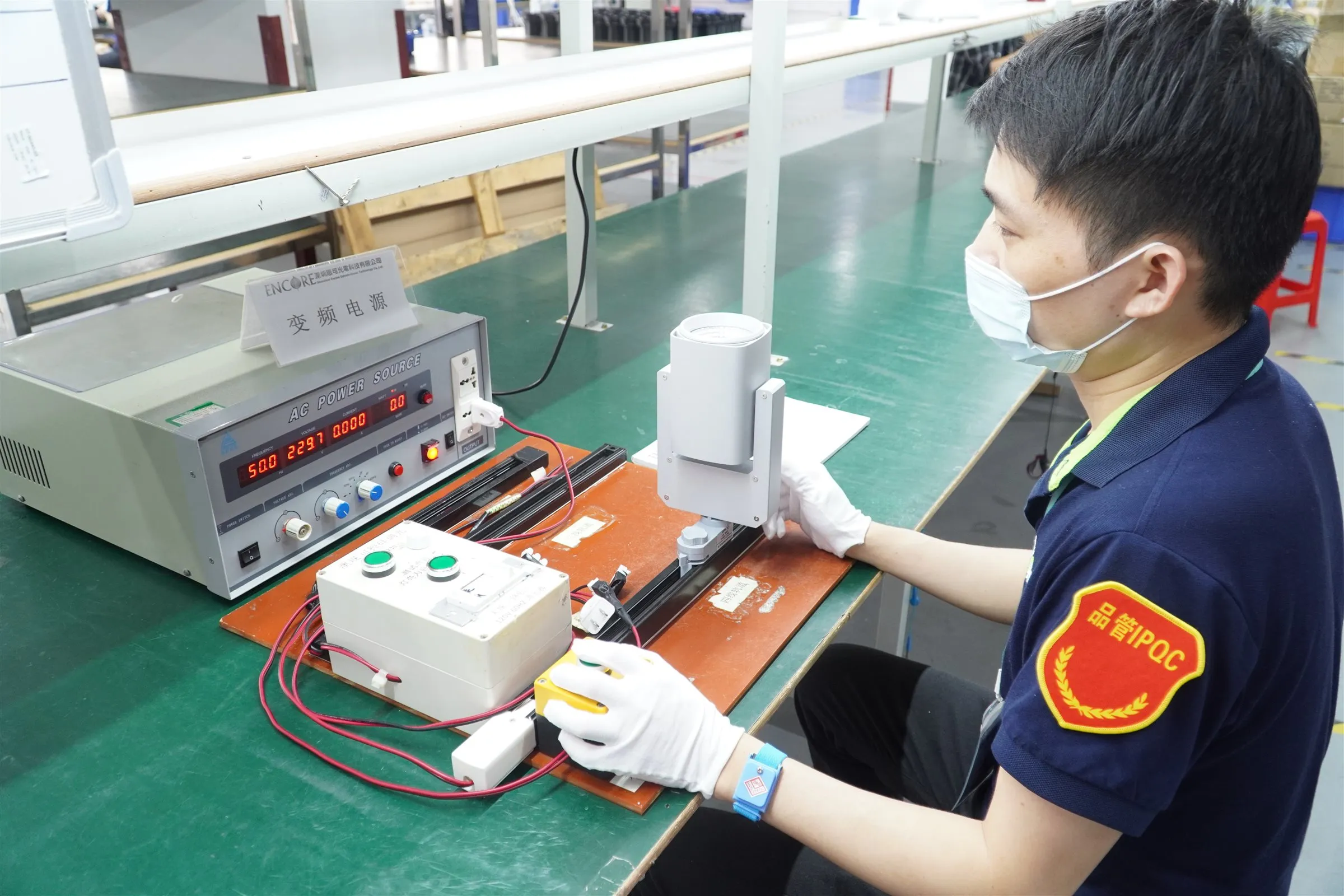
Our factory builds architectural and commercial lighting — track lighting, LED downlights, magnetic track systems — and we are not a Christmas lights factory. The strings in these photographs are real products from real shelves; the factory pictures are ours.
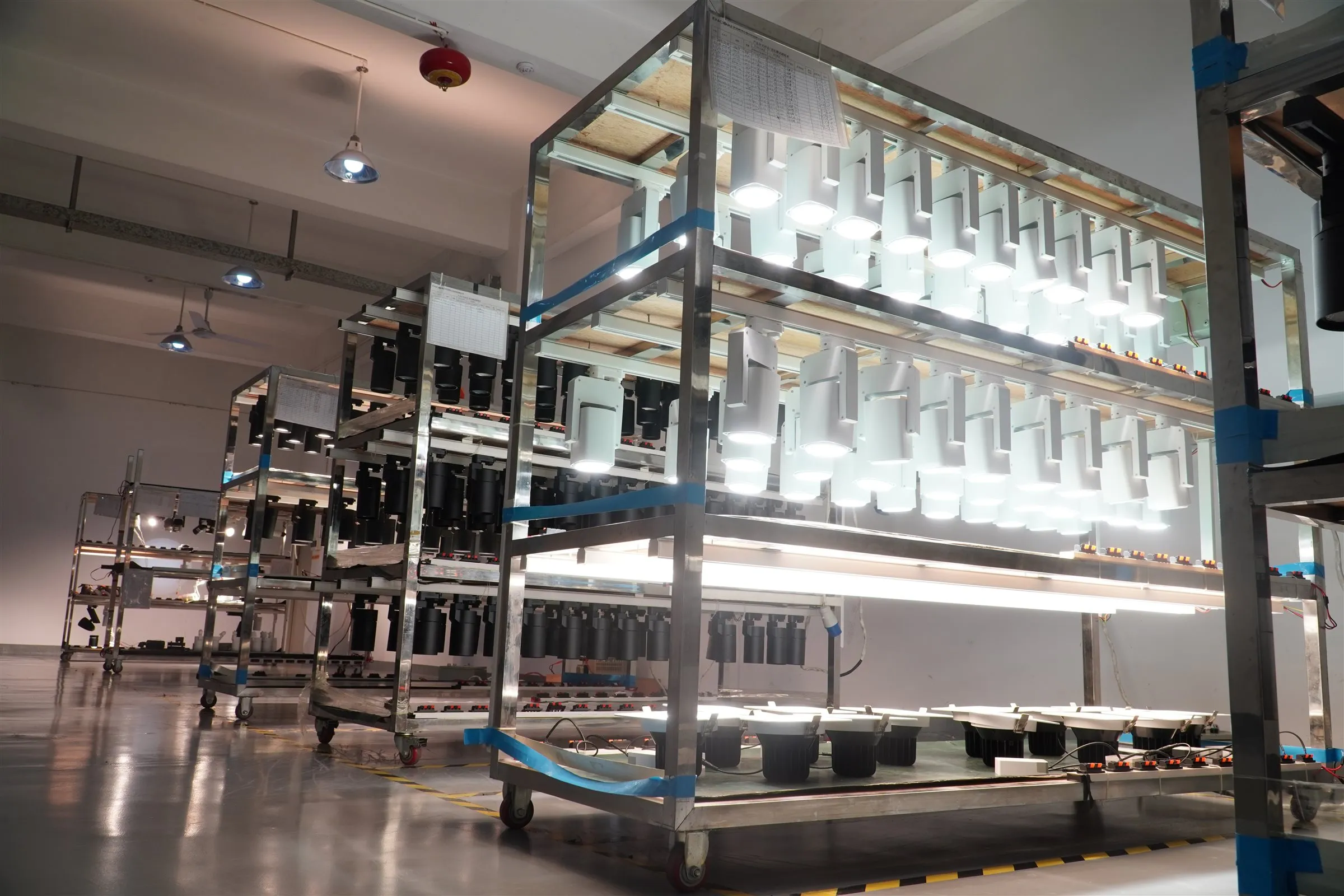
What carries across is the inspection logic, and it is the same sequence we run: incoming material inspection, first-article approval, in-process checks, 100 percent aging, then AQL before the carton closes. The quality control process sets that out step by step, and the factory inspection guide covers what to look at on site, in what order, and what to photograph.
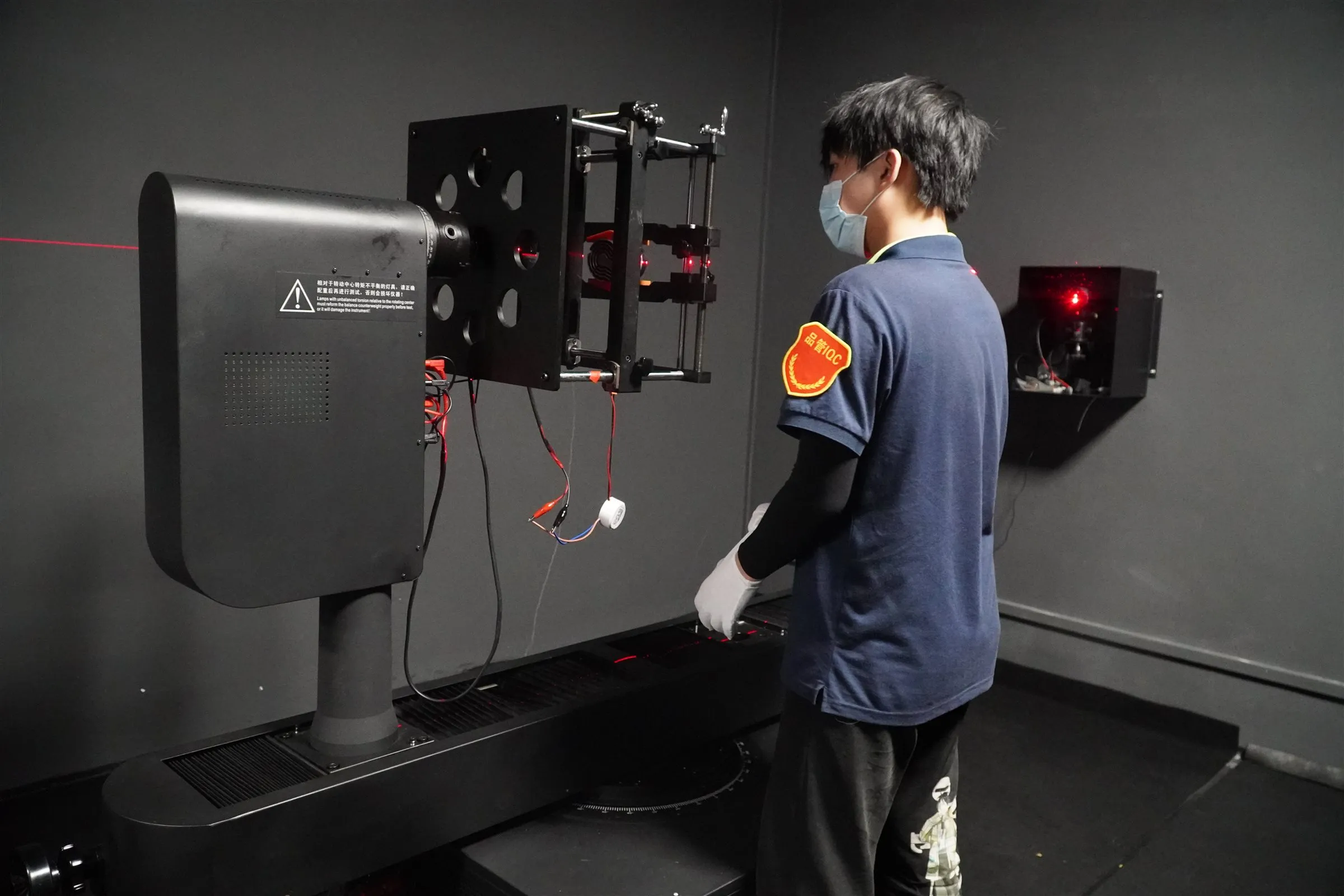
The OEM and ODM mechanics — mould ownership, certificate ownership, who holds the file number, what happens to tooling when the relationship ends — are in OEM/ODM services and on the certifications page. None of that is specific to Christmas lights. All of it decides whether the certificate in your folder belongs to a product you can actually reorder.
Where the decorative line meets the rest of the order
Christmas is the peak, not the whole year. The same buyer usually reorders a non-seasonal decorative range — C7/C9 sets for hospitality, festoon for terraces, mini strings for retail display — and those orders have their own customs and ampacity questions. That side of the programme, including what each customisation tier costs to open and why a run length is a wire specification rather than a design choice, is in LED string and fairy lights OEM. Read the two together: this page is the seasonal compliance half, that one is the year-round product half.
FAQ
What is the difference between a Christmas lights manufacturer and a Christmas lights supplier?
A manufacturer owns the assembly line, the lampholder tooling and the test records; a supplier owns a catalogue and a forwarder. The practical test is the cord tag: section 116.1.3 requires a distinctive marking that identifies which factory made each unit, and a trading company cannot print that code without naming the factory behind it. Ask for it in writing before you ask for a price.
Does a Christmas light string have to be UL certified in the US?
For mains-voltage seasonal decorative lighting, compliance with UL 588 is what 16 CFR 1120.3(c) assesses — the rule treats a product missing the minimum wire size, the strain relief or the overcurrent protection as a substantial product hazard. Battery, solar and low-voltage products fall outside that rule and follow a different path. In practice buyers still require a listing mark from UL, ETL or another NRTL, and the certificate has to name the model being shipped.
What wire gauge should a Christmas light string use?
UL 588 Table 6.1 requires at least 22 AWG CXTW or XTW for series strings, rising to 20 AWG where a polarised string carries a load fitting. Parallel strings need 20 AWG XTW or 18 AWG SPT-1/SPT-2, and outdoor versions must use the W-suffixed types such as SPT-2W. The gauge is one decision; the current rating that comes with the configuration is the other, and they are not the same number.
Why is a 22 AWG string rated at 0.6 A when the wire can carry 1.8 A?
Because the limit is set by the current path through the lampholder contacts and terminals, not by the copper. Table 13.1 gives 1.8 A for 22 AWG in a fully loaded product, and Table 6.1 allows that full figure only for a polarised string with no load fitting. Anything else in a series configuration is capped at 0.6 A.
How can I check strain relief without a test lab?
Pull ten lampholders at random, holding the body and pulling the lead. SB15 allows no more than 1/16 inch (1.6 mm) of displacement at the point of entry, and no conductor may become visible; 79.1.2 sets the average pull at 27 lbf (120 N) for 20 AWG and larger. If the jacket slides a few millimetres or a conductor appears, the batch fails the first gate and no certificate changes that.
Are indoor and outdoor Christmas lights the same product with a different plug?
No. Outdoor versions add the rain test (section 85 or 85A), cold impact after conditioning at −35 °C (section 61), UV exposure and water immersion (section 89), drain holes in the lampholder (22.2.2.2) and copper contacts with at least 80 percent copper (22.2.2.1). A shared part number between the two is a red flag, not a convenience.
What does an Australian buyer need beyond the RCM mark?
Decorative lighting outfits sit at Risk Level 3 in the EESS definitions, which requires the RCM, a valid Australian or New Zealand certificate of conformity, and registration in the national EESS database linked to the responsible supplier. The RCM alone does not make the product compliant, and the responsible supplier is the importer.
Which HTS code applies to Christmas lights?
Strings for Christmas trees go to 9405.31.00 for LED (8 percent) or 9405.39.00 for other technologies, with statistical suffixes .10 for miniature series wired sets and .40 for other. Lamps shipped separately fall under 8539.22.40.00 or 8539.29.10.00 at 5.8 percent. Declaring the two together under one heading creates a duty error that surfaces later.
The short version
- Three characteristics are law, not preference. Wire size, strain relief, overcurrent protection — 16 CFR 1120.3(c), and one gap is enough.
- The fastest audit is on the tag. Date of manufacture, model number and factory code, all within 152 mm of the plug.
- The rating and the ampacity are different numbers. 22 AWG carries 1.8 A and is capped at 0.6 A unless the string is polarised with no load fitting.
- Strain relief, terminals and lampholder material decide year two. A fuse protects the wire and proves very little.
- A November shelf date is a June order. 136 days, 62 of them on the factory floor.
If you are building a seasonal programme and want a second pair of eyes on a supplier’s documentation pack, send it over. We read spec sheets and certificates for a living, and we will tell you which lines are evidence and which are decoration. Talk to our engineers →
Read next: QC for custom LED orders for how aging and AQL sampling actually run; ODM vs OEM LED lighting for who ends up owning the design; and how to vet a lighting manufacturer before an RFQ for the questions that come before the sample.
- christmas lights manufacturer
- christmas lights supplier
- oem christmas lights
- ul 588
- 16 cfr 1120
- seasonal lighting
- christmas light string wire gauge
- strain relief test
- hts 9405.31
- eess risk level 3
our factory