· Sourcing & Quality · 20 min read

Written by ENCORE Lighting Team
LED Lighting Manufacturer & OEM/ODM Partner ·
MOQ Demystified: What "100 Units" Really Means in Lighting
LED track lighting MOQ explained: why "100 units" is a condition, not a number. The five customization levels, the four inputs that really set a minimum order, how tooling inflates unit cost at low volume, and an RFQ template to place a 100-unit first order that still gets you engineering support.

There is one number that shows up in the first minute of almost every custom lighting enquiry, and it is the one most likely to end the conversation badly.
The buyer asks: “What is your MOQ?” The sales engineer answers: “100 units.” The buyer nods: “Good, let us start with 100.” The sales engineer adds: “The colour needs a bit more than that, and the lens needs a mould…”
Now both sides are stuck. The buyer feels misled. The sales engineer is certain they said it up front.
The problem is not honesty. The problem is that “100 units” is never a number — it is a shorthand for a set of conditions.
This article does one thing: it unpacks that sentence. You will see the four inputs that actually produce an MOQ, and what a 100-unit order does and does not buy you in LED track lighting.
MOQ is not the factory’s gate. It is the price of the change you are asking for.
One thing to get out of the way first: the numbers here are indicative industry bands for B2B custom track lighting projects. They are there to make the mechanics clear, not to quote any specific factory. Always price tooling, volume breaks and lead time against a written quotation.
What an MOQ Actually Is
Most people read MOQ as “the factory cannot be bothered with small orders.” That is an emotional explanation, not a commercial one.
The real mechanism is this: part of the cost of an order does not change with quantity, so it has to be divided across every unit produced.
At least three costs behave that way in custom lighting:
- Tooling and fixtures. New die-cast housings, extrusion profiles, injection-moulded optics, packaging dies. This is the expensive one — tens of thousands of dollars is normal.
- One-off engineering. Mechanical design, optical simulation, driver matching, IES photometric files, sample iterations, and certification testing (the test and report fees for ETL or CE).
- Production changeover. Every switch of the line means stopping, changing material, re-setting, and first-article approval. The labour and lost time is the same whether the run is 100 units or 1,000.
The MOQ a factory gives you is really an answer to one question:
“How many units do I have to produce before those three costs, divided across each unit, still leave an acceptable unit price?”
So MOQ is not a question of goodwill. It is a division problem. The denominator is volume; the numerator is one-off cost.
Remove the numerator and the MOQ disappears on its own. That is why the same factory will happily ship a standard fixture at 50 units and ask for 1,000 units on a new housing. Nothing about their attitude changed. The numerator changed.
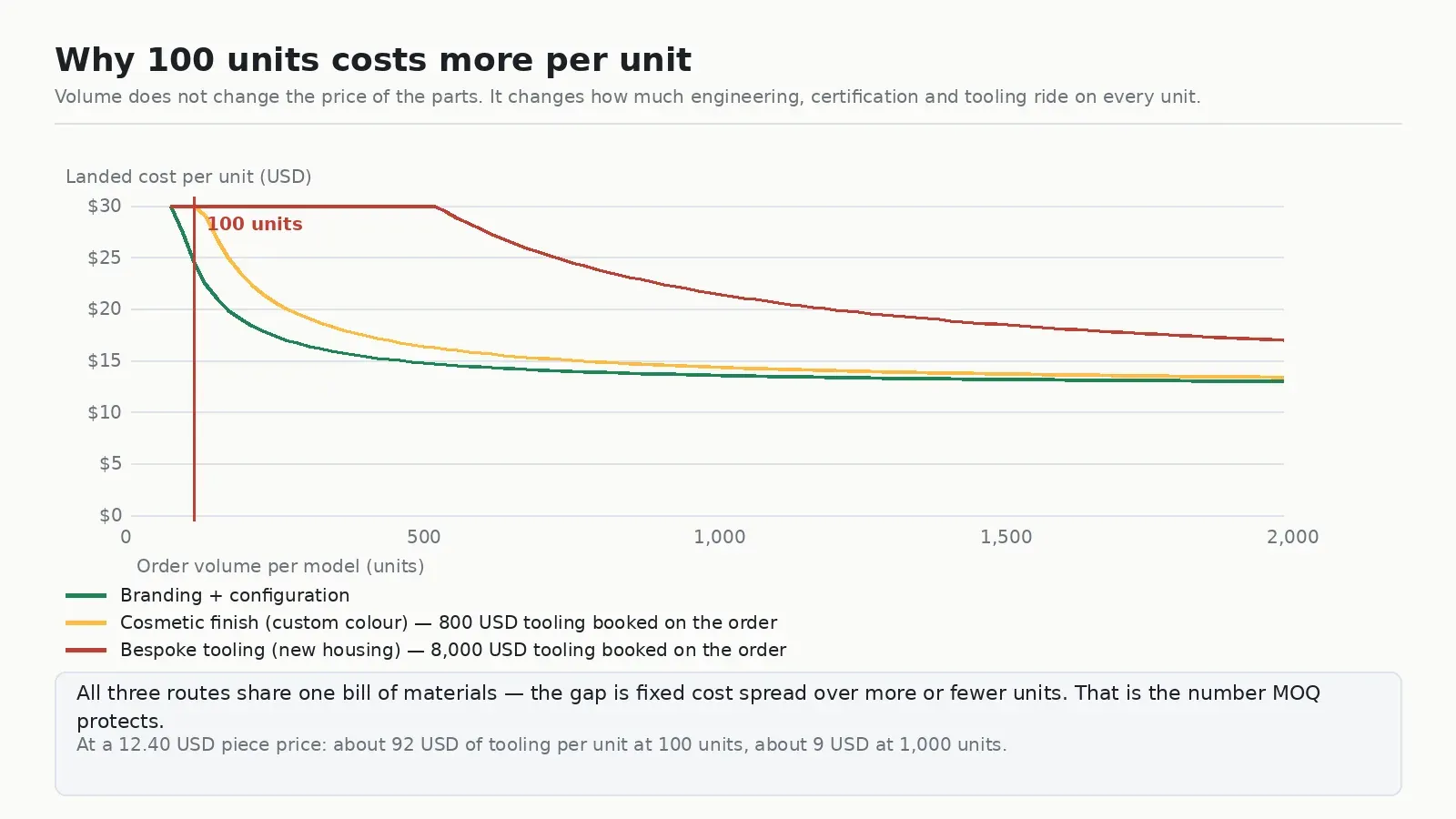
Three routes, one bill of materials. The gap between the curves is one-off cost spread over more or fewer units.
What 100 Units Buys You: The Five Levels
Put customization depth and minimum order side by side and the picture clears up immediately. Custom lighting runs in five levels, and each one has a different numerator.
| Level | What you change | Typical MOQ | Tooling charge |
|---|---|---|---|
| 1. Branding | Laser-marked or printed logo, retail box, manual, spec labels | 100–300 units | none |
| 2. Configuration | Choose CCT, CRI, beam angle, wattage and dimming from the catalog | 300–500 per model | none |
| 3. Cosmetic | Housing colour and finish — powder coat, anodising, plating | 500–1,000 units | small |
| 4. Re-engineered | Custom CCT binning, SDCM ≤ 3, custom optics or a specified driver | 1,000–2,000 units | moderate |
| 5. Bespoke tooling | A new housing or track profile designed exclusively for you | 2,000–5,000 units | high |
The most important row in that table is the first one. The literal meaning of “100 units” is: levels 1 and 2 are open for discussion.
At level 1 you get your own logo, your own packaging, and your own combination of colour temperature and beam angle. For a furniture brand testing a range on Amazon, or a designer fitting out a first showroom, that is already enough to build a product line that genuinely looks like yours.
At level 5, 100 units buys nothing at all — because a mould does not get cheaper when you only make 100 pieces. It gets more expensive per piece, by a factor of twenty.
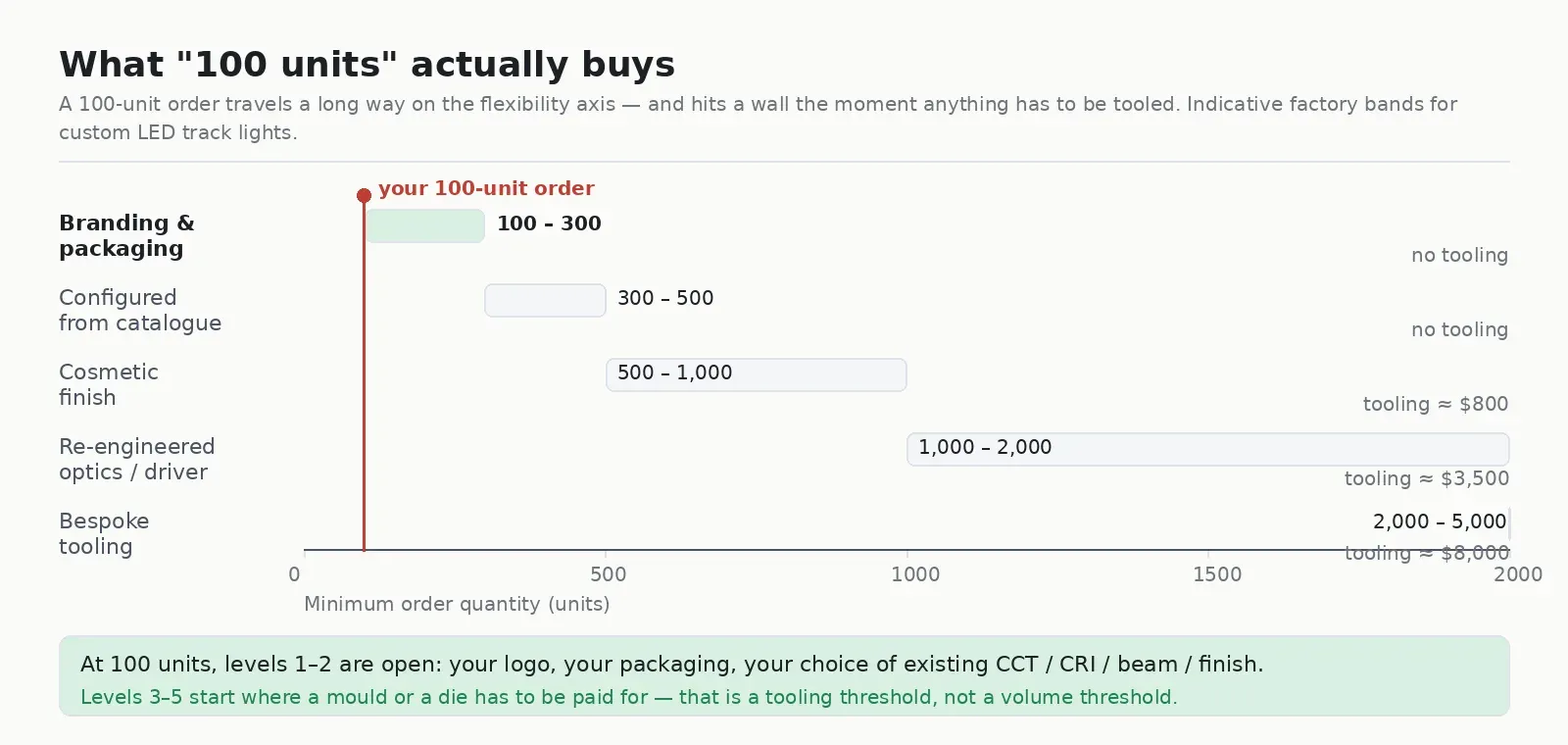
100 units reaches the first two levels and stops where a mould has to be paid for.
The Four Inputs, Three of Which Are Yours
Most buyers treat an MOQ as a rule handed down by the factory. In practice it is the output of four inputs, and you control three of them.
Input A — Does something have to be cut? This carries the most weight. The moment you need a new mould, a new extrusion profile or a new optical tool, the MOQ steps up. Stay inside an existing structure and it drops by an order of magnitude.
Input B — Does material have to be bought in specially? A standard 3000K 90 CRI LED is on the shelf. A specific bin — say SDCM ≤ 2 — has to be ordered from the LED maker, who has a minimum order of their own. The same applies to a named-brand dimming driver or a specific anodising dye.
Input C — How many times does the line change over for you? One model at 300 units needs one changeover. three models at 100 units each need three. Same total volume, entirely different cost structure. That is why factories tell you “same colour and spec can be mixed, different colours quote separately.”
Input D — The volume itself. The simplest and most misunderstood: an MOQ applies per model. Three colours at 300 units is not a 300-unit order — it is 100 units per colour. Every split by colour, CCT, beam angle or driver protocol shrinks the volume you can amortise across.
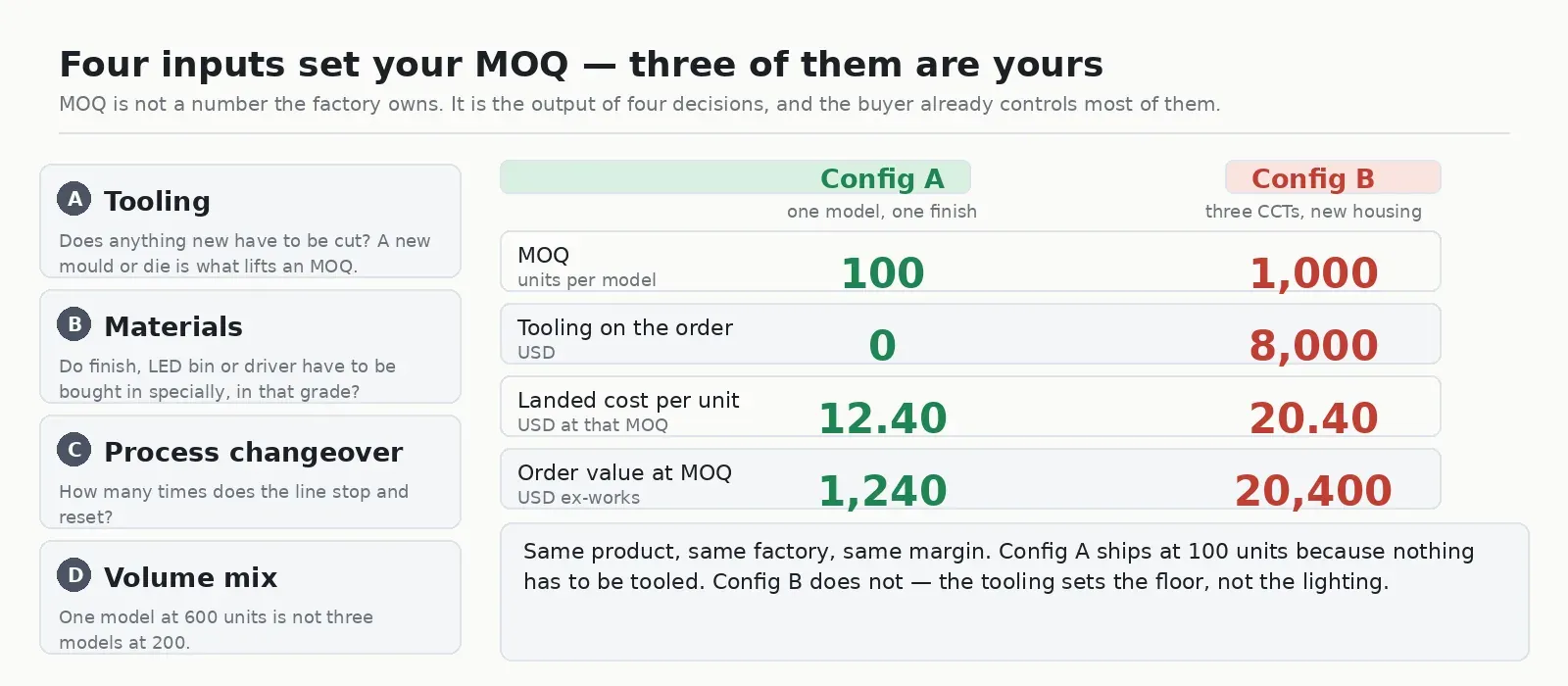
Same product, same factory. Only the tooling decision separates Config A from Config B.
Why 100 Units Costs More Per Unit
Here is something many buyers believe they understand but usually do not: a 100-unit unit price is high because fixed cost is divided by a smaller denominator.
Split an order into two buckets:
- Variable cost — LEDs, drivers, aluminium, hardware, labour, packaging. Costed per piece. Nearly identical at 100 units and at 1,000.
- Fixed cost — tooling, engineering, certification, changeover, sampling and freight. Costed per order. Unrelated to piece count.
Every extra dollar on a 100-unit price comes from the second bucket being spread thin. That explains two things that are routinely misread at the negotiating table.
First, do not attack the unit price — attack the fixed cost. Changing “I want three colours” to “the first order is one colour, and I will add the rest when it sells” saves you a changeover and a dye lot, not a discount. That is worth far more than grinding 5% off the piece price.
Second, bring the repeat orders to the first conversation. If you already know you will reorder three times this year, put the annual volume in your first email. Now the factory is planning against a twelve-month rolling forecast instead of an isolated 100-unit job, and your position is completely different. A real procurement plan outperforms any negotiating tactic.
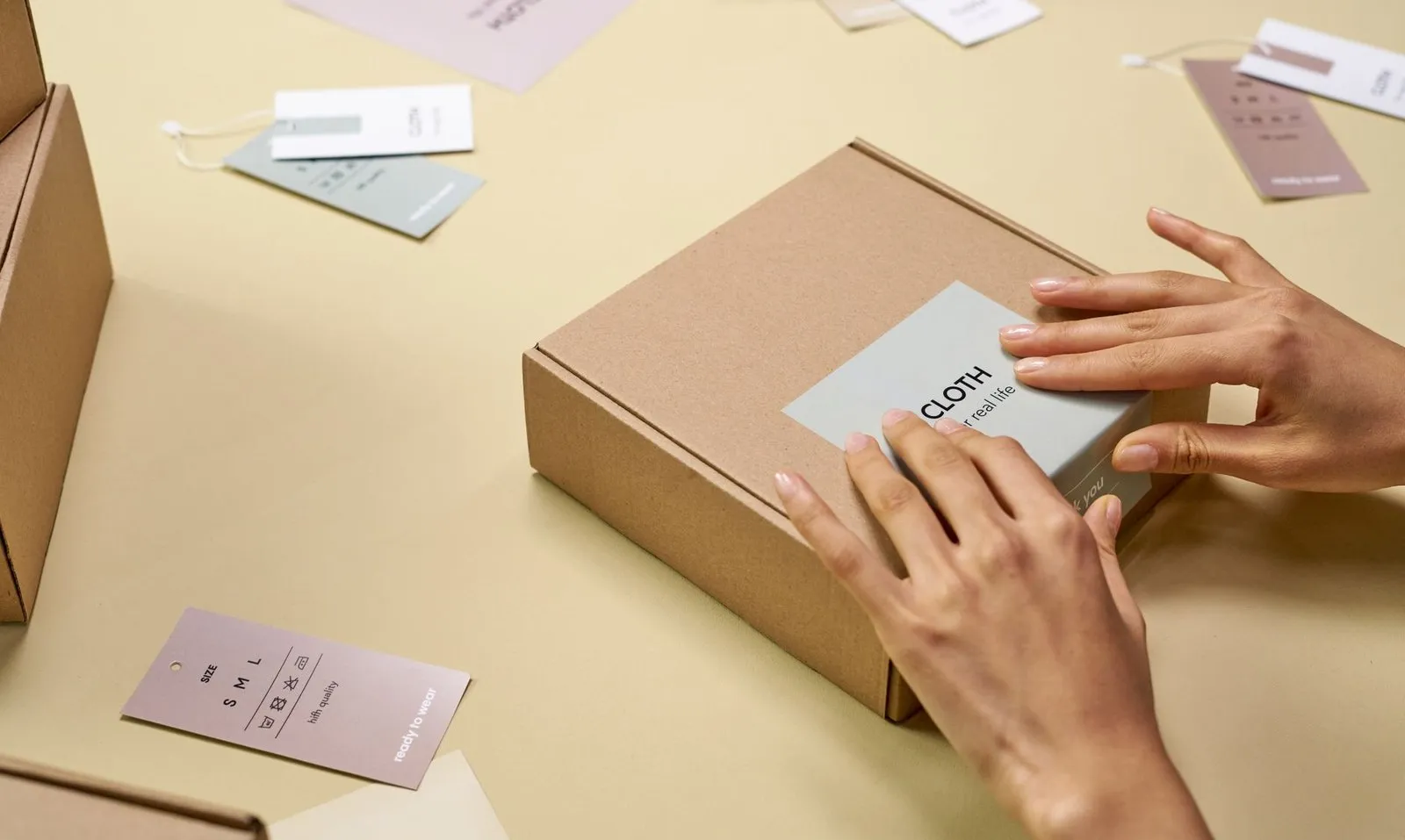
Logo, label and carton are configuration choices rather than tooling projects — which is exactly why they are reachable at 100 units.
Making 100 Units a First Order, Not a One-Off
Experienced buyers do not ask “can you lower your MOQ to 100?” They ask “how do I get what I need out of 100 units?” The difference between those two questions is the difference between a long-term supplier and a single transaction.
Four steps that hold up in practice.
Step 1 — Decide what this order has to prove
A 100-unit order is not there to make money. It is there to produce information. Before you send the first enquiry, write down the three questions the order must answer. For example:
- Does this colour temperature and rendering sell in my channel?
- Does this packaging and logo get accepted by my customers?
- At this price, is the margin enough to feed my distribution?
If the first order cannot answer one of those, the 100 units were spent in the wrong place.
Step 2 — Compress the customization until nothing needs a mould
Walk your requirement list against the four inputs:
- Can the colour come from an existing powder-coat range? Then no new die.
- Can the beam be produced from an existing reflector and lens pair? Then no optical tool.
- Can the driver use an existing platform with a programmed variant? Then no driver development.
- Can the packaging start as a plain carton with a printed label? Then no cutting die.
Each “yes” drops the MOQ one level. A 100-unit first order is earned one decision at a time.
Step 3 — Declare your splits before you ask for a price
Tell the factory your colour and specification split at quotation stage, so they can price it on a per-colour minimum batch basis. Plenty of buyers discover after the PO that every extra colour carries a charge, then suspect the factory of moving the goalposts. Raised early, the same request can often be absorbed into one material purchase and one production run.
Step 4 — Trade the first order’s QC record for a better second order
This is the step almost everyone skips. Once you hold the approved first-article report, the aging log and the inspection report, your position on the second order is entirely different:
“Here is the sealed sample from order one, 24-hour aging with zero failures, and the AQL report. Order two is 1,000 units — can we drop the engineering fee and reprice the piece cost?”
No factory can refuse that conversation, because you are not bringing a demand. You are bringing certainty, and certainty converts directly into their cost. For the documents worth collecting on the first order, see our QC framework for custom LED orders.
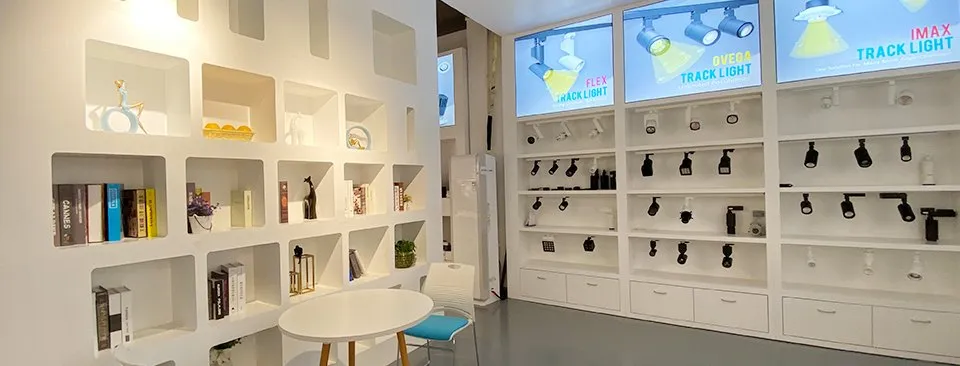
Real hardware, real samples: buyers review finishes and light output at ENCORE before committing to order one.
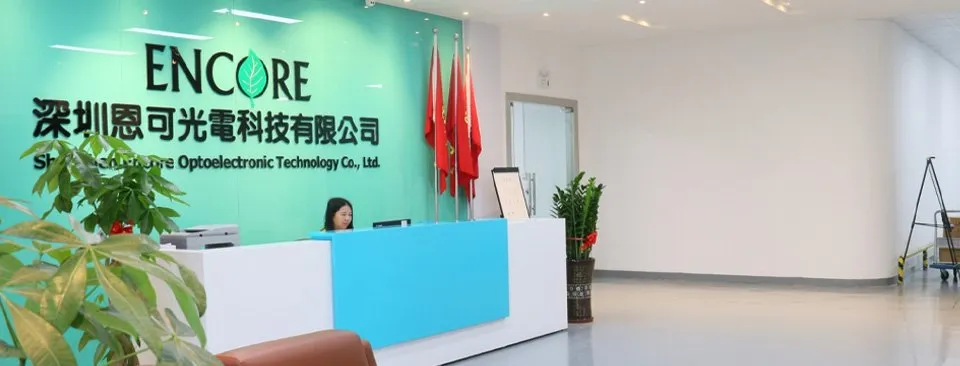
A first order is still handled by a real factory, not a catalogue. This is where the enquiry lands.
An RFQ Template You Can Copy
Rewrite the details and send it. It works because it pre-answers every question the factory would otherwise have to ask, so the first reply is a real quotation instead of three rounds of clarification.
Hello,
We are evaluating an LED track spotlight for [channel / market]. First order 100 units, annual demand approximately [X] units.
- Product: track spotlight, [wattage] W, [CCT] K, CRI [90+], beam angle [24°]
- Customization depth: logo (laser marking) + retail box + spec label only. Housing colour from your existing range — no new mould required.
- Colour count: one colour for the first order; two more if it sells through.
- Compliance market: [US / EU]. We would like to use your existing certification and have our SKU listed.
- Please quote: unit price at 100, at 500 and at 1,000 units. If there is any tooling or engineering fee, list it separately.
- Please confirm: sample lead time, production lead time, payment terms and warranty.
Attached: our logo files and packaging dimensions.
Pay attention to item 5. Asking for three price breaks in one email is the smartest move in the whole template. It shows you the real slope of the MOQ before you commit. If 100 units and 500 units differ wildly, you are looking at fixed cost, and there is room to talk. If they are close, the factory’s small-run economics are already good and you can place the 100-unit order with confidence.
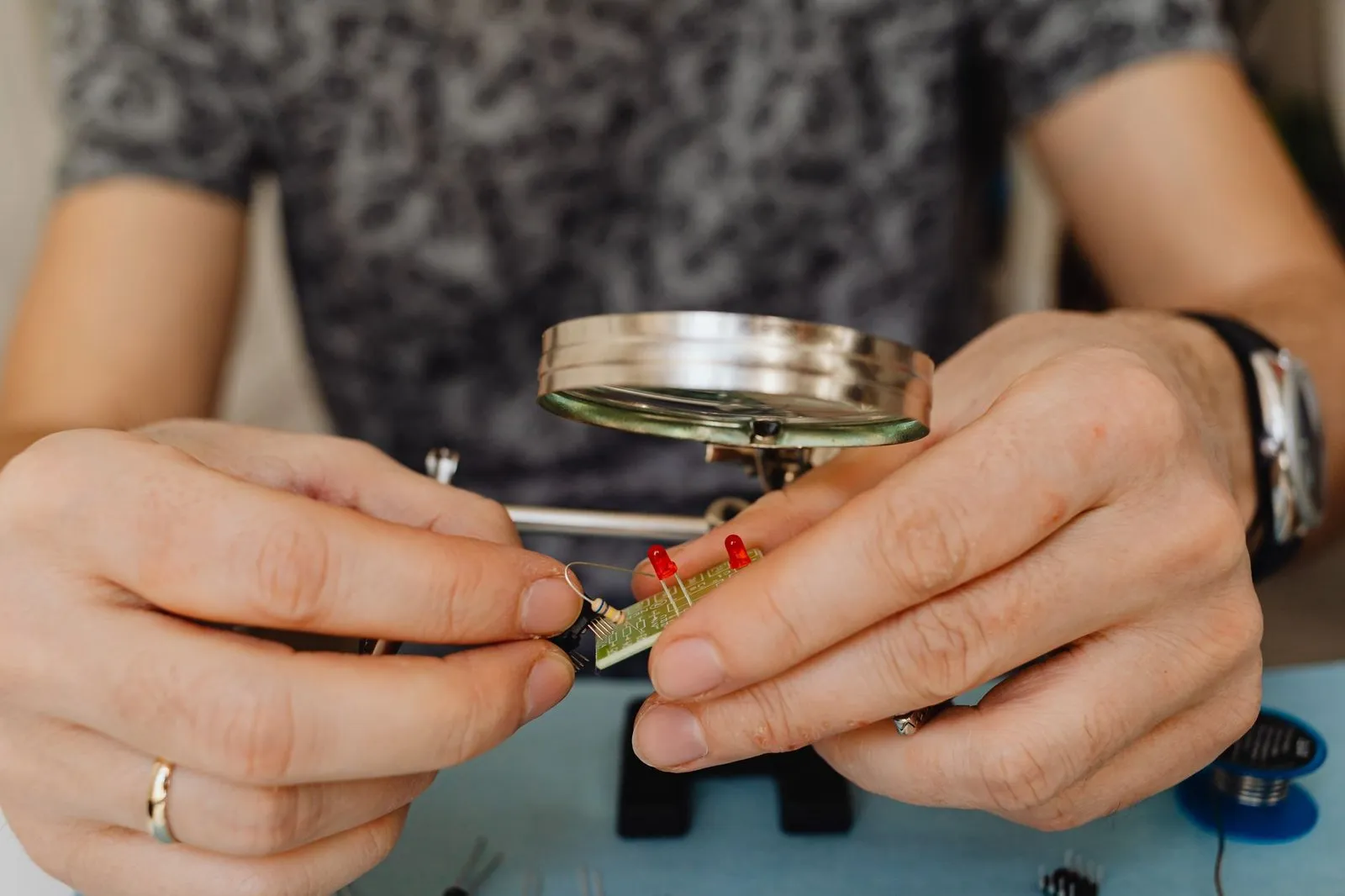
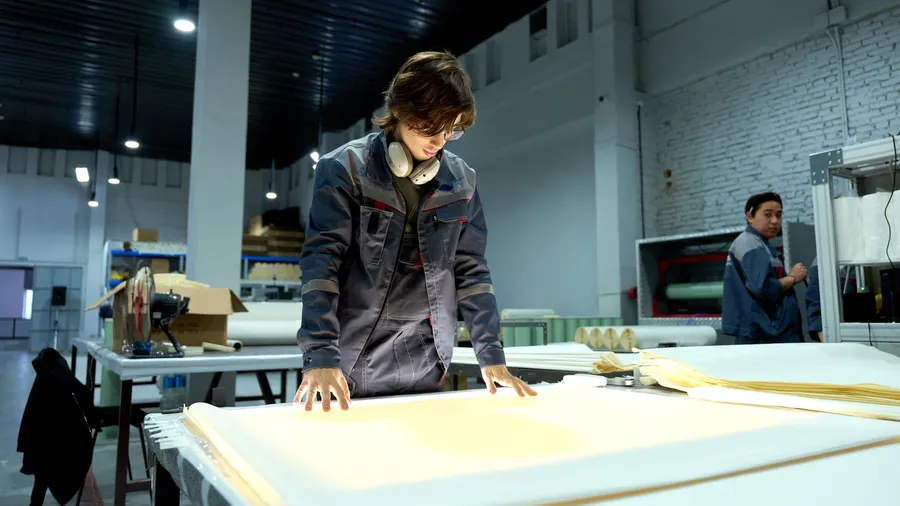
Small batches still carry the same assembly and testing operation — the labour does not shrink with the order.

Ask for three price breaks in one email. The document work is what turns a 100-unit enquiry into a priced MOQ.
Common Misconceptions
“MOQ is a bargaining chip.” It is not. An MOQ is a cost structure written in plain language. To move it you change the structure or the volume. Haggling does not touch it.
“MOQ is the minimum order size.” It is the minimum order size per model. If you say “300 units” split across three models, most factories will cost it as 100 units per model.
“The lower the MOQ, the better the factory.” A factory that will take 10 units is usually one of two things: a trading company passing the job on, which means no engineering support, or a genuinely flexible line whose unit price is noticeably higher. The question worth asking is not “how low is the number” but “what engineering support do I get at my volume.”
“Getting to 100 units is the win.” 100 units is the start line. The objective is to convert the data and the trust from that order into better terms on the second. Brands that stay at 100 units forever stay in the uneconomic zone at 100 units forever. For how to pick a supplier who can walk with you from 100 units to 10,000, see our 2026 custom track lighting manufacturer guide.
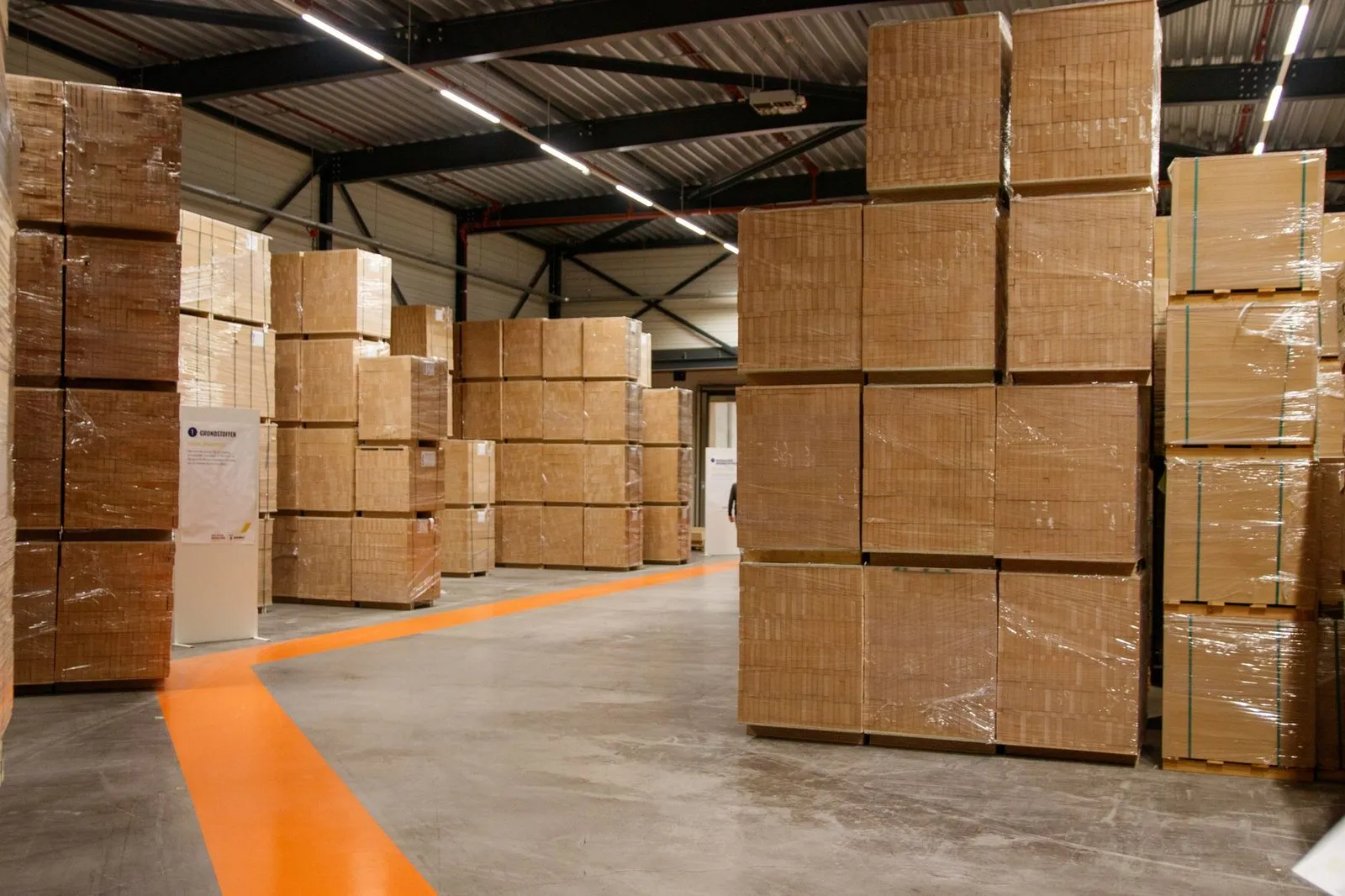
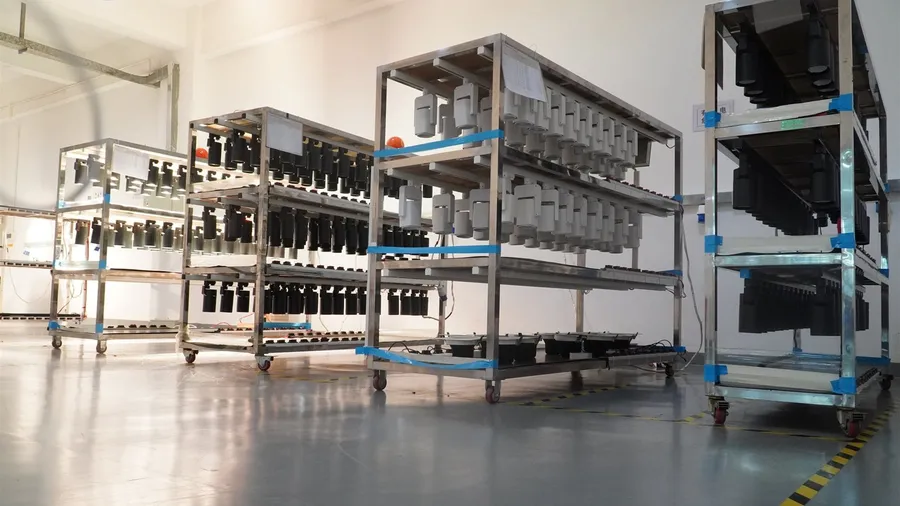
Where a 100-unit run ends up: staged as a real shipment, on its own pallets, ready for export.
MOQ and Lead Time Move Together
Buyers usually ask about MOQ and lead time in the same breath, and for good reason — both are driven by the same numerator.
| Customization level | Typical MOQ | Realistic lead time |
|---|---|---|
| Branding only | 100–300 units | 2–4 weeks after artwork approval |
| Configuration | 300–500 / model | 3–5 weeks |
| Cosmetic finish | 500–1,000 units | 4–6 weeks, plus a finish sample round |
| Re-engineered | 1,000–2,000 units | 6–10 weeks including prototype revision |
| Bespoke tooling | 2,000–5,000 units | 8–14 weeks including tooling and retesting |
Two things to keep in mind. Samples typically add 7–15 days in front of any of these figures. And repeat orders compress hard — once the tooling exists and the first article is sealed, a re-run of the same model usually lands in 4–6 weeks regardless of which level you are at. Get the schedule in writing, with milestones, before you pay a deposit. Our customization and MOQ breakdown covers the full menu of what can be changed at each level.
How ENCORE Handles a 100-Unit Order
We build LED track lighting, downlights, magnetic track systems and commercial luminaires in Shenzhen. When a buyer comes to us with a 100-unit first order, here is what actually happens on the floor:
- We map the request against our existing tooling first, and tell you plainly which parts of your list need a mould and which do not.
- We quote three price breaks — usually 100, 500 and 1,000 units — so the cost structure of your MOQ is visible before you commit.
- We run the same first-article approval and aging process on a 100-unit order that we run on a 5,000-unit order. Small orders do not get a lighter QC process.
- We keep the sealed sample and the first-article record on file, so your second order starts from a defined standard rather than from memory.
If the change you want does need tooling, we will say so and show you the cost of it, rather than quoting a large MOQ without explanation. Read the full quality control process, see how a specification travels from RFQ to certified production on the OEM/ODM page, or send us your requirement list and target market and we will tell you exactly which levels your first order can reach.

Freight is one of the fixed costs that behaves like tooling — the same whether the consignment holds 100 track lights or 2,000.
FAQ
What is the MOQ for custom LED track lighting? Around 100–300 units per model for branding and packaging customization, 300–500 units for configuration from an existing catalogue, and 1,000–2,000 units and up once new optics, a custom driver or a new housing has to be tooled. The number tracks the tooling, not the product.
Why does a 100-unit order cost more per unit? Because the fixed costs of the order — tooling, engineering, certification, changeover and freight — are divided by 100 instead of 1,000. The bill of materials is identical. On a tooled programme at a 12.40 USD piece price, one-off cost works out at roughly 92 USD per unit at 100 units and about 9 USD per unit at 1,000 units.
Can I get 100 units of a fully custom track light? Not if “fully custom” means a new housing or a new optical tool. That is a tooling threshold, not a volume threshold. What 100 units will get you is your own logo, packaging, colour temperature, CRI, beam angle and finish, chosen from an existing platform.
Is MOQ per order or per model? Per model, and often per colour or per specification variant. If you split 300 units across three colours, most factories will plan and cost it as 100 units per colour, because each variant needs its own changeover and its own first-article approval.
How do I ask a factory to lower an MOQ? Do not ask for a lower number. Ask for a different configuration. Move the colour to an existing range, use a standard LED bin, pick a beam angle the factory already tools, and start packaging as a plain carton with a label. Then ask for three price breaks so you can see where the fixed cost actually sits.
Does a lower MOQ mean a worse supplier? Not by itself, but it usually means a higher unit price or less engineering support. Ask what happens to warranty, first-article approval, IES files and certification at your volume. A supplier who answers those questions at 100 units is worth more than one who simply quotes a smaller number.
How long does a 100-unit custom order take? Two to four weeks for branding-level customization after artwork approval, three to five weeks for configuration-level work, plus 7–15 days for a sample if you need one. Repeat orders of the same model usually compress to four to six weeks.
Conclusion
Back to the original question. What does “100 units” actually mean?
It means: without cutting a single new tool, you can own a product with your brand on it. Your logo, your packaging, your choice of colour temperature and beam angle — none of that needs a mould, so 100 units can do it.
And it means: anything that has to be cut pushes the threshold past 1,000 units. That is not the factory’s gate. It is the mould’s.
So the right sequence is not “negotiate the MOQ first.” It is:
- Use 100 units to get a product you can actually test.
- Use the data, the sealed sample and the QC record from that order to get better terms on the second.
- Once you know which model earns, use 1,000 units and up to buy a structure that is only yours.
An MOQ was never a wall. It is a price list. Read it properly and 100 units is enough to get a seat at the table.
Send us your specification, target market and first-order quantity, and we will tell you which parts of your list are reachable at 100 units, which ones trigger tooling, and what the smartest route to the second order looks like. Request a custom track lighting quote →
Read next: Custom LED Track Lighting: What You Can Customize + MOQ & Lead Time for the full customization menu at every level — or ODM vs OEM LED Lighting to decide which sourcing model your first order should use.
- led track lighting moq
- track lighting minimum order quantity
- custom lighting MOQ
- led track light moq and lead time
- led lighting tooling cost
- low volume custom track lighting
- oem track lighting minimum order
- lighting moq negotiation

ENCORE Lighting Team · ENCORE
LED Lighting Manufacturer & OEM/ODM Partner
The ENCORE engineering and sourcing team writes about LED track lighting, downlights, magnetic systems, certifications and OEM/ODM manufacturing for B2B buyers and specifiers.