· Track Lighting · 8 min read

Written by ENCORE Lighting Team
LED Lighting Manufacturer & OEM/ODM Partner ·
Magnetic Track Lighting Guide: What It Is, When to Choose It, and How to Buy
Magnetic track lighting guide: how the magnetic connection system works, slim 5mm/15mm/20mm track profiles, when to choose it over conventional track, fixture types, dimming, and a B2B buyer checklist for sourcing a magnetic track system.
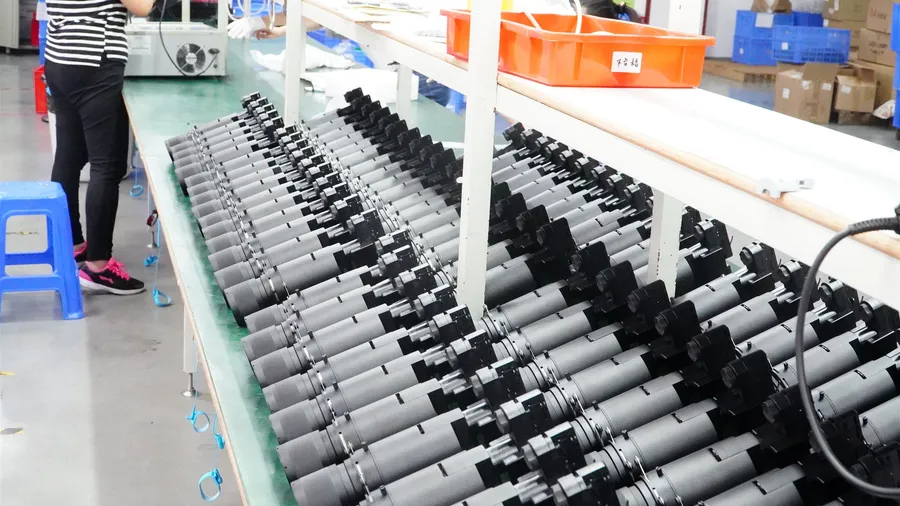
Magnetic track lighting is the fastest-growing segment of modern architectural lighting — and for good reason. Instead of wiring each fixture in place, a magnetic track light snaps onto a live rail with a magnetic connector. You move, swap, add, or remove fixtures in seconds, without rewiring and without touching the ceiling. That combination of flexibility and a clean, slim profile has made it the default choice for retail refresh programs, showrooms, high-end offices, and contemporary residential interiors.
This guide covers what magnetic track lighting actually is, how it compares to conventional track, when it is the right choice (and when it is not), the fixture types and technical specs that matter, and a practical B2B checklist for sourcing a magnetic track lighting system for your brand or project.
What Is Magnetic Track Lighting?
A magnetic track lighting system has two parts: a track (rail) that carries the electrical bus and provides the magnetic connection, and magnetic fixtures that snap onto the rail.
The key difference from conventional track lighting is the connection. On a traditional track system, fixtures slide into the slot and lock with a mechanical twist or clip. On a magnetic system, the fixture is pulled against the track by permanent magnets, and the electrical contacts make the circuit automatically. No tools, no alignment keys, no separate locking step.
Because the connection is magnetic, every fixture on the rail is also live and addressable — you can add or relocate luminaires while the rail stays powered.
Track profiles: the numbers that matter
Magnetic tracks are usually described by the width and recess depth of the profile:
- Slim 5 mm profile — almost invisible on the ceiling; fixtures are small and low-wattage. Best for residential and boutique retail where the track should disappear.
- 15 mm profile — the most common all-rounder; balances a low visual profile with room for larger fixtures and better optics.
- 20 mm profile — for heavier, higher-output fixtures and commercial projects that need more light per meter of track.
At ENCORE we build all three (AURA, DISC, GRIDIS, NOVA, and LATTICE series sit on the 5 mm, 15 mm, and 20 mm rails), so the system scales from a minimal apartment ceiling to a full retail floor.
Magnetic Track vs Conventional Track: Which Should You Use?
| Consideration | Conventional track lighting | Magnetic track lighting |
|---|---|---|
| Reconfiguration | Tools + rewiring; fixture swap takes minutes | Snap fixtures on/off in seconds, no tools |
| Ceiling profile | Deeper, bulkier track | Slim 5–20 mm, flush or recessed |
| Fixture weight | Handles heavy fixtures | Best with light-to-medium fixtures |
| Application | High-ceiling commercial, industrial | Retail refresh, showroom, residential, offices |
| Smart control | Possible via dimming/0-10V/DALI | Same protocols; easy to add scenes |
Choose conventional track when you need very high wattage and heavy optics for tall ceilings (warehouses, atriums, high-bay retail) where the flexibility of a magnetic system is not worth the weight limit.
Choose magnetic track when layouts change often — a retail program that re-merchandises seasonally, a showroom that reconfigures, or a hotel/office that wants a clean ceiling you can relight without a sparkie. If your fixtures are 5–30 W and you want to reposition them over a product, artwork, or a table, magnetic track is almost always the better fit.
Fixture Types: What Can Go on a Magnetic Track
One rail, many fixture types. A mature magnetic system covers every role you would ask of accent or ambient lighting:
- Spotlights — narrow 15°–30° beams for accent and display.
- Flood / wash fixtures — 30°–60° for general retail and ambient light.
- Wall-washers / grazing heads — asymmetric optics for illuminating vertical surfaces, signage, or artwork.
- Linear light bars — slim continuous light for task zones and architectural lines.
- Pendants — for over-counter and dining lighting.
- Downlights / mini panels — compact units that sit flush on the rail.
The practical benefit is that you install one track system and cover accent, ambient, and display roles from the same rail — then rebalance them when the space changes.
The Specs That Matter When Buying
Whatever the fixture looks like, the buying criteria are the same as any serious luminaire:
Color rendering (CRI)
Retail and display work in 2026 should start at CRI 90+, and CRI 95+ is the baseline for brands that care about accurate color. Check R9 as well as the average Ra — R9 governs reds, which matter for food, cosmetics, and clothing displays.
Color temperature (CCT)
Choose from standard bins — 2700K (warm hospitality), 3000K (retail/hotel), 4000K (commercial) — and ask whether the factory can hold tight SDCM ≤ 3 so fixtures on the same rail look identical.
Beam angle and optics
Do not buy a beam angle, buy photometric control. A real magnetic track manufacturer can give you an IES/LDT file for each fixture and optic, so you can verify illumination levels and glare before you commit. 15°, 24°, 30°, 40°, and wall-wash are the angles that cover most layouts.
Dimming and control
Magnetic track is a natural partner for smart control because fixtures are easy to regroup. Confirm the control protocol you need — TRIAC, 0-10V, DALI, Zigbee, or Bluetooth — and make sure the driver is compatible with the rail before you order. Tunable-white options are worth asking about for spaces that shift between daylight and evening modes.
Certification
Same rule as any market: ETL/UL for North America, CE (LVD + EMC) for the EU, SAA for Australia/New Zealand. Ask for certificates that name your exact SKU, not a generic factory claim.
A B2B Buyer Checklist for Sourcing a Magnetic Track System
If you are sourcing magnetic track lighting for your brand or a project, work through this list:
- Confirm the rail profile — decide between 5 mm, 15 mm, and 20 mm based on the ceiling and the wattage you need.
- Lock the fixture mix — which fixture types and beam angles you need on the rail, and how many per meter of track.
- Verify CRI and CCT — CRI 90+/95+ and tight SDCM binning for color consistency across the project.
- Get photometric data — ask for IES/LDT files for each fixture/optic before you commit, and run them in your design software.
- Confirm the control protocol — TRIAC, 0-10V, DALI, Zigbee, or Bluetooth, plus tunable-white if needed.
- Check certification naming — certificates that list your exact SKU for your target market.
- Negotiate MOQ and lead time — real numbers, itemized tooling, written before any deposit. Typical production lead time is 25–45 days; sample lead time 7–15 days.
- Verify QC — IQC, in-process inspection, 100% aging test, and OQC on the line before shipment.
At ENCORE our magnetic track lighting product page shows the AURA, DISC, GRIDIS, NOVA, and LATTICE series and our factory supports the full OEM/ODM process if you want to sell a magnetic track system under your own brand.
FAQ
Is magnetic track lighting safe? Yes, when built to the right standards. Magnetic track systems carry a low-voltage bus in the rail, and fixtures are mechanically retained by the magnet while the electrical contacts are shielded. Buy from a manufacturer that certifies the system for your market (ETL/UL, CE, SAA) rather than unbranded imports.
Can you mix fixture types on one magnetic track? Yes — that is the point of the system. Spotlights, floods, wall-washers, and linears can share the same rail, and you can rebalance them whenever the layout changes.
How do you move a magnetic track fixture? Pull it off the rail and push a new one on. The magnet retains the fixture and the contacts make the circuit automatically — no tools and no rewiring.
What is the difference between 5 mm, 15 mm, and 20 mm magnetic track? The profile width and, with it, the wattage and fixture size the rail can carry. 5 mm is nearly invisible and low-wattage; 20 mm handles heavier, higher-output fixtures for commercial projects; 15 mm is the common all-rounder.
Do magnetic track lights dim? Yes. Magnetic track fixtures support standard dimming protocols — TRIAC, 0-10V, DALI — and newer systems add Zigbee and Bluetooth for smart control and scenes.
When should I choose magnetic track over conventional track lighting? Choose magnetic track when the space needs frequent reconfiguration, a slim ceiling profile, or the convenience of snapping fixtures on and off. Choose conventional track when you need very high wattage and heavy optics for tall commercial ceilings.
- magnetic track lighting
- magnetic track light
- modular track lighting
- magnetic lighting system
- adjustable track lighting

ENCORE Lighting Team · ENCORE
LED Lighting Manufacturer & OEM/ODM Partner
The ENCORE engineering and sourcing team writes about LED track lighting, downlights, magnetic systems, certifications and OEM/ODM manufacturing for B2B buyers and specifiers.