· Custom & OEM Lighting · 22 min read

Written by ENCORE Lighting Team
LED Lighting Manufacturer & OEM/ODM Partner ·
Ceiling Fan Light OEM/ODM: What Importers Should Plan For
A ceiling fan light OEM/ODM brief for importers: the six-rung ladder from a logo on a carton to your own tooling, the three dimensions that decide whether a sample can ship, why the light kit is a separate customs question, and a 159-day calendar that ends at your door.
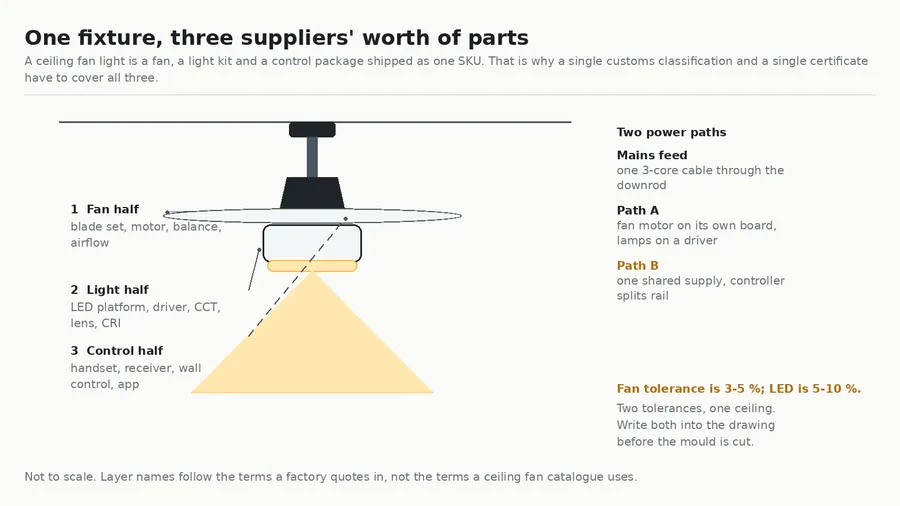
A ceiling fan light OEM/ODM programme ships as one SKU and comes apart into three products the moment something goes wrong: a fan, a light kit and a control package. Importers who plan for one appliance spend the first six months arguing about the other two.
The good news is that the planning is knowable. Six rungs of customisation, three dimensions that decide whether a sample is shippable, two customs headings, two electrical listings, and one calendar of roughly 159 days. This page walks each of them in the order they cost you money.
It is written for the importer or brand owner who will sign the drawing and then live with it for a season of returns — not for someone choosing a fan for their own living room.
If your programme is a lighting line rather than an appliance line, the OEM and ODM services overview explains the model, and the custom LED lighting OEM and ODM playbook is the parent article. This one is the variant where the fan decides the certification route and the light decides the margin.
What you are actually buying
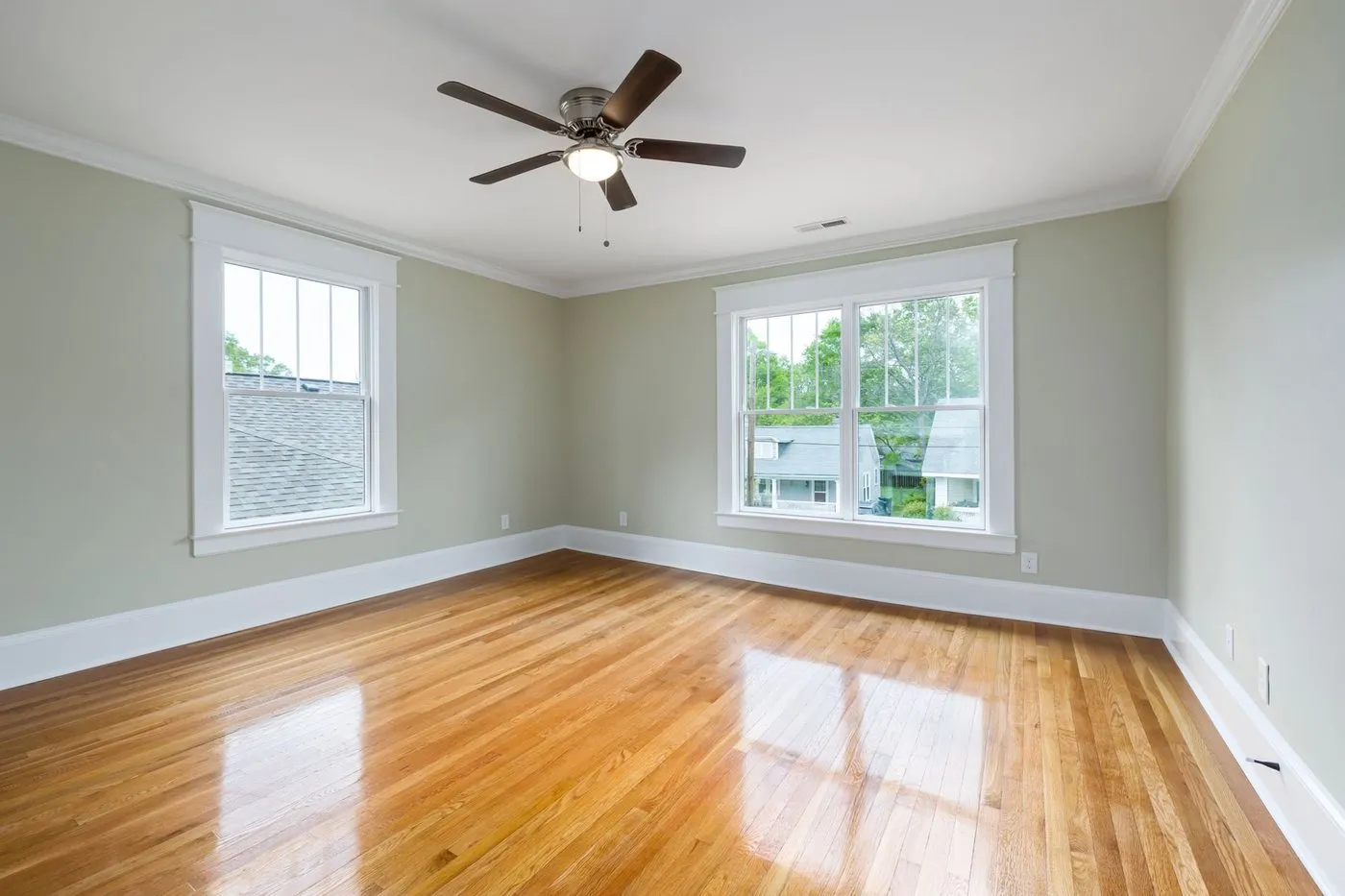
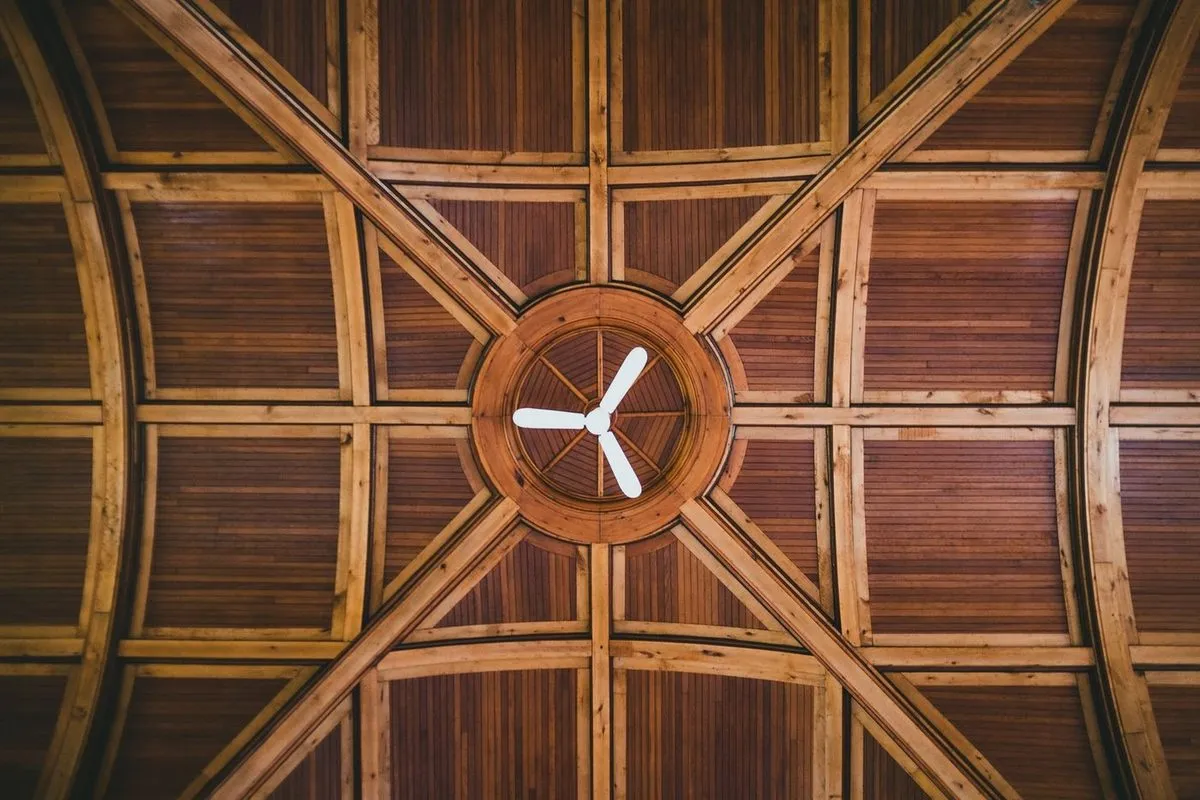
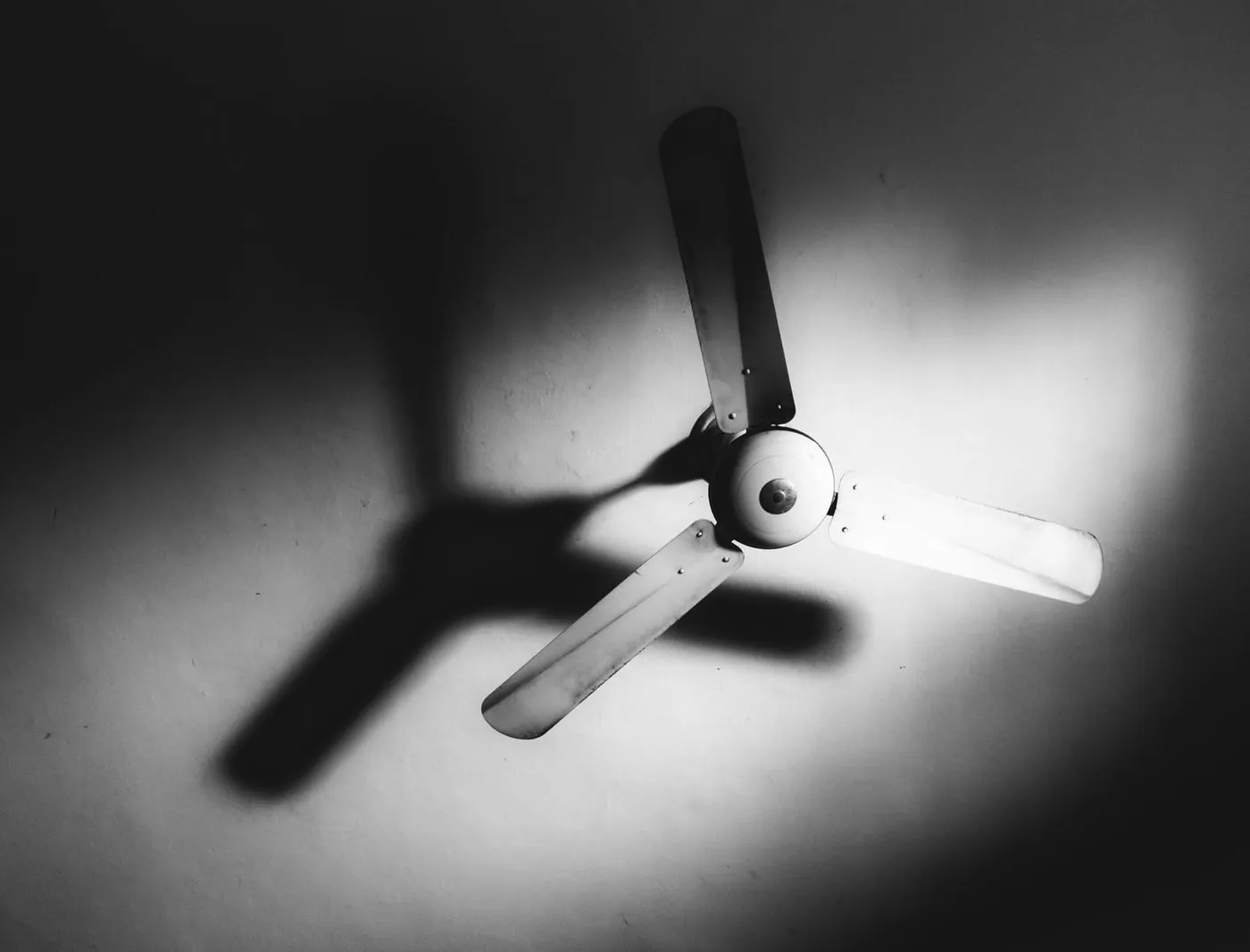
The picture at the top of this page is the whole product. Three layers, stacked:
- Fan half — blade set, motor, balance, airflow. Decided by moulds and by physics.
- Light half — LED platform, driver, CCT, lens, CRI. Decided by the LED supply chain.
- Control half — handset, receiver, wall control, app. Decided by whichever wireless module the factory standardised on.
Each layer has a different supplier base, a different tolerance and a different failure mode. A ceiling fan light fails a season in one of two ways: the fan goes out of balance (mechanical), or the light kit dims unevenly and flickers (electrical). Those are not the same problem, they are not solved by the same team, and they are not covered by the same standard.
That is why the split matters commercially. If you source the whole fixture from one factory, you are buying their weakest layer as well as their strongest.
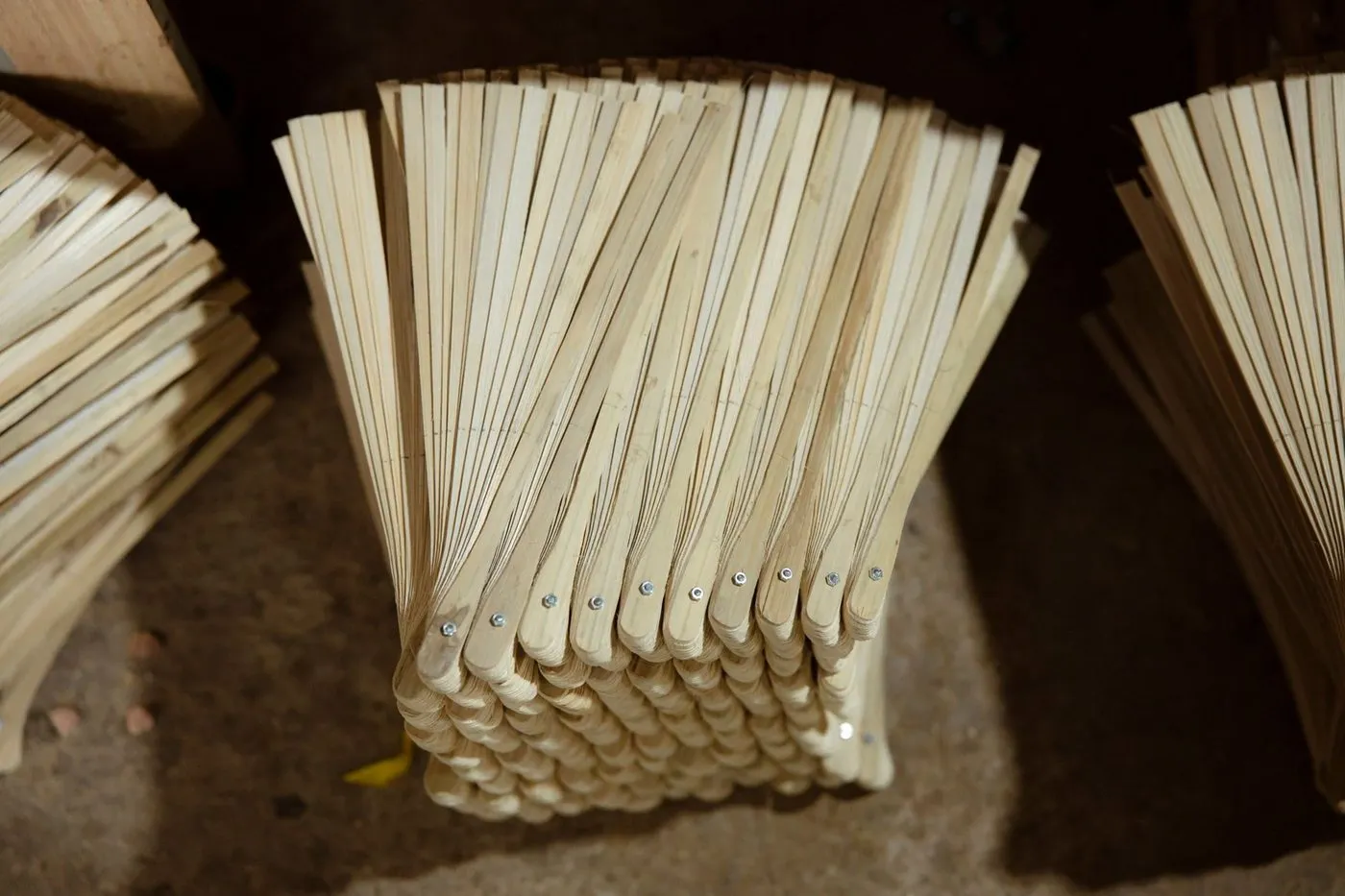
Blades are sawn, matched and then balanced as a set. A replacement blade shipped on its own is almost never the answer to a wobble complaint.
The ladder: six rungs, and only the top two change who is liable
“Can you put my logo on it” and “can you make my design” are two different businesses, priced decades apart. Importers get into trouble when a supplier’s sales deck blurs them.
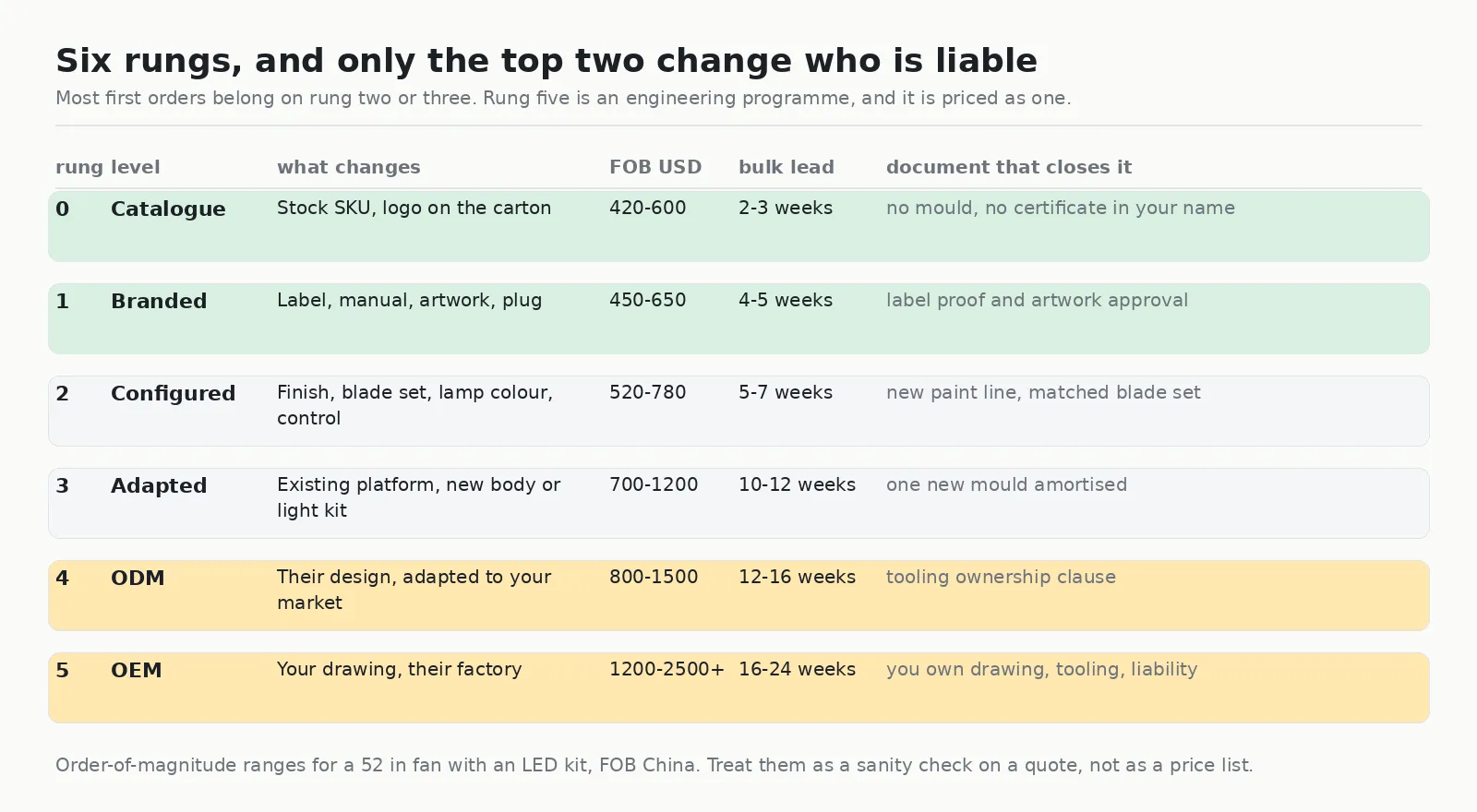
Two things to read off this table.
First, the price bands sit close together at the bottom and diverge at the top. Rung one to rung two is a paint line and a blade set; rung three is a mould; rung five is your engineering, your tooling and your product liability. If a quotation for “full OEM” lands near rung two money, the factory is quoting a label with a better vocabulary.
Second, the document column is the actual deliverable. Each rung is closed by a piece of paper — an artwork approval, a matched blade set report, a tooling ownership clause — and a programme without that paper has not bought the rung, it has bought the story. Our six-step sourcing checklist applies the same test to the supplier as a whole; this table applies it to a single order.
Most first orders belong on rung two or three. That is not a compromise, it is the cheaper way to learn what your market wants before committing to tooling.
Three dimensions decide if a sample can ship
A ceiling fan light has a physical constraint that a downlight does not: it needs room around it. Importers approve a beautiful sample and then discover the blade sweep does not fit the rooms their customer actually has.
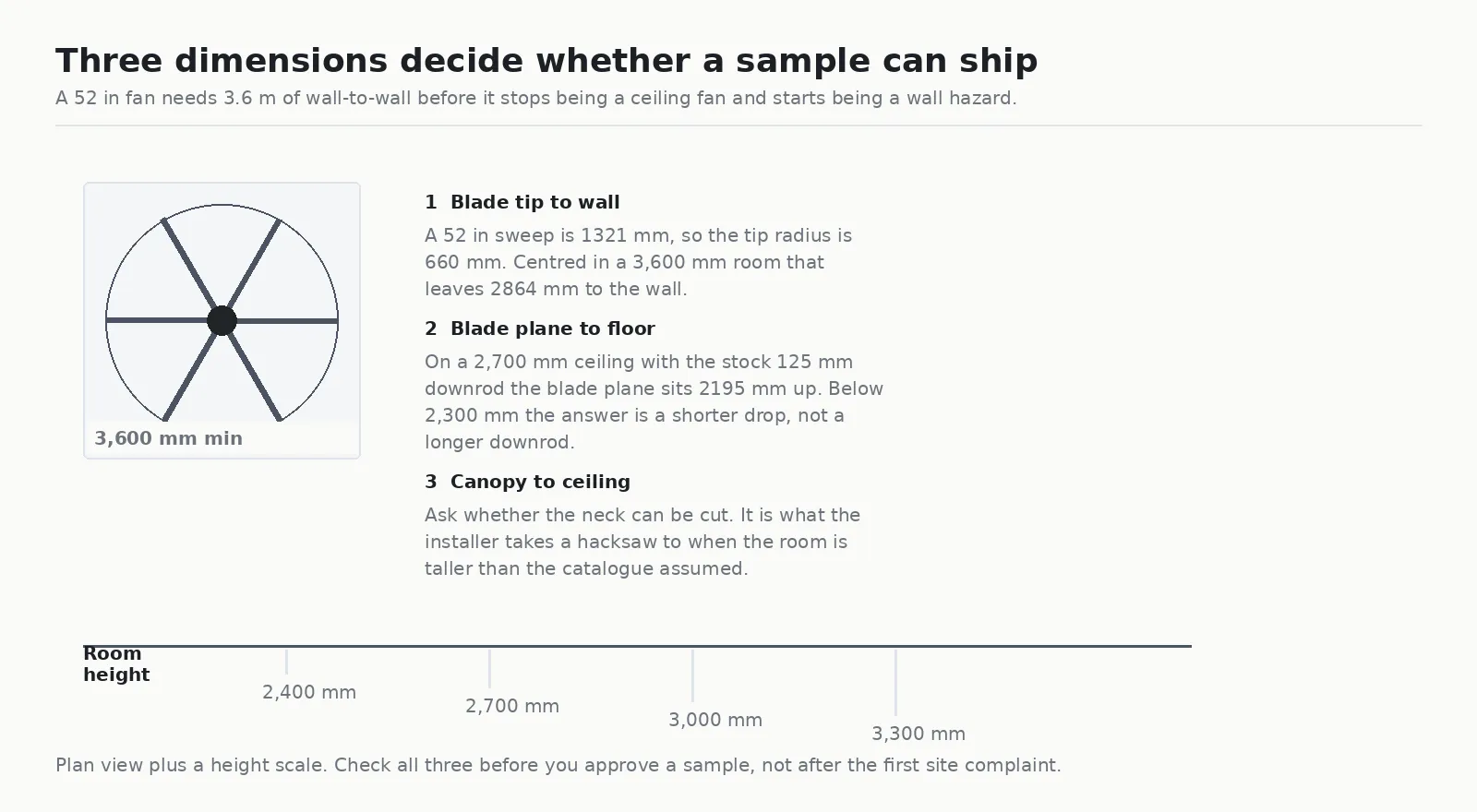
Blade tip to wall. A 52 in sweep is a 1,321 mm disc. A room 3,600 mm across leaves about 1,140 mm from tip to wall when the fan hangs in the middle — comfortable. The same fan in a 2,800 mm bedroom is a hazard and a noise source, because the blade passes close enough to the wall to pressurise the gap. Write the minimum room dimension into your listing copy, not just your specification.
Blade plane to floor. A 2,700 mm ceiling with the stock 125 mm downrod puts the blade about 2,195 mm up. Below 2,300 mm the answer is a shorter drop or a flush mount, never a longer downrod.
Canopy to ceiling. On a sloped or high ceiling the installer cuts the neck. Whether they are allowed to is a specification decision you should make once, in writing, rather than discover in a site complaint.
The LED half is where a fan light stops being a fan
This is the part of the category where a general lighting manufacturer is more useful than a fan factory, because the fan half is a mature commodity and the light half is where the specification still moves.
Four lines carry most of the value:
Colour consistency, written as a number. SDCM ≤3 within a batch, and a documented binning rule between batches. A ceiling light is the largest bright surface in a bedroom; two fixtures at 4,000 K that do not match read as a defect from the doorway, not as a tolerance. The physics behind that number is in our CCT guide.
Flicker, written as a number. Ripple below 5 % at 100 Hz and PWM above 3 kHz. Cheap fan-light receivers have no output capacitor worth the name; the camera on your customer’s phone finds it in the first video review. If the kit is destined for a room with a camera in it — a home office, a hotel desk — this is a hard requirement, not a preference.
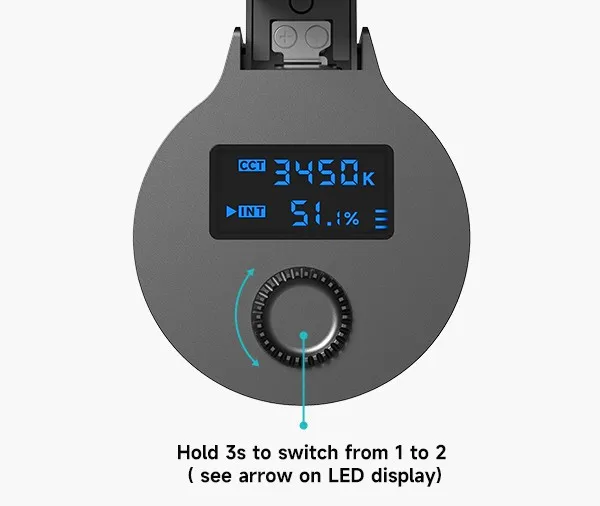
CCT range and how it is reached. A fixed 3,000 K lens and a tunable-white strip are different products at the same price point, and the tunable version needs its driver to hold colour while dimming. Our own work on adjustable white leans on a display-and-dial control rather than a three-step switch, because a two-wire wall box cannot carry a fourth state:
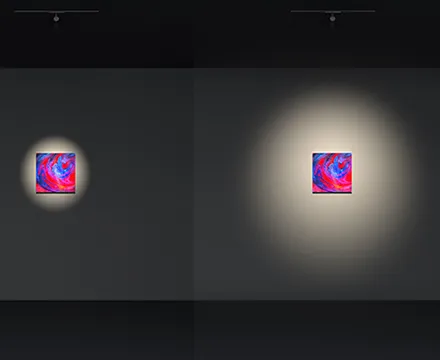
Optics. A flat diffuser over a fan light kit throws light onto the ceiling as well as the floor, which is why so many of them look washed out. A lensed kit with a controlled beam puts the light where the room needs it. Compare the beam shapes below — the same LED platform, four different optics:
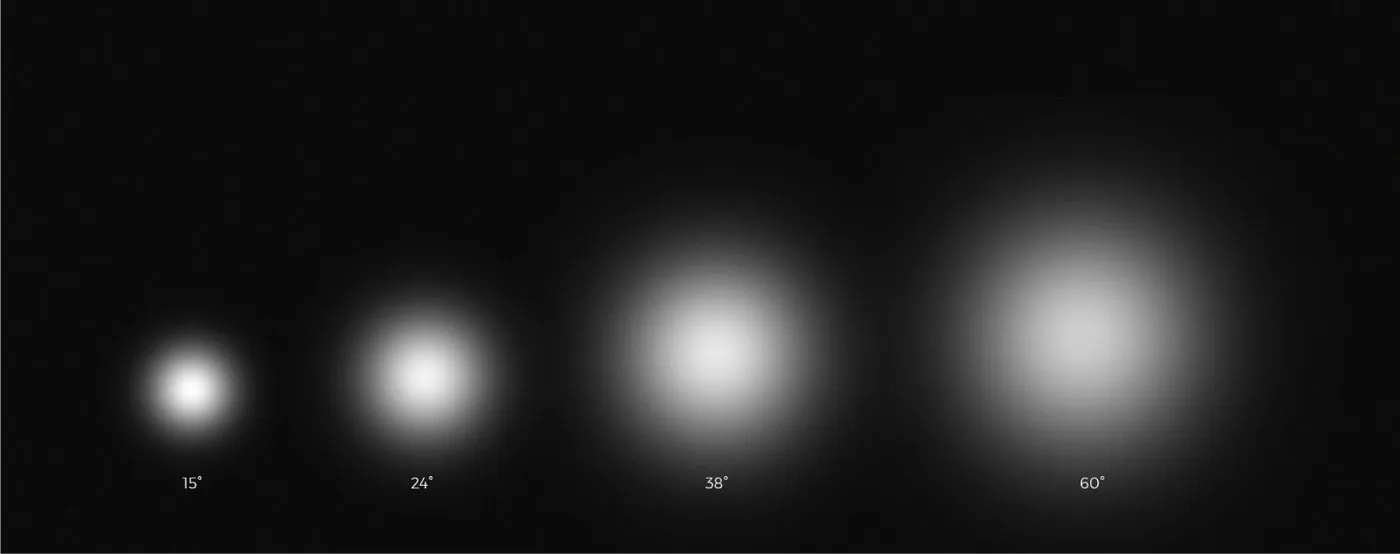
One platform, several distributions. The value is in the second lens you did not have to tool.
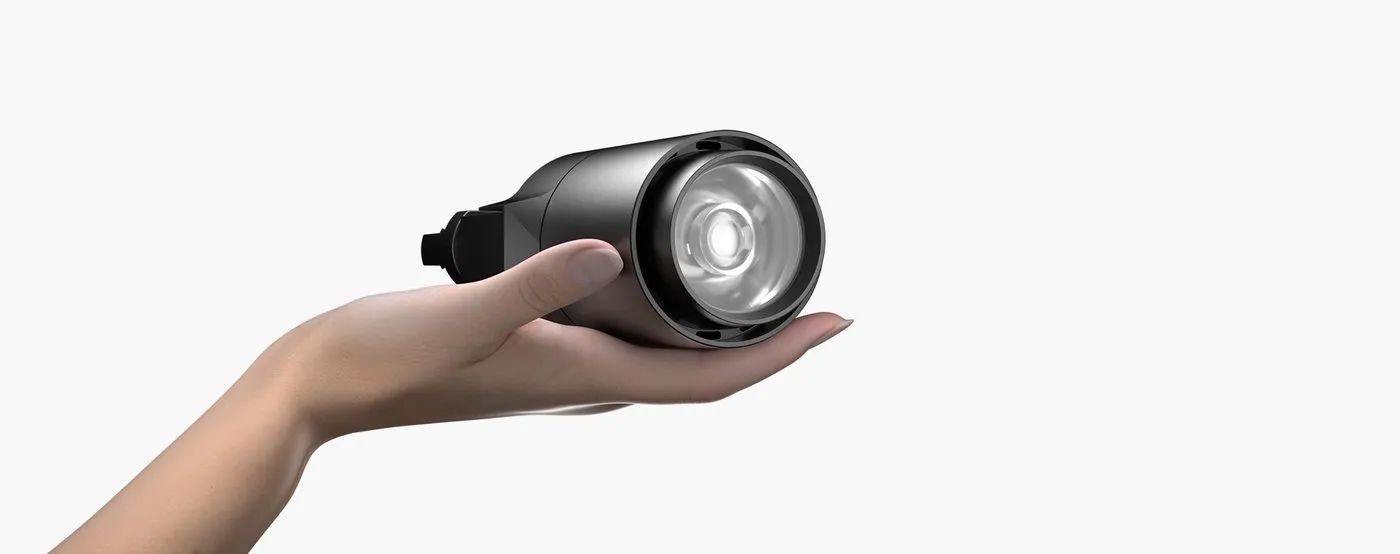
That is the argument for pairing a lighting manufacturer with a fan factory rather than buying both habits from one place: the light half is where the specification lives, and the LED downlight and track lighting lines carry the same platform logic — driver, optic, binning — that a light kit needs.
The fan half still has an efficiency curve
A catalogue quotes one airflow figure. What your customer experiences is the curve, and the curve is what makes a fan feel cheap or expensive on a normal evening.
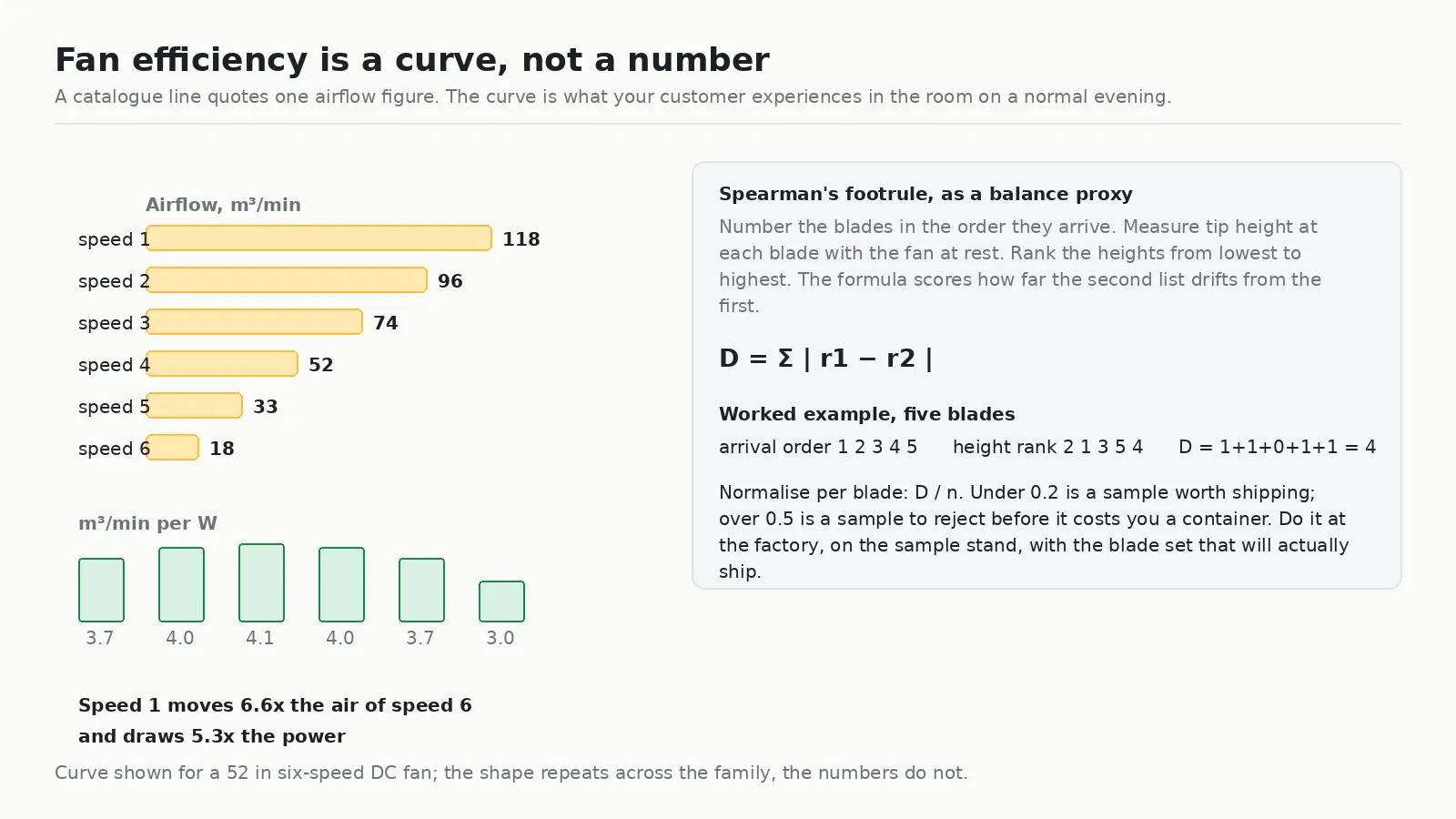
Speed one moves roughly six times the air of speed six and draws about five times the power — so the useful comparison between two fans is where the middle speeds sit, not the headline top speed. Ask for the whole curve, then ask which speed the noise figure was measured at.
The right-hand panel is the test you can run yourself, in a showroom, with a 600 mm rule: number the blades in the order they arrive, measure tip height at each blade, rank the heights, and score how far the second list drifts from the first. Under 0.2 per blade is a sample worth shipping. Over 0.5 is a sample to reject before it costs you a container.
Customs is two questions, not one
Nobody warns first-time importers about this one: the light kit is not automatically a luminaire for classification purposes.
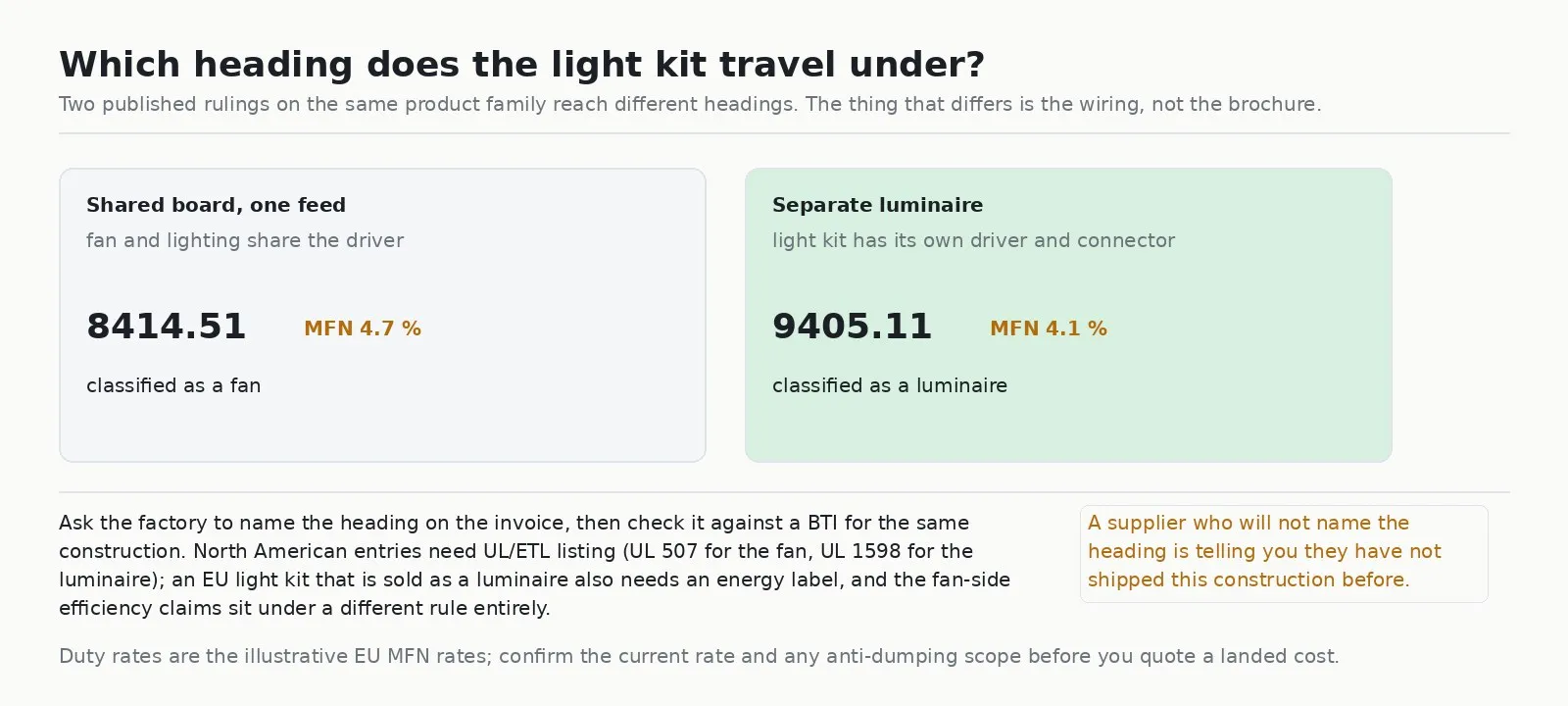
If the fan and the light share a driver board and one feed, the construction is normally classified as a fan. If the light kit is a self-contained luminaire presented with the fan, published rulings exist that give it the luminaire heading instead. The difference lands in the duty rate, in whether the light half needs an energy label, and in which part a customs broker will ask you to describe.
Two practical rules:
- Ask the factory to name the heading on the invoice, then check it against a binding ruling for the same construction. A supplier who cannot name the heading has not shipped this construction before.
- Split the packing list on purpose. If the light kit is its own carton, the fan stays a fan. If it is buried inside the fan carton, you have a single article and a single argument.
North American entries add a second split: UL 507 covers the fan, UL 1598 covers the luminaire, and a combined product needs a listing that names the combination. Our ETL certification and CE documents walkthroughs cover what each file has to contain; for a fan light, the file is thicker than either one because it carries both scopes.
The control package is where the returns come from
Almost no ceiling fan light is returned because the fan stopped. Most are returned because the remote stopped pairing, the wall switch fights the receiver, or the light and the fan end up on the same button.
Decide three things before the drawing is signed:
- One feed or two. One cable through the downrod is the norm, which means the receiver owns the switching and the wall switch must stay on. Say so on the installation sheet in the installer’s language, not the buyer’s.
- Who owns the pairing. A receiver that pairs to one handset, a receiver that pairs to many, and an app-based module are three different support burdens. The one you choose sets your after-sales script.
- Where the spare parts live. A handset is a five-dollar part and a fifty-dollar support ticket. Keep a spare per SKU in your own warehouse and price it into the landed cost.
The calendar: 159 days, and 40 of them are production
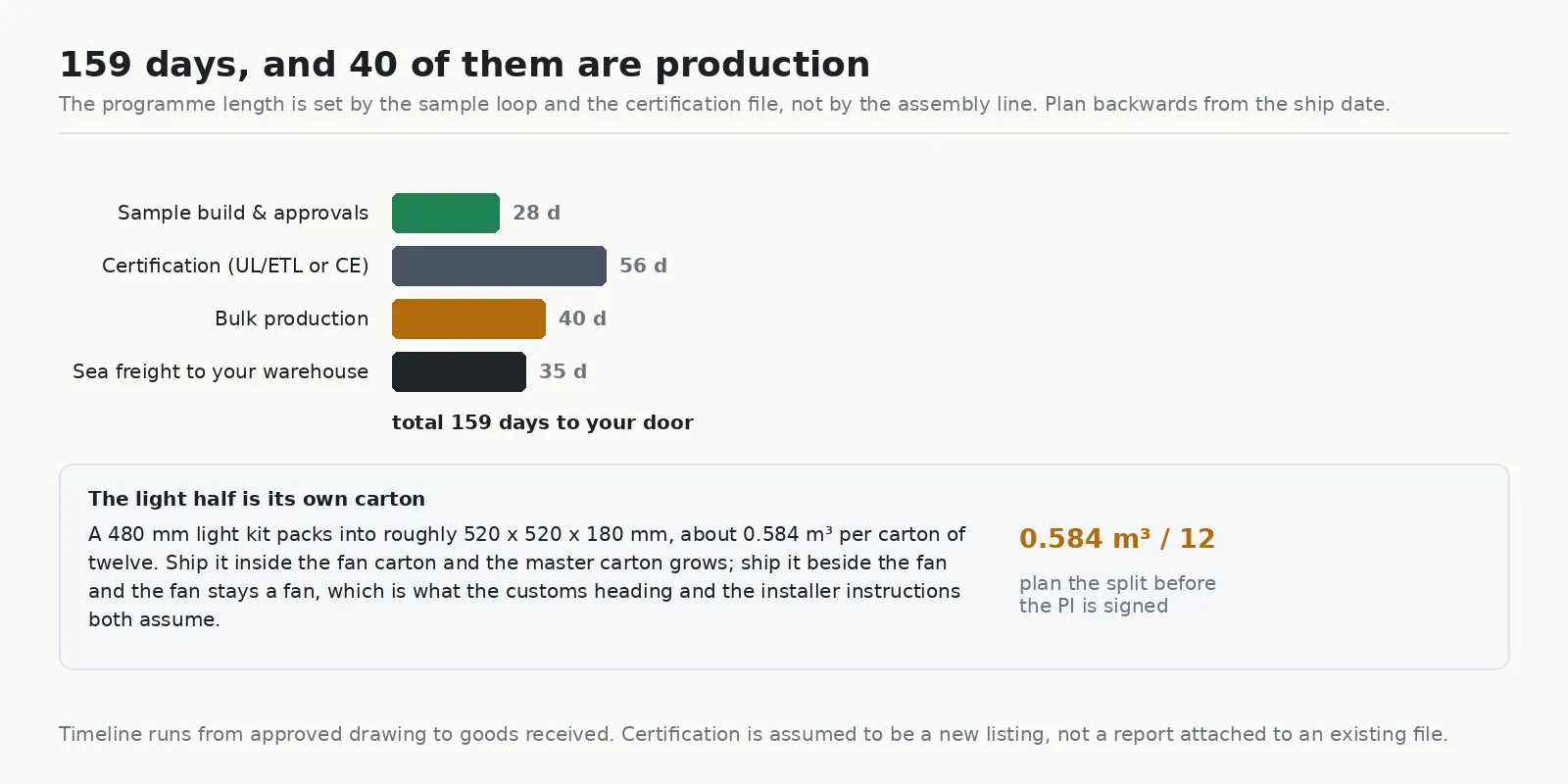
The two long stages are the ones importers plan last: the sample loop and the certification file. Bulk production is the part everyone protects and the part that is least likely to be the critical path.
Two levers actually move this calendar:
- Certification runs in parallel with tooling, not after it, provided the construction is frozen. Freeze the driver part number and the LED module before the first sample leaves, and the listing can start on the second sample.
- Sea freight is a decision, not a delay. If the programme is late, air freight on the light half alone — it is a fraction of the cube — can rescue a launch date that a full air shipment would bankrupt.
The right side of the figure is the bit that changes the picture: the light kit packs as its own carton, so a programme can use a fan factory for the mechanical half and a lighting factory for the light half without touching the fan tooling. That split is also what keeps the fan’s customs heading intact.
Where the category actually goes, and what each place demands
Ceiling fan lights are not one market. The same fixture is sold into four conversations with four different specifications.
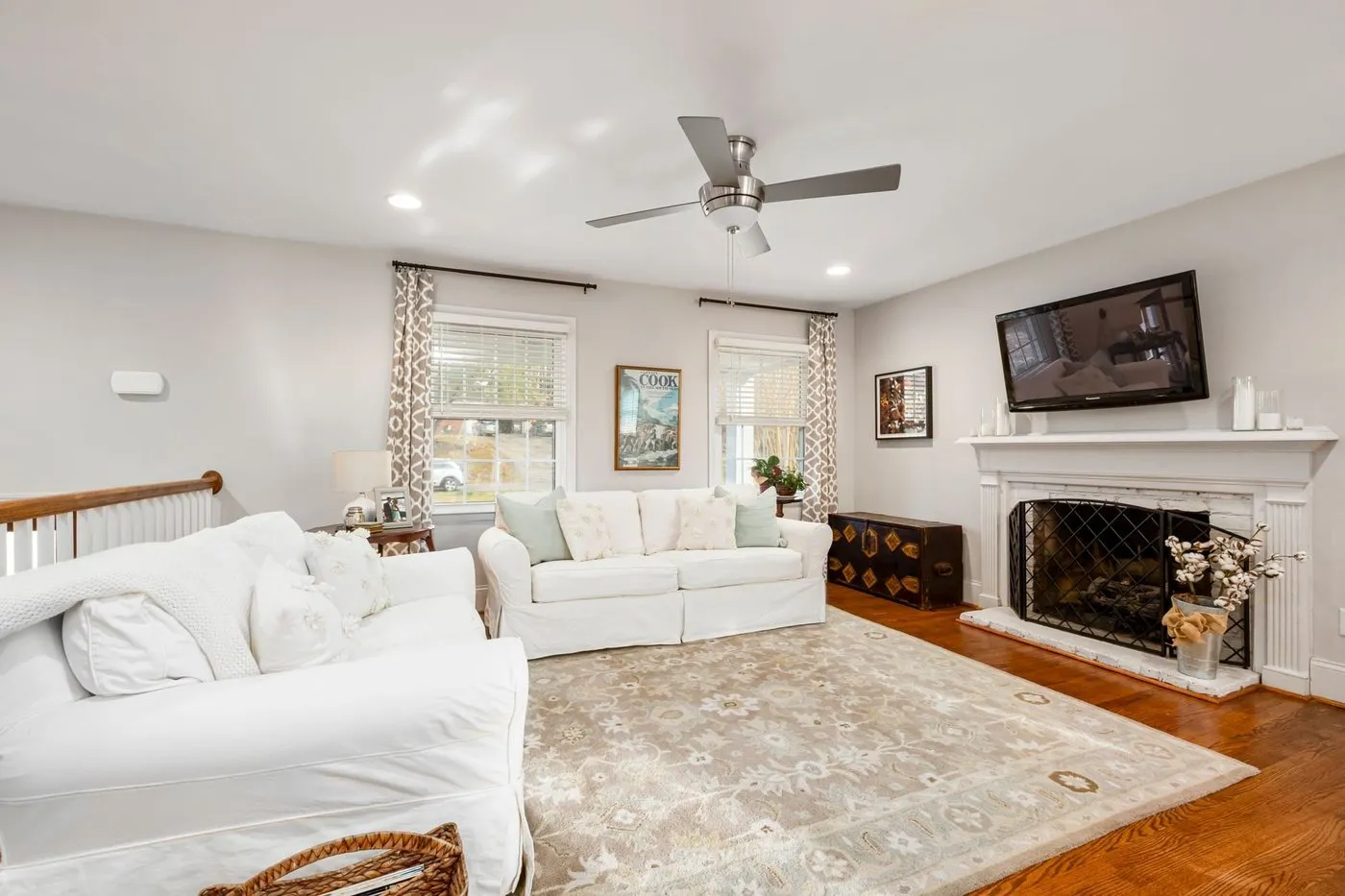
Residential bedrooms and living rooms. Colour consistency and a quiet top speed matter more than lumen output. This is where SDCM ≤3 and a good speed-five noise figure earn reviews.
Hospitality and rental. The light kit has to sit at 2,700–3,000 K, dim smoothly to low levels, and survive a guest who leaves it on for a week. This is a specification conversation, not a price conversation — the same one we go into in hotel lighting MOQ.

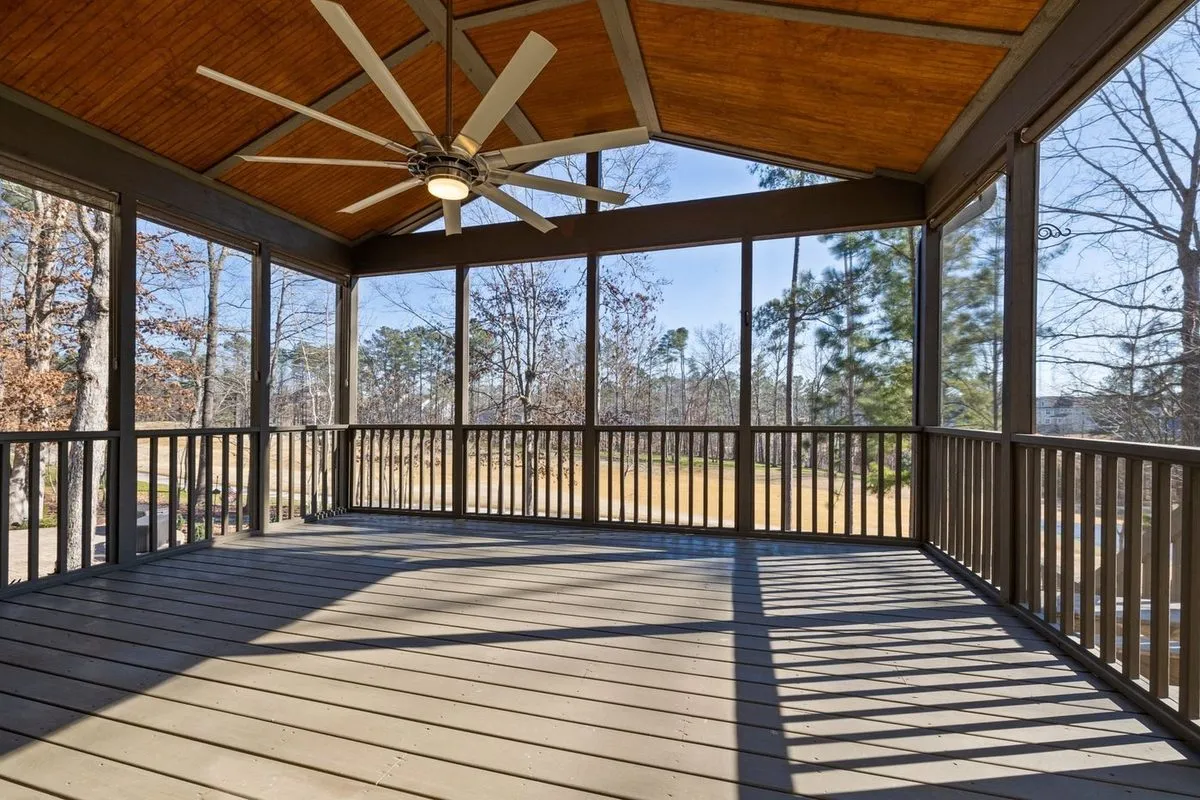
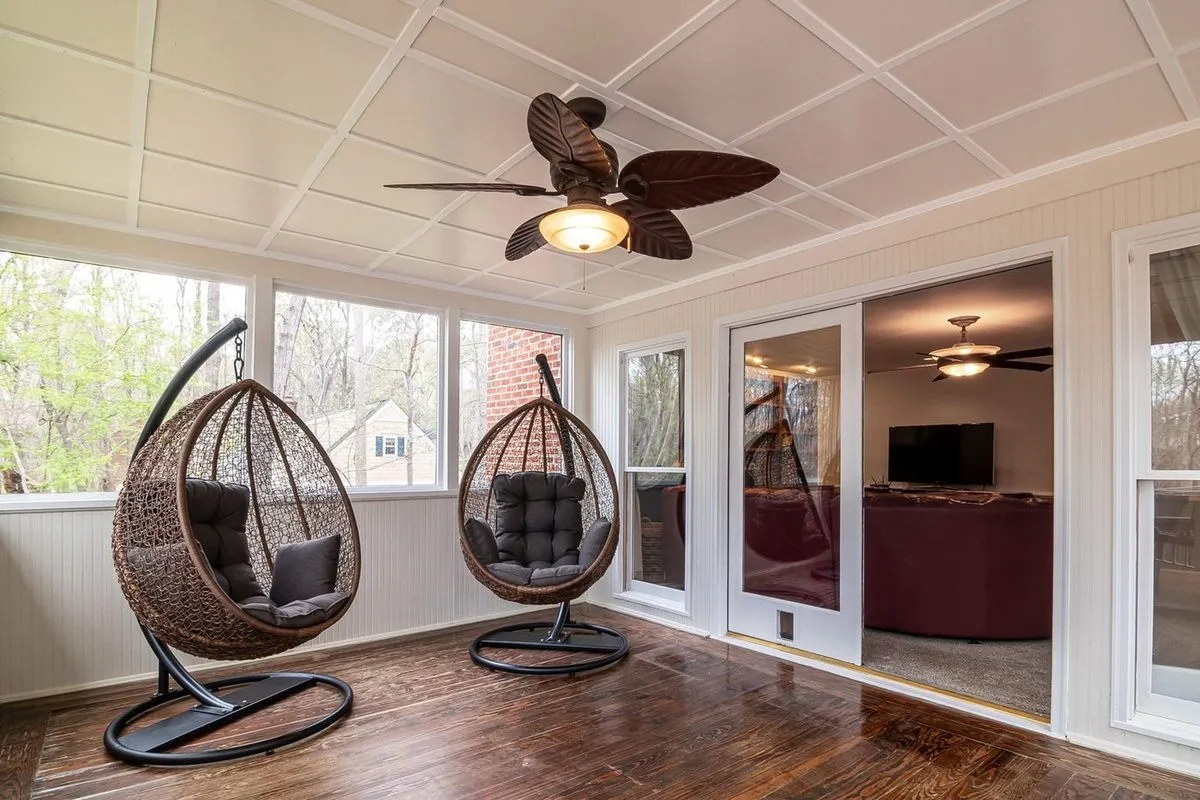
Covered terraces and sunrooms. Damp location rating, and blades that tolerate humidity without delaminating. Ask for the damp-rating test on the blade finish, not just on the motor.
Retail and display. Here the fan is nearly decorative and the light does the work, so the ratio flips: the light half must be capable of accent-quality light, and the fan becomes a comfort feature. That is a different build of the same SKU, and it is where an OEM/ODM conversation with a real lighting factory starts to pay.
Five mistakes that cost ceiling fan light importers money
- Specifying lumens but not colour consistency. The complaint is never “not bright enough”; it is “these two don’t match”.
- Approving the fan and the light as one sample. Then discovering the light kit is a different supplier with a different certificate scope.
- Not writing the neck-cut permission. The installer cuts anyway, and the warranty argument starts.
- Quoting one customs heading for a two-article shipment. The duty and the energy label decision follow the construction, not the invoice.
- Shipping the light kit inside the fan carton to save a carton. You have now built a single article and told customs so.
How ENCORE handles a ceiling fan light programme
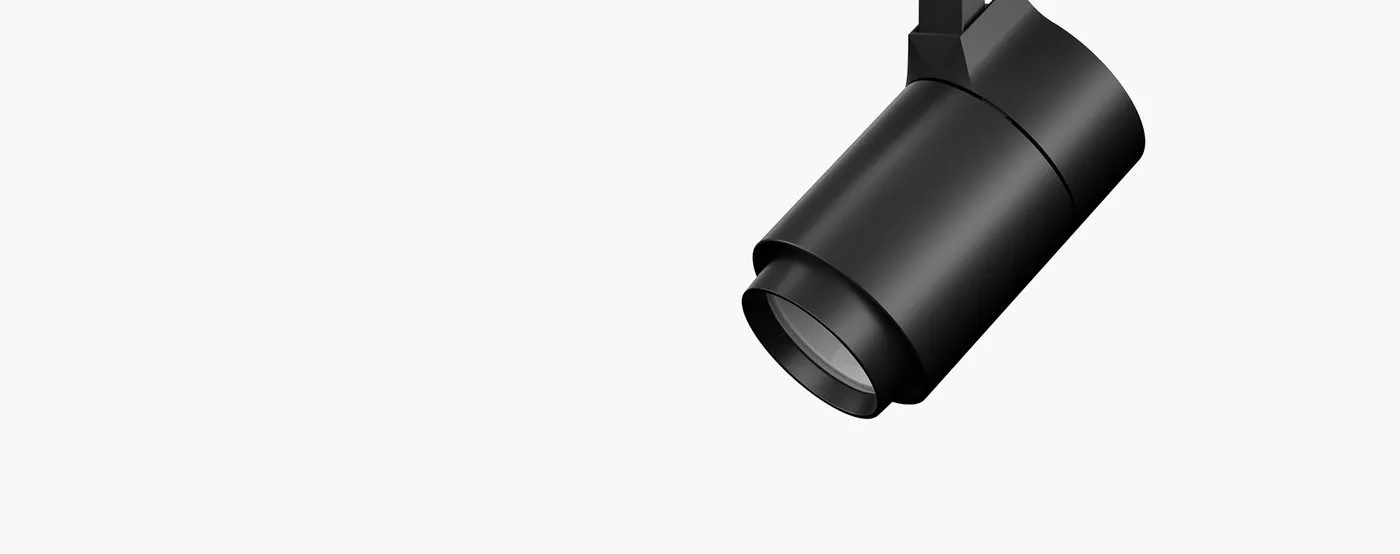
We are a lighting manufacturer, so we are precise about the half we own. PDF downlights, LED battens and track lighting all run on the same platform discipline — driver part number, binning, optics, certification file — and a light kit is that same work in a different enclosure.
What that means for a fan light programme:
- The light half as a module. LED platform, driver, CCT range, optic, CRI and flicker numbers, supplied as a kit your fan factory can install, with the certificate scope named in writing.
- A factory-side review before the drawing is frozen. Neck length, blade clearance and installation sheet in the installer’s language.
- One document per gate, the same way we close our own QC line — sample report, compliance file, packing split, artwork proof.
The OEM/ODM page covers the process end to end, and private label lighting covers the rung-one conversation if that is where you are starting.


FAQ
What is the MOQ for a private label ceiling fan light? It tracks the rung, not the product. A label, manual and carton artwork on a stock SKU starts around 300–500 units because the print plate is the constraint. A finish or blade-set change moves to 500–1,000. A new light kit housing or a new blade mould is 1,000–2,000, and a full OEM programme is whatever the tooling amortises to — usually 2,000–3,000 for a first run.
Can I buy the fan from one factory and the light kit from another? Yes, and for many importers it is the better plan. The light kit travels as its own carton, so the fan stays a fan for customs purposes, and you get your light specification from someone who builds lighting rather than someone who buys it. The thing to write down is who owns the combination listing — a UL or ETL file that names both halves is not automatic.
Which certificate do I need for a ceiling fan light? Two scopes, usually. In North America, UL 507 for the fan and UL 1598 for the luminaire; the listing has to cover the combination, not just each half. In Europe, the luminaire side sits under EN 60598 and the fan under EN 60335, which means two test reports and, for the light half, an energy label where it applies. The CE documents walkthrough lists the file contents, and the SAA/RCM guide covers the Australian entry.
Do I need an energy label for the light half? If it is sold as a luminaire, yes in the EU. If it is classified as a fan because the boards are shared, the label question moves. That is one more reason to settle the construction before the artwork.
How long does a ceiling fan light OEM programme take? About 159 days from approved drawing to goods received, on a realistic reading: 28 days of sample and approval, 56 days of certification, 40 days of production, 35 days of sea freight. Reusing an existing platform and an existing listing can take a month out; new tooling adds six to ten weeks before any of it starts.
What should the light kit specification actually say? Six lines: LED platform and lumen output, CCT range with the control method, CRI and R9, SDCM, flicker (ripple at 100 Hz and PWM frequency), and the driver part number. Everything else on the datasheet is a consequence. The custom LED driver guide shows why the driver line is the one that decides the other five.
Can the same SKU be sold in a bedroom and a covered terrace? Only if it carries a damp location rating, and only if the blade finish is tested for it. A dry-location fan on a screened terrace is a warranty claim with a delivery date.
The short version
A ceiling fan light OEM/ODM programme is not one product decision, it is six: rung, room, light, control, heading and calendar. Each one has a document, and the document is what you are actually buying.
- Decide the rung first. Label, configuration or tooling — the price, the lead time and the liability all follow from it.
- Check the room before the sample. Sweep, floor clearance and neck permission.
- The light half is a lighting specification. SDCM, flicker, optics, driver part number.
- Customs follows the construction. One shared board or two articles — name the heading in writing.
- Plan from the ship date backwards. Certification is on the critical path, production usually is not.
Send us the room sizes you are selling into, the CCT range you want and your first two order quantities. We will tell you which half of the fixture we can carry, what the light kit specification should say, and which parts of the list belong on rung two and which need a mould. Request a light kit OEM/ODM quote →
Read next: Custom LED Lighting OEM/ODM Playbook is the parent article; Custom LED Drivers for OEM Projects takes the driver line in detail; LED Batten Light OEM/ODM shows the same platform logic in a linear fixture. For the light half of a fan light, start at LED downlights and the beam angle calculator.
- led ceiling fan light oem
- ceiling fan light manufacturer
- odm ceiling fan light
- ceiling fan light supplier
- private label ceiling fan light
- ceiling fan light moq
- ceiling fan light certification
- ceiling fan light customs classification

ENCORE Lighting Team · ENCORE
LED Lighting Manufacturer & OEM/ODM Partner
The ENCORE engineering and sourcing team writes about LED track lighting, downlights, magnetic systems, certifications and OEM/ODM manufacturing for B2B buyers and specifiers.