· Custom & OEM Lighting · 7 min read

Written by ENCORE Lighting Team
LED Lighting Manufacturer & OEM/ODM Partner ·
How to Choose an LED Track Lighting Manufacturer (2026 Buyer Guide)
A practical 2026 buyer guide to choosing an LED track lighting manufacturer: factory vs trading desk, certifications (ETL/CE/SAA), MOQ, samples, QC process and pricing — so you pick a partner, not a middleman.
If you are sourcing track lighting for a retail chain, a hospitality brand, a museum fit-out, or a lighting catalogue you sell under your own name, the supplier you choose decides everything: beam quality, color consistency, certification risk, and whether your product ships on time. This guide walks you through exactly how to choose an LED track lighting manufacturer — what to check, what to ask, and what should disqualify a candidate before you spend a single dollar.
Choosing a track lighting manufacturer is not the same as buying a fixture. You are choosing a production partner whose engineering, QC, and compliance will carry your brand’s reputation. Here is the 2026 buyer guide, built on what B2B buyers actually get wrong.
1. Factory vs Trading Desk: Know Who You Are Talking To
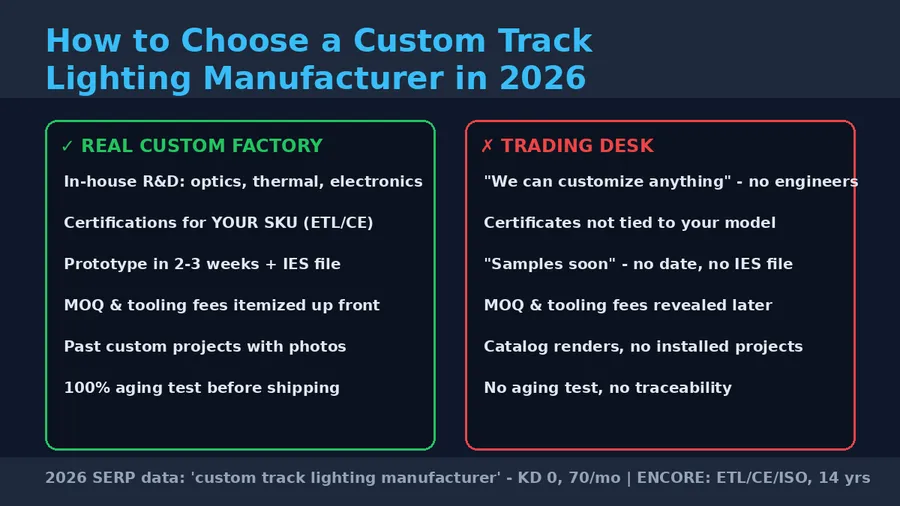
The single biggest mistake in sourcing track lighting is paying a trading desk a factory’s markup for a product you could have bought from the factory directly. Here is how to tell the difference:
- A factory owns tooling, an assembly line, an aging-test room, and engineers. They can show you an IES file for your exact prototype and a certificate naming your SKU.
- A trading desk resells another factory’s goods. They have a showroom and samples, but no line, no engineers, and no control over QC. When something fails, they have to call someone else.
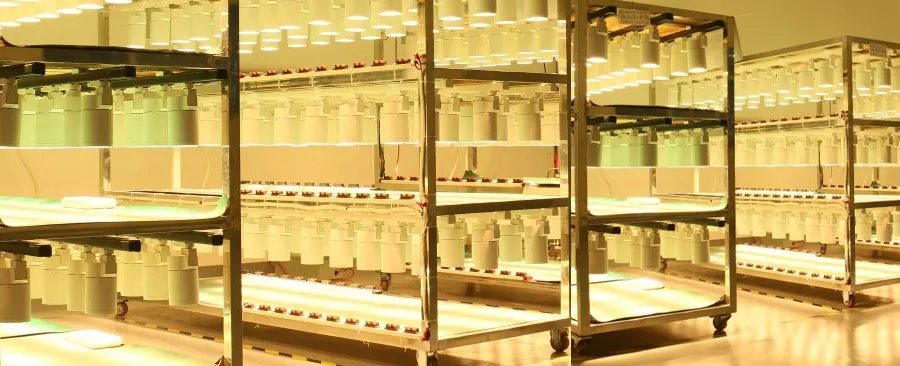
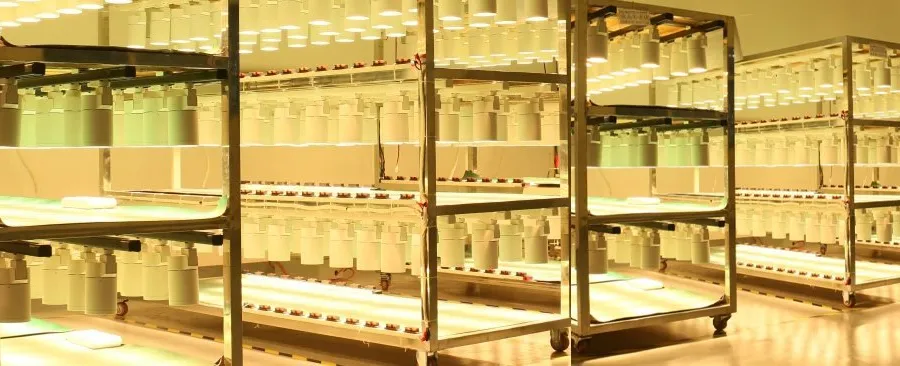
Ask for workshop photos and video — not showroom shots. A real LED track lighting manufacturer will happily walk you through their SMT line, aging-test racks, and OQC bench. Ask who manufactures the LED drivers and housings, and whether they control thermal design in-house. At ENCORE, our Shenzhen factory has done this since 2011, and we publish our factory and quality-control process openly because transparency is the point.
Red flag: a supplier that can only quote “catalog items” and cannot engineer a custom beam angle, CCT, or dimming protocol to your spec is almost certainly not a manufacturer.
2. Certification Is Non-Negotiable
Certifications are not a checkbox — they are the difference between a product that clears customs and a product that fails at the border. For track lighting, the certifications that matter depend on your market:
- ETL / UL — required for North America (USA and Canada). ETL listing means the fixture passed UL safety standards.
- CE (LVD + EMC) — required for the European Union.
- SAA — required for Australia and New Zealand.
- ISO9001 — quality-management system for the factory itself, not the product.
Ask for certificates that name your exact SKU, not a vague “we have certifications.” If the certificate lists a different model number, it does not apply to your product. A serious track lighting manufacturer will also give you a photometric IES/LDT file with your prototype so you can run it in your own lighting design software before you commit.
3. Match the Series to Your Application
Track lighting is not one product — it is a family of systems with different wattages, beam angles, and color-rendering profiles. A good manufacturer will help you match the series to the application instead of pushing one “all-rounder.” At ENCORE we build four main track lighting families, each tuned for a different job:
- VEGA — the versatile all-rounder, 6–40W, 10°–60° beam, CRI 90+. Ideal for retail stores, galleries, and general commercial lighting.
- OVEGA — premium line with advanced thermal management, 6–50W, CRI 90–95, 0-10V/DALI. Built for high-end retail and museums that need accurate color rendering.
- IMAX — high-output, 10–60W, 15°–60° beam, CRI 80–90, TRIAC/DALI. For commercial and industrial spaces that need higher illumination.
- FLEX — adjustable heads, 6–30W, 15°–90° beam, CRI 90+. For accent and display lighting in changing retail layouts.
Compare wattage, beam angle, CRI, and dimming side by side on our product comparison page, then request a track lighting quote for the series that fits. We also make LED downlights and magnetic track lights if your project mixes families.
4. MOQ, Samples, and Lead Time: Set Realistic Expectations
Three numbers trip up every first-time buyer: MOQ, sample lead time, and production lead time. Here is what to expect from a genuine manufacturer:
- Sample lead time — 7–15 days for a standard or lightly customized sample, plus courier.
- Production lead time — 25–45 days for bulk, depending on quantity and customization depth.
- MOQ — commonly 500 units per model for OEM orders, with flexible options for trial orders. True bespoke tooling may push this higher; ODM modifications may be lower.
A supplier quoting “samples in 3 days, MOQ 50, ships tomorrow” is either lying or selling from a trading stockroom, not building your product. Get itemized MOQ and tooling costs in writing before you pay any deposit. Read more about the full OEM LED lighting manufacturing process to understand how a real order flows from brief to shipment.
5. QC Process: What Happens on the Line Matters
Your brand is on the product, so the QC process is your reputation. A reliable LED track lighting manufacturer should describe a four-stage control loop:
- IQC — incoming quality control on components (LED bins, drivers, housings) per AQL.
- IPQC — in-process quality control on the assembly line.
- 100% aging test — every fixture is burned in before packing to catch early failures.
- OQC — final function and electrical testing before the carton is sealed.
Ask whether you can send a third-party inspection company, or visit in person for a material order. Full traceability — tracking codes that link a shipped unit back to its production batch — is a strong signal of a mature factory.
6. Pricing, Payment, and What Factory-Direct Actually Means
Factory-direct pricing is real, but it is not magic. You pay for engineering, tooling, certifications, and QC — and you should. What you should not pay for is a middleman’s margin on a product the factory never controlled. Ask for:
- A breakdown — tooling, per-unit cost by quantity tier, certification cost, packaging.
- Payment terms — the industry standard is 30% deposit / 70% before shipment (T/T), with L/C for large accounts.
- Warranty — a real manufacturer backs its product. ENCORE offers a comprehensive 5-year warranty on LED track lighting.
FAQ
What is the difference between a track lighting manufacturer and a trading company? A manufacturer owns the tooling, assembly line, and QC process; a trading company resells another factory’s goods with a markup. Verify by asking for workshop video, an IES file with your prototype, and certificates naming your exact SKU.
What certifications does LED track lighting need? ETL/UL for North America, CE (LVD+EMC) for Europe, SAA for Australia/New Zealand, plus ISO9001 for the factory’s quality system. Always confirm the certificate names your exact model.
What is a typical MOQ for LED track lighting? Around 500 units per model for OEM orders, with flexible trial options. Bespoke tooling may raise MOQ; ODM modifications may lower it. Get it itemized in writing before deposit.
How long does an LED track lighting order take? Samples in 7–15 days; bulk production in 25–45 days. Custom tooling and certification add time, so plan 8–14 weeks for a full first OEM cycle.
Should I buy track lights by catalog or get them customized? If you are building a brand, customization (housing color, CCT, CRI, beam, dimming, packaging) protects your margin and differentiation. See our custom LED track lighting guide for the full customization menu.
Conclusion
Choosing an LED track lighting manufacturer comes down to three things: verify they are a factory, verify their certifications name your product, and get MOQ, lead time, and QC in writing. Match the series to the application — VEGA for retail all-round, OVEGA for high-end display, IMAX for high output, FLEX for flexible accents — and you will have a product you can stand behind.
When you are ready to shortlist, send us your application, target lux, and mounting height. We will recommend the right series, beam angle, and CRI — and confirm MOQ and lead time honestly. Request a track lighting quote →
Read next: Custom Track Lighting Manufacturer 2026: B2B Buyer Guide — a deep dive into vetting a custom factory vs a trading desk.
- LED track lighting manufacturer
- track lighting factory
- OEM track lighting
- LED track light supplier
- commercial lighting manufacturer

ENCORE Lighting Team · ENCORE
LED Lighting Manufacturer & OEM/ODM Partner
The ENCORE engineering and sourcing team writes about LED track lighting, downlights, magnetic systems, certifications and OEM/ODM manufacturing for B2B buyers and specifiers.