· Certifications & Compliance · 18 min read

Written by ENCORE Lighting Team
LED Lighting Manufacturer & OEM/ODM Partner ·
SAA & RCM for Australia: The Compliance Path for LED Sellers
SAA approved lighting explained for LED sellers: what the SAA certificate really is, why it is not a government approval, how the RCM mark and the EESS database work together, which risk level your luminaire lands on, and the eight-step path that ends with the Australian importer — not the factory.
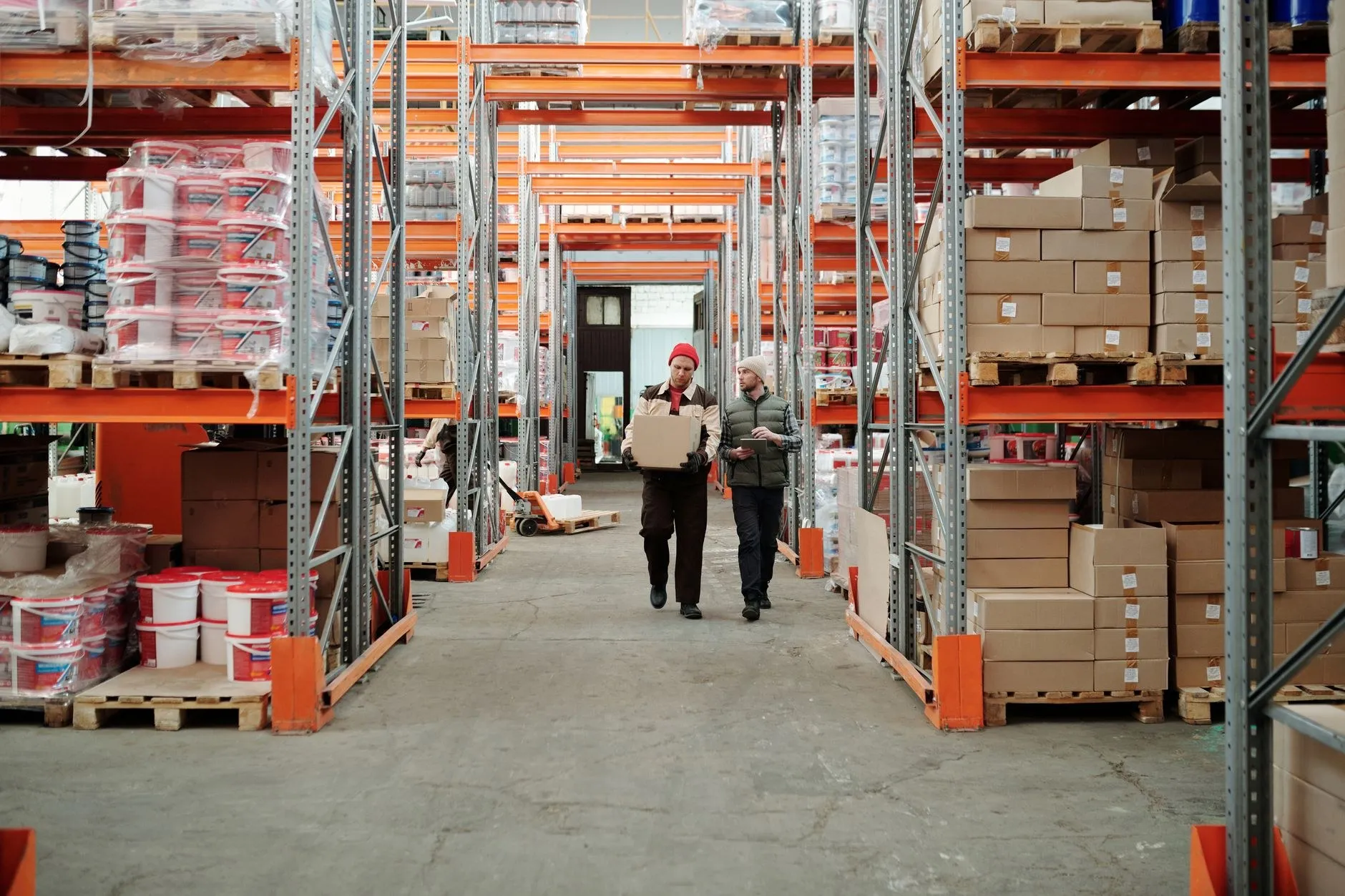
A container of LED track lights arrives in Melbourne. The cartons are clean, the driver brands are reputable, and the spec sheet says SAA approved. Then the wholesaler’s compliance officer asks one question that stops the whole order: which certificate number, and whose name is on it as the Responsible Supplier?
If nobody can answer that, the pallets sit in the warehouse.
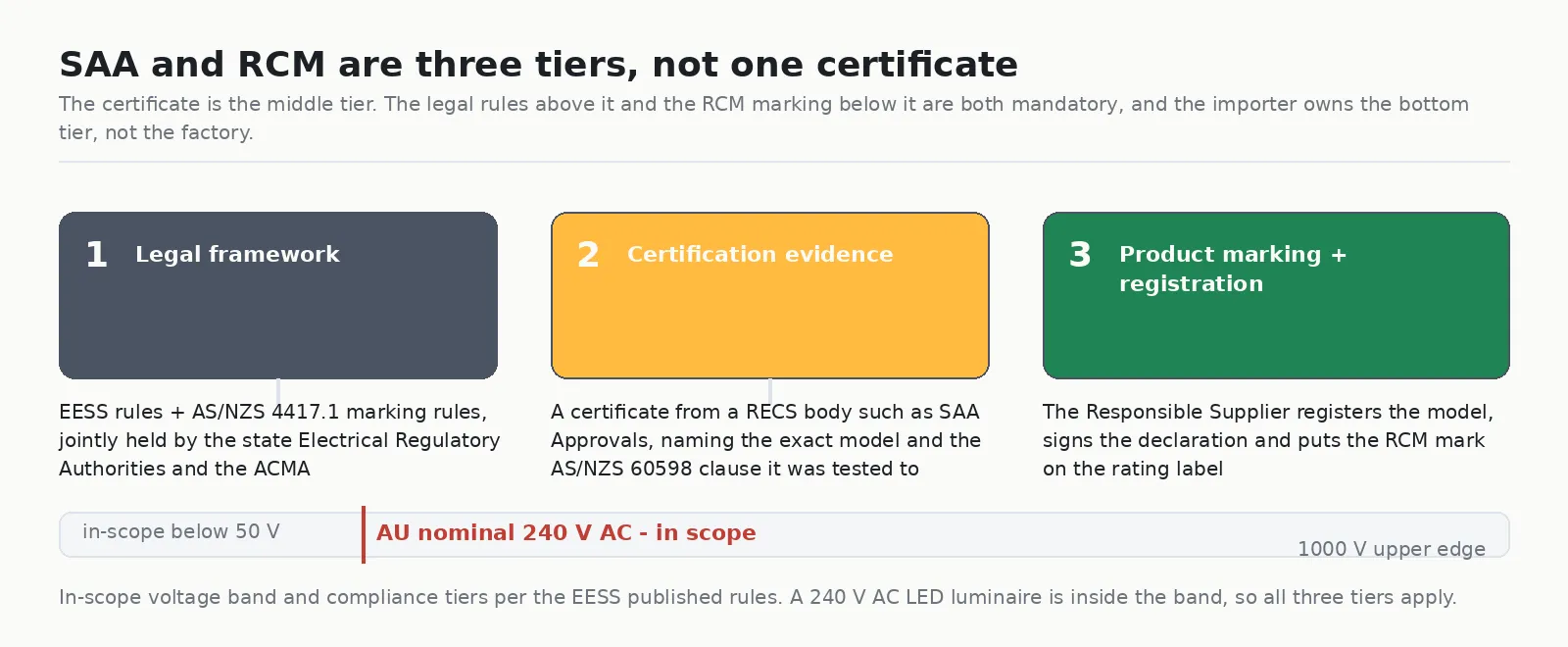
This is the reality of saa approved lighting in Australia. The phrase is thrown around in quotations, on Alibaba listings and in WeChat chats as if it were a single sticker you buy once. It is not. Australian electrical compliance is a chain of three tiers, and a certificate is only the middle one. Miss either end and the product cannot legally be sold.
This guide walks the full chain: what SAA really is, what RCM means, what the EESS database does, how the voltage band decides whether you are even in scope, which risk level your luminaire falls on, and the eight-step path that ends with an obligation the factory can never carry for you.
Three Words That Get Used as One — SAA, RCM and EESS
The single biggest source of confusion is that Australian buyers, Chinese suppliers and freight forwarders all say “SAA” when they mean three different things. Separate them once and everything downstream makes sense.
SAA is a certification body, not a government department
SAA Approvals Pty Ltd is a private company. It is one of the bodies recognised under the EESS as a Recognised External Certification Scheme (RECS) certifier. When your supplier says “we have SAA”, what they mean — when it is true — is that SAA Approvals issued a Certificate of Suitability for a specific model.
That nuance matters. SAA is not the Australian government, and an SAA certificate is not a licence. It is evidence produced by an accredited third party, and it is one type of evidence the regulators accept.
The current RECS list published by the EESS includes Certification Body Australia, EESS Conformity Certification Services, Global-Mark, UL International New Zealand, SAA Approvals, Oz Cert, SGS Australia and TÜV Rheinland Australia. In practice, SAA Approvals is the name most often quoted in the lighting trade, which is why the whole market says “SAA approved” instead of naming the scheme.
RCM is the mark, and it answers to two regulators
RCM stands for Regulatory Compliance Mark — a registered trademark jointly held by the Australian electrical regulators and the ACMA (the communications and media authority). Its use is governed by AS/NZS 4417.1 and AS/NZS 4417.2.
The clever-and-confusing part: a single RCM mark on a luminaire declares compliance with two separate frameworks at once:
- the EESS electrical safety rules, and
- the ACMA requirements for electromagnetic compatibility,
for the same product. It replaced the old separate approval and certificate numbers so the industry would stop tracking and printing several identifiers. In-scope equipment that is not marked correctly must not be sold.
EESS is the rulebook and the database
The Electrical Equipment Safety System (EESS) is not a mark and not a certificate. It is the regulatory framework that defines which equipment is in scope, what evidence each risk level requires, who counts as the Responsible Supplier, and where the registrations live.
Understanding the three tiers separately is the difference between buying a certificate and actually clearing customs and shelf.
Are You Even In Scope? The Voltage Test Comes First
Before certificates, before RCM, before anything: does the EESS apply to your fixture at all? The test is a voltage band plus an intended-use test.
Per the EESS rules, equipment is in scope when its supply falls in this window:
- above 50 V AC RMS, or above 120 V ripple-free DC, and
- below 1000 V AC RMS, or below 1500 V DC,
and it is designed or marketed for household, personal or similar use.
That last clause is the one overseas sellers miss. A track light sold to a café is still in scope — the rules explicitly say it does not matter whether the equipment is also used commercially or industrially. And if a regulator asserts that something is in scope, it is treated as in scope unless the supplier proves otherwise. The burden of proof sits with the supplier, not the regulator.
Australia’s nominal mains supply is 240 V AC at 50 Hz. Every mains-powered LED track light, downlight or linear fixture ENCORE ships to Australia sits squarely inside the band, so the whole compliance chain applies.
Who Is the Responsible Supplier — And Why It Is Never the Factory
This is the sentence that ends most arguments about who “does the compliance”:
The Responsible Supplier is the person or company that manufactures the in-scope equipment in Australia or New Zealand, or that first imports it into Australia or New Zealand.
Read it again with your own name in it. If you are the Australian brand or importer bringing the container in, you are the Responsible Supplier. Not the Shenzhen factory. Not the agent. Not the freight forwarder. You.
The Responsible Supplier must be a legal entity under Australian or New Zealand law and must hold an ABN (or a New Zealand IRD number). That single requirement removes any possibility of a Chinese manufacturer carrying the duty on your behalf, because it cannot hold an ABN.
The obligations that come with the role are three:
- Register in the EESS database as the Responsible Supplier for that model.
- Sign the Responsible Supplier Declaration.
- Mark the equipment with the RCM according to AS/NZS 4417.1.
A factory can hand you a perfect certificate and still leave you fully exposed, because none of those three acts are the factory’s to perform.
The Three Risk Levels and the Evidence Each One Forces
Not every product needs the same paperwork. The EESS sorts in-scope equipment into three risk levels, and the level decides what evidence you must hold.
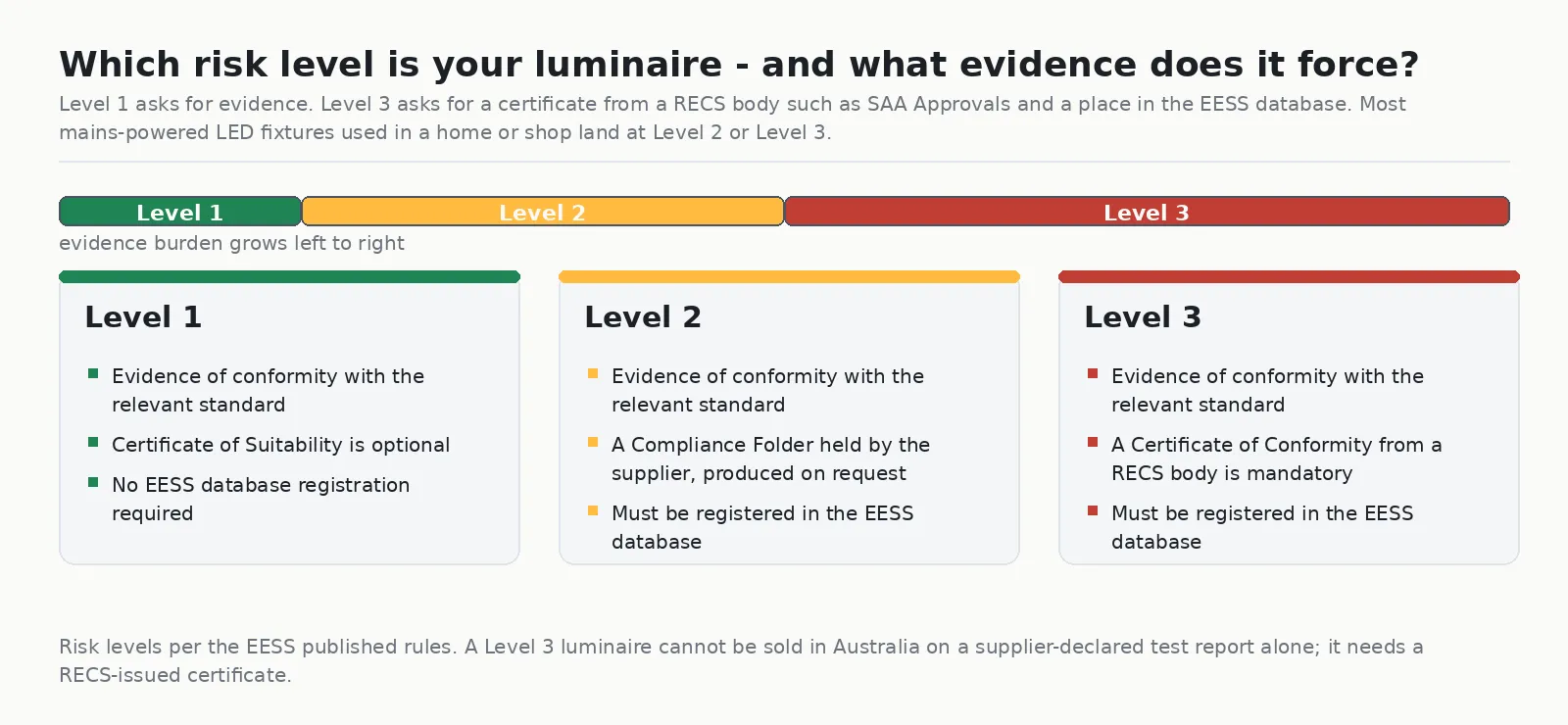
Level 1 — evidence of conformity
The supplier holds evidence that the product conforms to the relevant standard. A Certificate of Suitability is optional here, and no EESS database registration is required.
Level 2 — evidence plus a Compliance Folder
Still evidence-based, but the supplier must also maintain a Compliance Folder that can be produced on request, and the model must be registered in the EESS database.
Level 3 — a mandatory Certificate of Conformity
The heaviest level. On top of the evidence, a Certificate of Conformity issued by a RECS body is mandatory, and the model must be registered in the EESS database. This is the level where “we tested it ourselves” stops being an answer.
Mains-powered LED luminaires sold into homes, cafés, retail and offices routinely land at Level 2 or Level 3. If your supplier cannot tell you which level your fixture is classified under, that is your first warning sign.
What standard does the certificate actually reference?
Certification against the EESS points back to an AS or AS/NZS standard. At Level 1 the relevant standard plus AS/NZS 3820 applies (and where no specific standard exists, the IEC standard plus AS/NZS 3820, or AS/NZS 3820 alone). At Levels 2 and 3 the standard is either one listed in AS/NZS 4417.2 or one the electrical safety regulator accepts.
For LED luminaires, that standard is almost always the AS/NZS 60598 family — the same 60598 series you may already know from the European EN 60598 tests, but the Australian edition and clause numbering is what a RECS certifier will check against.
The Eight-Step Compliance Path
Here is the full route from a spec sheet to a shelf in Australia. The critical detail is where the handover sits: the certificate lands at step six, but the legal duty keeps running past it.
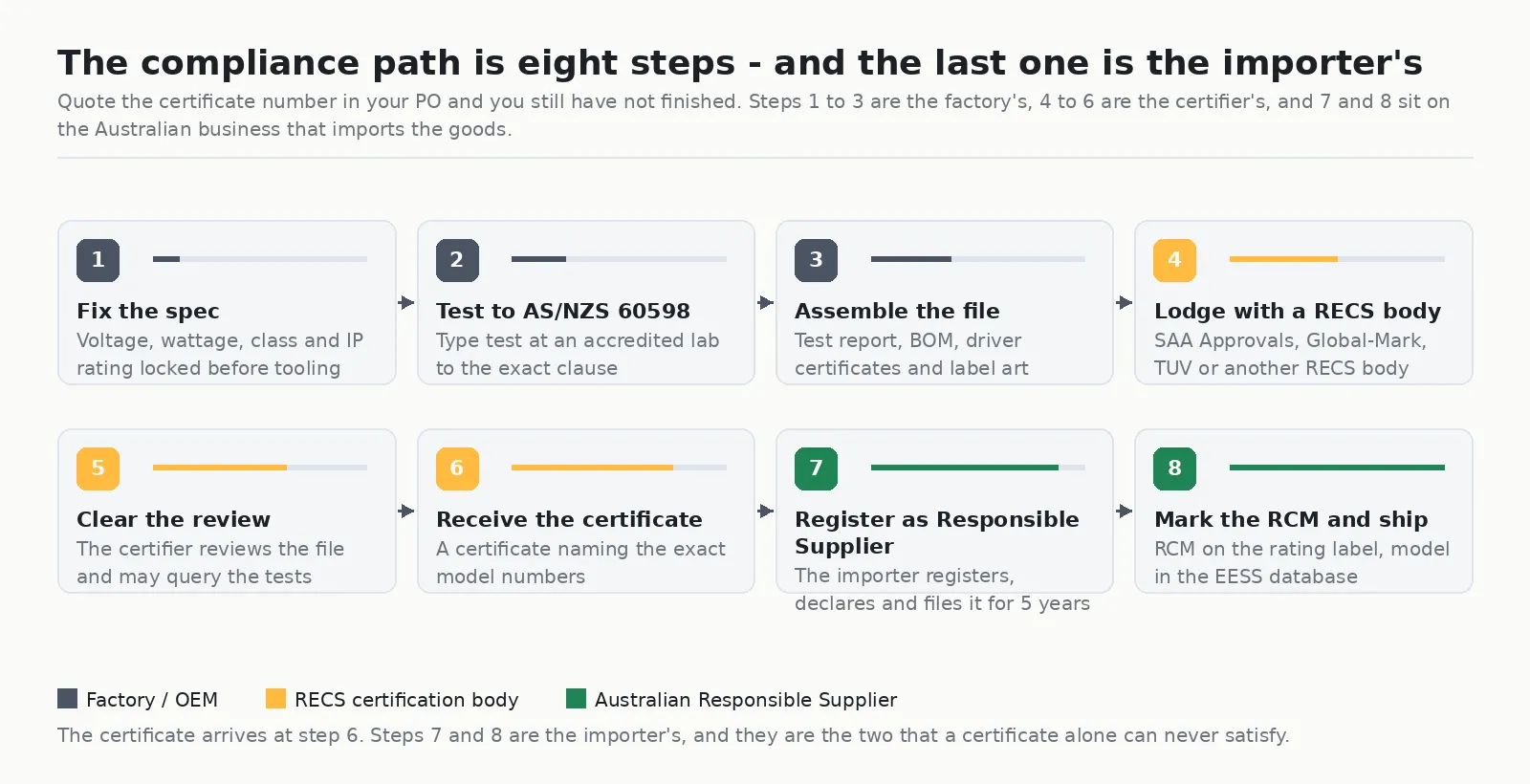
- Fix the spec. Voltage, wattage, insulation class and IP rating are locked on paper before tooling. Changing the driver later invalidates everything you paid for.
- Test to AS/NZS 60598. Type testing at an accredited laboratory against the exact clause for the fixture family.
- Assemble the file. Test report, BOM, driver certificates, label artwork and product photos in one folder.
- Lodge with a RECS body. SAA Approvals, Global-Mark, TÜV Rheinland Australia, SGS Australia or another JASANZ-accredited certifier.
- Clear the review. The certifier reviews the file, may witness or re-check tests, and may request design changes.
- Receive the certificate. A Certificate of Conformity or Suitability that names the exact model numbers.
- Register as Responsible Supplier. The Australian importer registers in the EESS database, signs the declaration and keeps the file for the required retention period.
- Mark the RCM and ship. RCM on the rating label, model live in the database, then release the order.
Steps 1 to 3 belong to the factory. Steps 4 to 6 belong to the certifier. Steps 7 and 8 belong to the Australian business — and no certificate can ever complete them for you.
For a deeper look at how the products themselves are specified and tested before certification, see our guide to LED track lighting and the quality control process behind every order.
Six Mistakes That Cost Australian Sellers Real Money
These are the failure modes we see most often when a buyer asks us to rescue a stalled Australian order.
1. Treating “SAA approved” as a government stamp
SAA is a private RECS certifier. If a spec sheet implies government approval, that is marketing language, not compliance evidence.
2. Accepting a series certificate for a specific SKU
A certificate naming a family is a starting point, not proof. The document must be traceable to the exact model number you are shipping, with the ratings printed on the label matching the certificate.
3. Assuming the factory is the Responsible Supplier
It cannot be — it has no ABN. The moment you import, the duty transfers to you.
4. Forgetting that RCM also covers EMC
RCM declares both EESS electrical safety and ACMA electromagnetic compatibility. A certificate that only addresses safety leaves the second half of the mark unproven.
5. Changing the driver or the LED board after certification
A new driver changes the electrical characteristics and can invalidate a Level 3 Certificate of Conformity. Re-qualify before you ship, not after a recall.
6. Missing the database registration
At Levels 2 and 3, a certificate with no EESS registration is an incomplete file. The regulators check the database, not your Dropbox.
How ENCORE Handles Australian Compliance
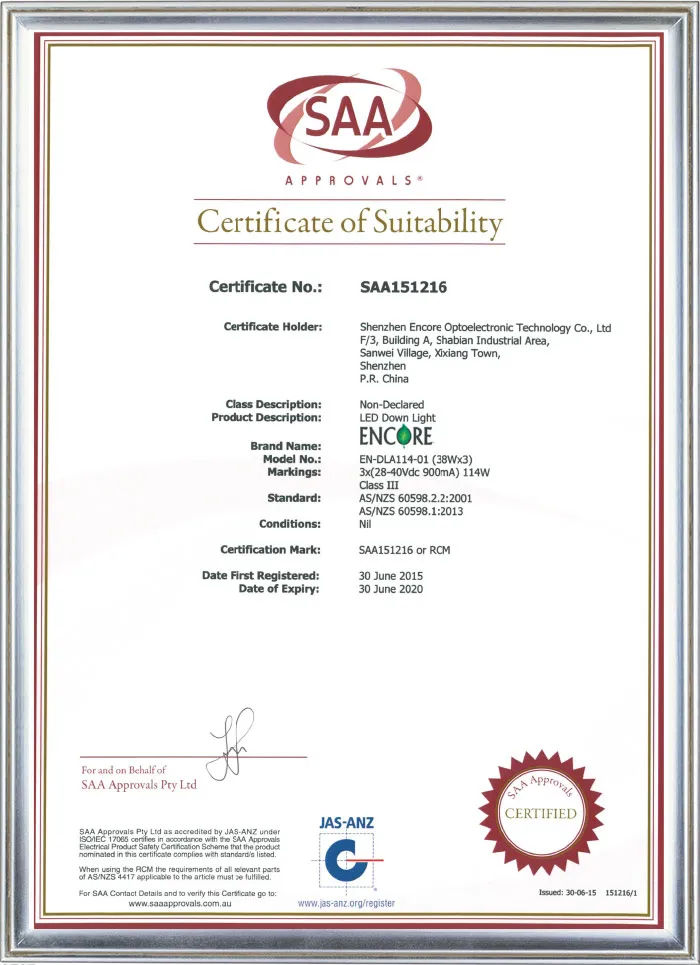
ENCORE has carried SAA approvals for the Australian and New Zealand markets for years, and we hold the certificates to prove it. Five series are certified:
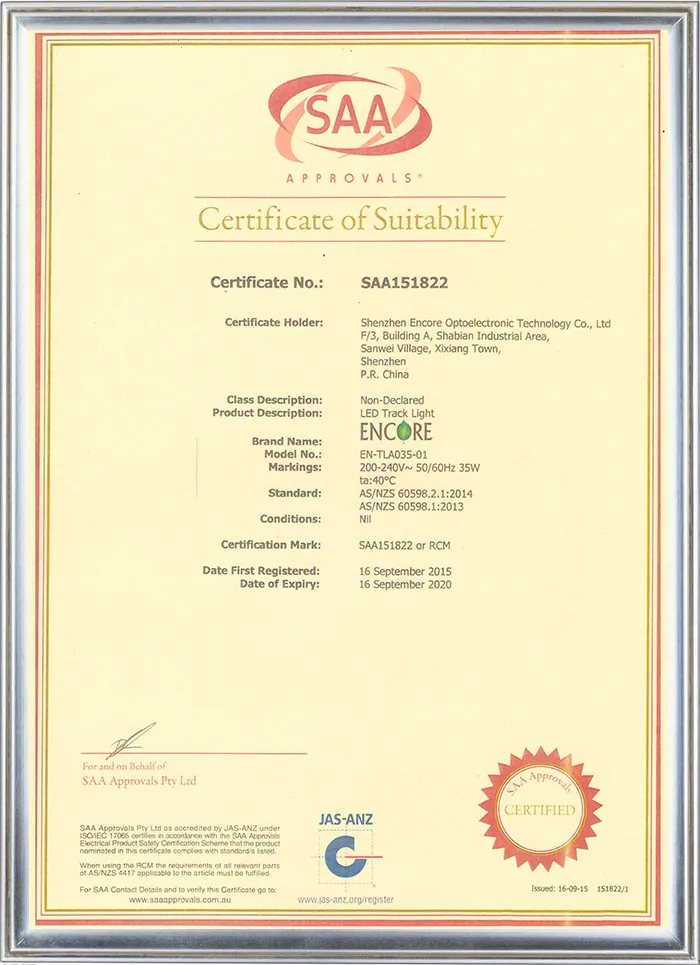
- AIMER — LED track light, certificate SAA151822, model EN-TLA035-01, 200–240 V~ 50/60 Hz 35 W, tested to AS/NZS 60598.2.1:2014.
- AXIS — LED down light, certificate SAA151216, model EN-DLA114-01, Class III, tested to AS/NZS 60598.2.2.
- FLEX — LED track light, certificate SAA180775, model EN-TLF025-11, 220–240 V~ 50/60 Hz 25 W, tested to AS/NZS 60598.2.1:2014.
- IMAX — LED track light, certificate SAA191064, model EN-TLI-30W, 220–240 Vac 50/60 Hz 30 W, tested to AS/NZS 60598.2.1:2014.
- OVEGA — LED track light, certificate SAA180776, model EN-TLO030-11, 220–240 V~ 50/60 Hz 30 W, tested to AS/NZS 60598.2.1:2014.
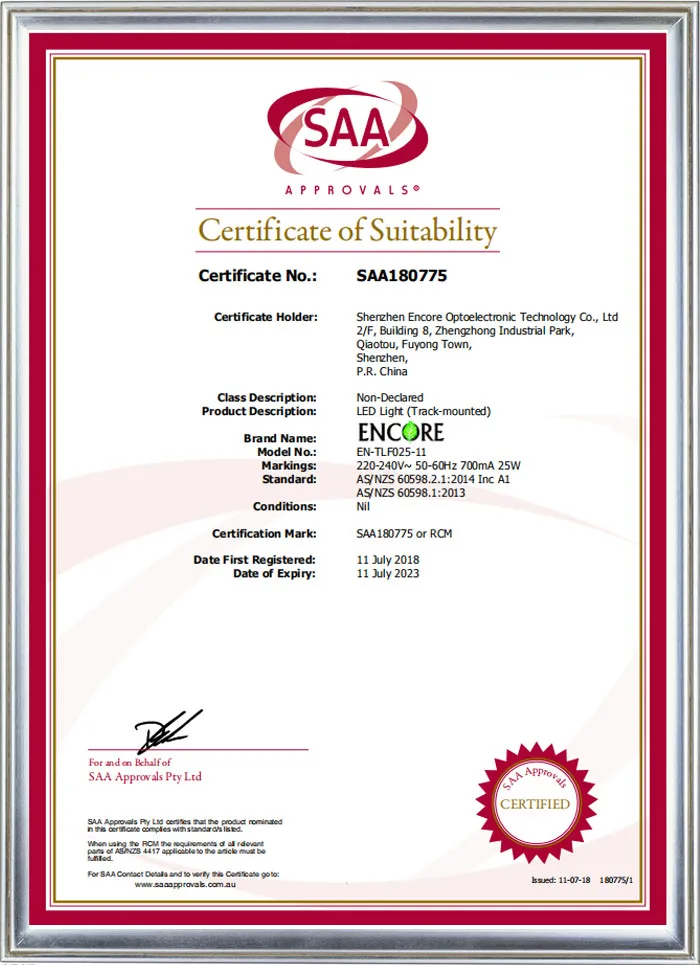
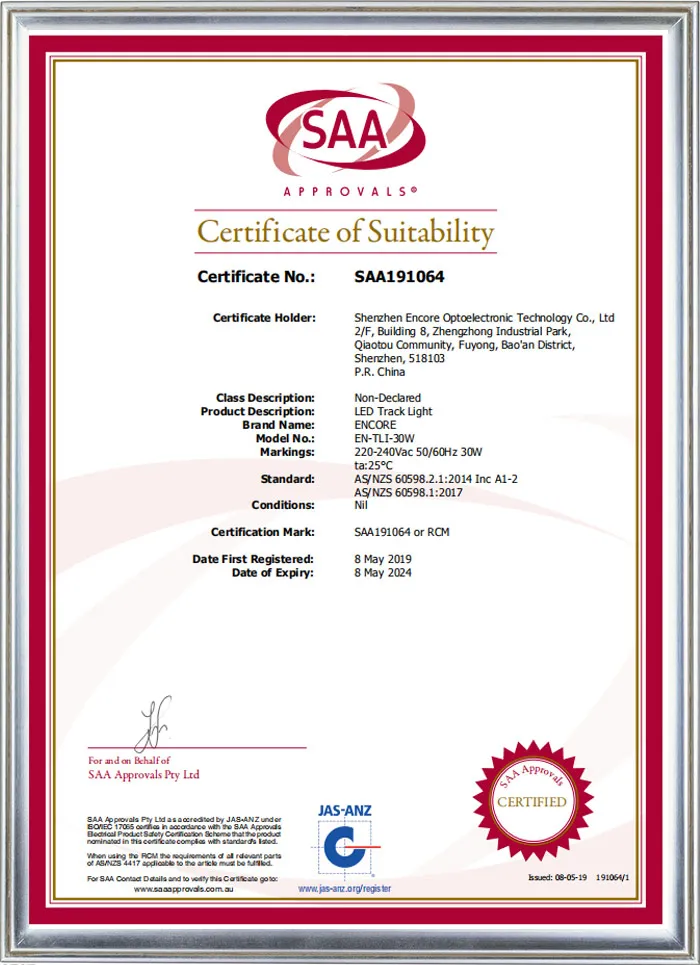
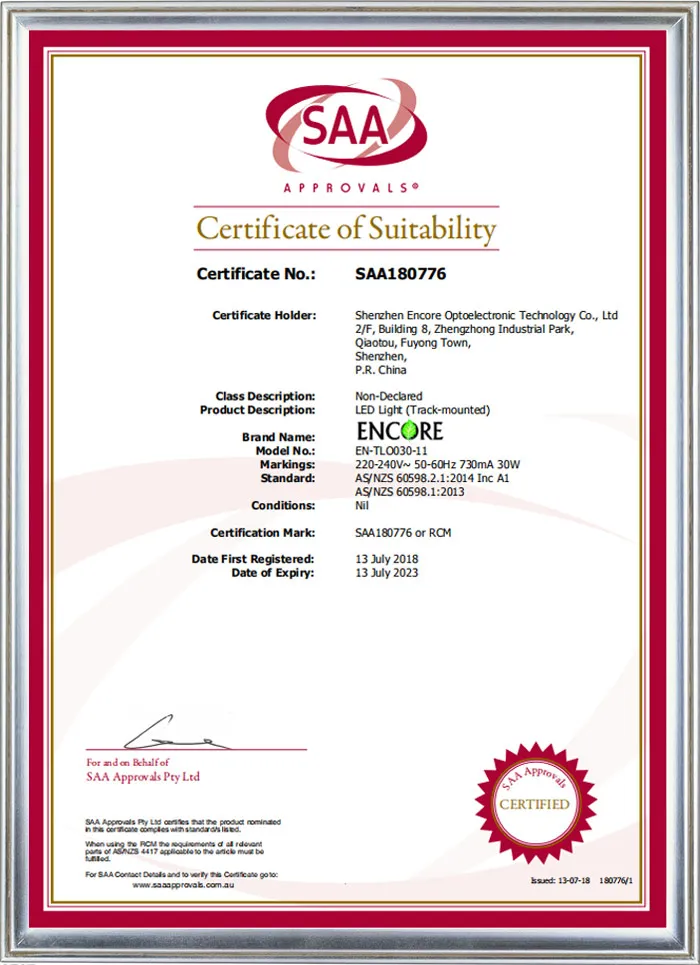
We publish the certificate files themselves rather than a logo wall, so any Australian buyer can cross-check the certificate number, the model and the standard clause before placing a PO. You can see the full set on our certifications page.
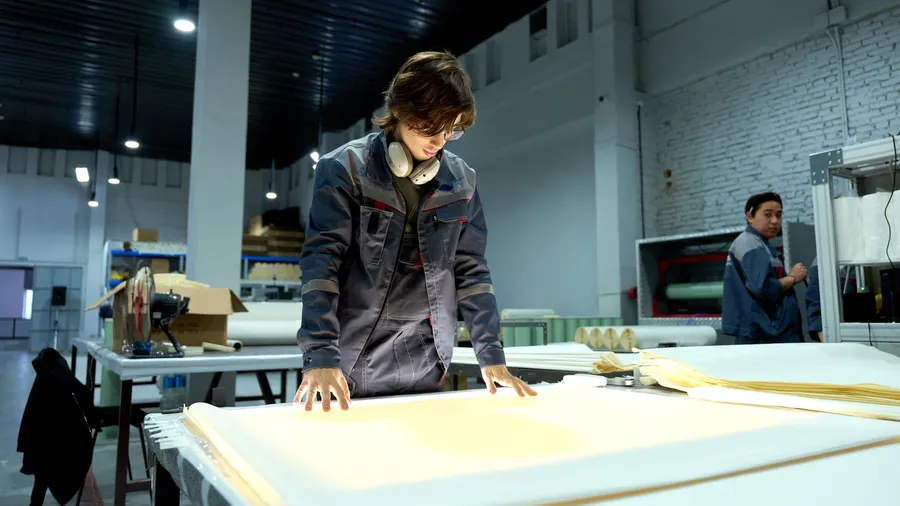
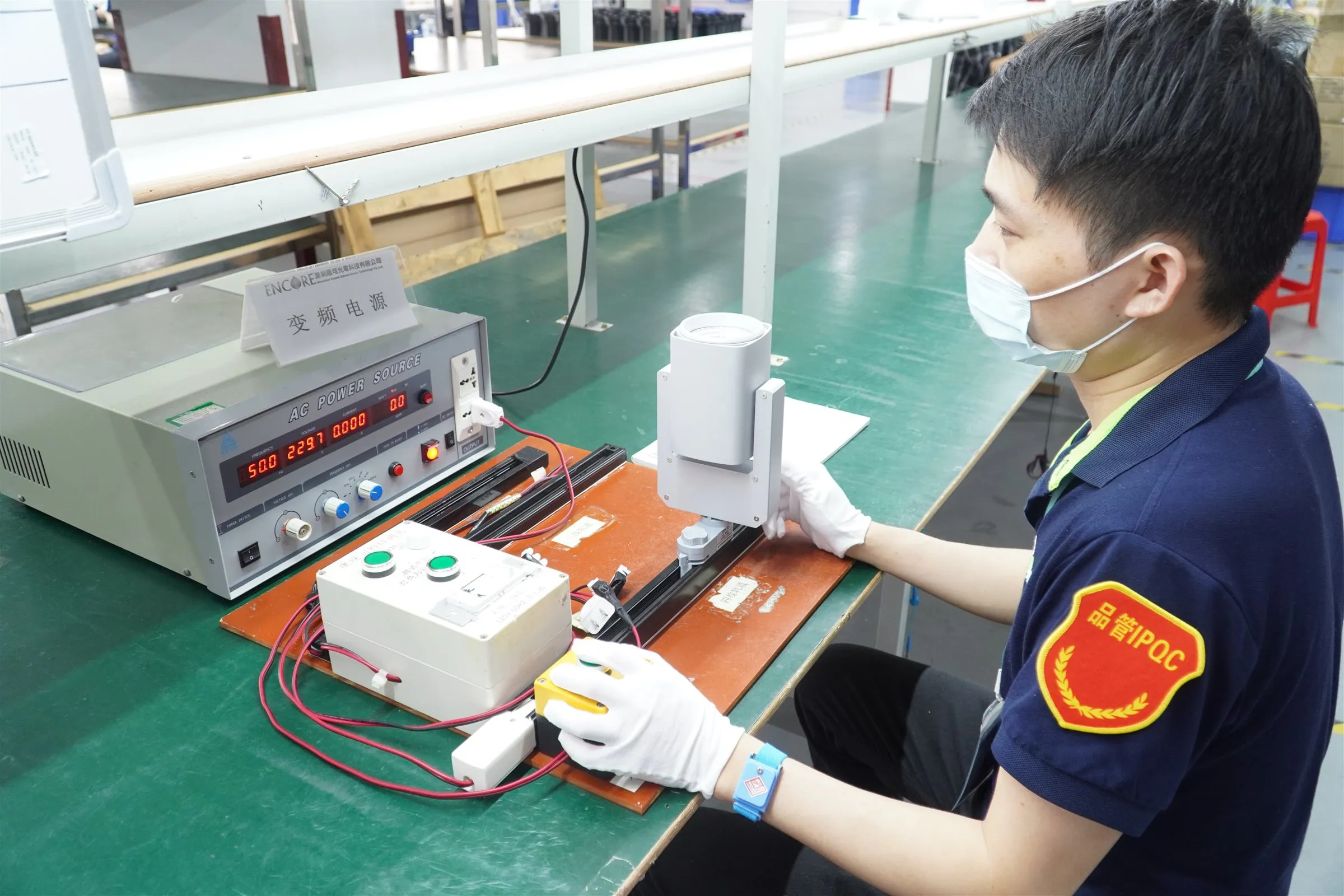
Behind those certificates sits the same routine that supports every other market we ship to. Electrical safety testing runs on the line, not at the end of the process:
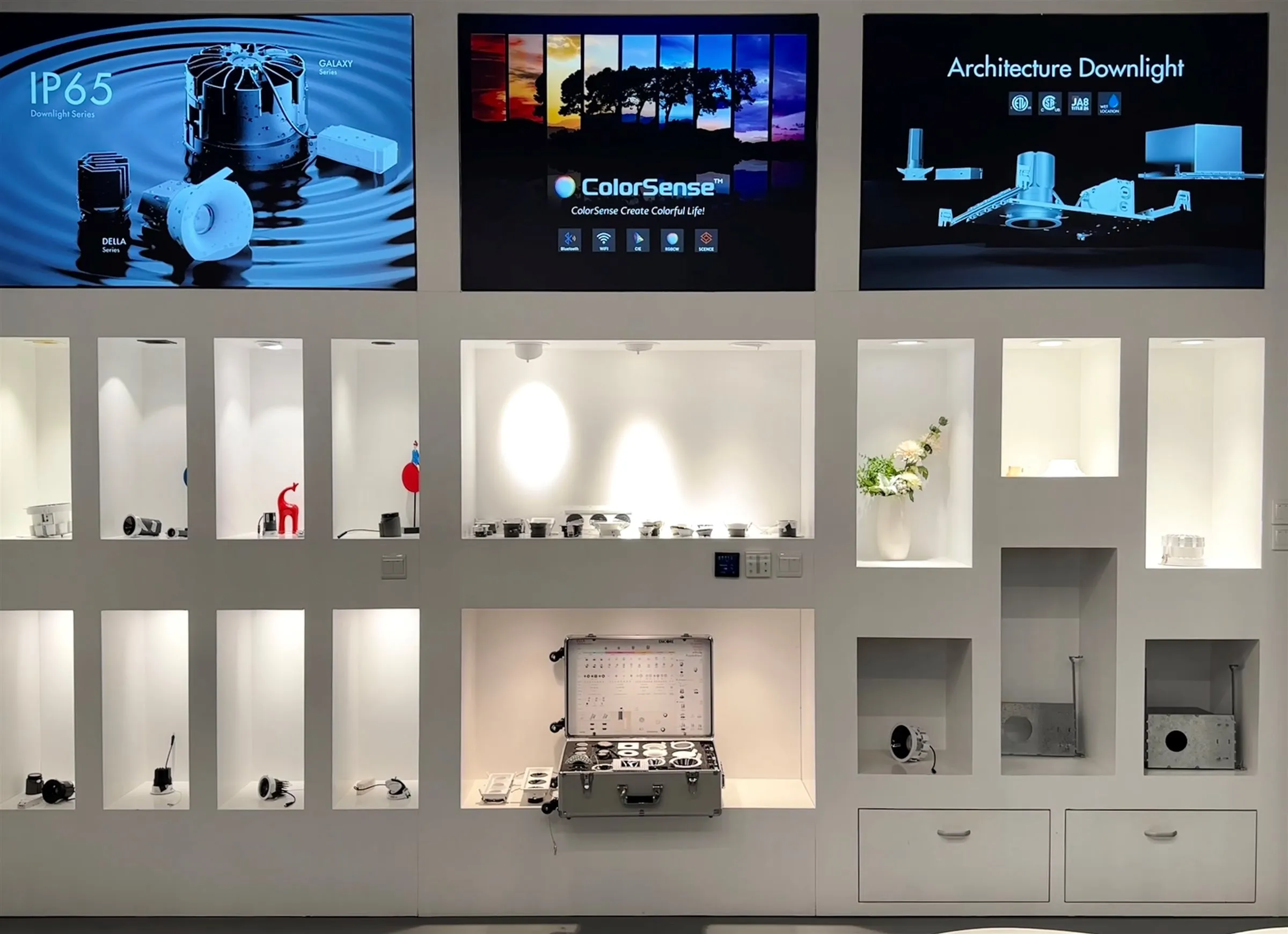
Our showroom carries the certification wall and the working fixtures that partners and their Australian clients can inspect before ordering:
And when an Australian partner wants to verify the process in person rather than on paper, they are welcome in Shenzhen:

Design Notes for the Australian Market
Compliance and design are not separate conversations in Australia. A few local habits shape what gets specified.
Ceiling height and beam control. Australian homes and cafés often pair high ceilings with open-plan layouts, so glare control matters as much as output. Narrow-beam heads over counters and wide washes for walls do most of the work — our beam angle calculator and UGR guide are useful starting points.
Colour temperature. Warm-white interiors and daylight-washed commercial spaces coexist in the same project. Check our CCT guide before locking a specification, and confirm the CRI on the CRI guide if the space sells colour-critical goods.
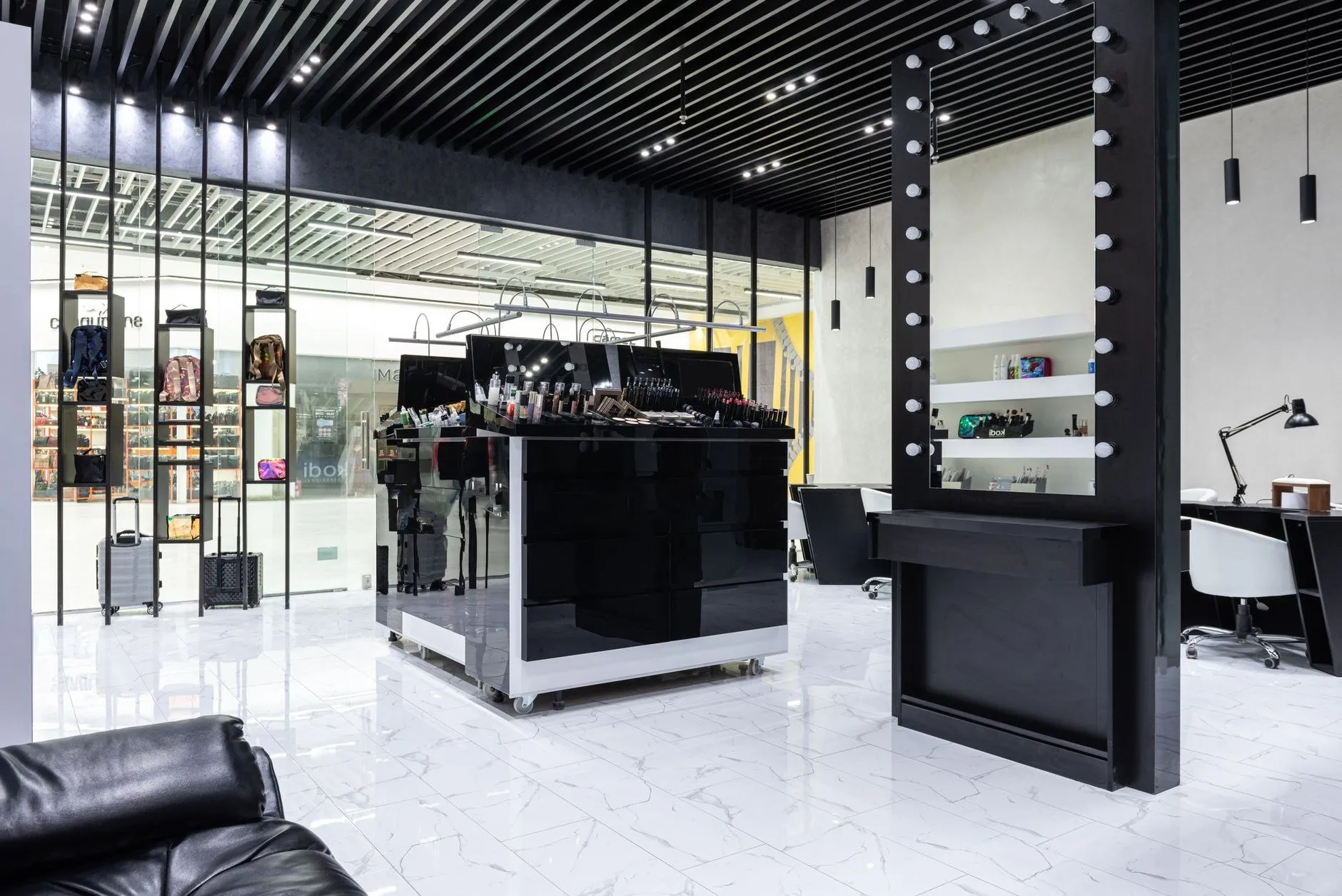
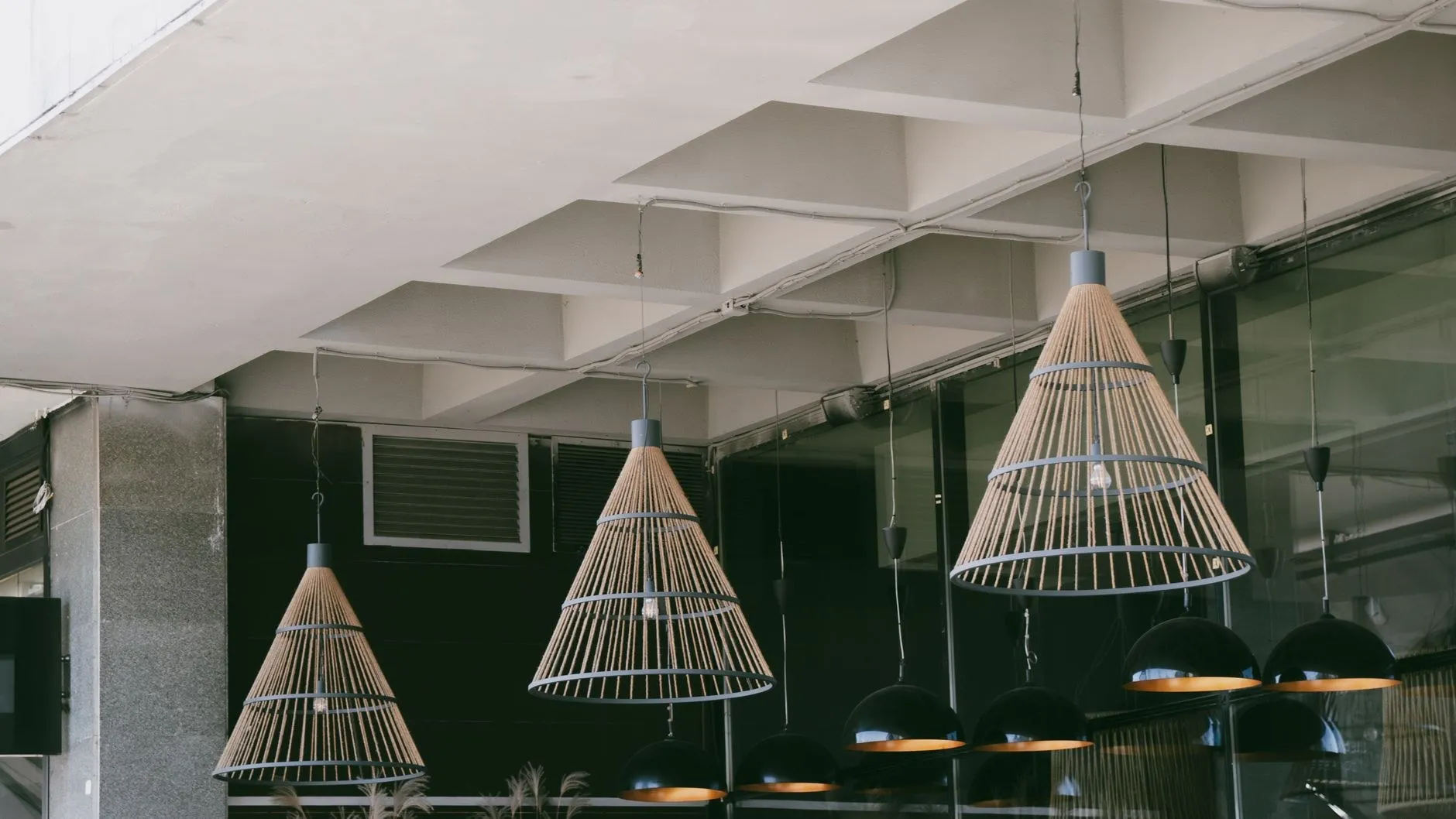
Retail and hospitality. Track and pendant systems dominate because they can be re-aimed as displays change:
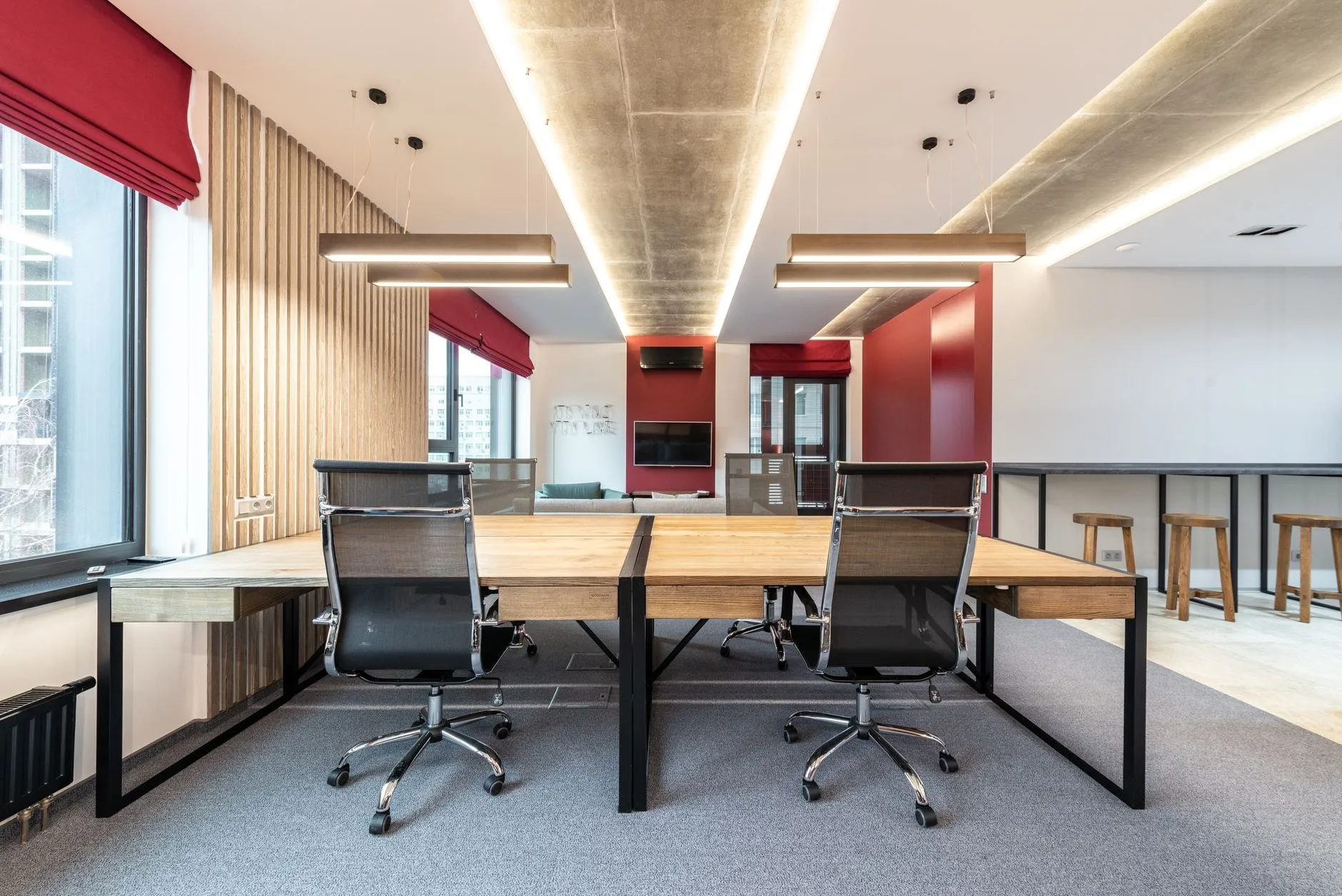
Office and warehouse. Linear systems and high-bay fixtures still have to clear the same electrical bar. Our commercial lighting range covers both, and the lux calculator helps size a layout before you commit:
For magnetic systems and downlights, compare the options on our magnetic track lights and LED downlights pages.
What Actually Ships to Australia
Once the file is closed and the RCM is on the label, the product goes into the same logistics chain as everything else:
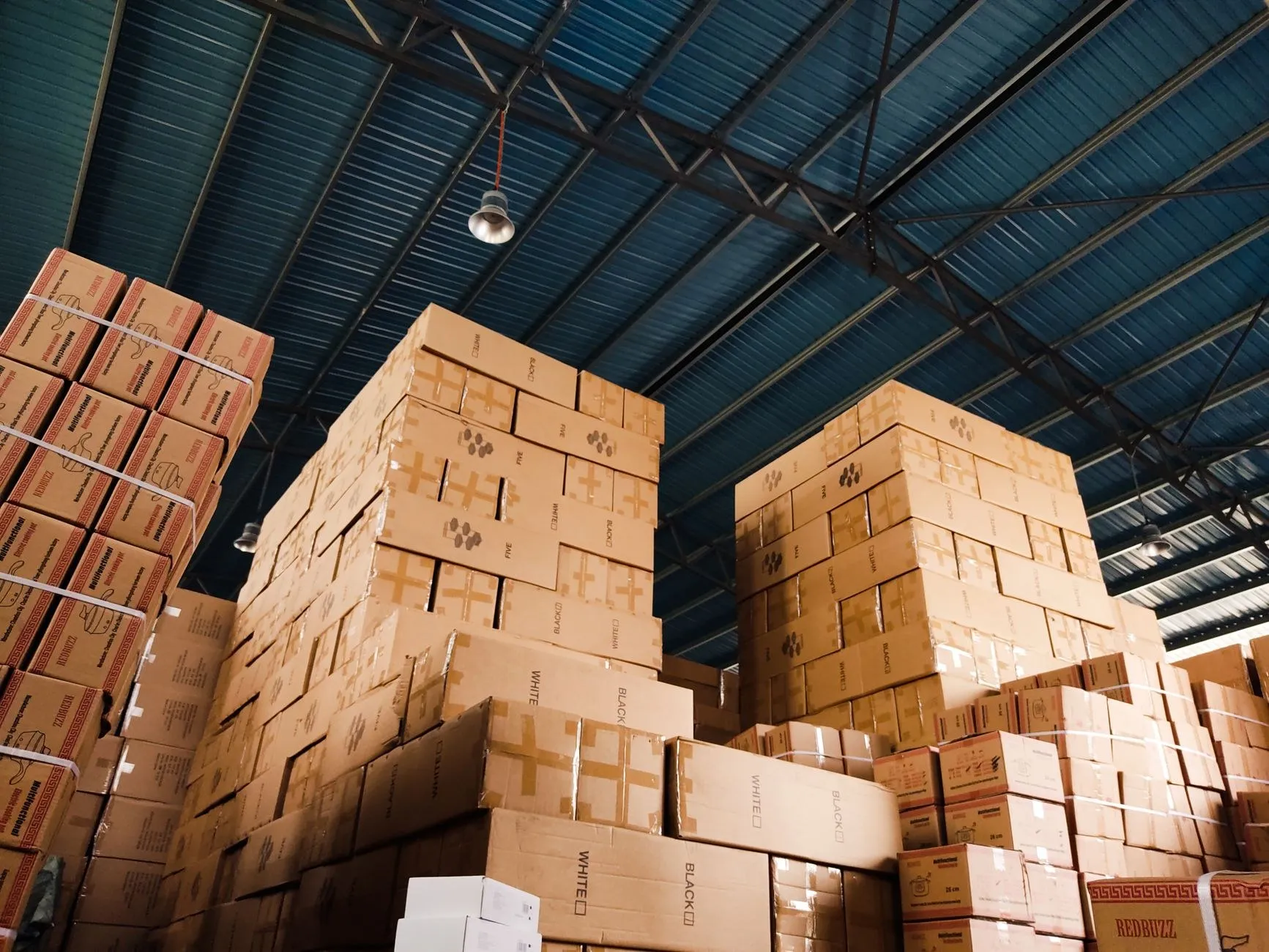
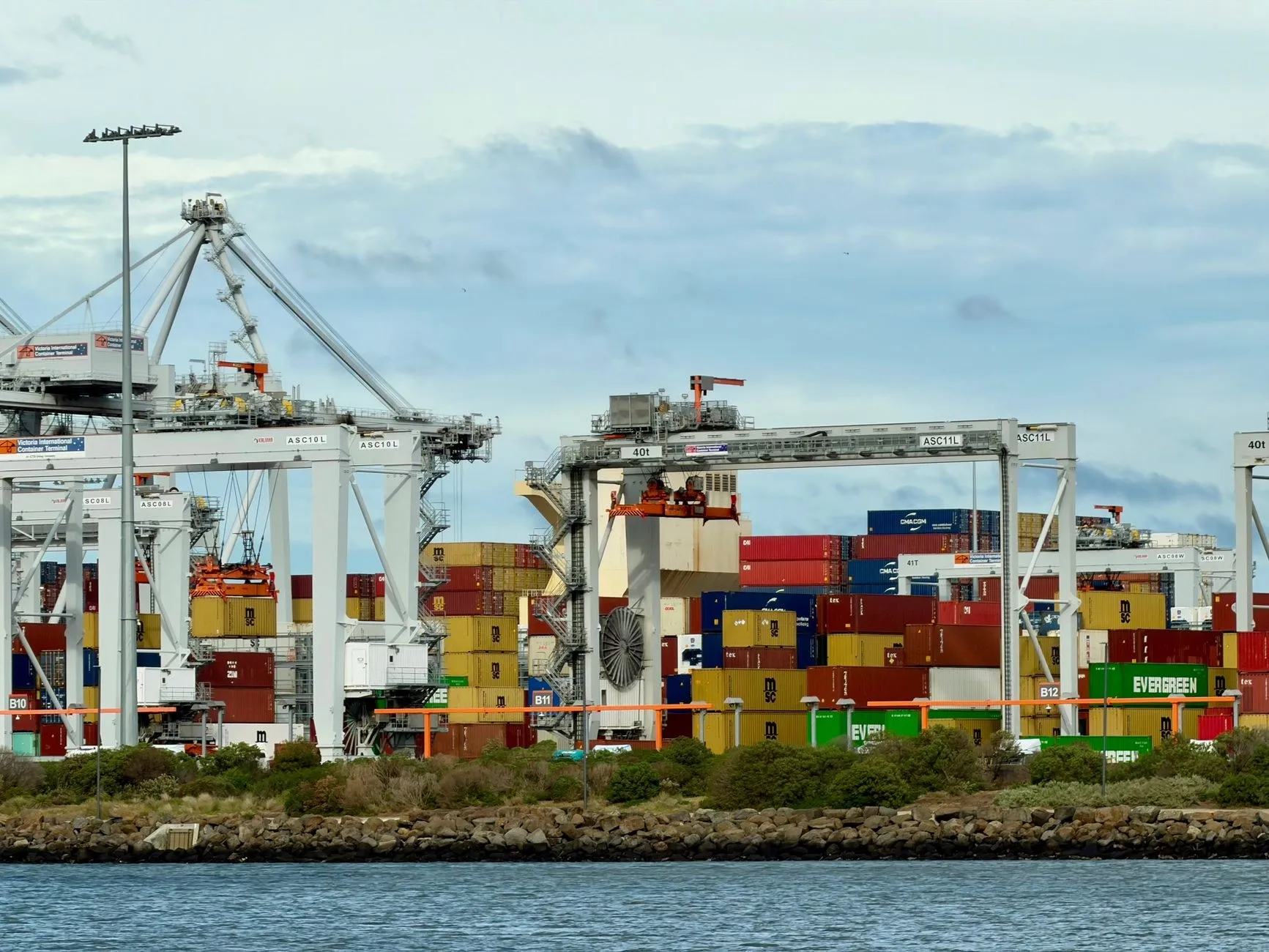
Note where the paperwork risk actually sits. Cartons and containers are inspected for the RCM marking and the model number as much as for damage. A container that is visually perfect but carries an unregistered model is still a container that cannot legally be released.
Frequently Asked Questions
Does an SAA certificate mean I can sell in Australia?
No. An SAA certificate is evidence of conformity. To sell legally you also need the correct risk-level evidence held, the model registered in the EESS database, the Responsible Supplier Declaration signed, and the RCM mark applied to AS/NZS 4417.1.
Can my Chinese factory be the Responsible Supplier?
No. The Responsible Supplier must be a legal entity under Australian or New Zealand law holding an ABN or a New Zealand IRD number. A Chinese manufacturer cannot hold an ABN, so this role falls to the Australian importer or brand.
Is “SAA” the same as “RCM”?
No. SAA is a private certification body whose certificate is one form of evidence. The RCM is the registered mark that declares compliance with both the EESS electrical safety rules and the ACMA electromagnetic compatibility requirements.
Which standard do Australian LED lights get tested to?
The AS/NZS 60598 family. Individual certificates reference the specific clause for the fixture type — for example AS/NZS 60598.2.1 for fixed general-purpose luminaires such as track lights, and AS/NZS 60598.2.2 for recessed luminaires such as downlights.
What is the difference between a Certificate of Suitability and a Certificate of Conformity?
Both are issued by RECS bodies, and both are evidence. A Certificate of Conformity is the mandatory document at Level 3. A Certificate of Suitability is optional at Levels 1 and 2 — useful proof, but it does not itself satisfy a Level 3 requirement.
Do I need to re-certify if I change the driver?
Often, yes. A different driver changes the electrical characteristics of the assembly. If your certificate names the driver in its construction description, the certificate no longer covers the product and the file must be re-qualified.
How long does the SAA and RCM process take?
Assume weeks, not days, and start before the order is confirmed. Type testing, the certifier’s review and the EESS registration are sequential, so a design change at step five can push everything back.
The Short Version
saa approved lighting is a three-tier chain, not a sticker. The EESS sets the rules and defines who is in scope. A RECS body such as SAA Approvals produces the certificate that proves the model was tested. The RCM mark is applied by the Australian business that imports the goods — because that business, and only that business, is the Responsible Supplier.
Buy the certificate and you have bought the middle tier. Finish the chain — registration, declaration and marking — and you have a product that can legally reach an Australian shelf.
If you would like the certificates, the test reports and the model list in one package before you place a PO, talk to our team and we will walk you through the file for the exact series you are specifying.
- saa approved lighting
- SAA certification Australia
- RCM mark Australia
- EESS responsible supplier
- LED lighting compliance Australia
- AS/NZS 60598
- SAA Approvals certificate
- LED track light Australia
- Australian lighting importer
- RECS certification body

ENCORE Lighting Team · ENCORE
LED Lighting Manufacturer & OEM/ODM Partner
The ENCORE engineering and sourcing team writes about LED track lighting, downlights, magnetic systems, certifications and OEM/ODM manufacturing for B2B buyers and specifiers.