· Custom & OEM Lighting · 12 min read

Written by ENCORE Lighting Team
LED Lighting Manufacturer & OEM/ODM Partner ·
Custom LED Lighting Manufacturer: OEM & ODM Manufacturing Playbook
A deep-dive playbook on working with a custom LED lighting manufacturer for OEM and ODM lighting. How to scope a project, read a factory RFQ, customize track lights, downlights & magnetic systems, validate an IES prototype, and plan certification, QC and shipping so your branded lighting actually lands on time.
There are two very different conversations you can have with a custom LED lighting manufacturer. One ends with “we’ll send you samples.” The other ends with a documented spec, an IES photometric file, an approval sign-off, a certified SKU, and a container that arrives on the date your fit-out crew is waiting on it.
Most sourcing guides stop at the first conversation — which model to choose, or how to spot a fake factory. This playbook covers the second: what actually happens after you decide to build a custom LED lighting product, and how to keep an OEM or ODM lighting project on rails from the first RFQ to the day the fixtures light up your project.
If you are still comparing sourcing models, our OEM/ODM services overview and the ODM vs OEM LED lighting guide explain the difference in one read. Here we assume you have chosen a custom LED lighting manufacturer and need to drive the project well.
Step 1 — Scope the Product Before You Touch a Factory
The single biggest cause of a blown lighting budget is a spec sheet written after the deposit, not before it. A good custom LED lighting manufacturer will still help you design — but it should never have to guess your intent. Before the first quote, pin down four things:
1. Application and environment
Where does the light live, and what must it survive?
- Retail / display — accent + general lighting with high color rendering to make merchandise pop
- Hospitality / residential — warm CCT, dimming curves, low glare in an occupied space
- Commercial / office — consistent illuminance, UGR control, long maintenance windows
- Architectural / museum — UV/IR limits, precise aiming, color-critical
This one answer changes your beam angle, your CCT and CRI targets, your driver, and even your housing material. Skip it and you will customize the wrong things.
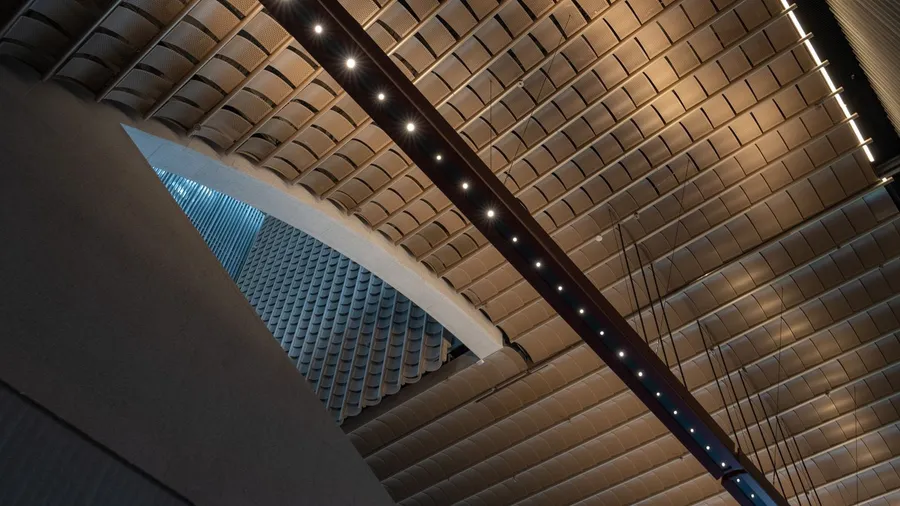
Scoping starts with the space: warm, tuned light is an atmosphere decision, not just a spec.
2. Form factor and integration
Decide the fixture family before the finish. Three of the most common project bases at an ENCORE custom LED lighting manufacturer are:
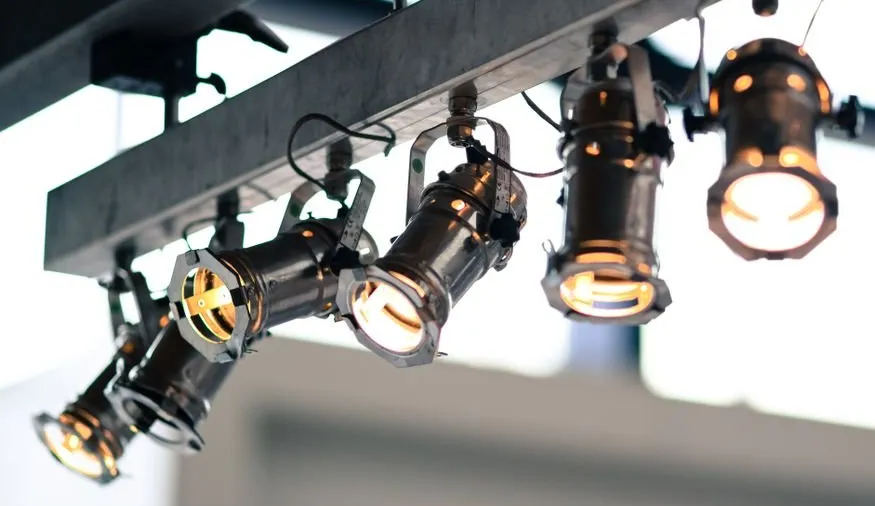
- Track lighting — flexible aiming and relighting when a space changes; the go-to for retail and gallery
- LED downlights — clean, recessed general lighting with tight trim control
- Magnetic track systems — a low-voltage rail where spots, pendants and linear modules snap in and out, ideal for showrooms and premium residential
If a project spans several zones — say a lobby with track, corridors with downlights, and feature walls on a magnetic rail — you want one factory that can run them under one quality bar, which is where OEM/ODM on a commercial LED lighting range pays off.
Form factor matters: a track, a pendant or a magnetic module each solves a different aiming and integration problem.
3. Photometric targets
Write down your numbers, then use a factory’s tools to validate them. The three you cannot skip:
- Beam angle — spot, flood, or wall-wash per zone. Use our beam angle calculator to size optics before you write the RFQ.
- CCT — warm 2700K, neutral 3000–3500K, cool 4000K+. Our color temperature guide walks through what each range reads like in a space.
- Color rendering (CRI / R9) — set the target (80 / 90 / 95+) and don’t forget R9 for reds. Our CRI guide explains why a high CRI number alone can still wash out a red jacket.
4. Market and compliance
Your customs clearance, your inspector, and your liability all hang on the certificate naming your exact SKU. Define the target market now — ETL/UL for North America, CE for Europe, SAA for Australia — so the factory certifies your model, not its generic range. Our certification overview lists what each market expects.
Step 2 — Write an RFQ That a Real Factory Can Quote
A precise RFQ is the fastest way to separate an engineering-led custom LED lighting manufacturer from a reseller. A reseller wants your order; an engineer wants your numbers. Include at least:
| RFQ field | What the factory does with it |
|---|---|
| Application + environment | Selects housing material, IP rating, thermal budget |
| Fixture family (track / downlight / magnetic / linear) | Locks the platform and driver topology |
| Beam angle + mounting height | Defines optic and reflector |
| CCT / CRI / R9 | Picks LED bin and driver constant-current spec |
| Lumen target or lux at plane | Sizes wattage and count |
| Dimming / control (TRIAC, 0–10V, DALI, wireless) | Selects driver and control interface |
| Voltage (120 / 220–240 / 277 / 24V) | Sets ballast, driver and connector |
| Market + certificate needed | Names the SKU to certify |
| Target price / MOQ / lead time | Frames tooling and production cost |
| Reference photos or a drawing | Removes all ambiguity on look and trim |
Send the same spec to several factories and compare apples to apples. When quotes come back wildly different, the gap is almost always in tooling assumptions, LED bin quality, or driver brand — not the housing. A factory that hides its driver brand is a factory you should be cautious with.
Step 3 — Choose Your Customization Depth
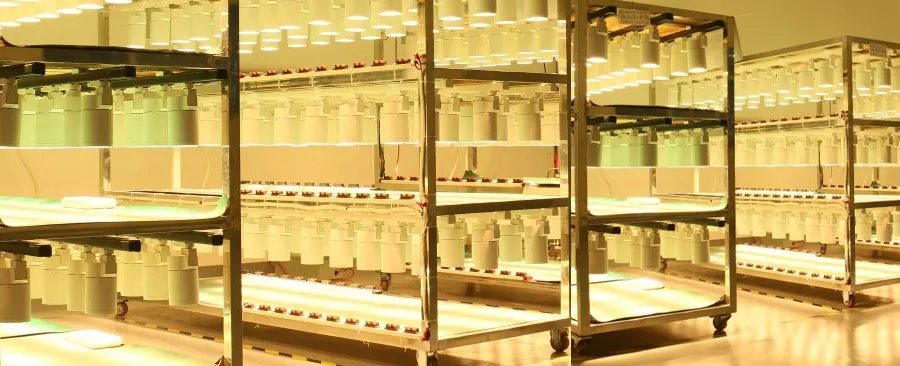
Here is where the “custom” in custom LED lighting manufacturer actually earns its keep. Customization is not a sticker and a new carton. It lives on three levels, and you should consciously pick which one you are paying for:
- Level 1 — ODM customization. Start from a proven catalog design and change the cheap things: housing color and finish, CCT/CRI options, beam angle, branding, and packaging. Fast, low-MOQ, ideal for market testing a brand. This is the classic ODM lighting path.
- Level 2 — OEM with a custom platform. The factory adapts a proven base — say a magnetic track head or a downlight trim — around your exact dimensions, finish, driver and control protocol. You get differentiation without inventing every screw.
- Level 3 — Full OEM engineering. You hand over a drawing (or a sketch) and the factory engineers the optics, thermal, electronics and structure from scratch, then tooling. Highest cost, longest lead time, maximum exclusivity — the true OEM LED lighting engagement.
Most smart brands launch at Level 1 or 2, then migrate to Level 3 once a SKU proves itself in the market. Our private label lighting guide shows how that migration keeps working with one supplier.
Warm, tuned light quality is what makes a custom LED lighting project feel intentional rather than off-the-shelf.
Step 4 — Validate the Prototype, Not the Promise
When a factory sends you a sample, most buyers do two things: look at it, and ask for the price. Both are fine. Neither is validation. What separates a real custom LED lighting manufacturer is what ships with the sample:
- An IES/LDT photometric file you can open in your own lighting design software. Without it you cannot predict lux, spacing, or uniformity — you can only hope.
- Measured photometrics — beam angle, lumens, CCT, CRI/SDCM on the actual sample, not the datasheet’s nominal values.
- Driver brand and bin on paper, so nobody quietly swaps a premium driver for a cheaper one in mass production.
- Aging / burn-in result showing the sample held stable output over its test period.
Use our photometric guide to read the file, and our lux calculator and fixture count estimator to check whether the prototype actually hits your illuminance targets before you freeze the spec.
Once you approve the prototype, the spec is frozen. Every change after approval touches tooling and production parameters, so spend the time here — it is the cheapest place in the whole project to make corrections.
Step 5 — Plan Certification and Quality Control for Your SKU
Two things protect your brand on delivery day, and neither is a nice-to-have:
Certification in your name and on your model
The certificate must name the exact SKU you import. A factory that flashes a certificate for a different model is not certifying your product. Agree on which market each SKU targets — ETL/UL, CE, SAA — and let certification run in parallel with tooling so you don’t wait on paper at the end.
A QC process you can audit
A real factory follows IQC → IPQC → OQC:
- IQC — incoming checks on LED bins, drivers, housings
- IPQC — in-process checks on the line
- OQC — outgoing checks, including a 100% aging test before packing
Ask how many fixtures get a full burn-in, what happens to a failed bin, and whether you can request a pre-shipment inspection report. Our quality control overview documents what the ENCORE line actually runs on every order.
Step 6 — Make Shipping and Delivery Explicit
Custom orders die in the last mile more often than people admit. Before you release the deposit, get the following in writing:
- Incoterm — FOB, CIF, EXW or DDP, and who owns the freight risk at each stage
- Payment milestones — deposit, sample approval, tooling, balance before/after shipment
- Lead-time buffer — a realistic window plus freight; nobody wants fixtures arriving during a holiday when the factory and the port both shut
- Documentation pack — commercial invoice, packing list, certificate naming your SKU, IES files, QC report
- Spares policy — drivers and optics fail eventually; agree on a spares and warranty allowance so your installed project is not stranded
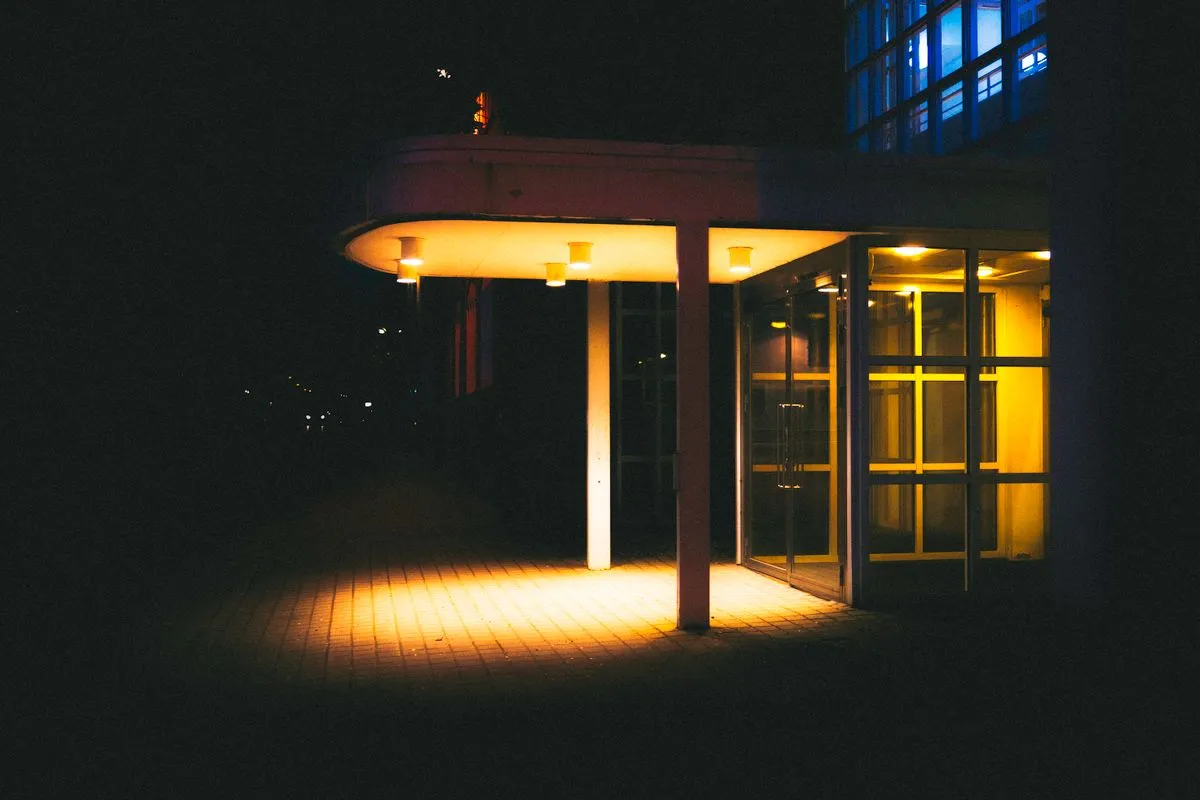
When the containers land and the fixtures turn on, the project is judged by the space it lights — not the spec sheet it shipped with.
FAQ
What does a custom LED lighting manufacturer do differently from a trading company? A manufacturer owns its engineering and production — it can build to your drawing (OEM) or adapt its own design under your brand (ODM), issue an IES file with your prototype, certify your exact SKU, and run IQC→IPQC→OQC on its own line. A trading company mostly resells another factory’s standard products and cannot control quality or photometrics.
OEM or ODM — which should a new lighting brand start with? Most brands should start ODM to launch fast and test the market at low MOQ, then migrate best-sellers to OEM once volumes justify tooling. A single factory that runs both lets you switch without changing suppliers.
What can I customize on custom track lighting, downlights and magnetic systems? Housing color and material, beam angle with custom optics, CCT (2700–6500K) and CRI/color consistency, wattage, voltage, dimming protocol (TRIAC, 0–10V, DALI, wireless), plus branding, packaging and documentation. The deeper the optical and driver change, the more it is OEM engineering rather than ODM rebranding.
Why do I need an IES file with my prototype? An IES/LDT photometric file is the objective proof of how your fixture distributes light. It lets your lighting designer compute lux, spacing and uniformity in software instead of trusting a sample photo, and it is the evidence that separates a real manufacturer from a reseller.
What is a realistic lead time and MOQ for a custom LED lighting order? ODM typically starts at a few hundred units with samples in 7–15 days; OEM with new tooling usually needs 1,000+ units and a full cycle of roughly 8–14 weeks including tooling and certification. Repeat orders compress to about 4–6 weeks once tooling exists.
How do I avoid being overcharged on tooling or stuck with one supplier? Ask for itemized MOQ and tooling costs in writing before the deposit, confirm the driver brand and LED bin in the contract, and require an IES file plus a QC report on every shipment so substitutions cannot happen quietly.
Conclusion
Working with a custom LED lighting manufacturer is not a transaction — it is a project. Scope the product before you quote, write an RFQ an engineer can price, choose your customization depth honestly, validate the prototype with photometrics rather than hope, and lock certification, QC and shipping into the contract. Do those five things and a custom OEM or ODM order stops being a gamble.
At ENCORE we run OEM and ODM from one ISO/ETL/CE-certified Shenzhen factory, across track lighting, LED downlights, magnetic track systems and commercial fixtures. Send us your spec sheet and we will tell you honestly which customization level you need, what is buildable, and what it costs. Start a custom lighting project →
Read next: Custom LED Lighting Manufacturer: OEM/ODM Services for the buyer’s guide to choosing a factory, and OEM LED Track Lighting: A Complete Guide for the track-specific process.
- custom LED lighting manufacturer
- custom LED lighting OEM ODM
- OEM LED lighting factory
- ODM lighting manufacturer
- custom lighting RFQ
- LED lighting manufacturer
- custom track lighting
- custom downlight manufacturer

ENCORE Lighting Team · ENCORE
LED Lighting Manufacturer & OEM/ODM Partner
The ENCORE engineering and sourcing team writes about LED track lighting, downlights, magnetic systems, certifications and OEM/ODM manufacturing for B2B buyers and specifiers.