· Certifications & Compliance · 17 min read

Written by ENCORE Lighting Team
LED Lighting Manufacturer & OEM/ODM Partner ·
CE vs ENEC: The Two Truths About Selling LED in Europe
CE vs ENEC for LED lighting: what CE marking legally requires, what the ENEC mark verifies, why ENEC never replaces CE, and the certificate checklist European buyers actually use to screen a factory.

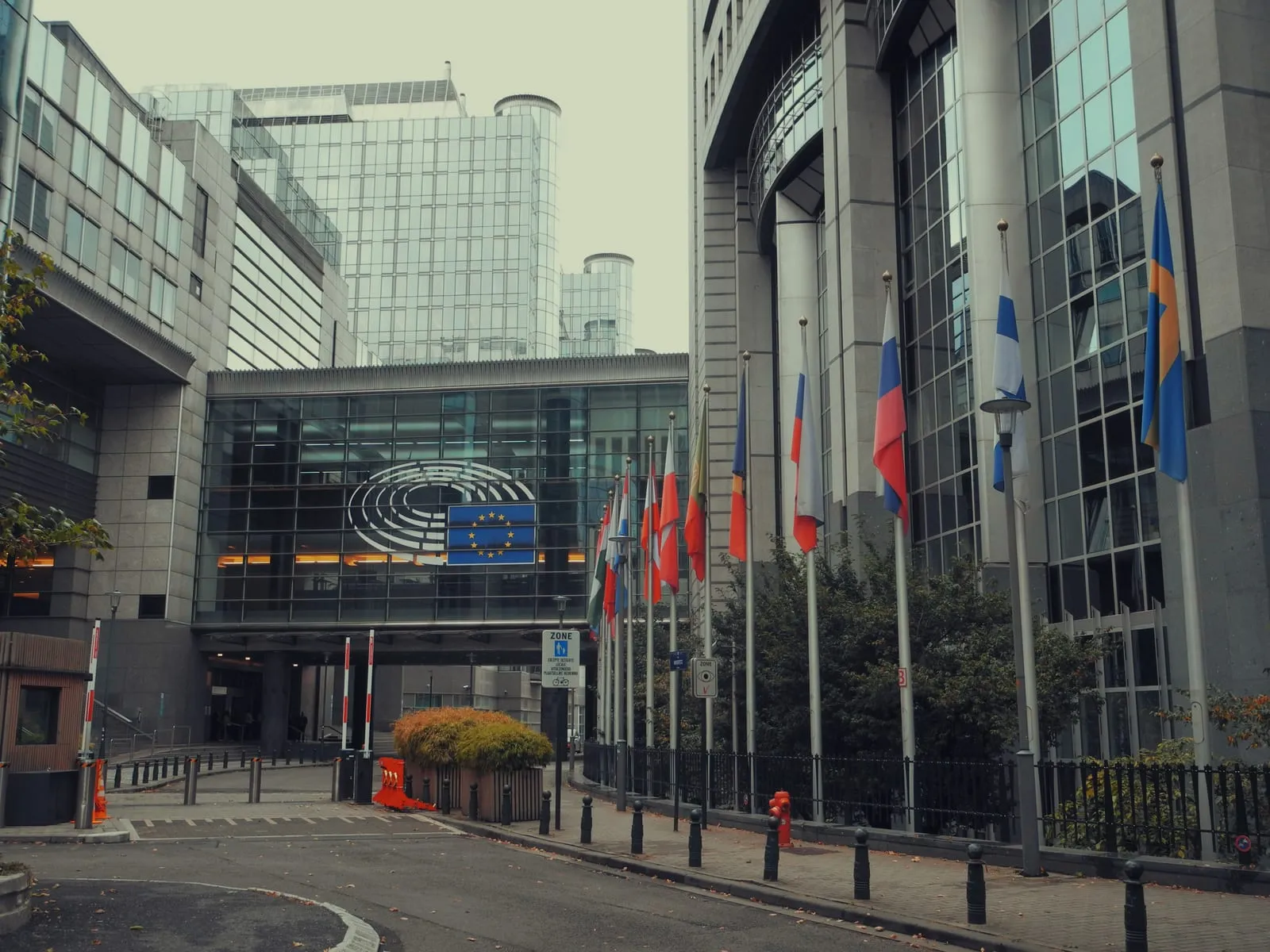
Every factory that wants to sell LED lighting into Europe eventually meets the same exchange.
A buyer writes: “Please confirm your fixtures are CE certified.”
The sales desk replies: “Yes, we are CE certified.”
Then the buyer asks the follow-up question: “Do you also have ENEC?”
That is where many conversations get vague. Some say ENEC is “the same as CE.” Some say CE is “the European passport.” Some email a CE certificate and hope the buyer cannot tell the difference.
Each of those answers is wrong — and each one can put a container on hold at Rotterdam.
This article is about the two truths behind that exchange.
- Truth one: CE is a legal responsibility you declare yourself. ENEC is a credibility asset a third party verifies for you. They do not sit on the same layer, and one never substitutes for the other.
- Truth two: What actually wins the order — and clears customs, and passes acceptance — is rarely the certificate itself. It is the traceability behind the certificate: who signed it, which standard was tested, which model numbers are covered, and whether the factory is still inside its surveillance cycle.
We will unpack both, then hand you a checklist you can run in ten minutes.
CE Marking: It Is Not “Certification” — It Is a Self-Declaration
The misunderstanding that causes the most damage
In Chinese, we casually say “CE 认证” — as if CE were a certification. It is not. CE is a marking, and it works by self-declaration. The European Commission’s own guidance is explicit: by affixing the CE marking, the manufacturer declares that the product meets all applicable EU requirements.
The manufacturer’s obligations are four steps:
- Carry out the conformity assessment
- Set up the technical file
- Issue the EU Declaration of Conformity
- Affix the CE marking to the product
Notice what is not in that list: there is no mandatory third-party “CE certificate.” That single fact explains why the “CE certificates” you receive from different labs look nothing alike — CE has no standard, official certificate format. What you hold is usually a third-party test report or certificate of compliance. It supports your declaration. It is not the declaration itself.

CE marking is the legal gate into the EEA single market. It is a declaration, not an approval.
Which EU rules apply to a luminaire?
An LED luminaire — housing, driver, track, power supply — usually falls under several regimes at once:
- Low Voltage Directive (LVD) 2014/35/EU — electrical equipment with an input or output voltage between 50 and 1,000 V AC, or 75 and 1,500 V DC. Luminaires, drivers and power supplies almost always sit inside this range.
- EMC Directive 2014/30/EU — limits electromagnetic disturbance and sets immunity requirements.
- RoHS — restricts lead, mercury, cadmium and other substances.
- Ecodesign / Energy Labelling (ErP) — energy performance and labelling duties.
- WEEE — take-back and recycling obligations for electrical equipment.
A technical file that can actually support a CE declaration is therefore a bundle of evidence across several directives, not one sheet of paper with a CE logo on it.
What a proper document set actually looks like
Using certificates we issue to our own OEM partners as the reference, a serious third-party document set carries:
- Certificate number — the unique, traceable identifier
- Applicant — the legal entity responsible
- Manufacturer — the entity that actually produces
- Product name — e.g. LED TRACK LIGHT
- Trade name — the brand mark on the product
- Main test model + additional model list — the coverage scope
- Test standard — e.g. EN 60598-1 and EN 60598-2-1 for LVD
- Test report number — the laboratory reference behind the certificate
- Issuing body, signatory, date
Three of those fields do nearly all the work:
- Is the standard correct? Luminaires are tested to the EN 60598 series. Drivers are assessed separately. EMC evidence will reference standards such as EN 55015, EN 61547, EN 61000-3-2 and EN 61000-3-3.
- Do the listed models cover the SKU you are buying? A certificate only applies to the models printed on it.
- Who is the applicant? If the certificate is issued to a different company, it has nothing to do with your goods.
The structural weakness of CE
CE’s freedom and CE’s weakness are the same fact: nobody vouches for you. If your technical file does not survive a customs query, a market-surveillance sample, or a buyer’s due diligence, the liability lands entirely on the manufacturer and the importer.
As the ENEC scheme itself puts it, the CE marking does not indicate that products have been approved as safe by the European Union or any other authority. That is precisely why CE alone often is not enough on engineered and high-end commercial projects.
ENEC: Third-Party Backing for European Electrical Safety
What the ENEC mark is
ENEC stands for European Norms Electrical Certification. It has existed since 1992, is operated by ETICS, and is granted by independent Certification Bodies after testing by approved independent ENEC Testing Laboratories.
The scheme is mature and broad: roughly 17,000 certificates covering around 80,000 products, spanning luminaires and associated components and LEDs, household appliances, IT equipment, safety transformers, connectors, controls and switches, capacitors, security equipment, batteries, measuring equipment and electrical tools.
Luminaires (the “LITE” scope) are one of ENEC’s core categories.
How ENEC actually works — and why that matters
ENEC runs a full ISO type 5 certification scheme under ISO/IEC 17067 — the heavyweight class of conformity assessment. It has four moving parts:
- Initial factory inspection
- Type testing
- Certification and licensing
- Ongoing surveillance — periodic factory inspections plus re-testing of product sampled from the production line, the warehouse, or the market
In other words, an ENEC-certified product lives under permanent supervision. Annual audits, sampling and marketplace monitoring are part of the deal.
That produces three differences a buyer can feel:
- It is third-party. The evaluator is fully independent of both buyer and seller — the highest trust tier in conformity assessment.
- It governs mass production. Not “the sample passed,” but “the production stays consistent.”
- It is verifiable. The ENEC scheme publishes certificate verification tools and a directory of certification bodies and laboratories.
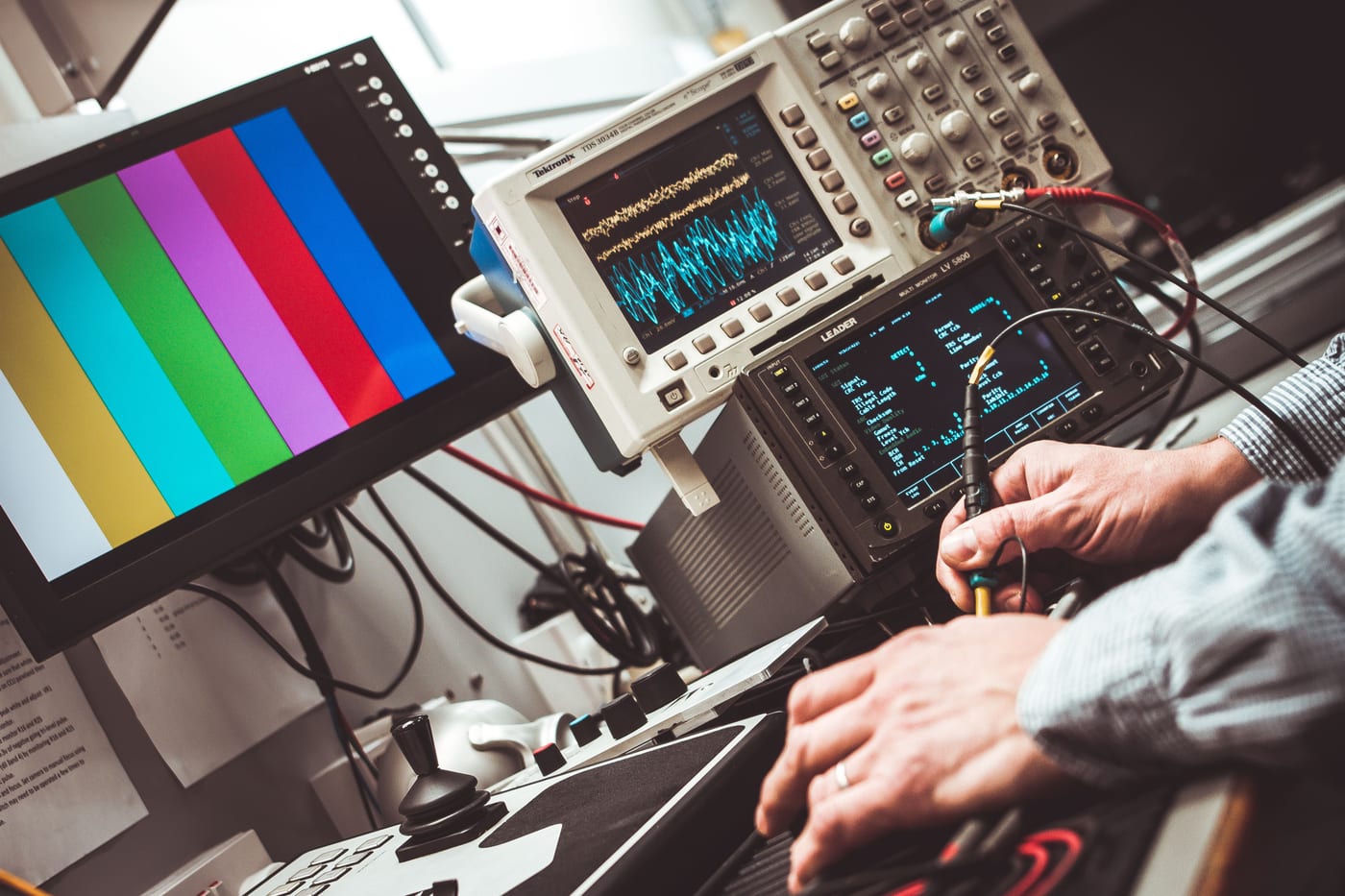
ENEC type testing is performed by independent, approved laboratories — not by the manufacturer’s own bench.
ENEC complements CE. It does not replace it.
This is the sentence most worth memorising, because ENEC’s own documentation says it plainly: ENEC certification complements the mandatory CE marking for electrical products in the European market.
So the division of labour is:
- CE is the legal threshold. Without it, the product cannot lawfully be placed on the EU market.
- ENEC is the credibility layer. With it, your product reads completely differently to specifiers, engineering firms, tender documents and local authorities.
The ENEC scheme was also designed to help manufacturers and distributors comply with the New Legislative Framework (Regulation 765/2008 and Decision 768/2008/EC). Compliance is continuously verified across the life of the certification — with manufacturers and distributors responsible for maintaining records of technical data, sourcing, distribution and sales.
There is also ENEC+, a companion mark aimed at performance rather than safety alone, run under the same third-party principles. If your buyer is a specifier asking for third-party evidence on efficacy, lifetime or colour consistency data rather than electrical safety, ENEC+ is the correct conversation.
CE vs ENEC at a Glance
| Dimension | CE marking | ENEC certification |
|---|---|---|
| Legal nature | Manufacturer’s self-declaration (a marking) | Third-party certification |
| Who carries it out | Manufacturer / importer | Independent certification body + approved lab |
| Official certificate? | No single official format | Yes — formal certificate, verifiable |
| Scope | Safety (LVD) + EMC + RoHS + ErP and more | Primarily safety under EN standards; ENEC+ covers performance |
| Governs mass production? | Relies on the manufacturer’s own control | Annual factory inspections + sampling and re-testing |
| Legal status | Mandatory to enter the EU market | Voluntary — but often a hard requirement on engineered projects |
| Validity | Tracks the technical file and evolving law | Valid across product life, with change notification |
| What it tells a buyer | ”The seller says it complies" | "An independent body verified it — and still supervises it” |
| Typical buyer reaction | Accepted, with a request for the technical file | Materially higher trust, faster approvals |
One line: CE lets you sell. ENEC makes you easy to buy from.
Why This Matters So Much for LED Lighting
Luminaires are a genuine safety category
A luminaire combines mains connection, insulation and creepage distances, earthing, temperature rise (LED drivers and boards get genuinely hot), ingress protection, mechanical suspension strength, and behaviour under abnormal conditions such as short circuit or overload. Get any one wrong and the failure mode is fire or electric shock.
Which is why professional European buyers — hotels, retail chains, office fit-outs, museums — do not decide on a single sheet of paper.

On commercial interiors, certification is a prerequisite for acceptance — not a marketing detail.
The three tiers of European buyer
After years of running OEM and ODM programmes into Europe, we see buyers split into three tiers with three different certificate expectations.
Tier 1 — Distributors and wholesalers. They need to list the product legally and know who is liable if something fails. A complete CE technical file plus test reports is usually enough — but they will check that the files match the models.
Tier 2 — Engineering firms, lighting designers, contractors. They need to pass acceptance and write the product into specifications. This is where ENEC starts being requested proactively — because for them, ENEC means “I do not have to audit this factory myself.”
Tier 3 — Brands, chain groups, large project owners. They are managing supply-chain risk, long-term consistency and legal exposure. This tier usually writes CE and ENEC into the procurement specification, and asks for surveillance reports, change notifications and traceable test data.
Which tier you want to sell into determines whether ENEC is worth the investment.
The most realistic risk of all: certificates that do not match the goods
We have seen it repeatedly. A factory wins an order using a CE certificate for one model, then ships a different model. A certificate that does not cover the shipped product is worse than no certificate at all, because it converts a paperwork gap into a compliance breach. On a market-surveillance sample or a competitor complaint, the outcome is delisting, fines, and damage to the whole EU supply chain’s credibility.
The discipline that avoids this is simple and absolute: every certificate must be traceable to a specific model coverage list.
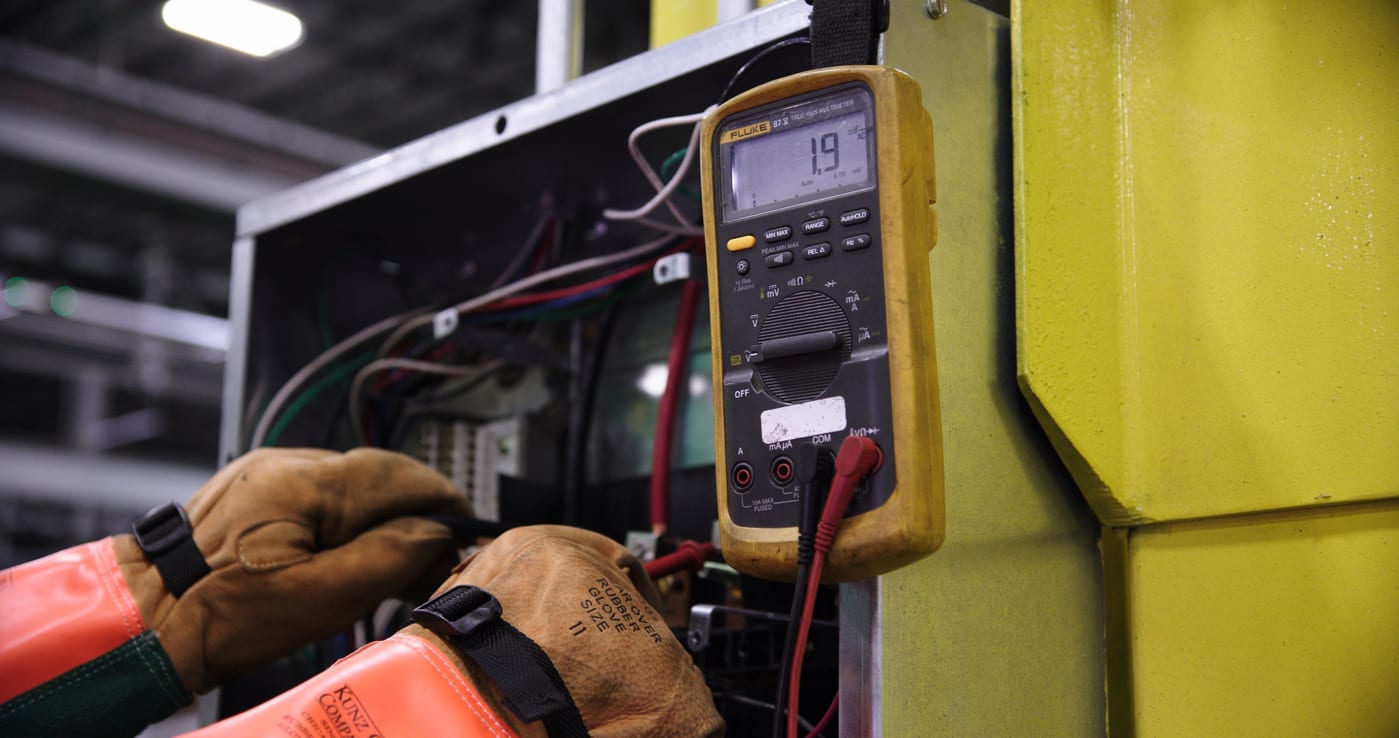
Verification is a procedure, not a logo. The strongest suppliers let you reproduce it.
The 10-Minute Certificate Verification Checklist
Send this to a supplier, or run it yourself when auditing one.
1. Check the applicant and the manufacturer. Are the Applicant and Manufacturer on the document your supplier — or you? If a third company is named, the certificate does not cover your product.
2. Check the product name and the model coverage. Does the Product Name match the category you are buying? Does the Main Test Model plus Additional Model list include the model you are ordering — or at least a series that legitimately covers it?
3. Check the standards. Luminaires: EN 60598-1 with the relevant EN 60598-2 part, under LVD 2014/35/EU. Drivers and control gear: assessed in their own right — do not let a luminaire report stand in for the driver. EMC: EN 55015, EN 61547, EN 61000-3-2, EN 61000-3-3 under EMC 2014/30/EU. Confirm the standard edition is current — a certificate resting only on an outdated edition will be challenged.
4. Check the report number and the issuing body. Is the Test Report No. traceable? Is the issuing laboratory a properly accredited third party? Are the signatory, the date and the stamp all present?
5. Look for the “one sheet, valid forever” pattern. CE technical files must track evolving law; ENEC requires annual inspection and re-testing. A 2015 certificate presented as “permanently valid, no updates needed” is a red flag, not a bargain.
6. For ENEC, look it up on the scheme’s own site. The ENEC scheme publishes certificate verification tools and the list of certification bodies and testing laboratories. If it cannot be found there, treat it as nonexistent.
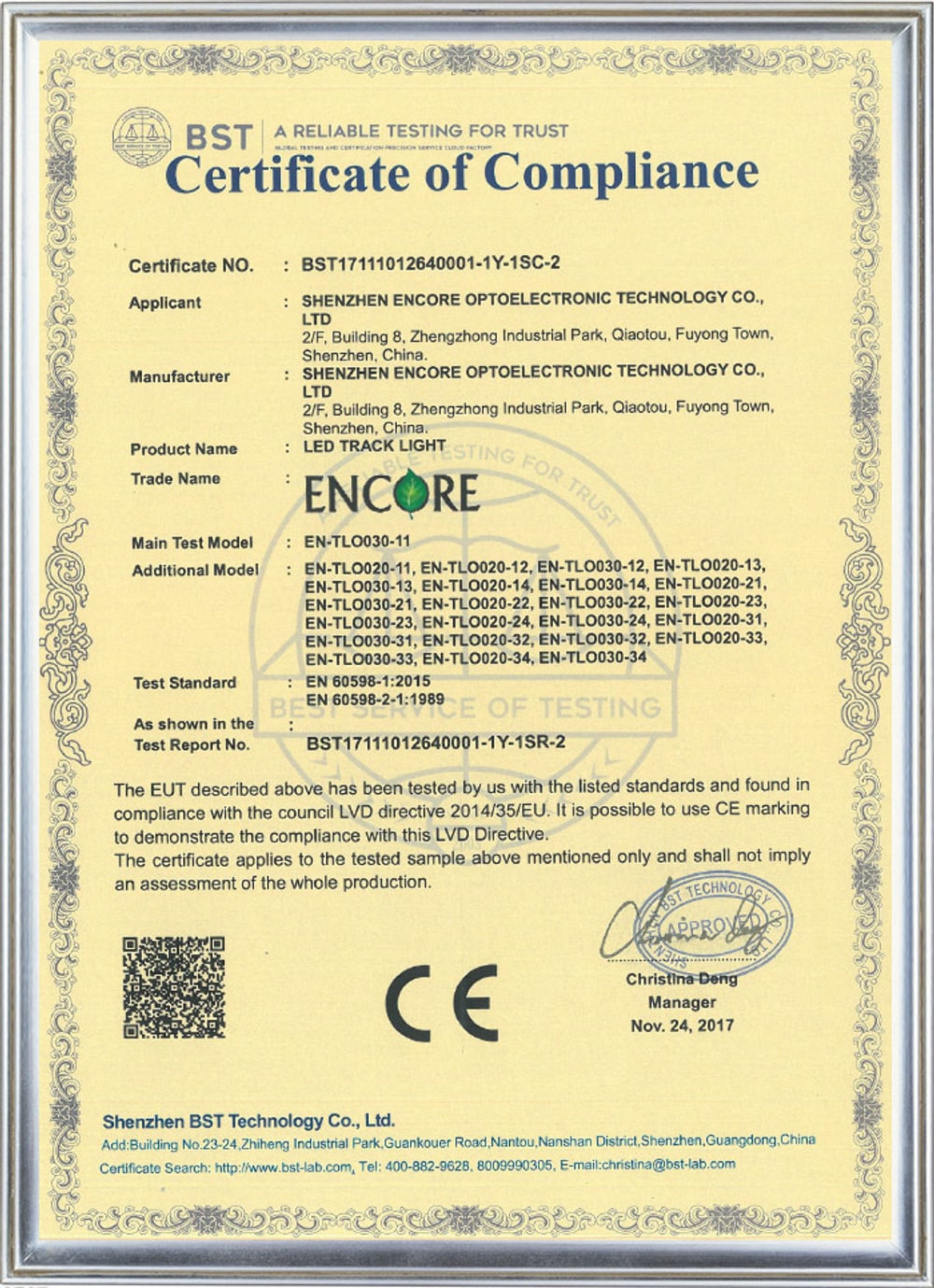
This is what to ask for: a certificate of compliance naming the applicant, manufacturer, product, model range and the test standard — here ENCORE’s LED track light tested to EN 60598-1:2015 / EN 60598-2-1:1989 under the LVD 2014/35/EU.
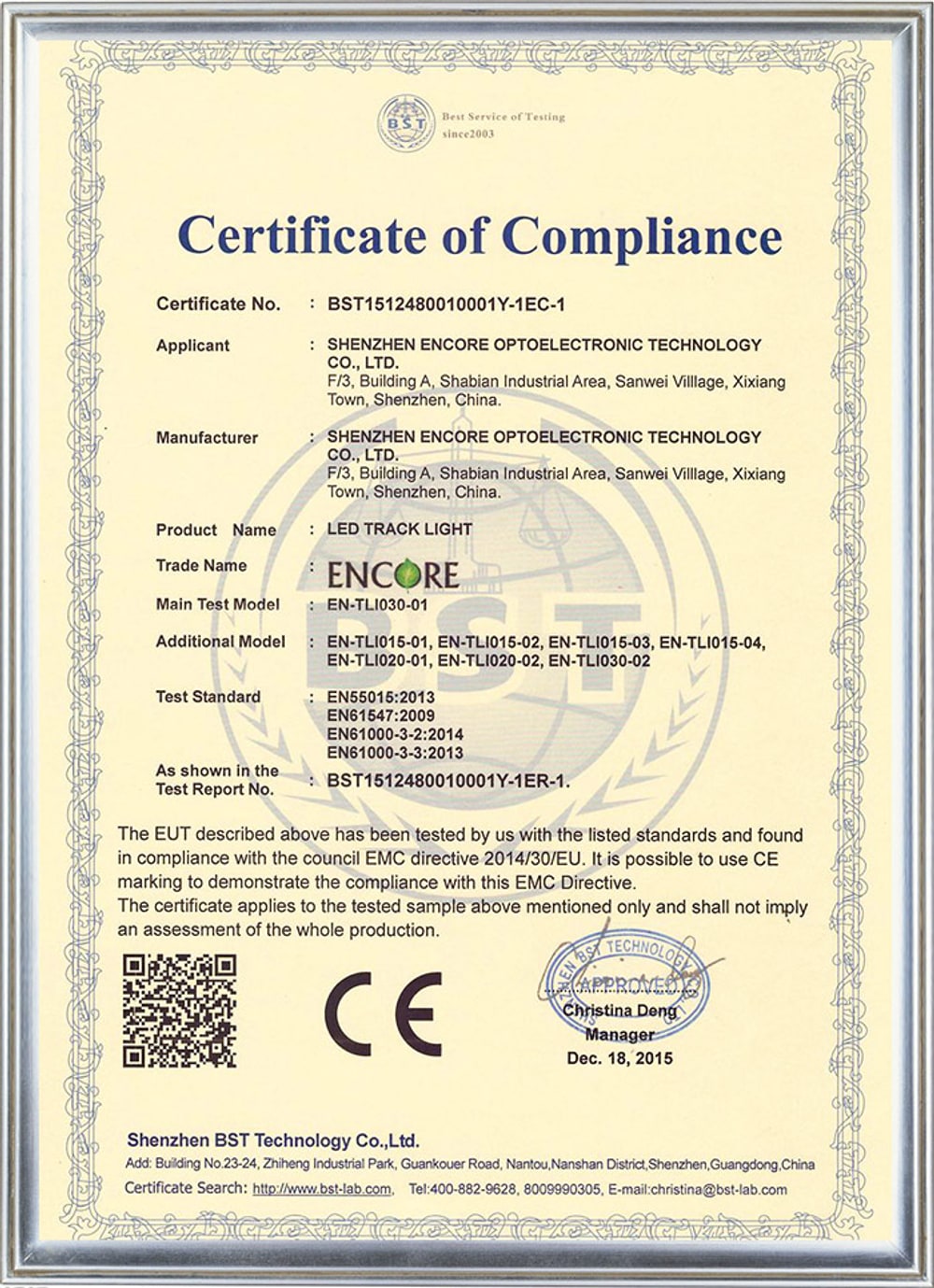
A separate document is required for EMC — EN 55015, EN 61547, EN 61000-3-2 and EN 61000-3-3 under Directive 2014/30/EU. Safety evidence does not cover EMC, and EMC evidence does not cover safety.
Practical Guidance for Factories Selling Into Europe
Make the CE technical file an asset, not an attachment
- Build a model-indexed document library: for every SKU, which LVD report, which EMC report, which RoHS evidence applies.
- Keep the standard editions current. EN IEC 60598-1 has moved on; buyers check this.
- Issue a formal EU Declaration of Conformity — not only a test report. It is a legal document and should carry company letterhead, a signatory, the list of directives and standards, and the product models.
- Certify the driver separately. Plenty of factories test the luminaire and forget the power supply sitting inside it.
Treat ENEC as a customer-segmentation tool
- Do not certify an entire range at once. Start with one flagship series — the volume track lighting family, for instance — and validate the market response.
- The ENEC cost structure combines one-off testing with annual fees and inspections, so the more concentrated the family, the better the economics.
- The biggest hidden benefit of ENEC is not the certificate. It is that your factory enters a system that is audited continuously — which tends to lift your quality control a level or two on its own.
- Choose a certification body with laboratory capacity in your region. The ENEC scheme lists certification bodies and laboratories by standard, so the search is straightforward.
Talk about certification the way buyers search for it
- On your certifications page, list market by market: ETL for North America, CE (LVD + EMC) for Europe, SAA for Australia and New Zealand, ISO9001 for quality management — and state which market each one unlocks.
- Treat certification as a filter, not decoration. Buyers search directly for things like “ENEC certified track light” or “CE certified downlight.”
- Volunteer the certificate scans together with a model cross-reference table. That combination outperforms any amount of marketing copy.

Market access is enforced at the border. Document gaps that survive a sales meeting rarely survive an inspection.
FAQ
Is CE the same as ENEC? No. CE is the manufacturer’s self-declaration and the legal threshold for placing electrical products on the EU market. ENEC is voluntary third-party certification. ENEC complements CE and can never replace it.
If I have a “CE certificate,” am I legal to sell in Europe? Not automatically. A “CE certificate” is usually a third-party test report or certificate of compliance. You also need a complete technical file, a signed EU Declaration of Conformity, and correct application of the CE marking itself.
If a product has ENEC, does it still need CE? Yes. The ENEC scheme explicitly positions itself as complementary to — and dependent on — the mandatory CE marking.
My customer asks for ENEC but we only hold CE. What do we do? Two routes. First, hand over a complete CE technical file — model cross-reference, standard list, report numbers — and buy trust with transparency. Second, put one flagship series through ENEC and use it to open that tier of buyer.
Does a CE certificate expire? CE has no “certificate expiry” as such — it tracks the technical file and the legislation. But the standards your reports rely on do get superseded, and buyers and authorities will expect current editions.
How long does ENEC take, and what drives the cost? Cost combines one-off testing, annual fees and factory surveillance, and depends on the product category, the number of models and whether new tooling is needed. Timelines run in quarters once testing and the initial factory inspection are scheduled. Products on a mature platform, with a concentrated model family, move substantially faster.
Is an ENEC certificate valid forever? A certified product stays valid across its lifetime, and minor design changes can be accommodated — but only while it remains under surveillance, which means ongoing factory inspections and re-testing are non-negotiable.
Conclusion
Selling LED lighting into Europe means running two businesses at once.
The first is legality — CE marking, the technical file, the Declaration of Conformity. Get this wrong and the goods do not enter.
The second is credibility — ENEC, traceable test data, surveillance records, model-to-certificate correspondence. Get this right and buyers sell for you.
Most factories pour 90% of their effort into the form of the first (obtaining a sheet of paper) and drop the substance of the second. European professional buyers, meanwhile, pay almost exclusively for the second.
So the next time a buyer asks “are you CE certified?”, the strong answer is not “yes.” It is:
“Yes — and here is the complete technical file for the exact model you are buying: the LVD report citing EN 60598-1, the EMC report, the EU Declaration of Conformity, and the model coverage list. If your project requires ENEC, tell me the series and we will map out what it takes to bring it under the scheme.”
That single paragraph outperforms ten blurry certificate screenshots.
We build and certify LED track lighting, downlights, magnetic track systems and commercial luminaires for ETL (North America), CE (LVD + EMC, Europe) and SAA (Australia / New Zealand) markets, with ISO9001 quality management across the whole process from R&D to final inspection. Certificate documents, model cross-reference tables and IES photometric data are available per model on request.
If you are working on a European project, send us the specification or the tender document. We will tell you plainly which models map onto existing certification, which need extended testing, and what the timeline and cost look like. Request a certified lighting quote →
Read next: ETL Certification for Lighting: What It Costs, How to Verify for the North American counterpart to this guide — or see the full certification set on our certifications page.
- ce certification led lighting
- ce vs enec
- enec certification lighting
- ce marking lighting
- enec vs ce difference
- enec certified led lighting
- led lighting certification europe
- ce emc lvd led driver
- eu declaration of conformity lighting

ENCORE Lighting Team · ENCORE
LED Lighting Manufacturer & OEM/ODM Partner
The ENCORE engineering and sourcing team writes about LED track lighting, downlights, magnetic systems, certifications and OEM/ODM manufacturing for B2B buyers and specifiers.