· Custom & OEM Lighting · 34 min read

Written by ENCORE Lighting Team
LED Lighting Manufacturer & OEM/ODM Partner ·
LED Batten Light OEM/ODM: the Spec Lines That Matter
An LED batten light OEM/ODM brief for buyers: why a 4ft batten is 1163 mm, which four datasheet lines are real decisions, how to pick a driver that survives a car park, and how the carton silently decides your freight bill.
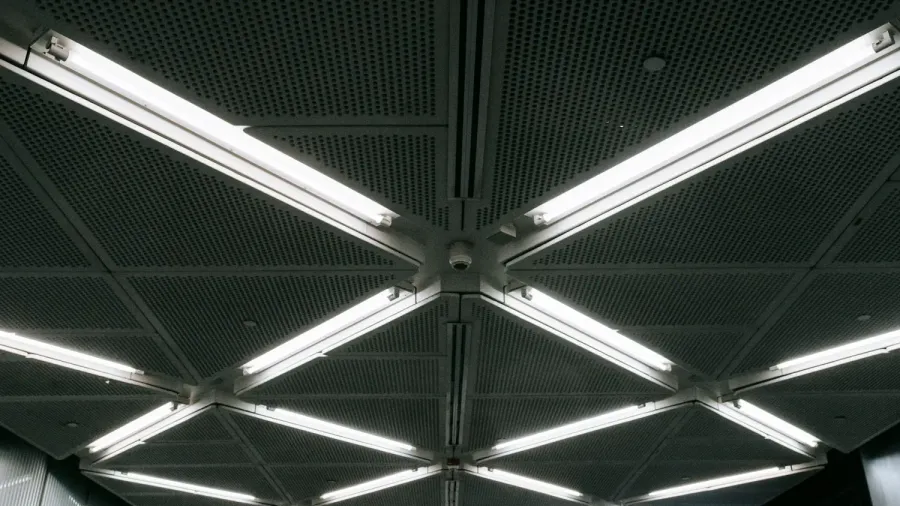
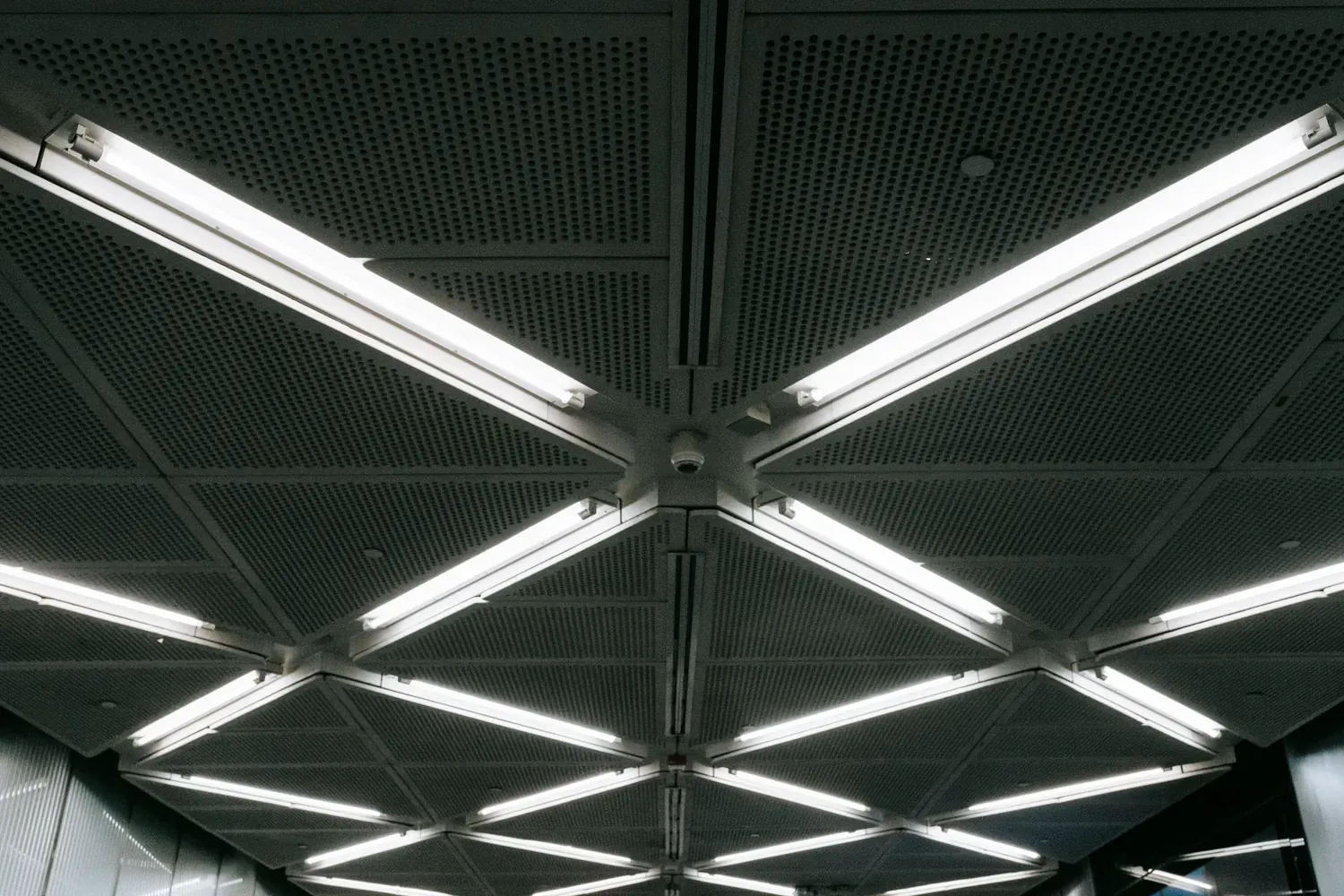
A batten is the least glamorous fixture in the catalogue and the one most buyers get wrong. It never appears in a render. It is what lights the car park under the building, the aisle behind the shop floor, the plant room nobody visits, and it is ordered in the hundreds with three lines of specification attached to the purchase order.
That is exactly the shape of a product that gets quietly de-specified. There is no client mood board to protect the flicker performance, no lighting designer arguing about the beam. So the savings get taken out of the driver, then out of the carton, and both of them show up two years later — one as a failure rate, the other as a freight invoice.
This guide is the version of the conversation we have with buyers before they send an RFQ. It covers the four datasheet lines that are genuinely decisions, the driver menu and what each option costs you later, and packaging as arithmetic rather than decoration. Driver technology gets one section here; the full driver article is separate and we will not re-run it.
The word “batten” is doing a lot of work
Three different products are sold under the same word, and the RFQ rarely says which one.
- The fluorescent heritage batten. A steel or aluminium channel, a magnetic ballast, a T8 tube under a clip-on diffuser. Still sold as “LED retrofit batten” where the body is kept and the tube replaced with an LED tube. That is a retrofit product, not a new fixture.
- The integrated LED batten. An extruded aluminium profile with the board and driver inside, a polycarbonate diffuser clipped into the mouth, and injection-moulded end caps. This is what “LED batten light” means on a 2026 purchase order, and it is what this article is about.
- The vapour-proof batten. The same object with a gasketed diffuser, a cable gland and stainless clips, rated IP65. Sold into food production, car washes, cold stores, canopies and coastal exteriors.
In the UK and Australia the middle one is called a batten. In North America the same object is a linear strip, a wrap or a shoplight. In Germany it is a Lichtleiste. The naming does not change the engineering, but it does change which directories and which suppliers you find — so search both the trade word and the category word when you build a supplier list.
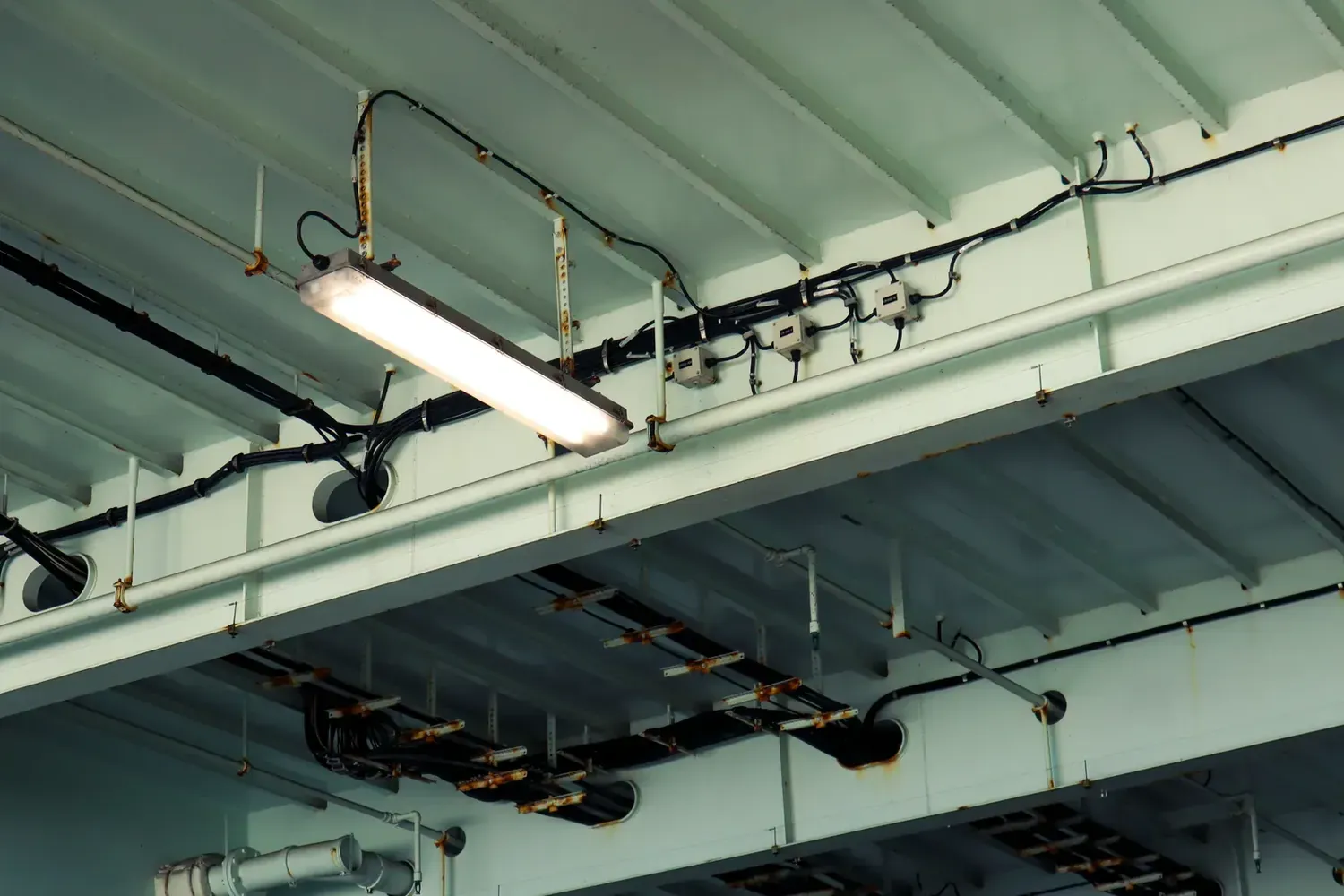
Surface mounting on a purlin, cable tray above: the cheapest install is the one where the batten body already has a flat back and a knockout at both ends.
What is actually inside, layer by layer
A battens datasheet reads like a list of independent features. It is not. It is six decisions stacked inside one extrusion, and they are not equally expensive to change.
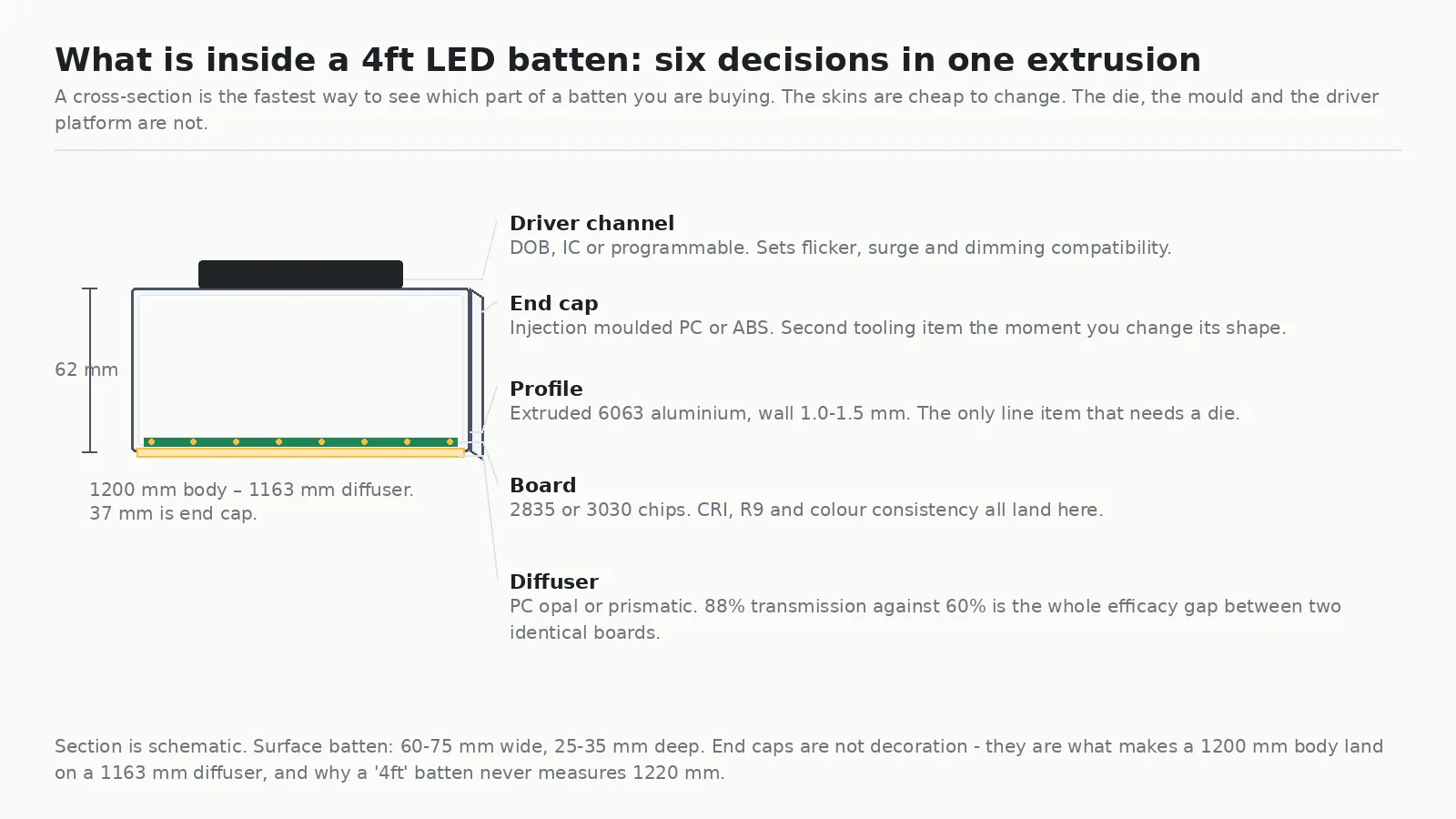
The skins are cheap. The die, the mould and the driver platform are not — which is why “can I change the profile?” and “can I change the label?” should never be in the same paragraph of an RFQ.
Read that picture from the bottom up and the cost order becomes obvious:
- Diffuser. PC, opal or prismatic, 1.5–2.0 mm. Light transmission is the whole efficacy story: an 88% diffuser over an ordinary board beats a 60% diffuser over a good board, and the two look identical on a spec sheet that only quotes chip lumens.
- Board. 2835 or 3030 chips on an aluminium-backed MCPCB. CRI, R9 and colour consistency all live here. On a batten, R9 matters more than buyers expect, because soffit and racking surfaces are often warm-tinted.
- Profile. Extruded 6063 aluminium, 1.0–1.5 mm wall, anodised or powder-coated. It is the heat sink, the structure and the appearance in one part — and the only line item that needs a die.
- Driver. In a channel on the back, potted or open, terminal block at one or both ends. This is where flicker, surge immunity and dimming compatibility are decided.
- End caps. Injection moulded PC or ABS, with or without a cable gland. Second tooling item the moment you want a different shape.
- Suspension kit / clips. Not part of the fixture, but part of the install cost, and a frequent source of “it arrived without the brackets”.
The length ladder: your 4ft batten is 1163 mm
This is the first thing that surprises a first-time batten buyer, and it costs a week if you discover it at the sample stage.
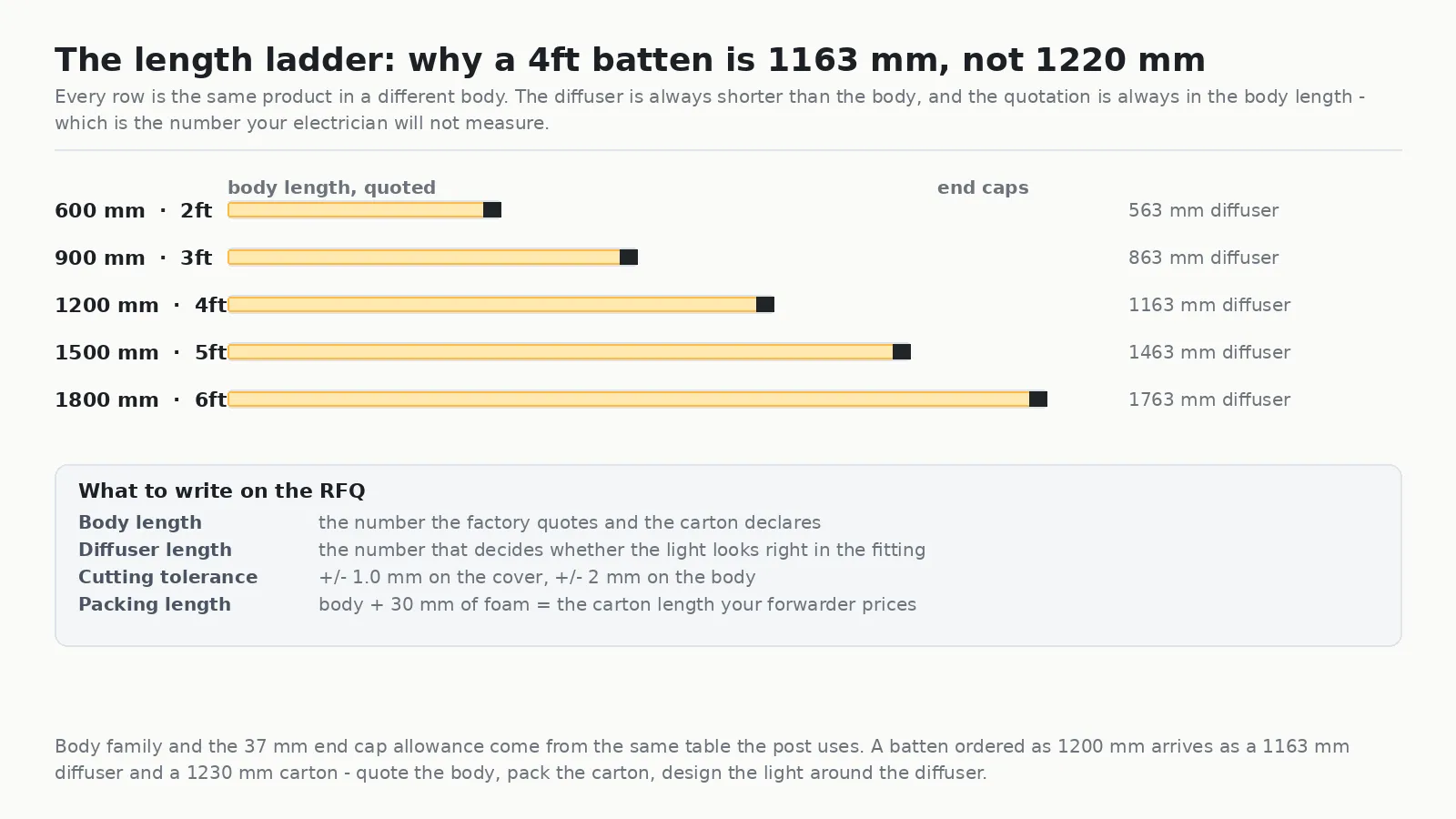
The quoted length is the body length — the aluminium. The diffuser sits inside the two end caps, so a 1200 mm body carries roughly a 1163 mm cover. Nobody is cheating you: a “4ft” fluorescent batten was never 1220 mm either, and every electrician in the trade knows the body is what gets clipped and what gets quoted.
The consequence is practical. If you design a cove, a shelf or a linear run to 1220 mm because you ordered “4ft”, the diffuser will be 57 mm short of your shadow gap. If you order 1500 mm because your run is 1500 mm, you get a 1463 mm diffuser plus 37 mm of end cap. Write both numbers on the drawing:
| On the drawing | What it is | Tolerance you should agree |
|---|---|---|
| Body length | factory quote unit, carton declaration | ±2 mm |
| Diffuser length | what the eye sees, what runs butt to butt | ±1 mm |
| Cut length for a run | body + the joint gap you actually want | per drawing |
| Carton length | body + 30 mm of foam | declared on the box |
One more number that bites: aluminium expands roughly 0.023 mm per metre per kelvin. A 1200 mm profile moving through a 40 K warehouse-to-roof swing moves about 1.1 mm. That is why battens in long continuous runs are butted with a gap rather than pushed tight, and why a “perfectly” tight run buckles its diffuser in summer.
The four spec lines that are actually decisions
Most batten spec sheets carry ten to fifteen lines. Only a handful change the product you receive; the rest are either consequences of those, or numbers that drift without anyone telling you.
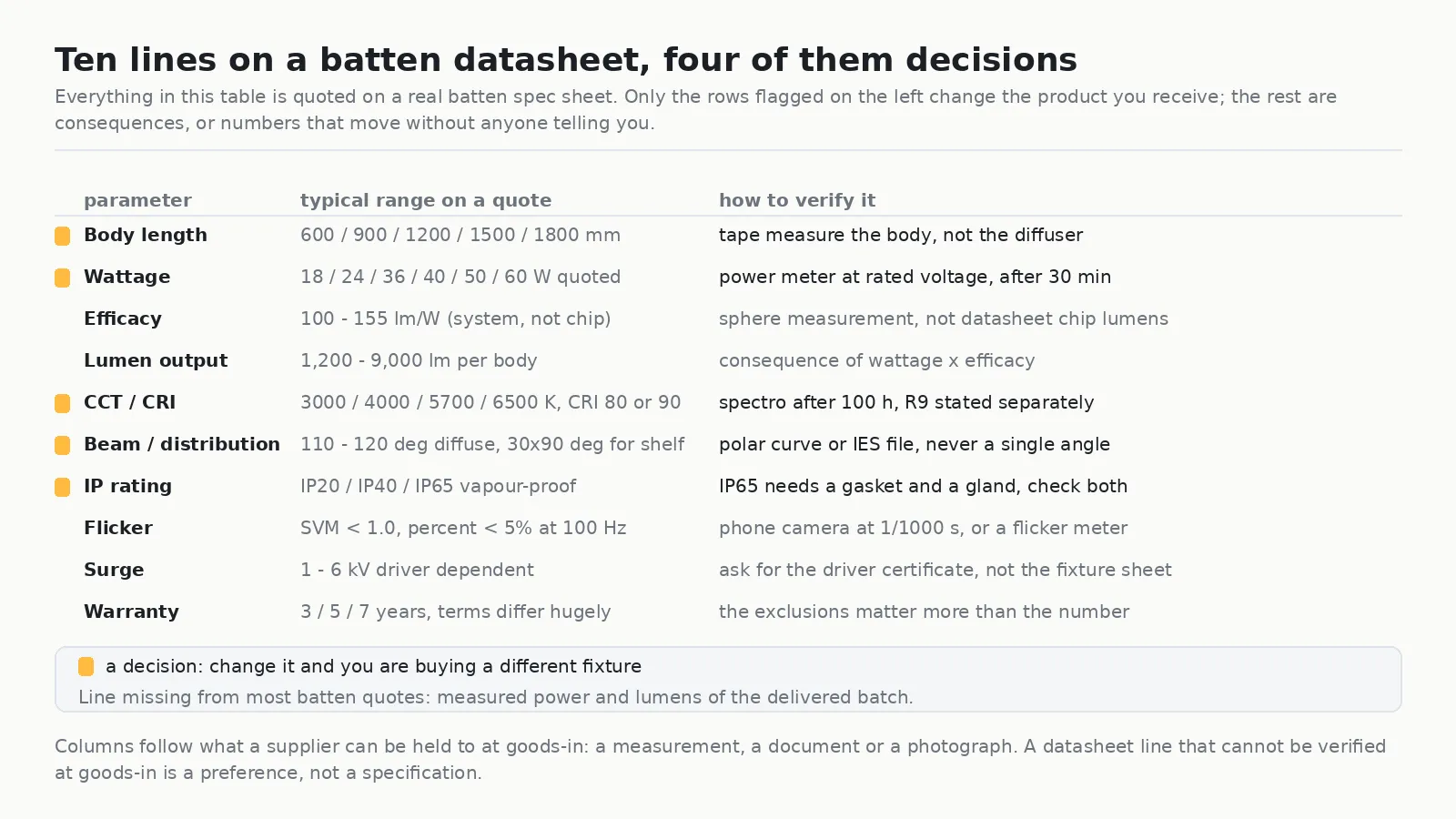
The flagged rows are the decisions: body length, wattage, CCT/CRI, beam distribution and IP. Everything else is downstream or negotiable.
Efficacy is a consequence, not a promise. A batten is quoted at 120–155 lm/W system. That figure is wattage × board efficacy × diffuser transmission × driver efficiency, and the same board can be sold as 110 or 140 lm/W depending on which diffuser the factory clips on. Ask for the sphere report of the finished fixture, not the chip datasheet.
CCT and CRI belong together. A 4000 K batten at CRI 80 and a 4000 K batten at CRI 90 look identical in a photograph and completely different on a racking label. If your application has merchandise, food or skin tones, specify CRI 90 and R9 ≥ 50 in writing — and expect the lm/W figure to drop by 8–12%.
Distribution is a curve, not an angle. A diffuse batten is roughly a 110–120° Lambertian wash. For shelving you may want an asymmetric optic (30×90°) so the light grazes the product instead of the aisle. That is a lens change, which is a tooling conversation, which is the next-but-one section.
IP is a construction, not a sticker. IP65 on a batten means a gasketed diffuser, a glanded end cap and clips with enough compression to hold the seal through thermal cycling. Ask for the gland and the gasket in the sample photographs. An IP65 label on a fixture whose end cap has no gland is a document, not a product.
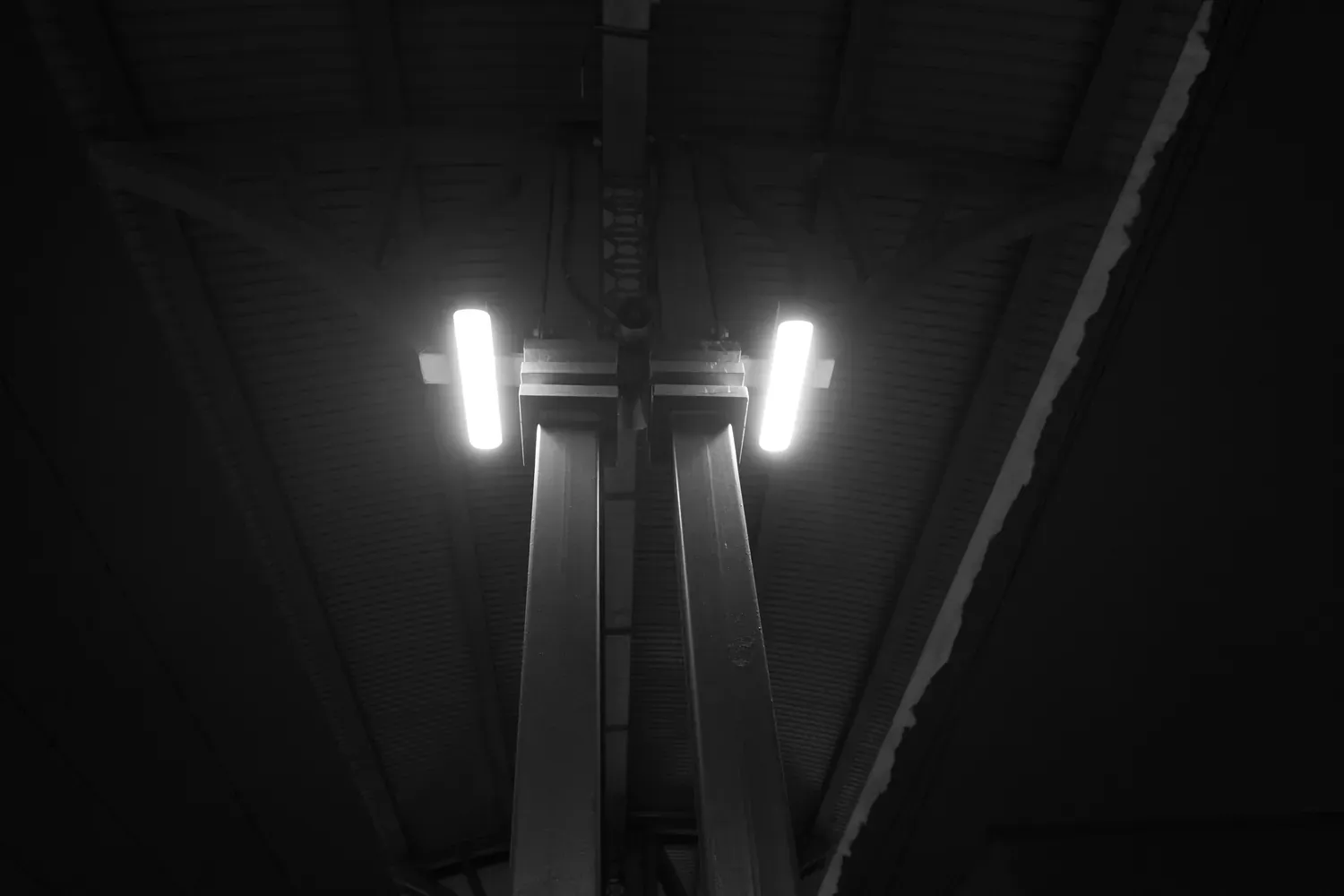
High mounting heights punish a narrow distribution and reward a wide one. In a shed like this, uniformity comes from spacing and beam width together, never from raw lumens.
Matching lumen packages to room geometry
Buyers usually pick wattage from a spreadsheet. The better route is to start from the room and work backwards: mounting height, spacing and target lux fix the lumen package, and the wattage then follows from whichever efficacy band the budget allows.
For a single row of battens in a corridor, plant room or car park aisle, the working rule is a spacing-to-height ratio around 1.2. Mounted at 2.8 m, that is a luminaire every 3.4 m. At 4 m, every 4.8 m. Two rows and you halve the density. It is a starting point, not a design — but a supplier who cannot discuss spacing at all is quoting you a box, not a lighting scheme.
Rough lumen packages the trade quotes on a 1200 mm batten:
| Wattage | Economy (≈110 lm/W) | Standard (≈130 lm/W) | High efficacy (≈150 lm/W) |
|---|---|---|---|
| 18 W | 1,980 lm | 2,340 lm | 2,700 lm |
| 24 W | 2,640 lm | 3,120 lm | 3,600 lm |
| 36 W | 3,960 lm | 4,680 lm | 5,400 lm |
| 40 W | 4,400 lm | 5,200 lm | 6,000 lm |
| 60 W | 6,600 lm | 7,800 lm | 9,000 lm |
If you need a target illuminance rather than a lumen package, run it through the lux calculator and then check the spacing against the photometric guide. For a project that will be submitted for review, the deliverable is an IES file plus a DIALux run — not a table like the one above.
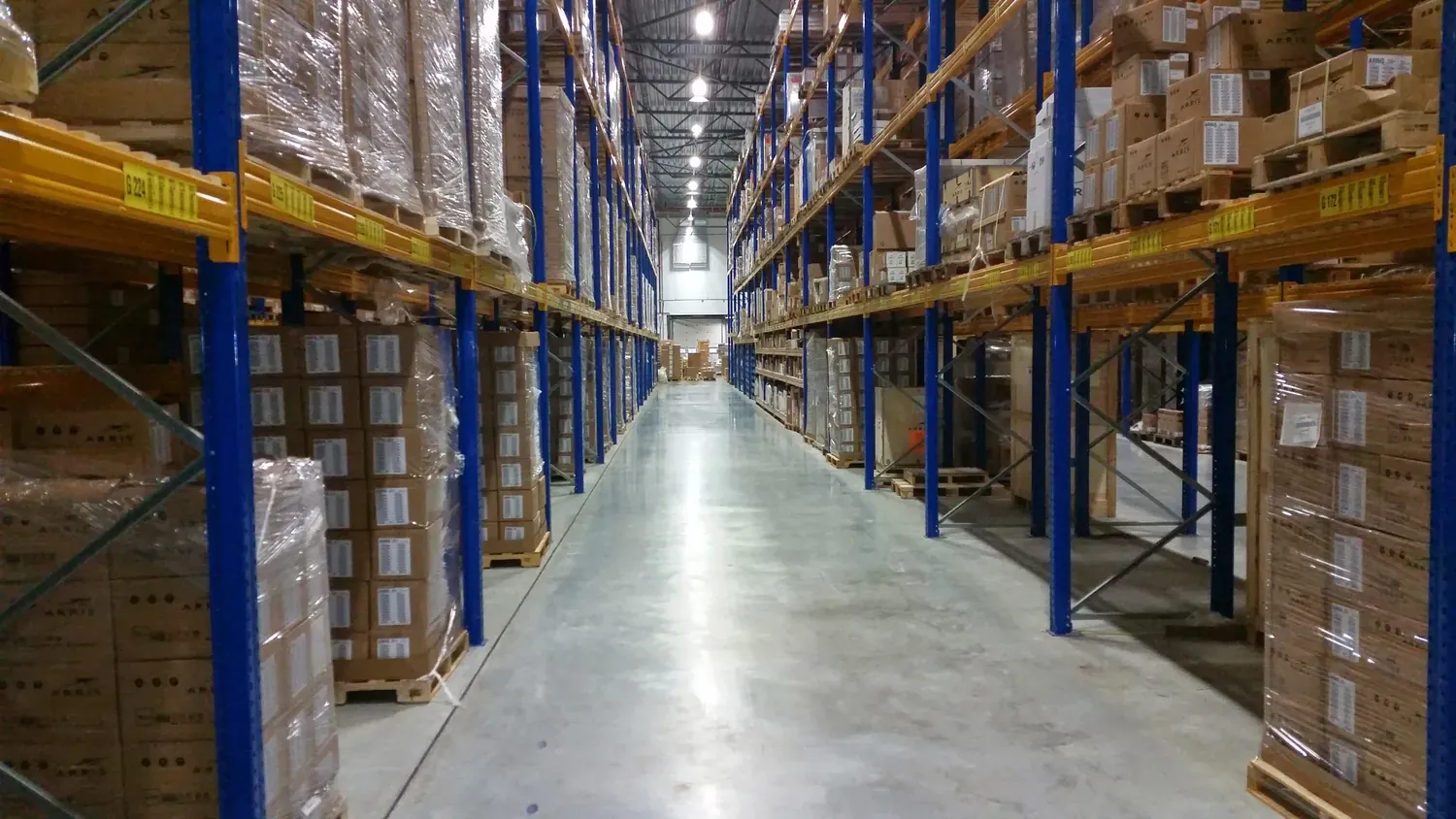
Aisle lighting is where the spacing rule earns its keep: racking faces need vertical illuminance, and that comes from distribution and mounting height, not from adding fixtures.
Drivers: four options, four different failure modes
Every part of a batten is a commodity except the driver. It is also the part that decides what the client says about your brand in year three.
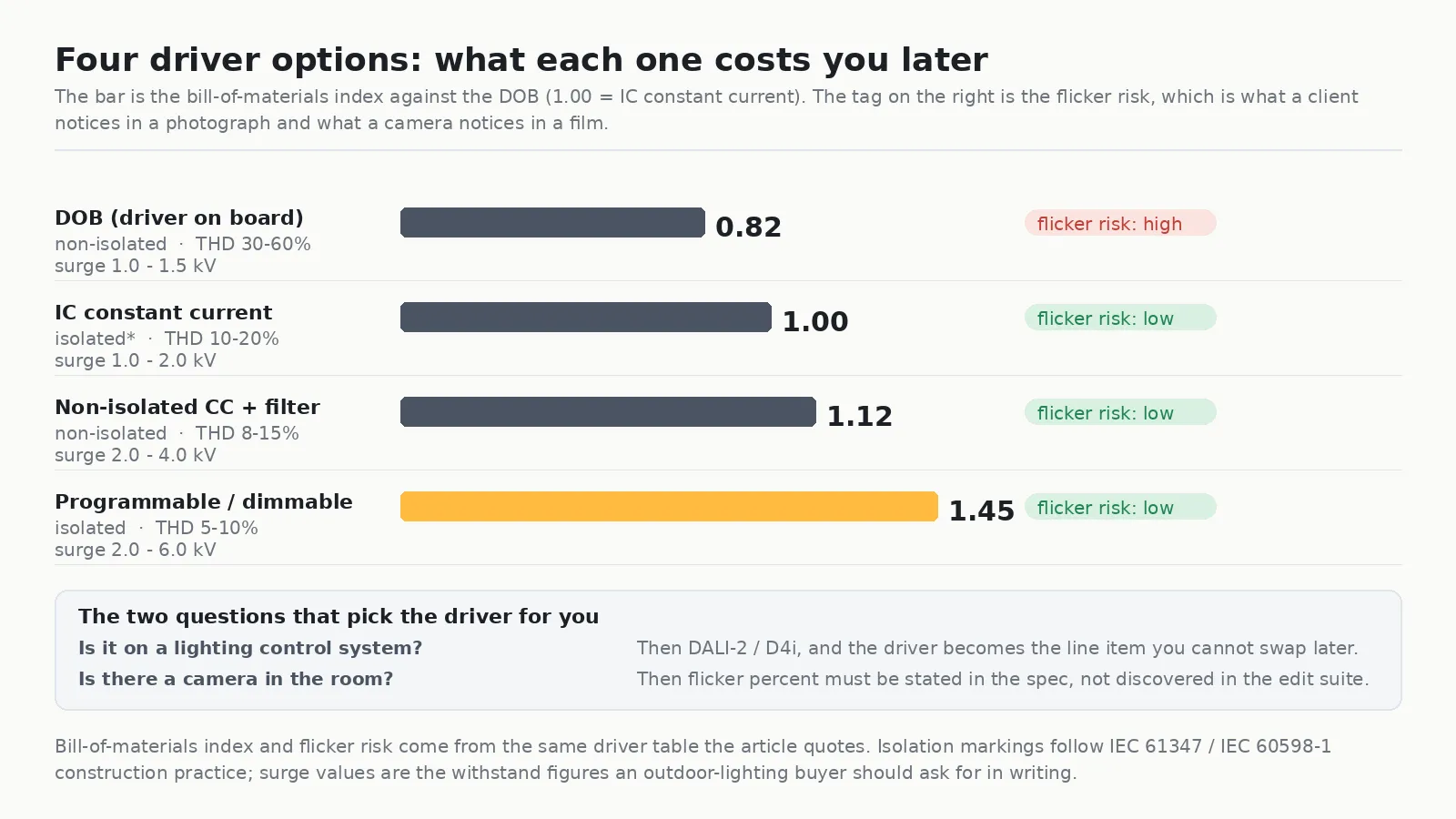
- DOB (driver on board). Chips and driver on one board, no electrolytic capacitor, lowest BOM, smallest end cap. THD lands anywhere from 30% to 60%, flicker is generally visible, and there is no isolation. Fine for a plant room; not fine for a car park with CCTV, and not acceptable on many utility rebate schemes.
- IC constant current. A linear driver IC with an external MOSFET, plus the passives to keep THD and ripple sane. This is the volume standard for a good batten: THD 10–20%, low ripple, low flicker, and a component count you can actually inspect.
- Non-isolated CC with an input filter. Adds common-mode chokes and an X-cap; THD 8–15%, better surge tolerance, still no galvanic isolation. A common choice where a budget exists but a full programmable driver does not.
- Programmable / dimmable. A real driver with 0–10 V, 1–10 V, DALI-2 or D4i, plus a set of protections you can read on the label. Highest BOM, and the only option that answers a lighting-control specification or a sensor-based daylight scheme.
Two things decide the answer faster than a cost comparison: whether the fixture is on a control system (then DALI-2 / D4i, and the driver becomes the line item you cannot swap later), and whether there is a camera in the room (then flicker percent and SVM belong in the spec, not in the post-install complaint).
Flicker is measurable and worth specifying as a number: PWM above 3 kHz and ripple below 5% at 100 Hz keeps a phone camera from banding. If you want the physics behind the numbers, the CCT guide and CRI guide cover the spectral side, while the driver detail — topology, lifetime, capacitor selection, dimming protocols end to end — is its own article. This one stops at “which driver, and how do I write it into the PO”.
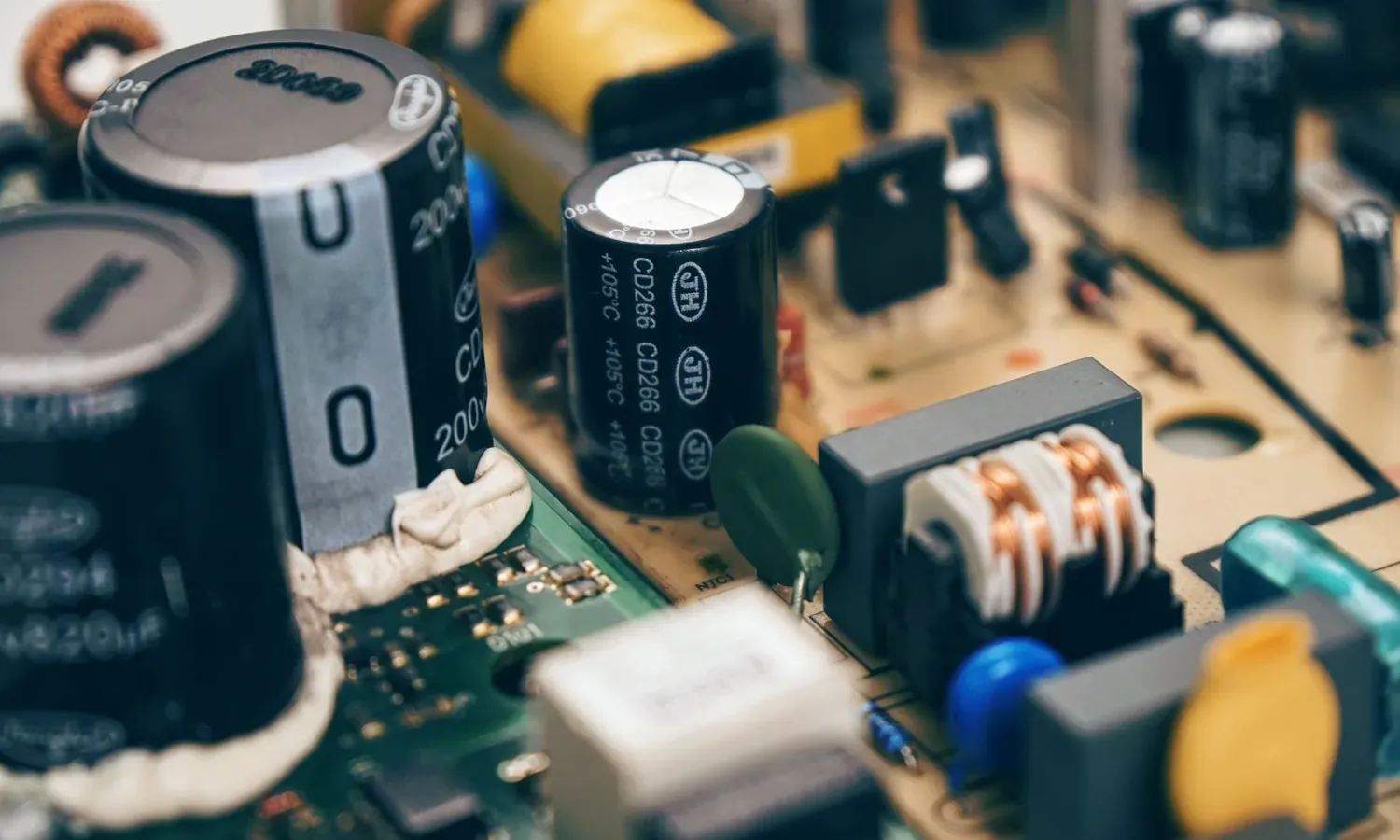
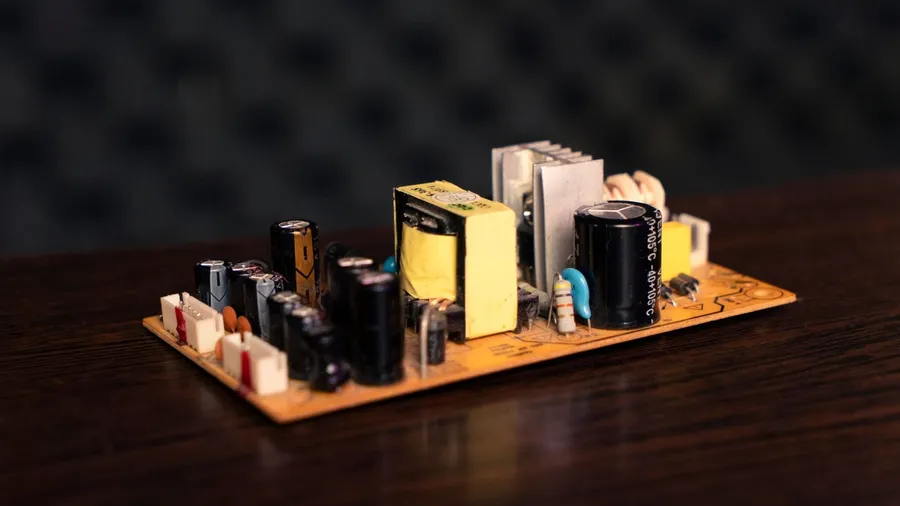
The 105 °C electrolytics are the parts that set a driver’s life. A “5 year warranty” printed on a carton is a promise about these two cylinders, not about the LED.
Three driver questions that separate a real quotation from a template:
- Which driver, by part number? Not “CE driver” — a part number and a datasheet. That single question tells you whether the factory is engineering or assembling.
- What is the surge withstand, tested how? 1 kV, 2 kV, 4 kV and 6 kV are all sold as “surge protected”. Ask for the driver certificate, and ask whether the test was differential or common mode.
- What happens at end of life? A driver that fails open leaves a dark batten; a driver that fails short leaves a hot one. Ask how the protection is configured, and whether the factory’s own aging rack caught any of them.
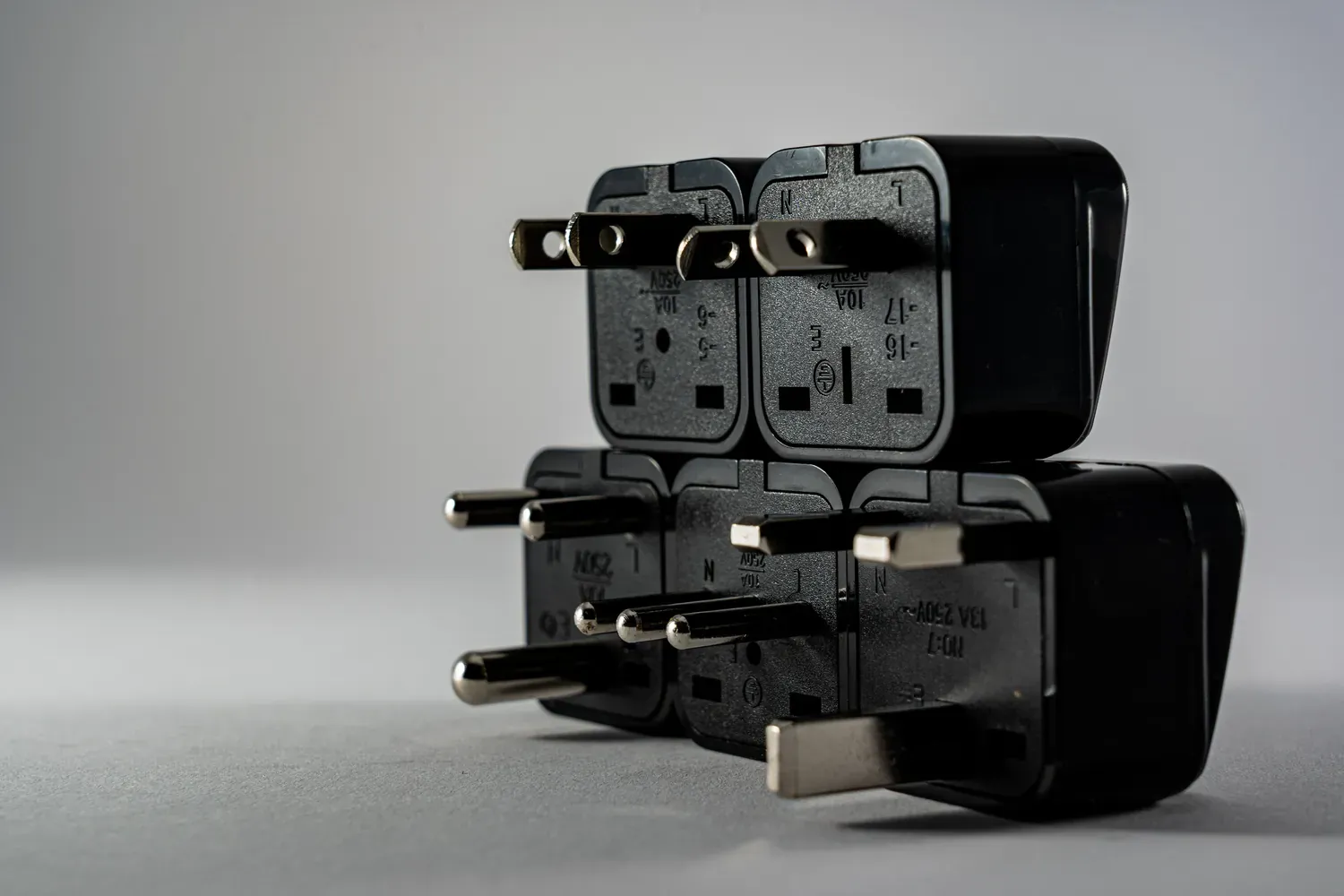
Three identical-looking drivers can differ by 2× in THD, surge rating and price. The part number is the only honest identifier.
Driver + batten = a thermal system, not a parts list
A 36 W batten in a sealed aluminium profile is a small thermal machine. The board heats, the profile spreads, and the driver sits in the hottest, tightest part of the assembly with the least airflow. Most batten warranty claims we see are not LED failures at all — they are driver failures caused by a channel that was designed for a 20 W board and then sold with a 40 W one.
Three cheap habits that prevent it:
- Ask for the temperature-rise test at rated load. Ta point on the driver, Tc on the board, ambient recorded, 60 minutes minimum. A factory that has never measured this will happily quote 50,000 hours anyway.
- Ask for the aging rack photographs. 100% aging at rated voltage for 2–4 hours catches early driver failures at a rate no incoming inspection will match. We walk through this in the LED factory QC line.
- Specify the derating. If the fixture is going into a roof void at 45 °C, say so. Derating the driver current by 10–15% costs a little light and buys years of life.
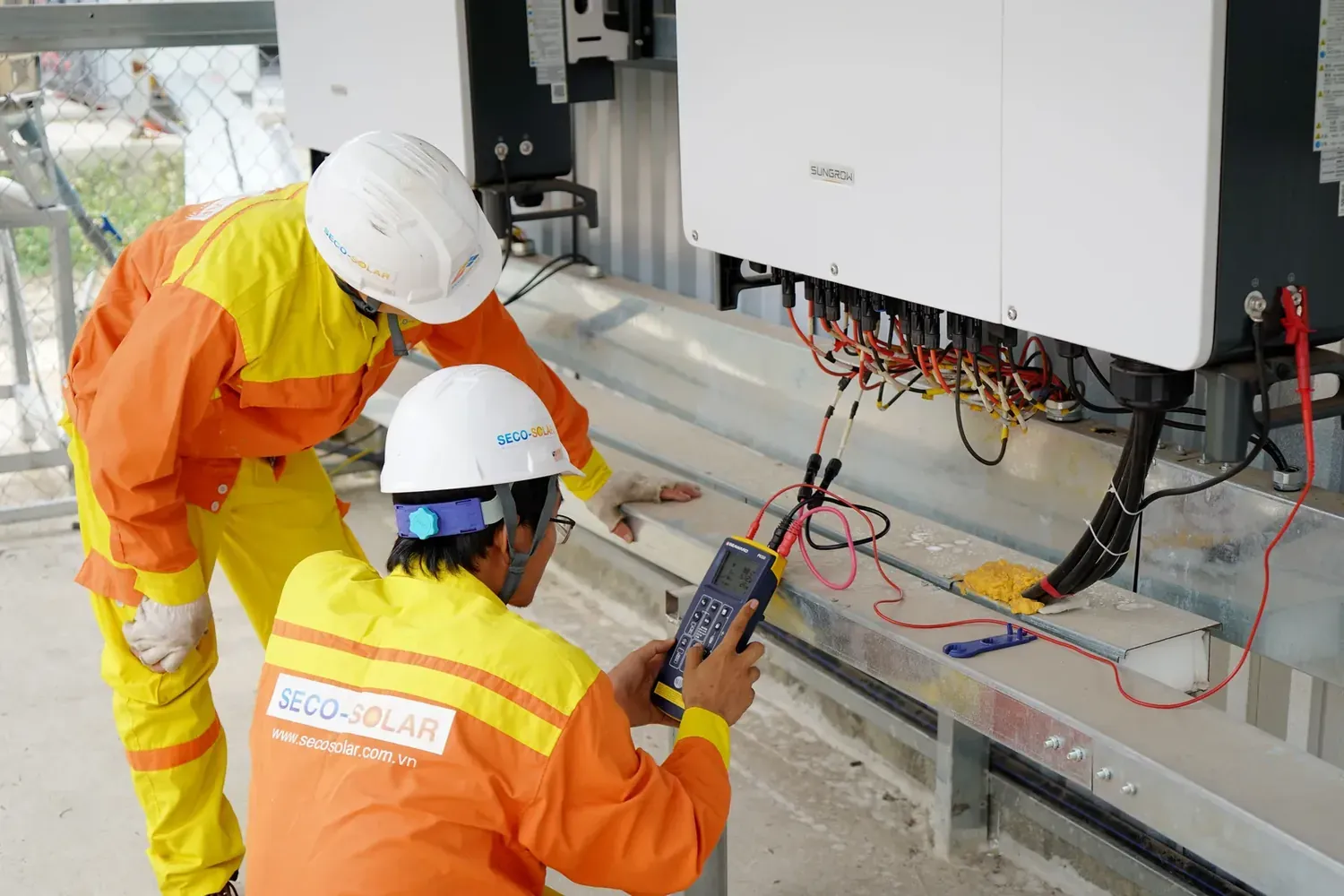
The measurement that matters on site is input power and illuminance at a known distance. Everything else is a document.
What OEM and ODM actually change on a batten
The words get used interchangeably in the trade, and the distinction that matters commercially is who owns the tooling.
ODM batten. You start from a platform the factory already has: profile die, end cap mould, board design and a family of certificates. You change the layers that are cheap to change — label, carton, CCT, CRI, lumen package, driver tier, diffuser finish, and the length within the existing family. You get your brand on a product that exists, at a real MOQ, in weeks rather than months.
OEM batten. You bring (or buy) the drawing. The profile die and the end cap mould are your tooling, the certificate carries your model number, and nobody else can buy your body. You also own the die maintenance, the minimum extrusion run and the entire certification cost.
For a batten the OEM route is genuinely worth it in one case: when the profile itself is the product — a bespoke width that meets a joiner’s shadow gap, a serviceable gear tray, a body that has to match a track system already on site. Otherwise the ODM route wins on time and on the first order. If you are still weighing the two models, our ODM vs OEM breakdown and the private label vs OEM vs ODM comparison go through the contracts; the OEM/ODM services page covers how we structure a project.
An extrusion die is not a photo opportunity — it is a five-figure line item and a maintenance schedule. This is why a “new profile” and a “new label” belong to different conversations.
The MOQ ladder, step by step
Minimum order quantity is not one number. It is a staircase, and each step is paid for by something in the supply chain — a print plate, an extrusion die, an injection mould, or the driver supplier’s own minimum.
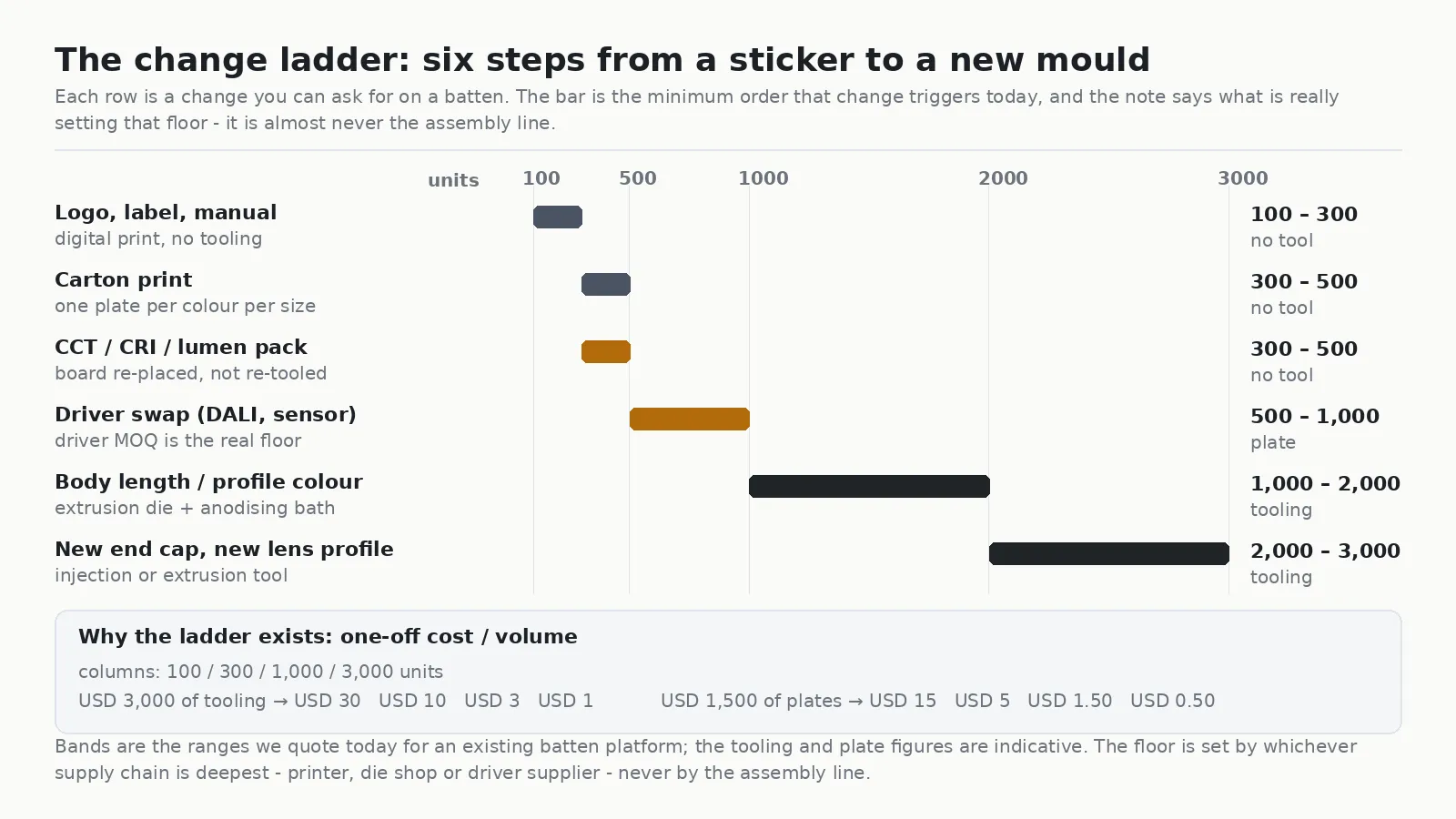
Reading the ladder down: your logo, manual and label are digital print, so 100–300 units is real. Carton print needs one plate per colour per size, which lands at 300–500. A CCT, CRI or lumen-package change is a board re-placement, not a re-tool, so 300–500. A driver swap to DALI or an integrated sensor is at 500–1,000 because the driver supplier’s MOQ is the actual floor. Body length or profile colour means the extrusion die and an anodising bath: 1,000–2,000. A new end cap or lens profile is a tool: 2,000–3,000.
The arithmetic behind the ladder is the same in every row. Divide a one-off cost by the volume. USD 3,000 of tooling is USD 30 a unit at 100, USD 10 at 300, USD 3 at 1,000 and USD 1 at 3,000. The bill of materials never changed — only the denominator did.
This is why “MOQ” negotiations usually fail. Buyers argue volume; the factory is defending a plate or a die. The productive question is not “can you do 200?” but “which of my changes is the one causing the minimum, and what is the cheapest version of that change?” A shorter body in a stock profile, or a driver from the factory’s existing platform, often cuts the MOQ by a factor of four without touching the part of the product the client sees.
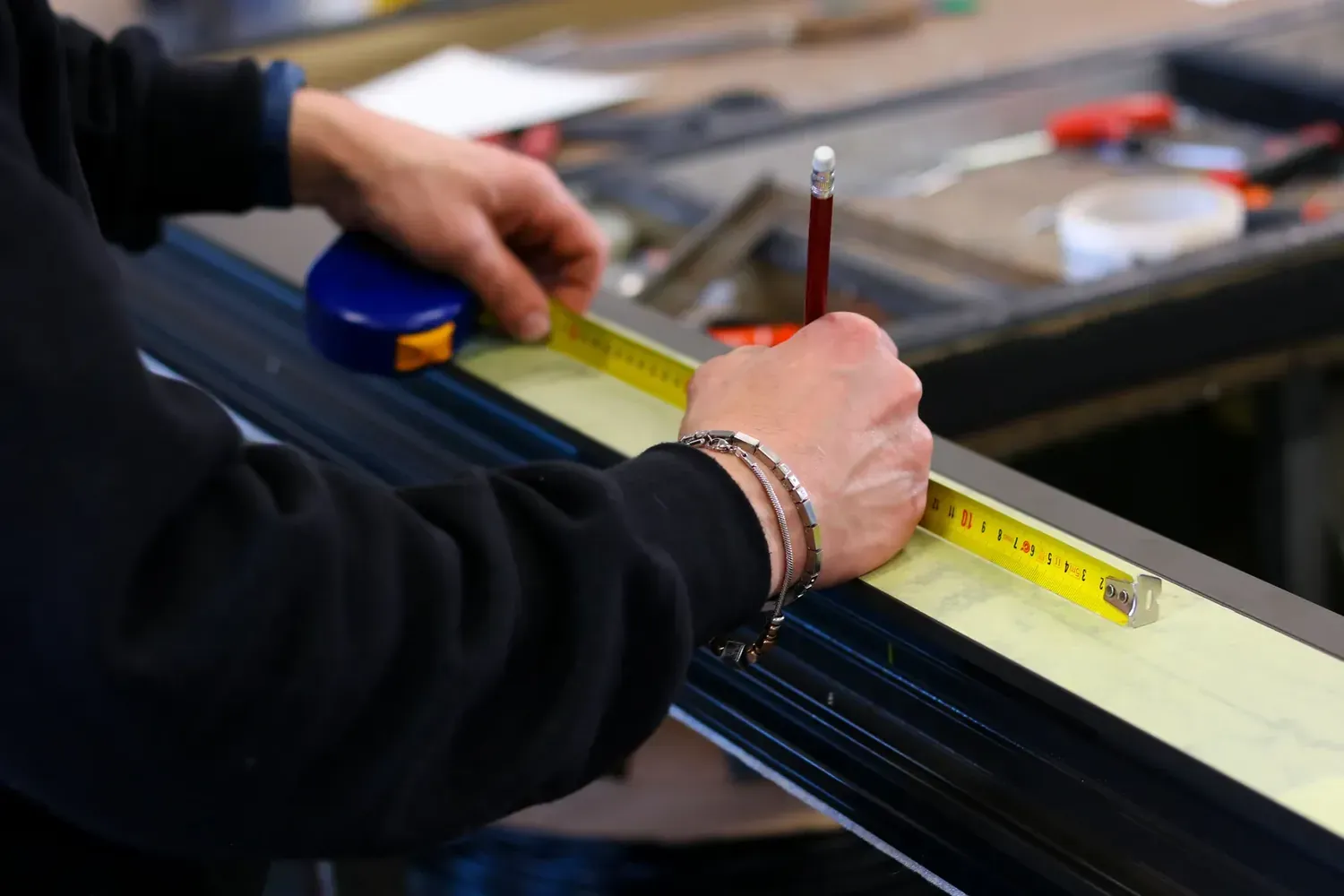
Cutting tolerance is worth writing down: ±1 mm on the diffuser, ±2 mm on the body. It is the difference between a clean run of five and a run you have to re-order.
Packaging: the part of a batten that decides your freight bill
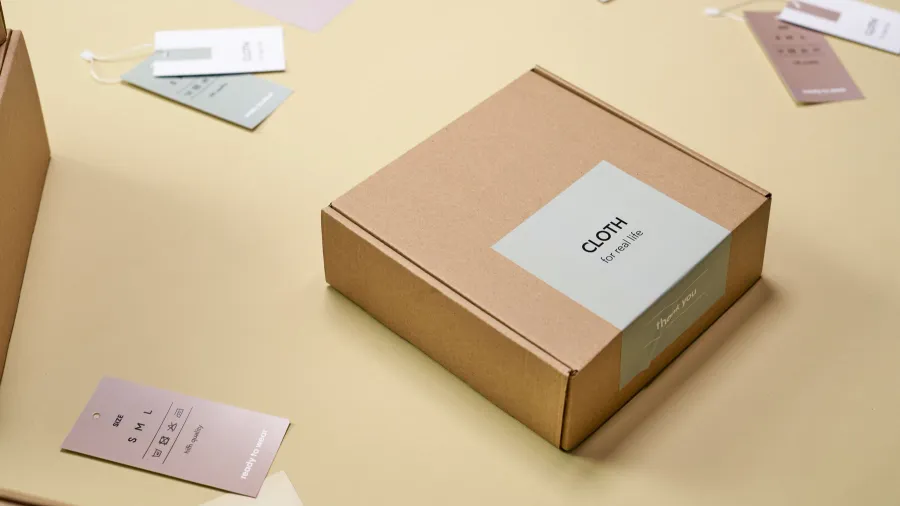
A batten carton is long, thin and mostly air. In sea freight that is harmless. In air freight it is decisive, because chargeable weight is volumetric: length × width × height ÷ 5,000 (cm³/kg). A 1200 mm body packs into roughly a 1230 × 92 × 78 mm carton, which is 8,828 cm³ — about 1.77 kg chargeable against 1.9 kg actual. Fine. Change the packing to two battens per carton with a divider and a thicker foam set, and the volumetric figure can overtake the actual weight, at which point your forwarder starts pricing air.
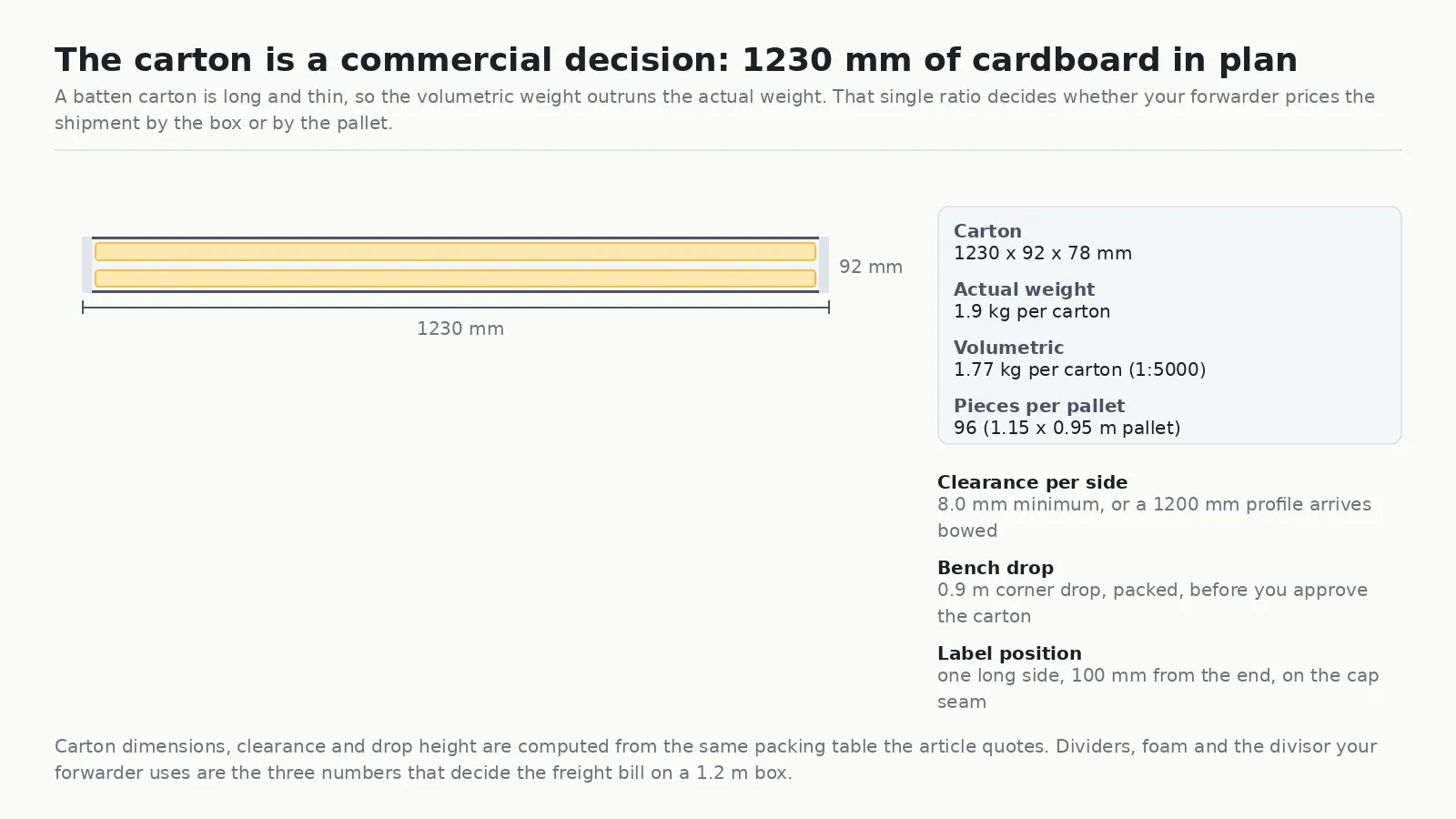
What actually needs deciding, in order of how often it goes wrong:
- Clearance. Each side needs at least 8 mm, and 5% of the profile width is a better rule. A 1200 mm extrusion packed snug arrives bowed, and a bowed batten never clips back flat.
- End protection. Moulded pulp end caps are the sustainable option and survive a bench drop. EPE foam corners are the cheap option. Dense foam plus honeycomb is what you use when the diffuser is the expensive part.
- Battens per carton. One per carton keeps handling simple and damage low. Two per carton halves the cardboard and can double the drop damage. Three or more is a pallet-level decision.
- Divider. A corrugated U-channel between bodies costs cents and prevents the worst failure mode on a batten: diffuser-on-diffuser abrasion in transit.
- Print. One-colour flexo on white kraft, or a litho sleeve over a plain carton. The sleeve is a second SKU to manage, but it lets you change a market-specific carton without re-printing every box.

Substrate choice is a spec line too: kraft board takes one-colour flexo beautifully and full-colour litho badly. Ask what the print method is before you approve artwork.
The market-specific rules are worth a paragraph of their own, because they are not optional. In the EU and UK the carton is part of the packaging waste obligation, so the material mix and its marking matter. In Australia, electrical accessories sold alongside the fixtures carry their own compliance obligations — we covered the detail in the SAA and RCM accessories guide. For North America, the carton should declare the model, wattage, CCT, CRI, IP and the certificate file number, because that is what a distributor’s receiving clerk will check against the PO.

Packing is the last place a defect can still be caught. A carton line with a final visual check and a drop-test sample per batch is cheaper than the returns.
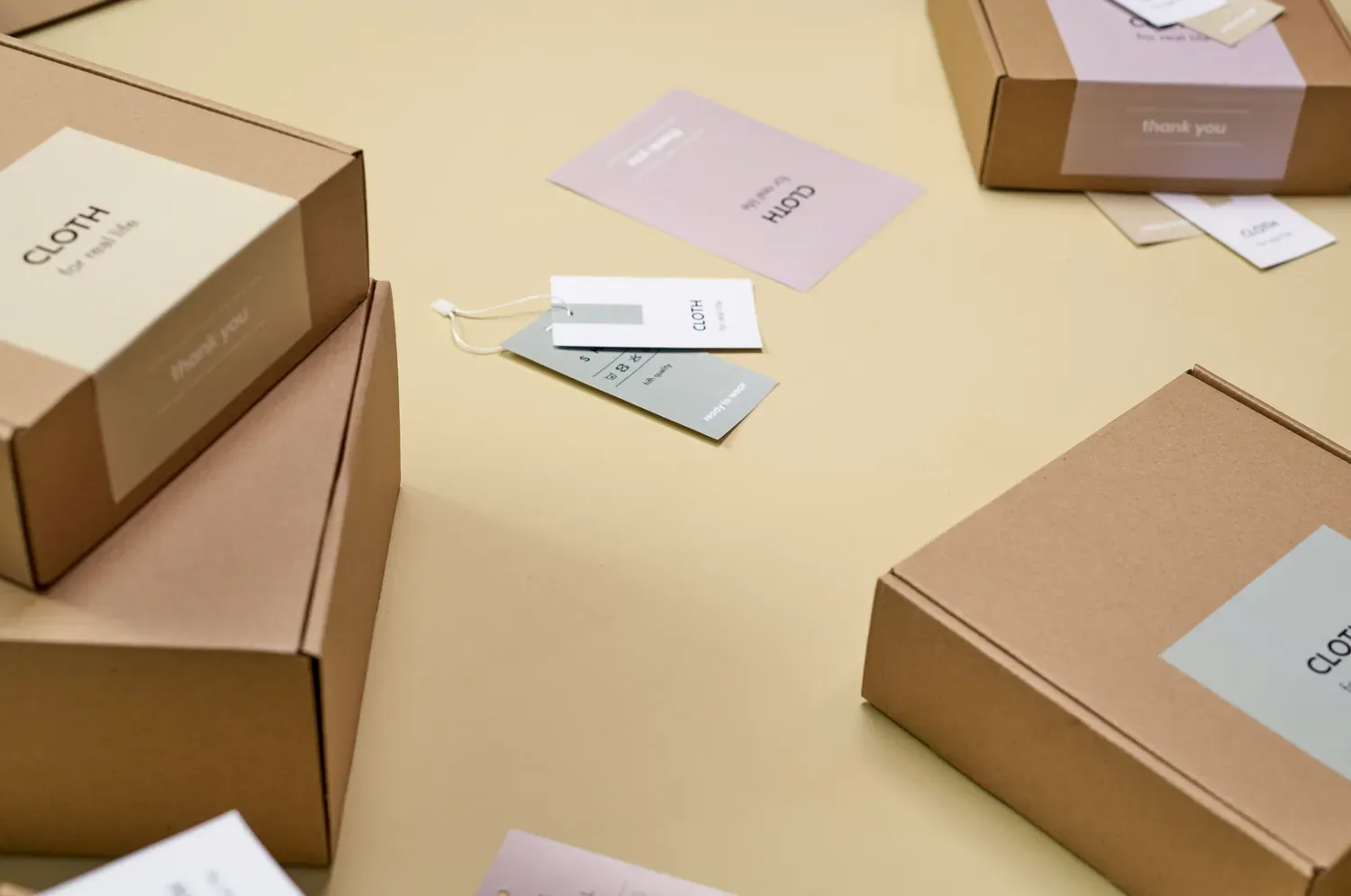
A label and a sleeve are the two cheapest branding moves on a batten, and both of them live under the 500-unit step of the ladder.
Pallet, container and the freight arithmetic
Packaging turns into money in three places: pallet, container and last mile.
A standard 1.15 × 0.95 m pallet takes a 1230 mm carton across the diagonal — which is why batten cartons are usually packed in layers of four to six with the long axis along the diagonal, and why “carton length 1230 mm” is not a problem in practice. Roughly 96 pieces of a 1200 mm batten per pallet, ~1.6 m high including the pallet, is a working number for a carton of this size.
A 40 ft high-cube is about 76 m³ and 67 m³ practically usable after pallet overhang. At six pallets per layer and a sensible stack, a batten order of 2,000–3,000 pieces fills a container comfortably. That is fine for a distributor and terrible for a first-time private-label test — which is exactly why the first order should go by LCL or by air against a smaller carton.
Two freight details that catch people:
- Carton markings. The box needs model, quantity, gross/net weight, dimensions and a country of origin, on one long side. If the marking is missing, the receiving warehouse re-labels and bills you for it.
- Pallet type. ISPM 15 heat-treated wood for anything crossing a border; plastic pallets where the customer runs an automated warehouse. Say which one on the PO — the factory will default to whatever it uses for everyone else.
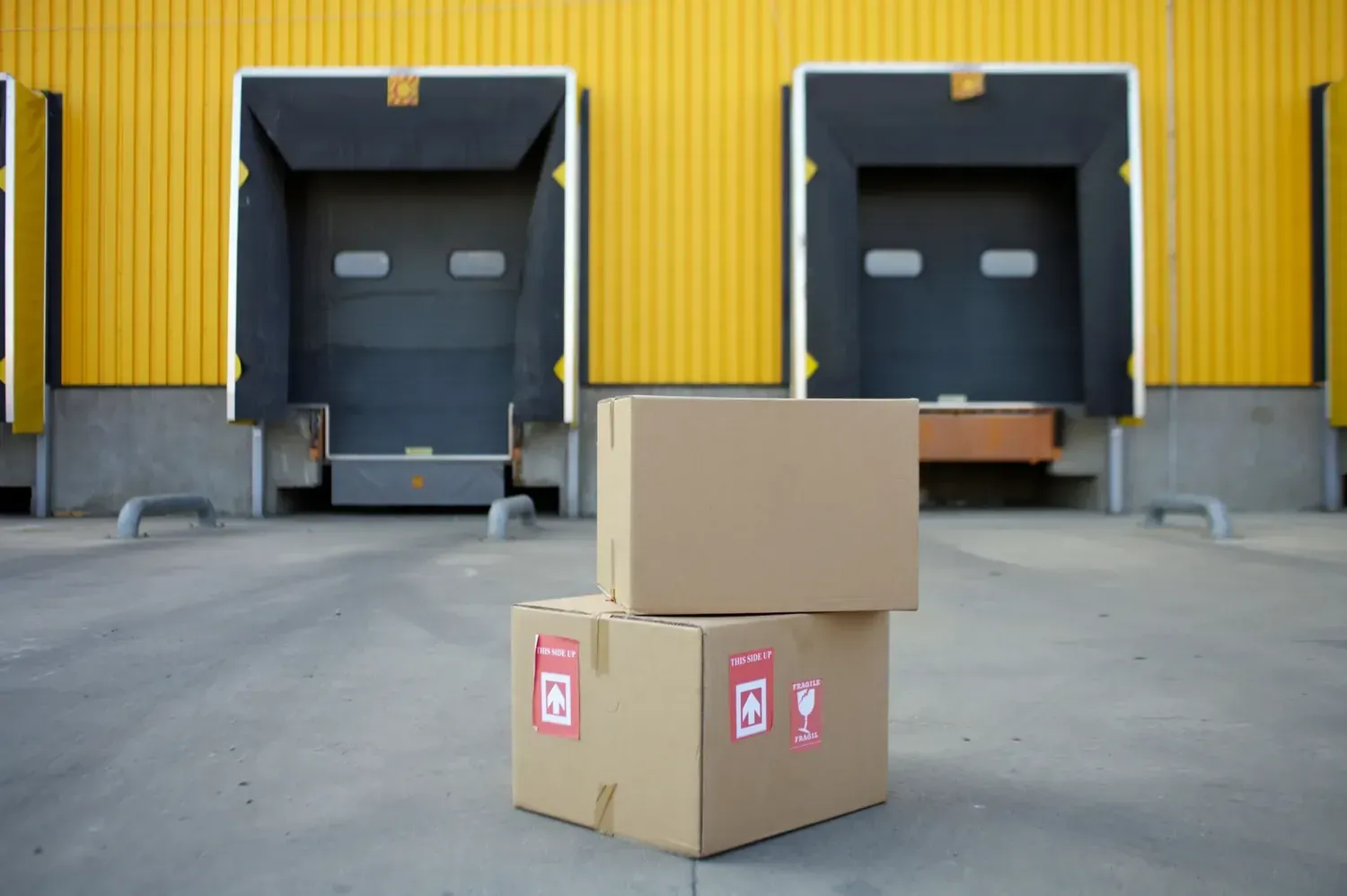
The loading dock is where the packaging spec finally gets tested by reality. Photos of a finished pallet, taken before it leaves, are the cheapest insurance in the whole order.
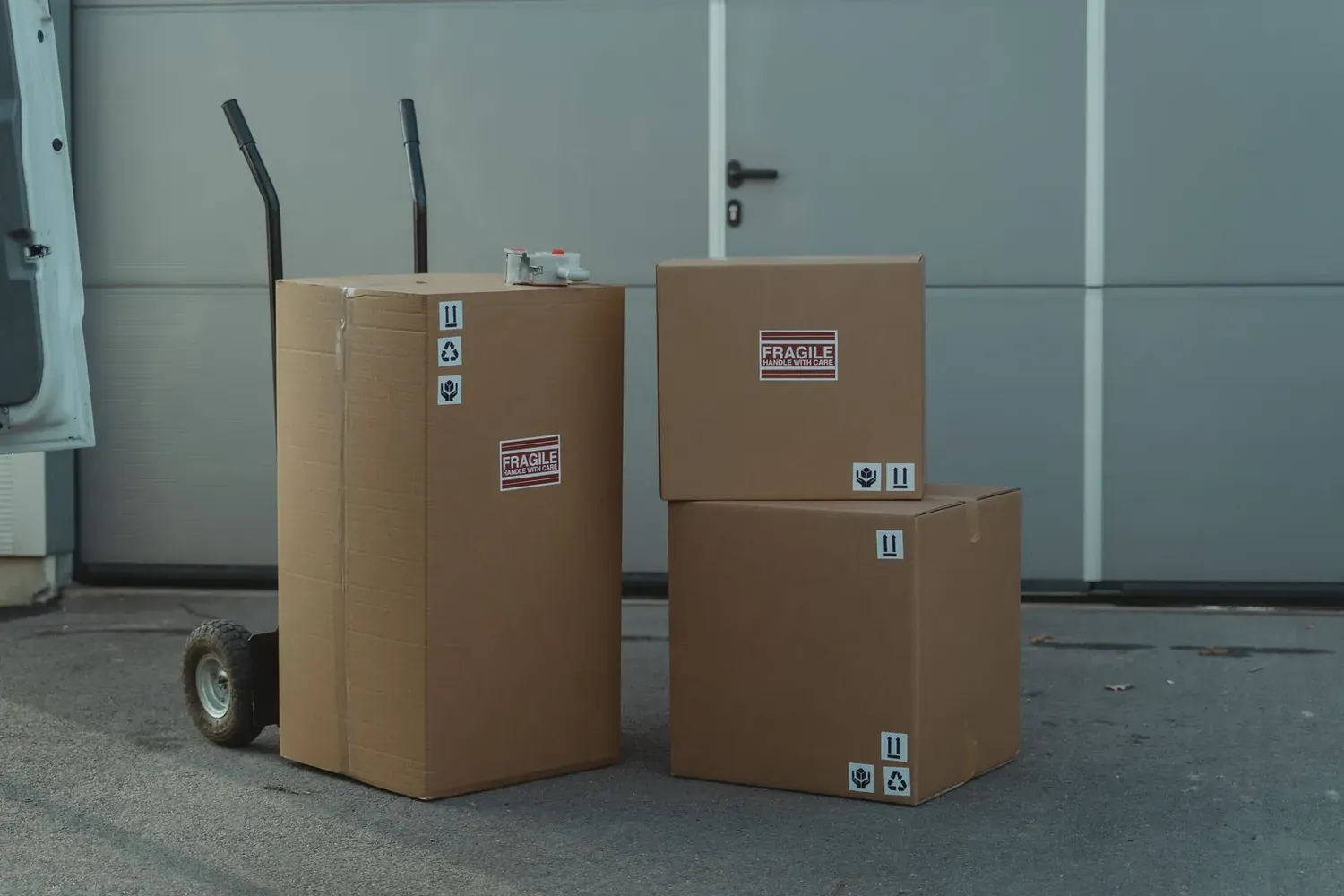
For a first order, small and frequent beats one big container. It also makes the second order cheaper, because you will have found the three things you got wrong.
An RFQ template that gets a real answer
Most batten RFQs get a template reply because they were a template question. This is the version that comes back with a drawing, a driver part number and a carton dimension.
Product: integrated LED batten, surface mounted, ODM from your platform
Market: EU / AU / US / UK   (state the certification route)
Body length: 1200 mm body, 1163 mm diffuser (confirm your tolerance)
Wattage / efficacy: 36 W, >= 130 lm/W system, sphere report required
CCT / CRI: 4000 K, CRI 90, R9 >= 50
Distribution: diffuse 110-120 deg; IES file required
IP / IK: IP20 standard; quote the IP65 vapour-proof variant separately
Driver: IC constant current, THD < 15%, surge >= 2 kV, part number in the quote
Flicker: ripple < 5% at 100 Hz, state the PWM frequency
Housing: 6063 extrusion, anodised natural; wall thickness in the drawing
Label / carton: our logo, one-colour flexo, model and certificate number on the long side
First order: 300 units, 2 lengths (1200 + 1500 mm), 1 pallet
Second order: 1,500 units, same SKUs
Deliverables: drawing, driver datasheet, sphere report, aging record, carton dimensioned sketch
Three lines in that template do most of the work. “Part number in the quote” eliminates the assemblers. “Sphere report required” eliminates the chip-lumen brochures. “Second order: 1,500 units” is what actually moves the price, because it tells the factory this is a product line and not a one-off.
If you have never run a factory audit and this is your first order, read the six-step sourcing checklist and the factory vetting guide before the RFQ, not after. Sampling, approval and QC on a custom order are covered step by step in QC for custom LED orders.
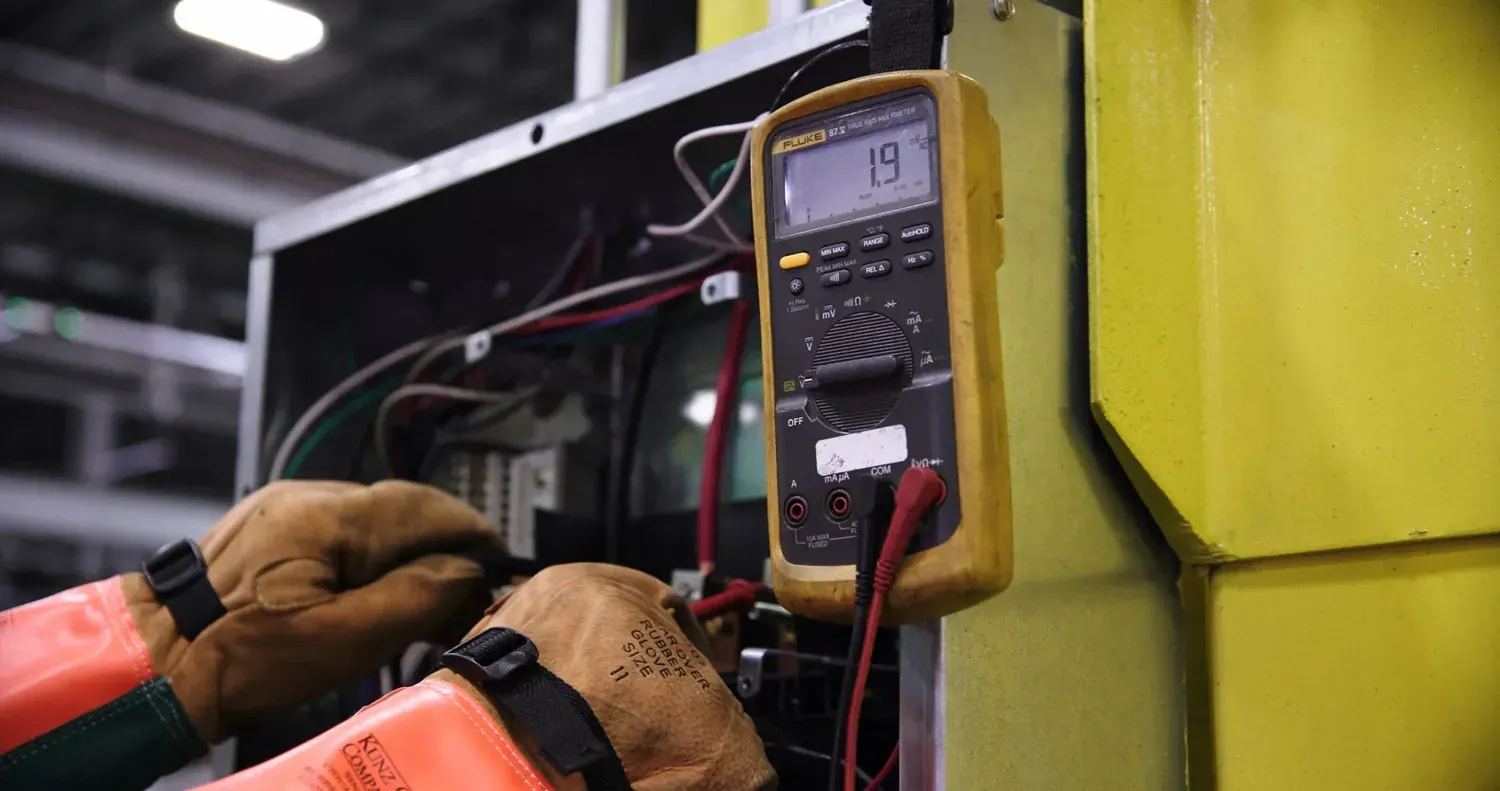
The install is where the spec becomes visible: input power at the panel, illuminance at the floor, and whether the driver hums when the contactor drops.
Certification is a route, not a logo
A batten crosses borders as an electrical product, so the certificate route depends on the destination market, and it is decided by the construction — not by the factory’s existing paperwork.
- EU: CE with the LVD and EMC directives, RoHS, and a test report to the EN 60598-1 family with the appropriate part 2 section. ErP applies to the light source, which on an integrated batten means the whole fixture.
- UK: UKCA, same technical standards, different paperwork. Post-Brexit some distributors still accept CE, but you should not assume it.
- Australia / New Zealand: the fixture is a declared article, and the RCM mark carries the EMC and electrical safety obligations.
- North America: UL or ETL to UL 1598 for the luminaire, plus driver-level recognition. A batten sold with a driver that is not recognised makes the whole article the problem.
- Middle East / Asia: often a national scheme layered on an IEC test report, and quite often a country-of-origin document as well.
Whatever the market, the practical rule is: do not change the driver, the board or the body structure after the certificate is issued unless the factory has confirmed the certificate still covers the article. A batten is small enough that people assume the certificate transfers; it does not. Our ETL certification walkthrough and CE vs ENEC guide go through the two most common cases in detail, and the certifications page lists what our own files cover.
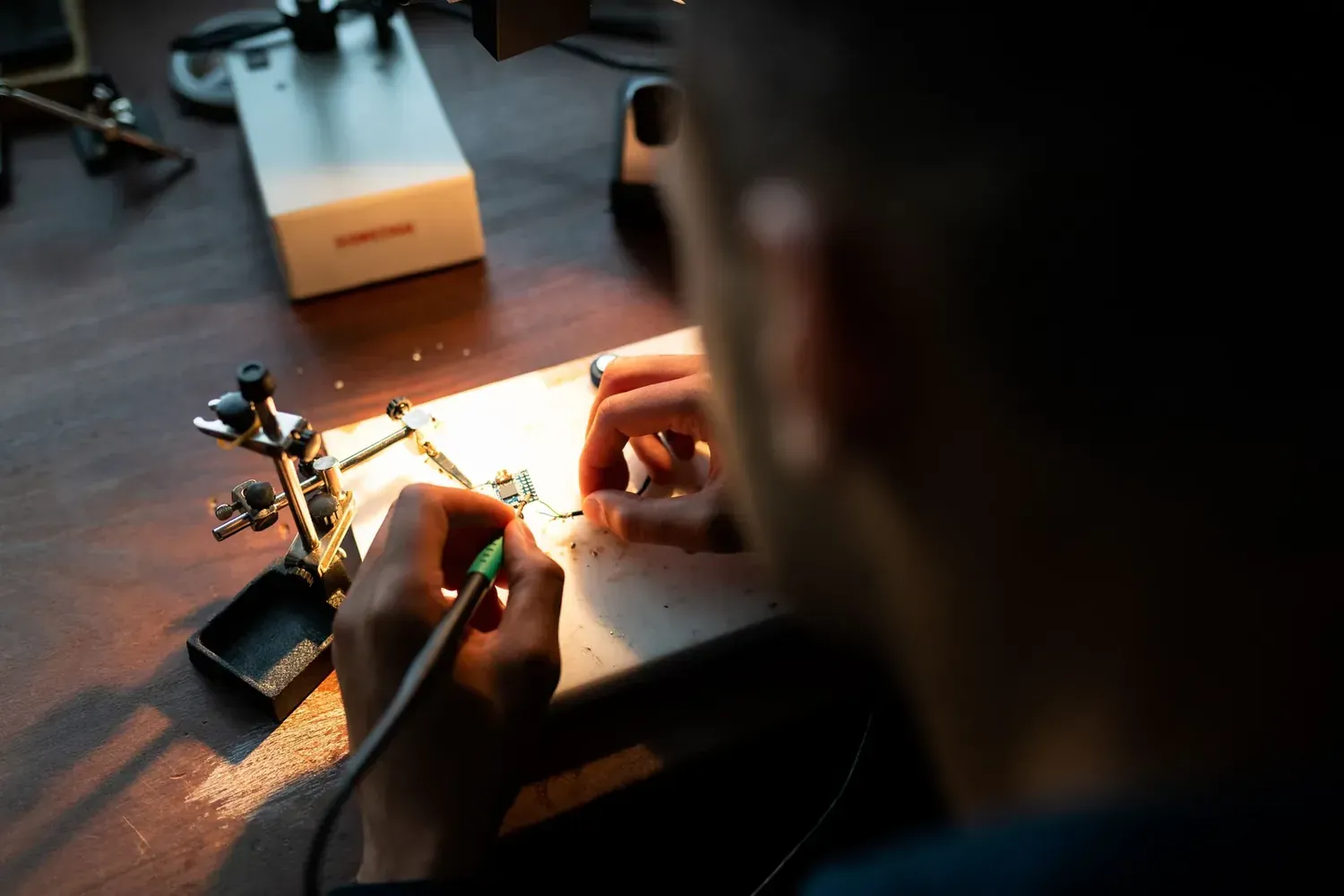
Every change after certification is a change to the article the certificate describes. That is the sentence to remember when someone offers a free driver swap.
Where battens actually go, and what each place demands
The application decides the spec more than the spec decides the application. Four common ones:
Car parks and basements. Long hours, dirty air, vibration from vehicles, and often a lighting control system. IP65 for washdown areas, surge ≥ 4 kV on the driver, DALI or a maintained-emergency variant, and a wide distribution at 2.5–3.0 m mounting height. Flicker matters because of CCTV.
Warehouse and racking aisles. High mounting, vertical illuminance on the rack faces, and a real maintenance cost per access. High-efficacy boards pay back, and a narrow asymmetric optic often beats a diffuse one. Aisle detection is the usual control layer.
Food production and cold stores. IP65 vapour-proof construction with a gasketed diffuser and a glanded cap, stainless clips, CRI 90 for inspection areas, and a housing that survives a pressure wash without water pooling in the driver channel.
Back-of-house retail, plant rooms, service corridors. The volume application. CRI 80, 4000 K, 24–36 W, no controls, and the lowest total cost. This is where the ODM route earns its keep and where the carton matters more than the optics.
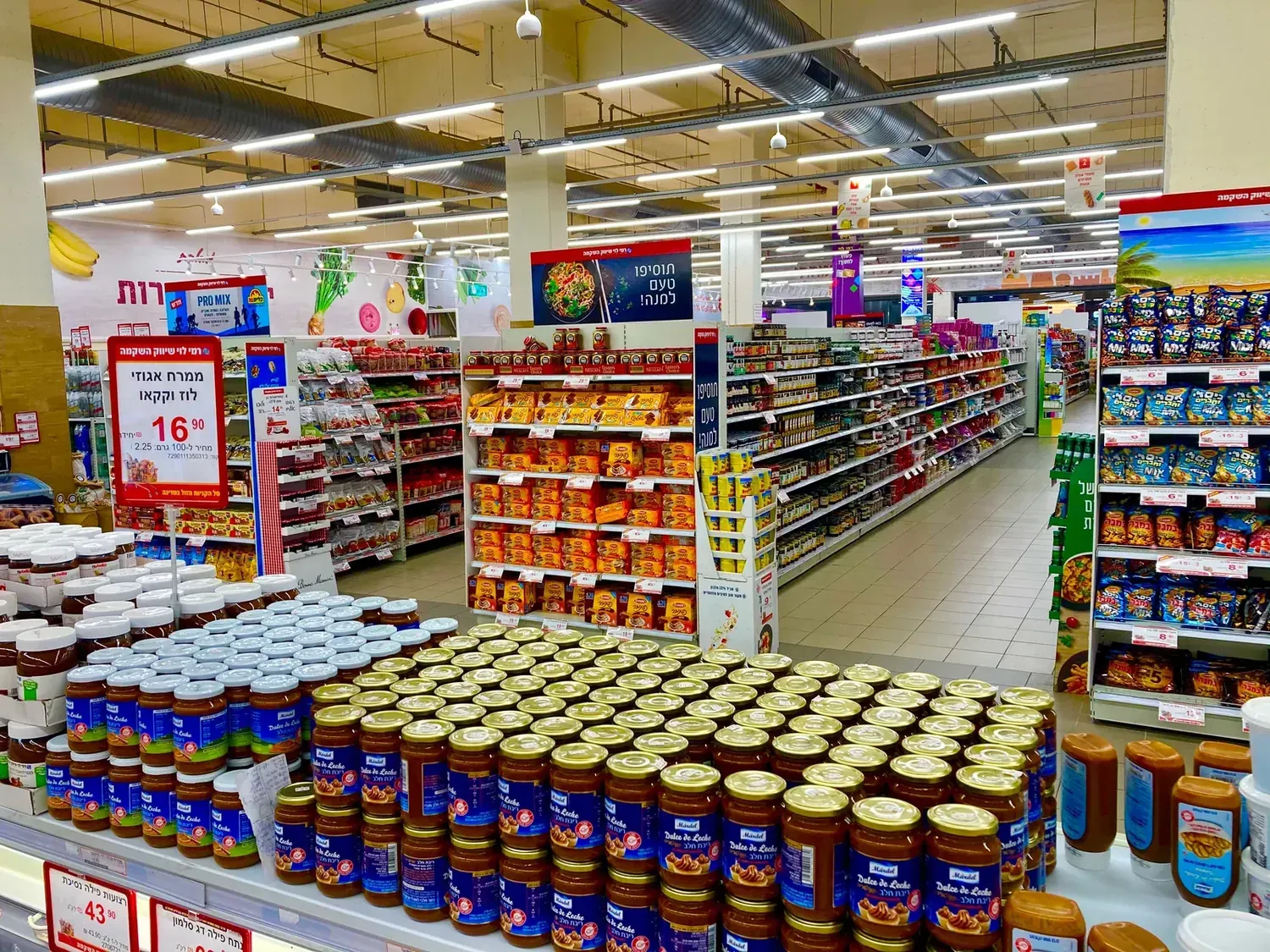
Back-of-house and aisle lighting is the volume end of the batten market. Nobody photographs it, and it is where most of the units ship.
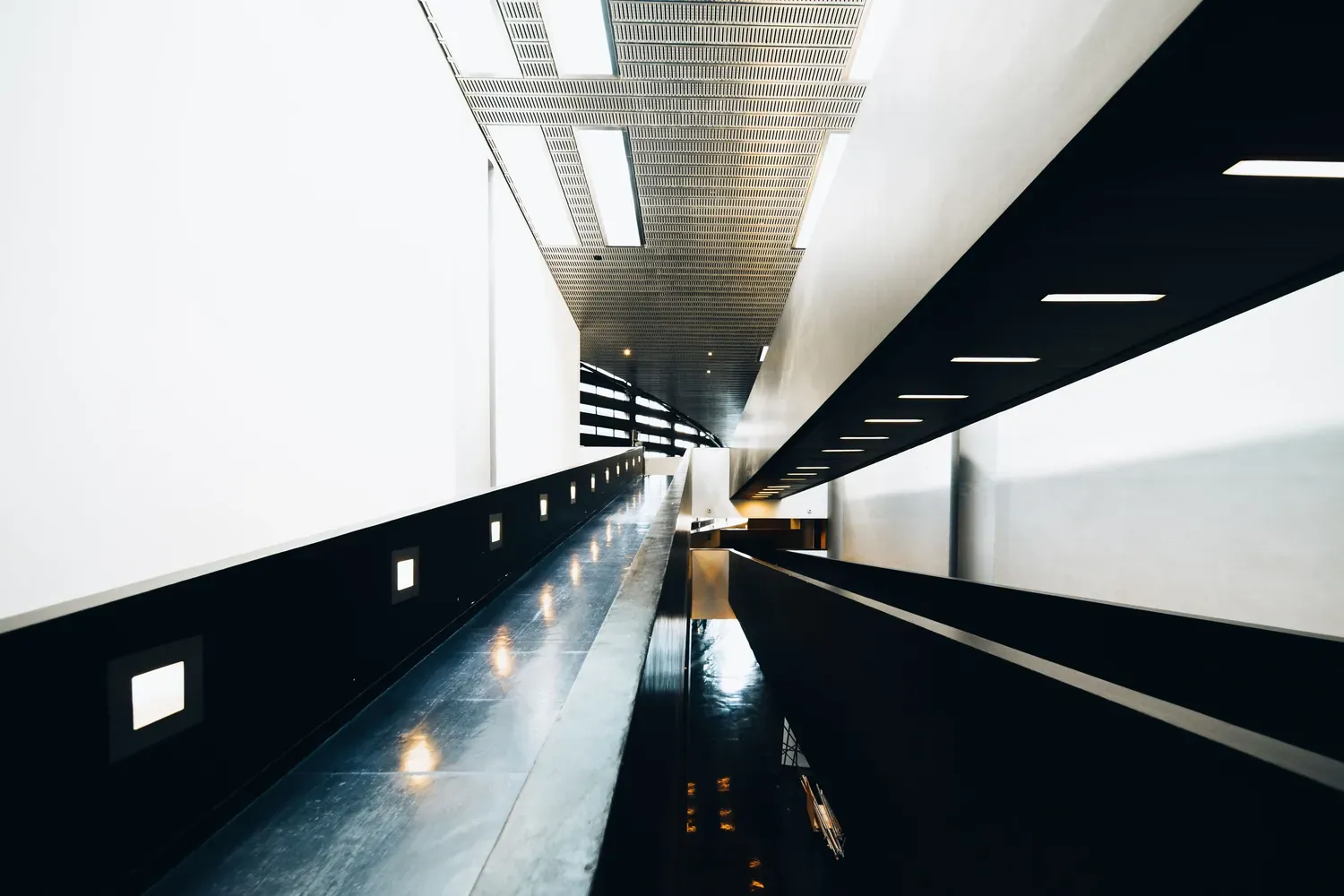
Corridors are where the length ladder shows up in architecture: the diffuser, not the body, is what the eye reads as the line.
Five mistakes that cost batten buyers money
- Ordering “4ft” against a 1220 mm opening. The diffuser is 1163 mm. Draw both numbers.
- Specifying lm/W without a sphere report. The board datasheet is a chip number; the diffuser and driver take 15–25% of it.
- Buying DOB for a space with cameras or controls. Cheapest per unit, most expensive per complaint.
- Treating the carton as an afterthought. Volumetric weight, drop damage and re-labelling fees all live in a box that nobody reviewed.
- Changing the driver after certification. The certificate describes the article you tested, not the platform it came from.
How ENCORE handles batten OEM/ODM
We are an architectural lighting manufacturer, so a batten is not our flagship — it is the product our project customers ask us to private-label alongside the track, downlight and linear systems, and we build it on the same platform discipline.
What that means in practice:
- Platforms, not promises. Battens are built on existing extrusions, end caps and boards, with the certificates already in place. That is what makes a 300-unit first order possible.
- Driver tier is a menu, not a surprise. IC constant current, non-isolated with filter, or programmable DALI-2, each with the part number and the datasheet attached to the quotation.
- Measurements travel with the goods. Sphere report per model, aging record per batch, and temperature-rise data on request.
- Packing is engineered. Carton dimensions, clearance, drop test and pallet configuration agreed before the first production run, with photographs before dispatch.
- One company, one certificate trail. ISO 9001 quality system, and ETL / CE / SAA files that name our own factory rather than a trading company.
You can see the wider product families on the commercial lighting page and the OEM/ODM services page, and the process from drawing to mass production in the custom LED lighting manufacturer overview. If you want the QC detail behind the aging and sphere claims, it is in inside an LED factory QC line.
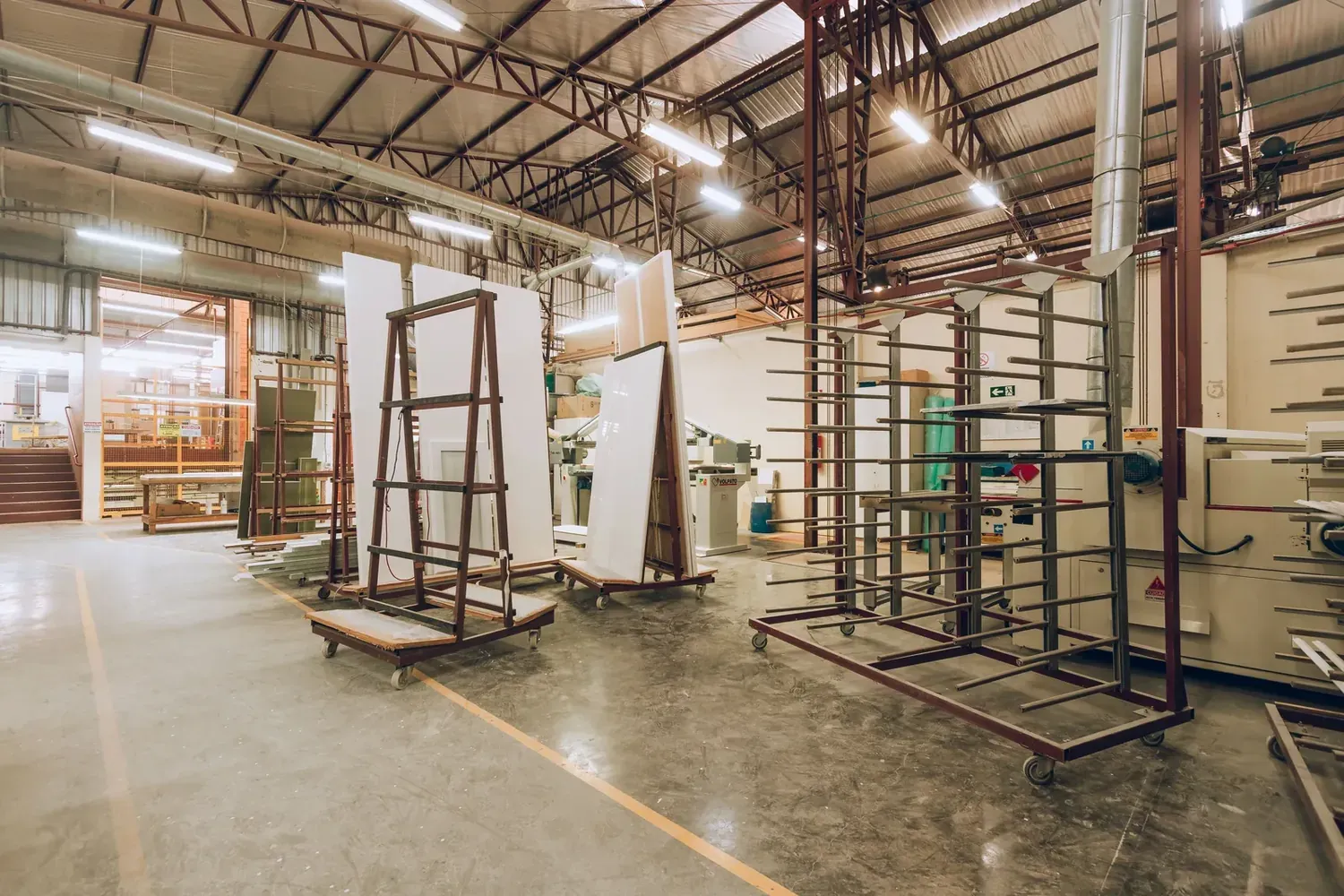
Battens share a line with the rest of the range. The value of an existing platform is not the aluminium — it is that the certificate, the tooling and the aging rack are already paid for.
FAQ
What is the difference between OEM and ODM for LED batten lights? It comes down to who owns the tooling. ODM means you start from a batten the factory has already designed, extruded, moulded and certified, and you change the layers that are cheap to change: label, carton, CCT, CRI, lumen package and driver tier. OEM means the drawing or the specification is yours, the profile die and end cap mould are normally on your invoice, and the certificate names your model. OEM buys you a body nobody else can sell; ODM buys you speed and a lower entry volume.
Why is a 4ft LED batten 1163 mm and not 1220 mm? Because “4ft” describes the aluminium body, not the light-emitting face. The diffuser sits between two injection-moulded end caps, which take about 37 mm in total. This has been true since fluorescent battens, and it is why drawings should carry both the body length and the diffuser length with separate tolerances.
What is the MOQ for a private label LED batten? It tracks the depth of the change rather than the product. 100–300 units for a label, manual and logo; 300–500 for carton print; 300–500 for a CCT, CRI or lumen-package change; 500–1,000 for a driver swap to DALI or an integrated sensor; 1,000–2,000 for a body length or profile colour; 2,000–3,000 for a new end cap or lens profile. The limiting factor is the print plate, the die or the driver supplier’s minimum, almost never the assembly line.
Which driver should I specify for a batten? Depends on two questions. If the fixture is on a lighting control system, specify DALI-2 or D4i, and accept that the driver becomes the line item you cannot swap later. If there is a camera in the room, specify flicker as a number — ripple below 5% at 100 Hz, PWM above 3 kHz. For everything else, IC constant current with THD under 15% and a driver part number on the quote is the volume standard.
Can I use DOB battens outdoors or in a car park? You can, and you will replace them early. DOB removes the electrolytic capacitor and the isolation, which makes it the cheapest and the least surge-tolerant option; THD typically lands at 30–60% and flicker is usually visible. A car park has vehicles, a distribution board with other loads and often CCTV — three reasons to spend the extra on an IC or non-isolated CC driver.
How many battens fit in a container or on a pallet? A 1200 mm batten packs into roughly a 1230 × 92 × 78 mm carton, about 96 pieces per 1.15 × 0.95 m pallet at sensible height. A 40 ft high-cube takes a 2,000–3,000 piece order comfortably. For a first order, LCL or air against a smaller carton is usually smarter than one full container.
Does the carton design really affect freight cost? Yes, through volumetric weight: length × width × height ÷ 5,000 for air freight. A single-batten carton at 8,828 cm³ is about 1.77 kg chargeable against 1.9 kg actual, so actual weight wins. Pack two per carton with foam and a divider, and the volumetric figure can overtake the actual weight — at which point the forwarder prices by volume and the carton becomes a commercial decision.
Can I have IP65 and a standard surface batten from the same platform? Usually yes, but they are not the same article. IP65 requires a gasketed diffuser, a glanded end cap and clips that hold compression through thermal cycling, and that construction is assessed separately from the IP20 version. Ask for the gland and the gasket in the sample photographs, and confirm the certificate covers the IP65 variant rather than the base model.
How long does a batten OEM/ODM project take? On an existing platform: selection and quotation 1–2 weeks, sampling 2–3 weeks including courier, carton artwork and plate 2–3 weeks in parallel, certification only if the article changes, and production 3–4 weeks. A new profile or a new end cap mould adds 4–8 weeks for tooling before any of that starts.
The short version
A batten looks like a commodity because it has no styling to defend. It is not one. It is four decisions — length, light quality, driver tier and IP — wrapped in an extrusion, plus a carton that quietly decides what the shipment costs.
Get those four lines right, keep the certificate and the driver part number attached to the drawing, and the rest is arithmetic:
- Body length and diffuser length are two numbers. Write both, with tolerances.
- Four datasheet lines are decisions. The other six are consequences or drift.
- The driver is the whole reliability story. Part number, surge rating, flicker percentage.
- The carton is a commercial decision. Volumetric weight, clearance, drop test, marking.
- The ladder is a division. One-off cost ÷ volume, every time.
Send us your body length, your target market and your first two order quantities, and we will tell you which parts of your list are reachable at 300 units, which ones trigger a plate or a die, and what the second order should look like. Request a batten OEM/ODM quote →
Read next: Custom LED Drivers for OEM Projects takes the driver decision — the one component every batten shares with the rest of the range — from dimming protocol through to the compliance evidence. ODM Downlights: How to Private-Label a Recessed Lighting Line applies the same platform logic to a fixture with a cut-out, and ODM vs OEM LED Lighting covers the model choice in full. For the wider commercial range, start at commercial lighting.
- led batten light oem
- led batten light odm
- led batten light manufacturer
- oem batten light
- led batten light supplier
- private label batten light
- vapour proof batten
- led batten driver
- batten light packaging
- led batten specs

ENCORE Lighting Team · ENCORE
LED Lighting Manufacturer & OEM/ODM Partner
The ENCORE engineering and sourcing team writes about LED track lighting, downlights, magnetic systems, certifications and OEM/ODM manufacturing for B2B buyers and specifiers.