· Sourcing & Quality · 18 min read

Written by ENCORE Lighting Team
LED Lighting Manufacturer & OEM/ODM Partner ·
Inside an LED Factory QC Line, Station by Station
Inside an LED factory QC line, station by station: what incoming inspection catches before assembly, how 100% aging finds the early failures, what the integrating sphere proves that a lux meter cannot, and how the AQL release rule closes a batch.
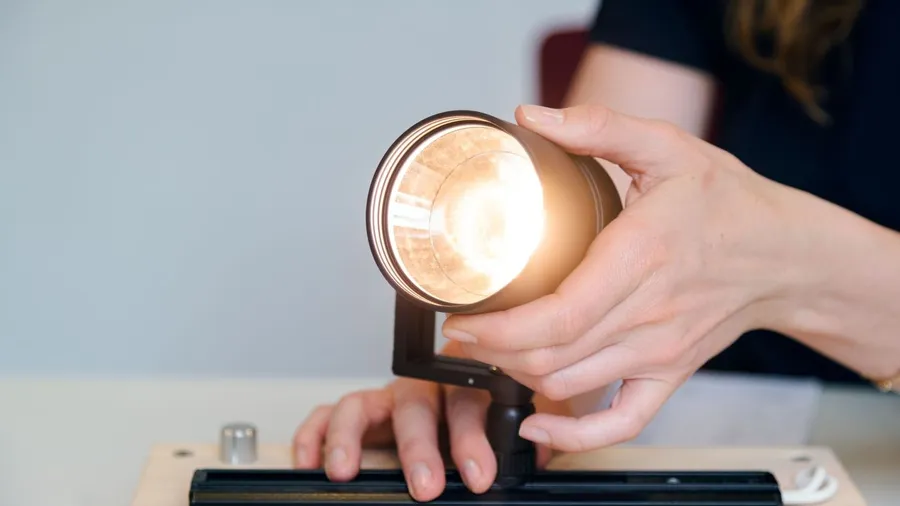
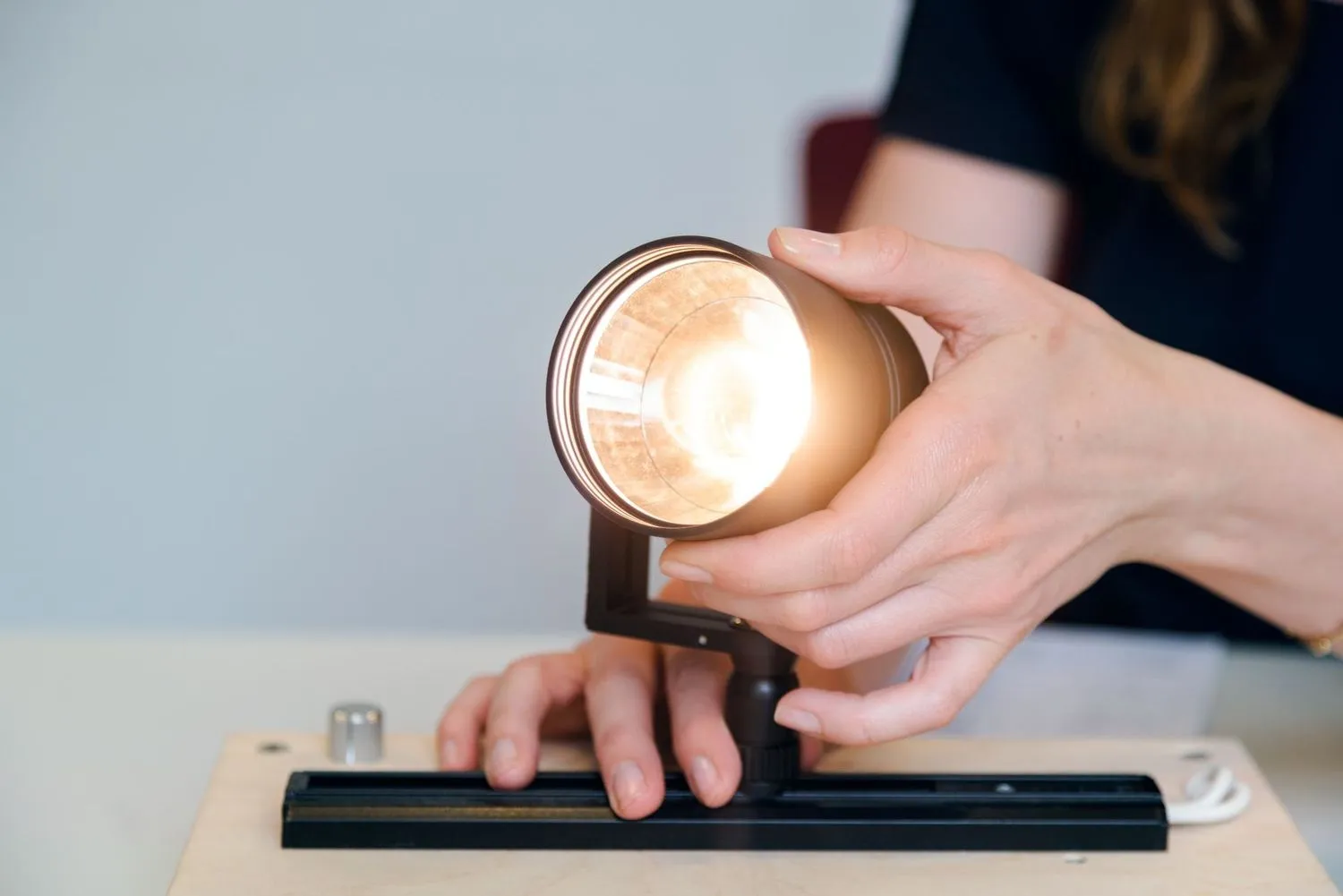
Most factory tours show you the same thing: a clean floor, a few people in uniform, a row of finished fixtures under good light. It photographs well and tells you almost nothing. The interesting part of a QC line is not how it looks. It is what happens between two stations when something is wrong, and who has the authority to stop the line.
This post walks an LED production line the way an inspector actually walks it — from the goods-in door to the moment the carton is taped shut — and stops at every point where a defect can either be caught cheaply or carried forward expensively.
The argument underneath it is simple:
Nothing invisible can be inspected at the end. Electrical safety, colour consistency and service life are all decided long before final packing. A QC line exists to make those three things visible early enough to do something about them.
That is also why the stations are in the order they are. Each gate covers a different failure mode, and none of them can cover for a gate that was skipped.
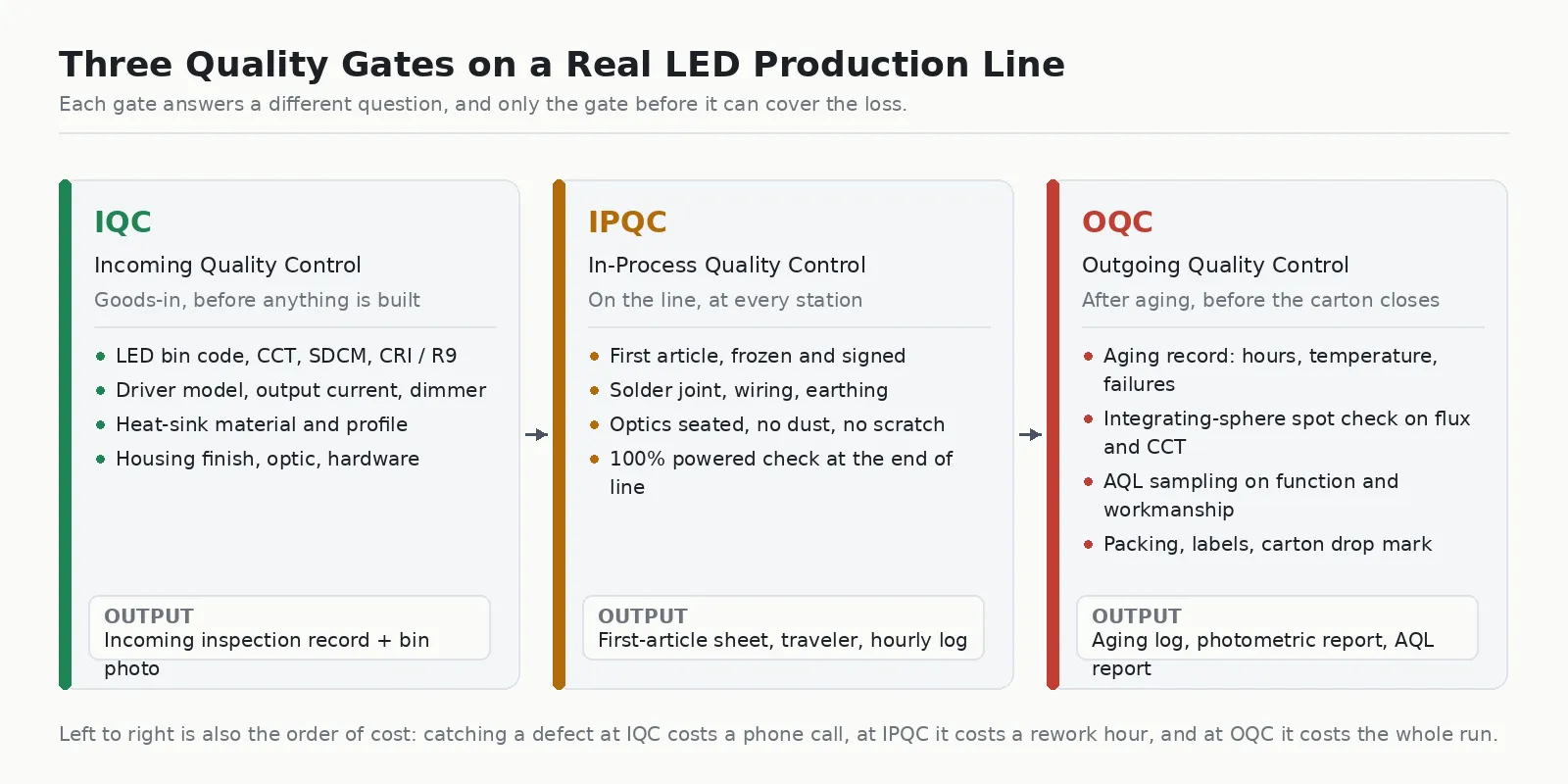
Why three gates, and why the order is not negotiable
| Gate | Runs | The question | Output |
|---|---|---|---|
| IQC | Goods-in, before anything is built | Did the right parts actually arrive? | Incoming record, bin photo, sample sticker |
| IPQC | On the line, at every station | Is the process still producing what first article defined? | Signed first-article sheet, traveler, hourly log |
| OQC | After aging, before packing | May this batch be released? | Aging log, photometric report, AQL report |
The order exists because of how far a defect travels. An LED bin substitution caught at IQC costs a phone call to the supplier. The same substitution caught at IPQC costs a production hour. Caught at OQC, it costs the whole run — the ceiling the client already specified has to be re-quoted. And caught on site, it costs a site visit, a claim, and the relationship.
If you only remember one thing from this article, remember that the gates are ordered by cost, not by convenience.
Gate 1 — IQC: what the incoming parts actually are
A custom order’s specs live in exactly two places: the approved sample and the purchase order line items. IQC is where you find out whether the second one was honoured.
The LED: bin code is the whole game
Almost every visible complaint about LED lighting traces back to a bin.
An LED order is not “3,000 LEDs at 3000 K”. It is a bin code — a specific flux bin, a specific colour bin and a specific forward-voltage bin, inside a range. Two reels can both carry the label “3000 K” and still sit several SDCM apart. On a single ceiling, that is the difference between a wall of light and a patchwork.
So IQC does not check the label. It checks the reel: manufacturer, part number, the full bin code, and a sample lit on a bench against the golden sample from the approved first article. The photo of that reel goes into the file, because in eight months the question will not be “does it look right” but “what bin did we approve”.
That bin question decides what the client sees. Retail and hospitality work lives and dies on CRI and, above all, R9 — the deep-red value that makes timber, skin and food read correctly. A fixture can post Ra 90 and still have R9 at 15, which is why the CRI guide and the CCT guide matter at the goods-in door, not just at specification.
The driver: the part that fails after the warranty conversation starts
Drivers are the leading cause of LED field failure, and they are the cheapest part to verify on the bench.
IQC confirms the model number rather than trusting the box, checks the label against the PO, and spot-checks output current at rated load. For dimmable SKUs, it also checks the behaviour that no datasheet describes honestly: does it dim smoothly at 1%, does it flicker on the specified dimmer, does it buzz?
That last one matters because flicker is not a defect the factory introduces. It is a specification gap that was never closed. If the client’s project uses 0–10 V dimming and the driver was quoted with trailing edge, nobody is lying — the mismatch just never came up, until a commissioning engineer walks the site with a camera.
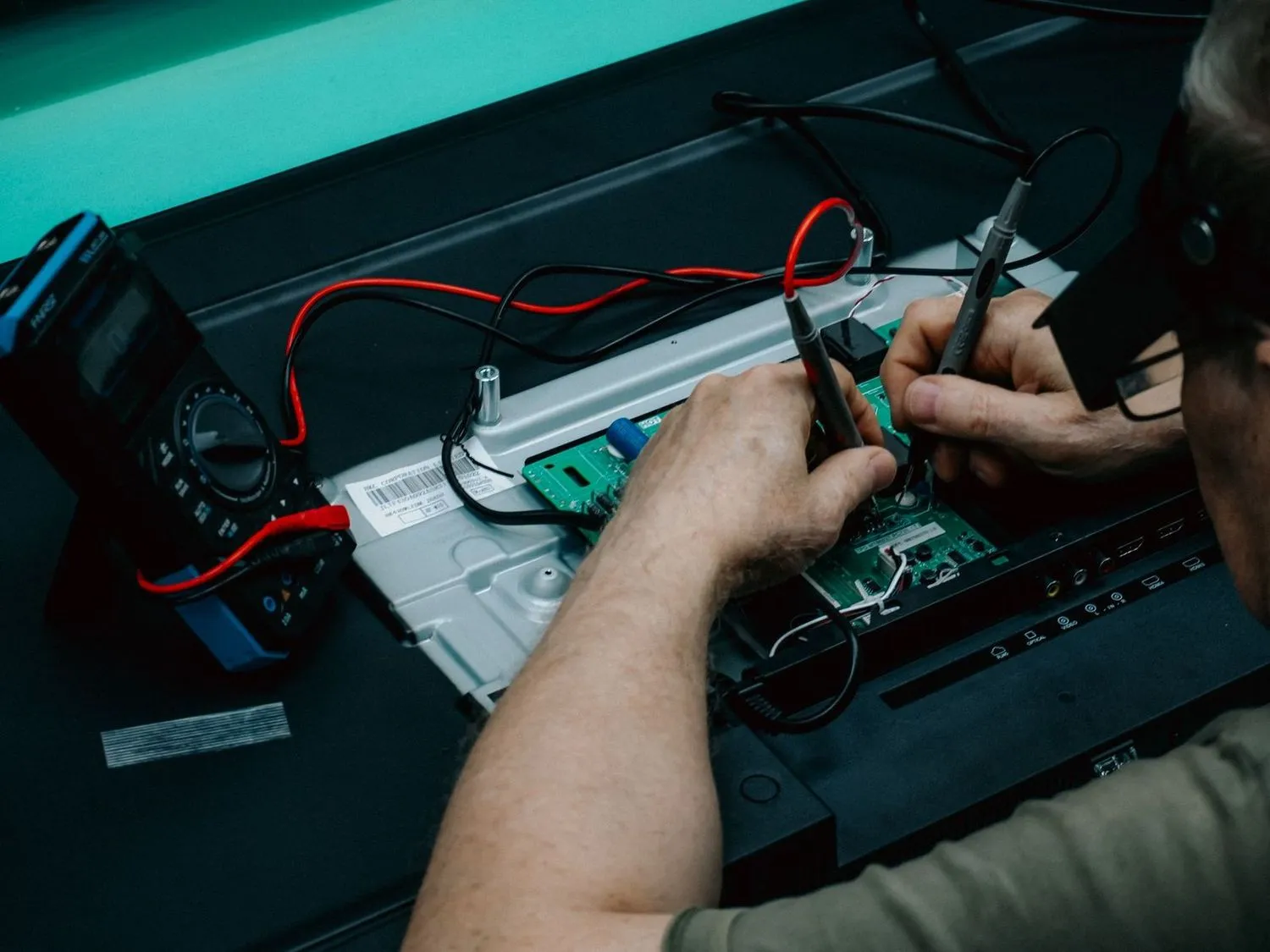
Housing, heat sink, optic, finish
The remaining IQC checks are physical and boring, and they are exactly where cheap fixtures hide their cost cuts:
- Heat-sink material and profile. Aluminium is not a colour, it is a thermal path. A thinner extrusion weighs less, cools worse, and fails as lumen depreciation in year two instead of as a short circuit in week one.
- Finish and coating. The anodising or powder-coat thickness, the colour match against the approved panel, and the texture. Two batches of “matte black” from two suppliers are not the same matte black.
- Optic and lens. Tool marks, gate residue, clarity, and whether the beam angle that was tooled is the beam angle that arrives.
- Hardware and connectors. Terminal ratings, wire gauge, screw plating. This is where a “minor” defect becomes a fire risk if nobody checks it.
What IQC produces
One sheet per component, one photo per lot, one signed sample sticker. When a client asks two months later why a ceiling reads warmer on one side, the answer is in that file, or the file does not exist and the answer is a guess.
Gate 2 — IPQC: controlling the process, not the product
If IQC is about what came in, IPQC is about whether the line is still doing the same thing it did when the sample was approved.
First article, frozen and signed
The single most valuable document in a custom LED order is a signed first-article sheet with a sealed golden sample. Without it, “correct” exists only in the memory of whoever built the sample — and sample drift is almost never the factory getting worse. It is the moment nobody wrote down what “the same” means.
First article pins down the light source (brand, model, bin, CCT, SDCM, CRI/R9), the driver, the thermal design, the optics, the finish and the structure. This is covered in depth in the QC for custom LED orders framework, and it should exist before the line starts, not after the first container.

The station-by-station checks
On the line itself, IPQC is a set of small, relentless checks:
- Solder joints. Cold joints, insufficient wetting, solder balls. This is where assembly quality control lives, and it is invisible after assembly.
- Wiring and earthing. Correct conductor routing, strain relief, and continuity from the fixture body back to the earth pin. A fixture that lights up and is not earthed is not a working fixture.
- Optics seating. A lens seated 0.5 mm off centre changes the beam. It is also undetectable once the trim ring is fitted.
- Thermal interface. Whether the thermal pad or paste was actually applied, and applied flat, rather than assumed.
- Cleanliness. Dust inside a lens, fingerprints on a reflector, adhesive residue on a trim ring. These are the defects clients photograph.
100% powered check before packing
Every unit is powered and checked before it moves to aging. Not sampled — every unit. A powered check catches the open circuit, the reversed connector and the dead driver in seconds, at the point where fixing it costs a rework hour rather than a customer relationship.

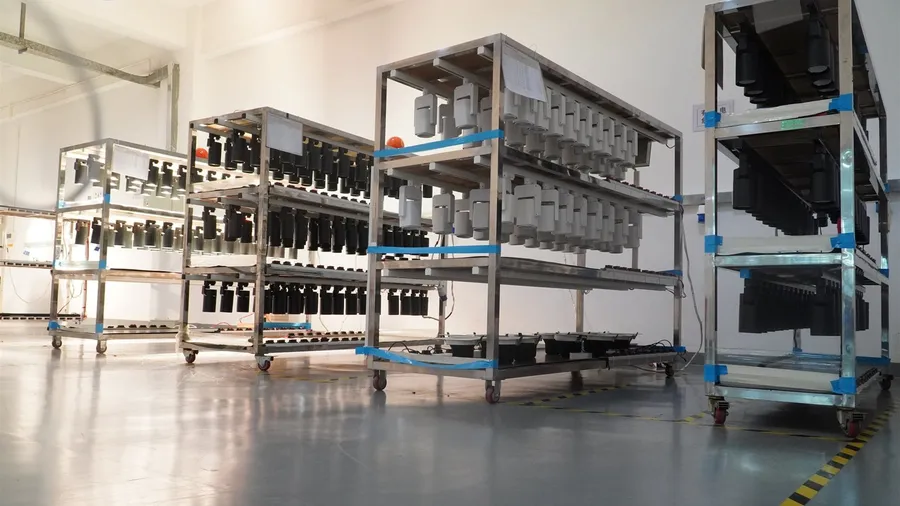
Between the gates — aging: the window that only exists before shipping
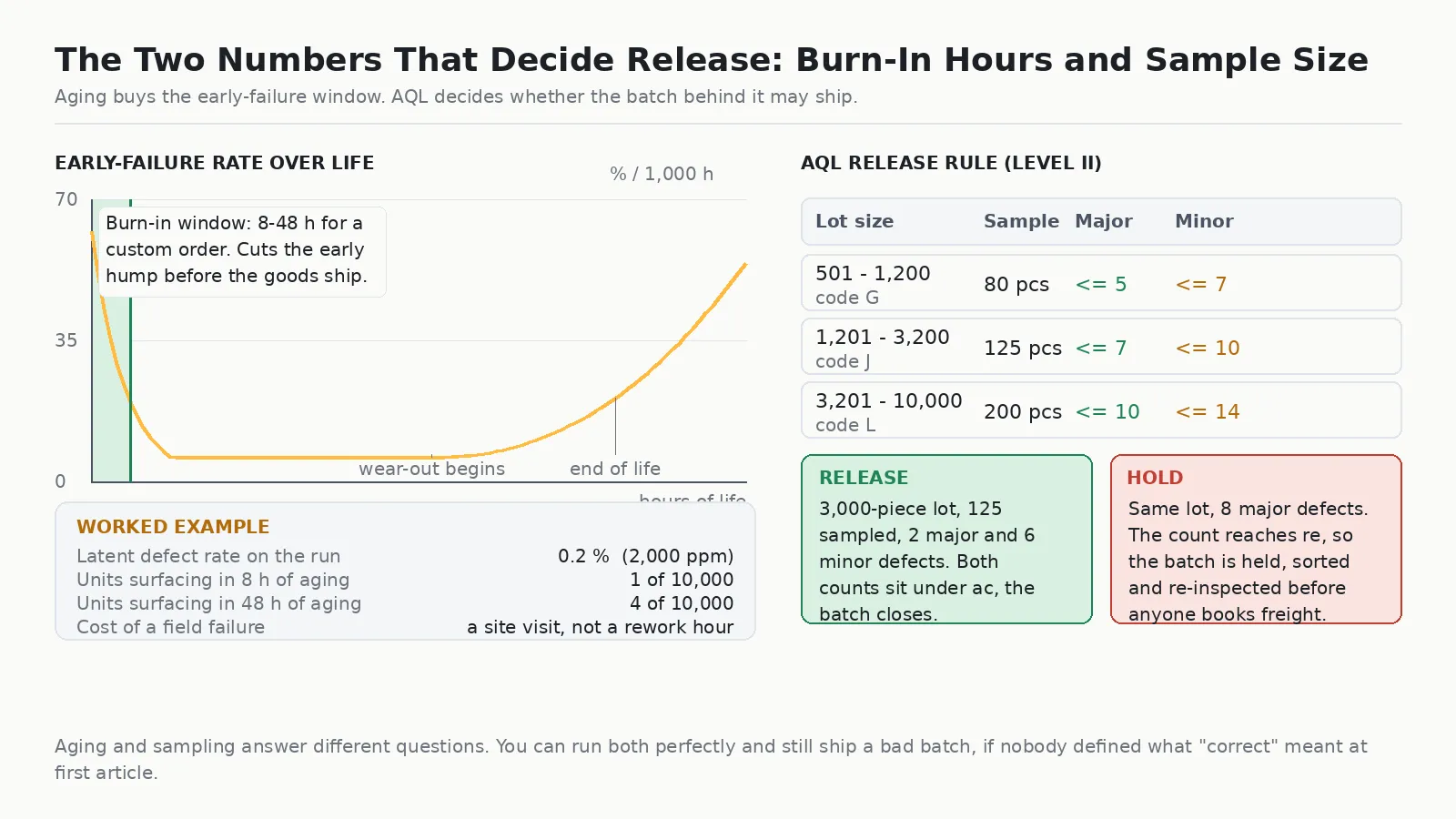
Here is the uncomfortable arithmetic behind burn-in. Manufacturing leaves a small number of latent defects in every batch, and those defects surface early. That is why the failure-rate curve of any electronics product is shaped like a bathtub.
If you ship without aging, you ship the early hump. The units that fail in month two are not a manufacturing accident on your client’s ceiling — they were already going to fail. Aging just decides where.
How long should an aging test run?
There is no universal number, and anyone who quotes one is selling something. Aging hours follow the risk of the order:
| Order stage | Aging hours | What it is really testing |
|---|---|---|
| Standard, history on the SKU | 4 h | Basic function, no assembly error |
| Custom order, day-to-day | 8 h | Driver stability, flicker, colour |
| Smart, dimmable or IP-rated | 24 h | Control gear, sealing, firmware |
| New platform, tooling or finish | 48 h | Wear-in of a new process |
| LM-80 / L70 maintenance claim | 1,000 h+ (separate) | Lumen and colour over time |
Two honest caveats. Four hours does not prove a product will last ten years — nothing short of LM-80 data does. And aging is a screen, not a cure: it removes units that were already going to fail early, and gives you a failure count you can act on.
What it does not do is catch a design problem. If the heat sink is undersized, aging just means you find out sooner.
Reading an aging log like a buyer
Ask for the log, not the claim. A useful aging record carries the hours actually run, the ambient temperature, the number of units in the batch, the number of failures and what failed. A record that says “aging passed” is not a record.
Now look at what is missing. If there is no failure count, no failures were recorded — which on a first production run is more suspicious than a small number would be. If the hours are not stated, assume the shortest product-friendly interpretation.
Gate 3 — OQC: photometry and the release rule
The last gate answers one question: given everything that has happened, may this batch ship?
The integrating sphere, and what a lux meter cannot do
A lux meter reads one point. That is useful for an installation, and almost useless for a release decision, because a bright hot spot can look excellent on a meter and still be a fixture that misses its claimed flux by 15%.
An integrating sphere measures the whole fixture at once — total lumen output, efficacy in lm/W, the actual CCT and Duv rather than the ordered one, CRI alongside R9, beam angle at 50% of peak intensity, and flicker under the real dimmer.
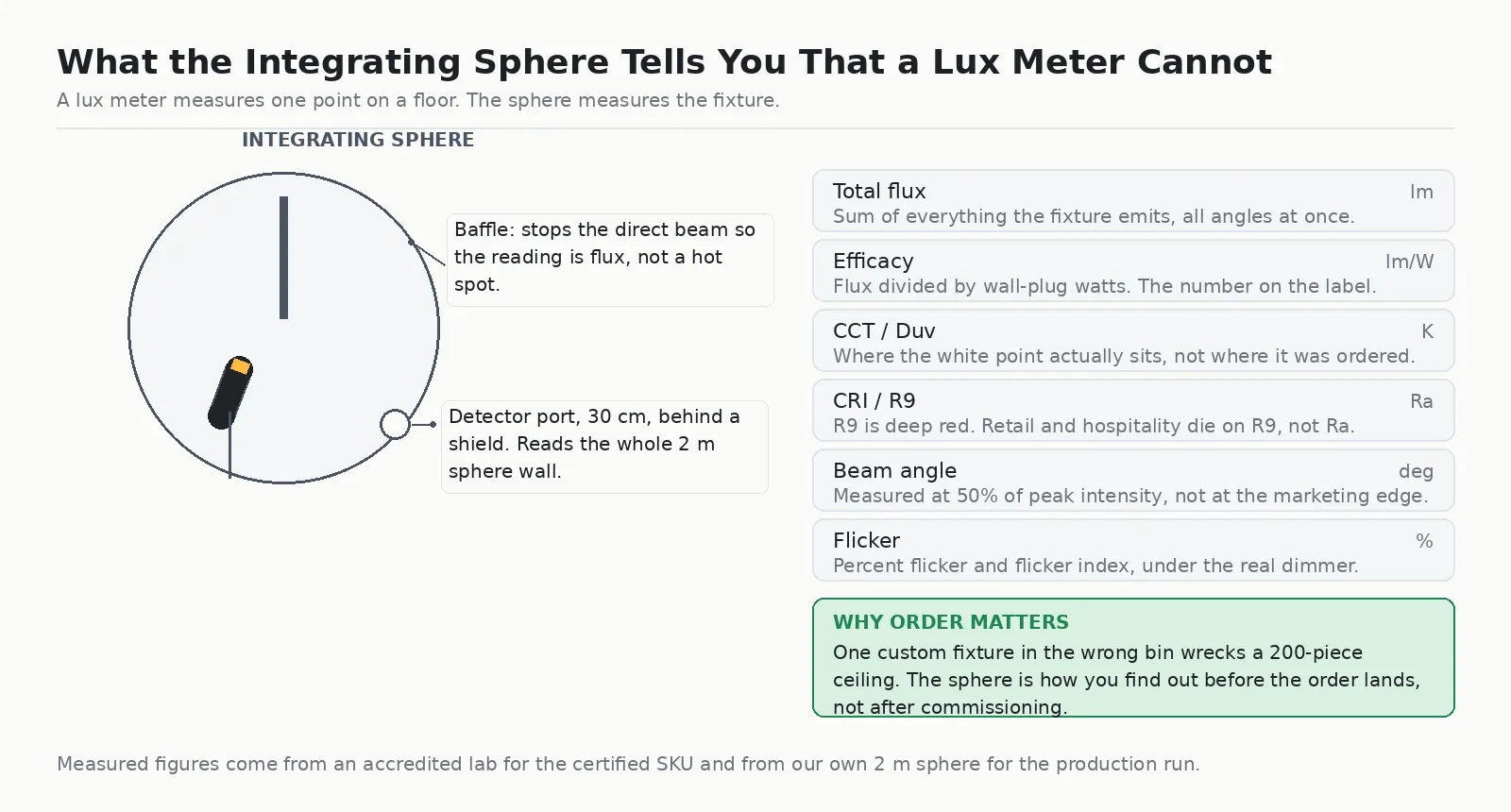
Two of those readings are worth pausing on.
Efficacy is the number that reaches the spec sheet, and it is where a claimed figure meets the wall-plug watts. A fixture that measures 6% below its claim is not a rounding error; it is a lighting design that no longer hits its lux target, which is why the lux calculator and the photometric guide start from measured data rather than claimed data.
Flicker is the reading buyers most often skip and occupants most often notice. Percent flicker and flicker index under the actual dimmer, not under a clean sine wave, is the only honest number.
Reading an AQL sampling plan without being sold to
AQL is not “we check about 5%”. It is a defined table: for a given lot size, at a given inspection level, you draw a fixed sample and compare defect counts against acceptance numbers.
For general inspection level II, the numbers look like this:
| Lot size | Sample | Accept ≤ (major 2.5) | Accept ≤ (minor 4.0) |
|---|---|---|---|
| 501 – 1,200 | 80 pcs | 5 | 7 |
| 1,201 – 3,200 | 125 pcs | 7 | 10 |
| 3,201 – 10,000 | 200 pcs | 10 | 14 |
Three things buyers get wrong here:
- Defect classes get merged. A scratch on a trim ring and a missing earth are not the same defect. Major and minor counts must be tracked separately, or the sampling plan is decorative.
- The lot is defined after the fact. If the batch is split into two shipments, it is two lots. Decide before production, not at packing.
- The report has no photos. An inspection report without photographs of the actual defects found is a statement of opinion.
Dimensional and packing checks
Finally, the boring part that decides whether the goods arrive usable: the mounting dimensions against the drawing, the trim and cut-out tolerances, the label and marking (model, wattage, CCT, IP rating, certification marks), the carton drop mark, the packing method, and the quantity per carton.
An IP-rated fixture with the wrong gasket fitted ships perfectly and fails on the first wet week. That is a packing-adjacent defect, and it is caught by comparing the parts list against the drawing at OQC.
How this runs on ENCORE’s own line
All of the above is how we run production, so it is fair to show the parts rather than describe them.
We build track lighting, LED downlights, magnetic track systems and commercial luminaires from one factory in Shenzhen, and the QC line runs the same three gates across all four families.
Our own photometric and aging equipment sits inside that line rather than at a third party, which matters most on custom orders — where the bin, the driver and the optic are all new and nothing can be assumed.
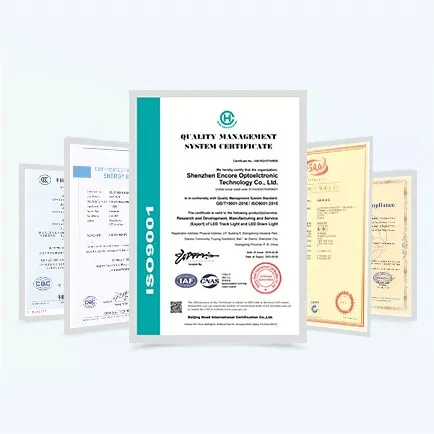
The QC system sits under an ISO 9001 quality management system, alongside ETL, CE and SAA certification for the markets we ship to. What that means practically is that the records described above are not a favour we do on request — they are the paperwork the system requires us to produce, and you can ask for them.
The full process, from RFQ through first article to certified production, is on the quality control page and the OEM/ODM page.
The buyer’s checklist, in one place
If you are visiting a factory or reviewing a QC report, these are the questions that separate a real line from a tour:
- May I see the first-article sheet and the sealed golden sample for this order?
- What is the LED bin code on the reel in production right now, and can I photograph it?
- What driver model is fitted, and is it on the certificate that covers this SKU?
- How many hours of aging, in what ambient temperature, with what failure count?
- What is the AQL level and lot definition, and can I see the report with photographs?
- Is there 100% powered testing, and where in the sequence does it happen?
- What happens to a failed unit — reworked, binned, or silently returned to the line?
A factory that answers all seven with a document rather than an assurance is a factory whose QC line you can trust with a custom order. A factory that answers with “we always do that” is telling you that the answer exists but is not written down anywhere — and unwritten standards drift.
If you want to see the answers on your own project, send the specification and target market and we will walk the line with your order in mind. Request a QC and production quotation →
FAQ
What is the difference between IQC, IPQC and OQC?
IQC is incoming quality control: it verifies the LED bin, driver, heat sink, optic and finish before anything is assembled. IPQC is in-process quality control: it covers first-article approval and every station on the line, including a 100% powered check. OQC is outgoing quality control: aging records, integrating-sphere photometry and AQL sampling before the carton is closed. They answer different questions — correctness of parts, stability of the process, and release of the batch.
How long should an LED aging test run?
Four hours for a standard SKU with production history, eight hours for a normal custom order, twenty-four hours for smart, dimmable or IP-rated products, and forty-eight hours when a new platform, tooling or finish is being worn in. LM-80 and L70 maintenance claims need a separate 1,000-hour-plus programme and cannot be inferred from a burn-in run.
What does a QC tester actually measure on an LED fixture?
A full photometric check measures total luminous flux, efficacy in lm/W, CCT and Duv, CRI including R9, beam angle at 50% of peak intensity, and flicker under the intended dimmer. Electrical checks cover insulation, earth continuity, dielectric withstand and driver output current. A lux meter alone measures none of these — it reads one point in space.
Is 100% aging necessary on a custom LED order?
It depends on the order. Aging is a screen for early-life failures, so its value is highest where the latent defect rate is unknown — which means first runs, new tooling and new driver pairings. On a mature SKU with years of history, a shorter burn-in usually gives the same information. What should never be skipped is the failure count: a burn-in with no recorded failures is not a burn-in, it is a wait.
What AQL level should an LED lighting order use?
Most commercial lighting buyers use general inspection level II with a major defect class at AQL 2.5 and a minor class at AQL 4.0, keeping critical defects at zero acceptance. The exact level belongs in the purchase order before production, together with the definition of a lot, so that a split shipment does not quietly change the sampling plan.
Read next: QC for Custom LED Orders for the three-gate framework in detail, or the LED Factory Inspection Guide for the buying-side plan — PPI, DUPRO and PSI — that sits around this line.
- led lighting quality control
- led factory qc line
- led packaging quality control
- led assembly quality control
- led lighting quality control tester
- integrated sphere testing led
- aging test led lighting
- aql inspection led lighting
- iqc ipqc oqc

ENCORE Lighting Team · ENCORE
LED Lighting Manufacturer & OEM/ODM Partner
The ENCORE engineering and sourcing team writes about LED track lighting, downlights, magnetic systems, certifications and OEM/ODM manufacturing for B2B buyers and specifiers.