· Buying Guides · 22 min read

Written by ENCORE Lighting Team
LED Lighting Manufacturer & OEM/ODM Partner ·
How to Read an LED Spec Sheet: Lumens, Lux, CRI and Beam Angle
An LED lighting datasheet is a set of decisions, not a brochure. Where lamp lumens hide delivered lumens, why lux can never be promised on a sheet, how to convert one into the other, and the four lines that decide whether a fixture is right for your project.
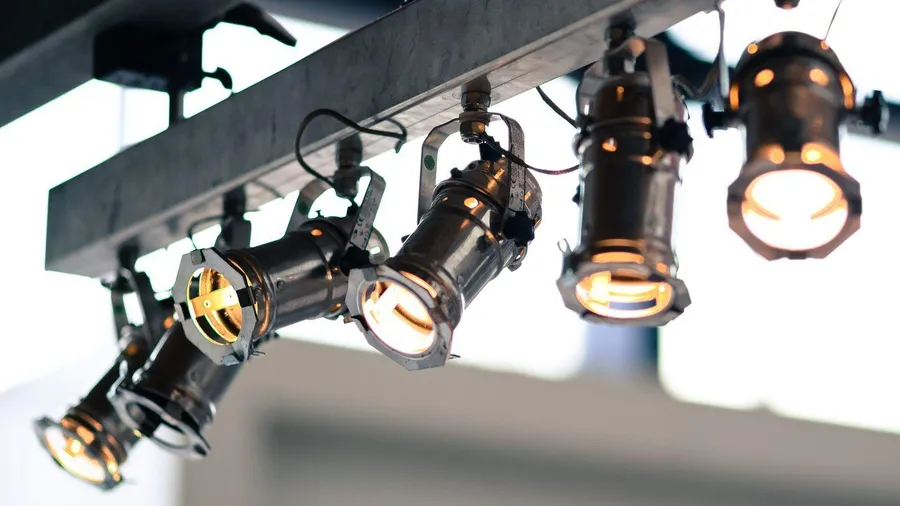
Two 20 W track spotlights, same price, same black body, both advertised at “1,600 lumens”. One puts 1,340 lumens on the floor. The other puts about 1,100. Neither number is a lie, because neither sheet says which lumen it is quoting.
That is the whole problem with an LED lighting datasheet. It is not a document you skim for the biggest number. It is a list of twelve habits, four of which are decisions and eight of which are consequences of those four. Read the four correctly and the rest of the sheet turns into arithmetic.
This guide is the version of that conversation we have with buyers, designers and electricians before they approve a submittal. Every line below is a line we get asked about on track lighting, LED downlights and magnetic track systems.
The twelve lines on an LED spec sheet, and which four are decisions
A commercial LED fixture datasheet, whether it is a one-page cut sheet or a twelve-page PDF, answers twelve questions. They are not equally important, and they are not in the order that matters.
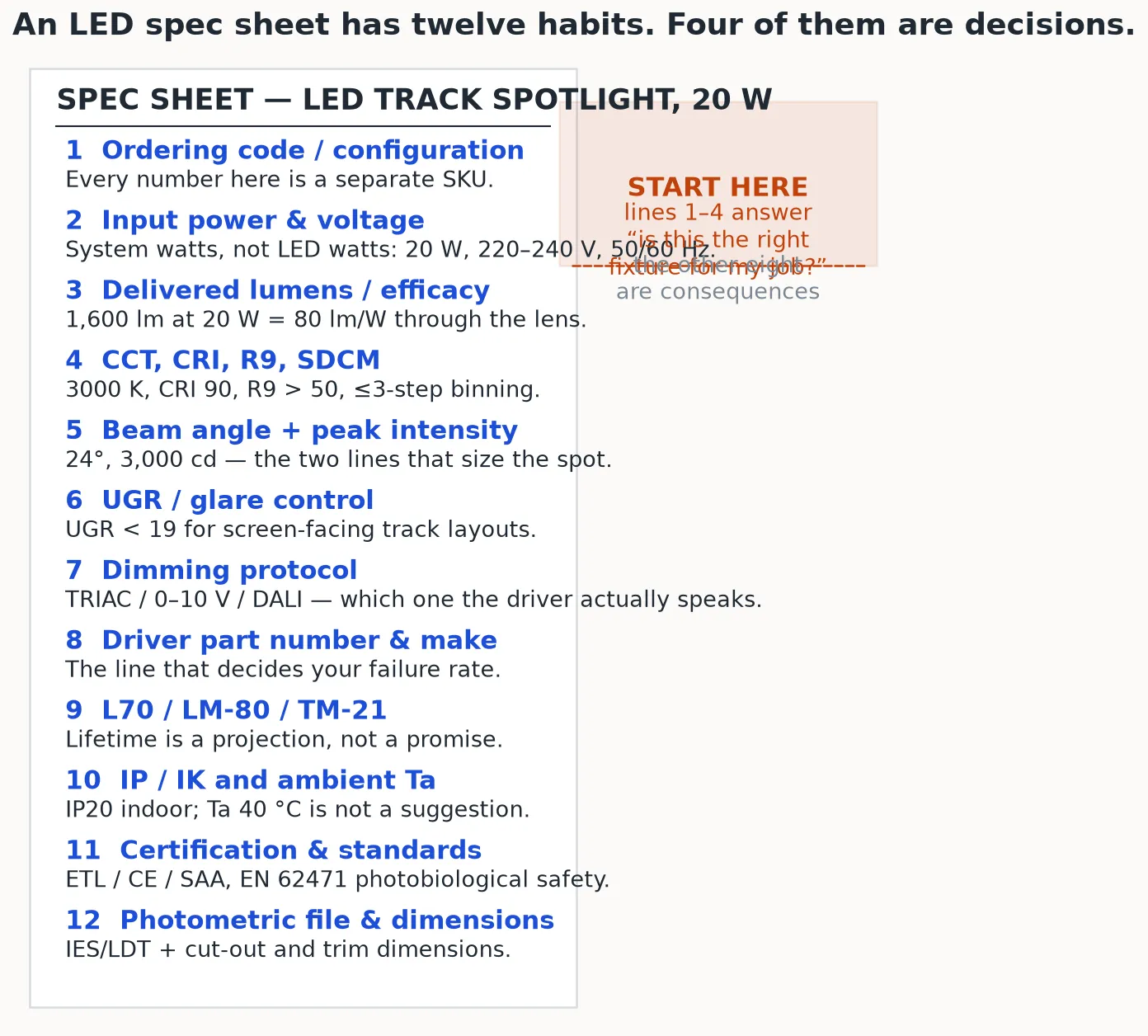
The four you actually decide:
- The configuration — the ordering code. Every bracket, CCT, beam and finish in that code is a separate article with separate certification.
- Delivered lumens and efficacy — what leaves the fixture, not what the chips make.
- CCT, CRI, R9 and colour consistency — what the light does to the objects in the room.
- Beam angle and peak intensity — how big the spot is at your mounting distance.
Everything else on the sheet — voltage, dimming protocol, driver make, L70, IP, IK, ambient temperature, certifications, photometric files — is either a consequence of those four or a reliability question. Those still matter, but they matter the way tyres matter on a car: you do not choose the engine by choosing the tyres.
Lumens: the number that is quoted two different ways
Start here, because this is the single most common place a spec sheet is technically accurate and commercially misleading.
Lamp lumens (also “source lumens”, “LED lumens”, “nominal lumens”) describe what the chips emit. Luminaire lumens (also “fixture lumens”, “delivered lumens”) describe what actually leaves the finished product after the lens, the reflector, the secondary optics and the housing have taken their share.
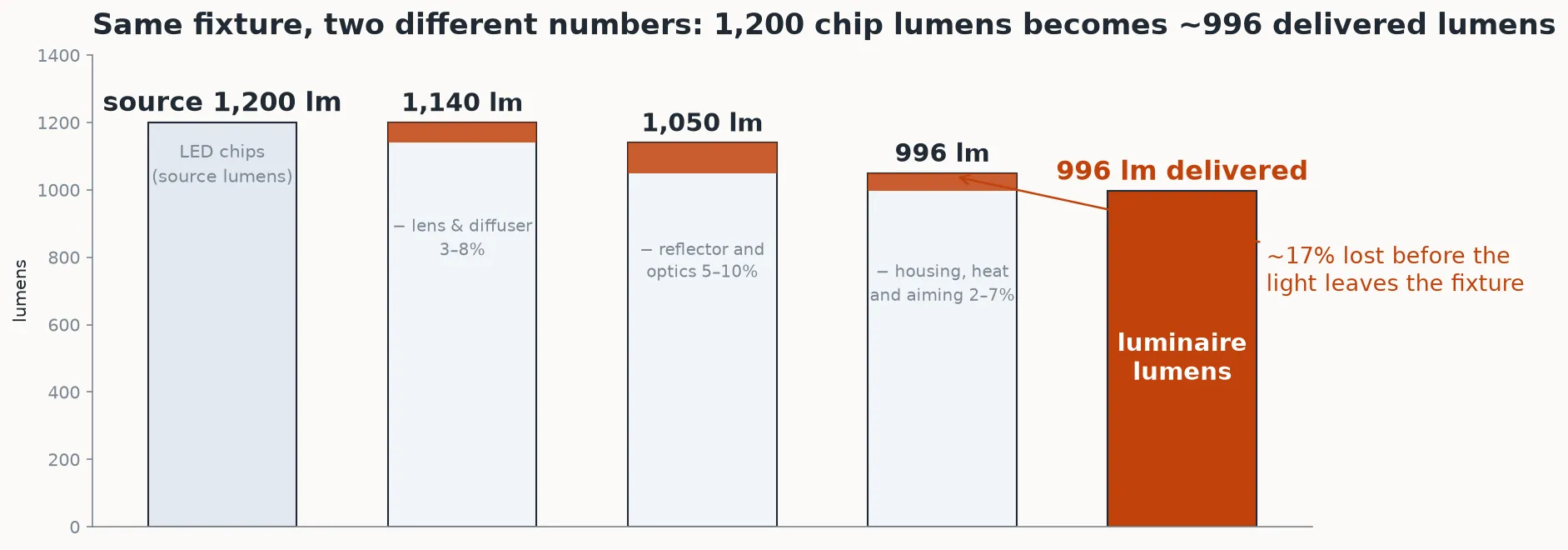
Those losses are not a defect, they are optics. A transmission diffuser eats 3–8%. A reflector or TIR lens eats 5–10%. The housing, the aiming losses and heat de-rating take another 2–7%. That is how 1,200 chip lumens becomes roughly 1,000 delivered — a 10–25% gap depending on the fixture, exactly the range across which two suppliers can quote the same product at different numbers.
The same sheet can also be double counting watts. A spot with a 20 W “LED power” line and a 23 W “system power” line is not lying either. The extras are driver losses and standby. Efficacy is delivered lumens divided by system watts, so a 1,600 lm fixture pulling 23 W from the wall is 70 lm/W, not 80.
The check that settles it in thirty seconds:
- Is the lumen figure followed by “delivered”, “luminaire” or “fixture”? If not, treat it as source lumens and discount it 10–25%.
- Does the wattage line say “input” or “system”? If it only says LED power, add 8–15% before you divide.
- Do the two numbers on the sheet agree with each other? 1,600 lm ÷ 20 W = 80 lm/W. If the sheet also claims 110 lm/W somewhere, one of the two figures belongs to a different configuration.
Our LED track lighting sheets print delivered lumens and input watts on the same row for this reason: the pair is what you design with.
Lux and lumens: why a datasheet can never promise a lux level
A lux number on a datasheet is the most requested and least meaningful line on it, because lux is not a property of the fixture. Lux is what a meter reads on a surface. It depends on the fixture’s lumens, its distribution, the distance, the surface, and the other fixtures in the room.
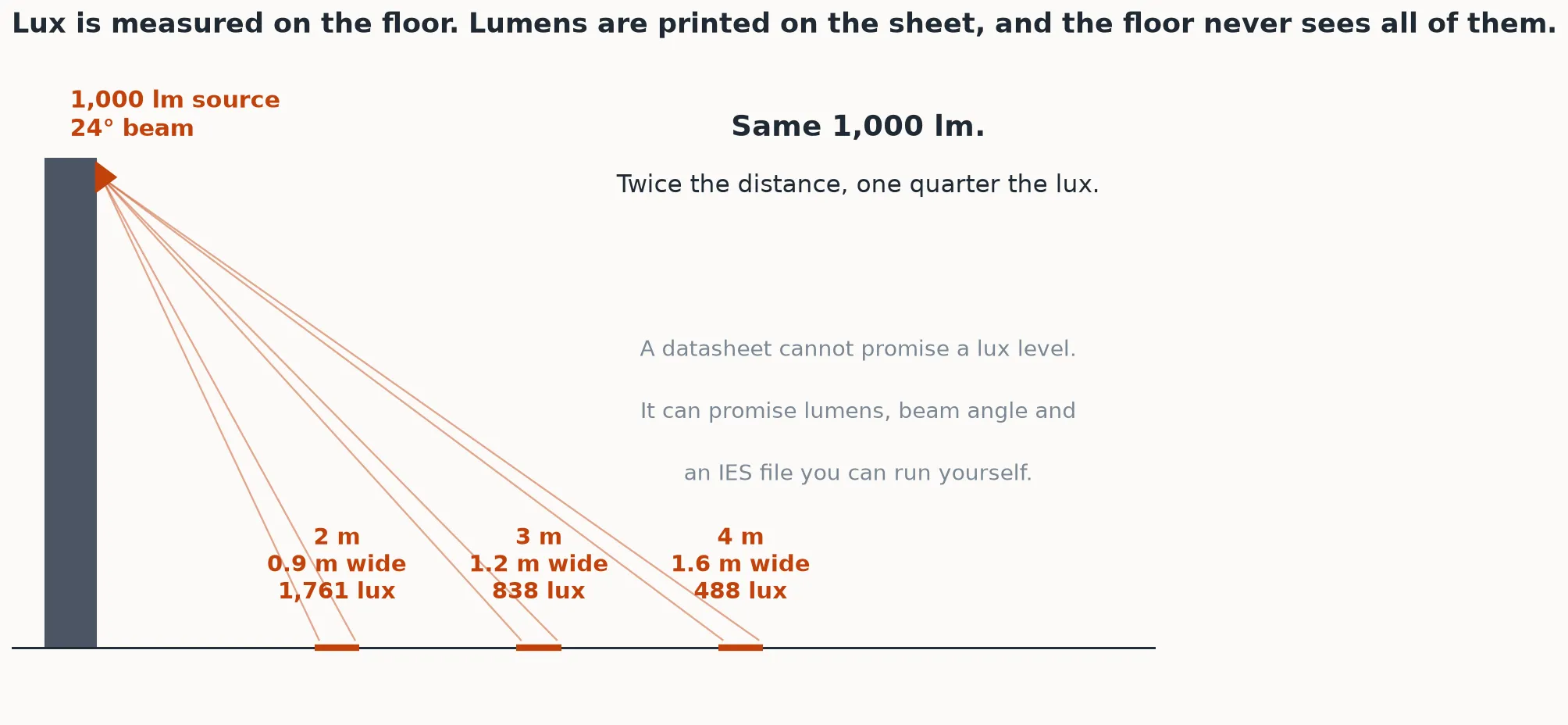
The lux to lumens formula most spec sheets assume
There are two conversions, and mixing them up is where designs go wrong.
Lumens to lux, by area (the lumen method). For a space:
lux = lm × util. × MF ÷ m²Lux to lumens, for one spotlight on a surface. For a single fixture aimed at a plane, the honest version uses the beam’s footprint:
lm = lux × m² ÷ (MF × cone share)A 24° spot at 3 m makes a circle 1.28 m across — 1.29 m². To hold 750 lux on that circle with a 0.85 maintenance factor and roughly 60% of the beam landing inside the task area, you need:
750 × 1.29 ÷ (0.85 × 0.60) = 1,896 lmA fixture quoting 1,600 source lumens is not going to do it. That is why “how many lux does this light give” is a question about your room, not about our product.
Lux to lumens to foot-candles, table
UK, EU and Asia specify lux. North America still writes foot-candles. One foot-candle is 10.76 lux. The practical values:
| Target on the surface | Illuminance | Area lit | Delivered lumens required |
|---|---|---|---|
| Gallery wall wash | 200 lux (18.6 fc) | 6 m² | ~1,570 lm |
| Hotel corridor | 150 lux (14 fc) | 8 m² | ~2,860 lm |
| Retail floor general | 500 lux (46 fc) | 10 m² | ~9,800 lm |
| Retail focal / shelf | 750 lux (70 fc) | 1.3 m² | ~1,900 lm |
| Office task | 400 lux (37 fc) | 10 m² | ~8,330 lm |
| Showroom feature wall | 1,000 lux (93 fc) | 2 m² | ~3,900 lm |
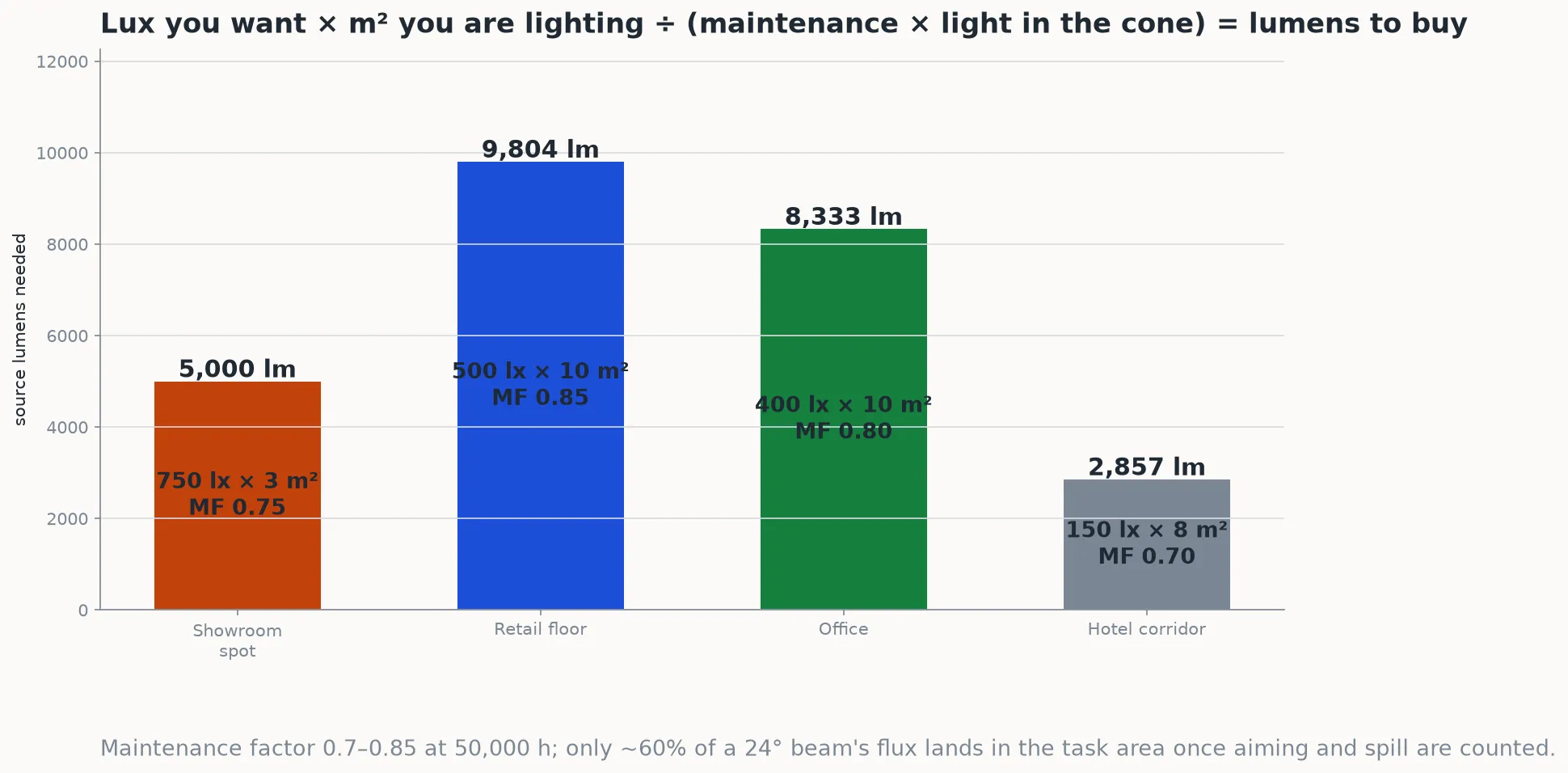
Those lumen figures are source lumens, already inflated for optical and maintenance losses. The lux calculator runs the full arithmetic for a room, the fixture count estimator turns it into a grid, and the unit converter handles lux ↔ foot-candles if you are working from a US drawing.
CRI: the average that hides the number you need
CRI is a 0–100 score for how faithfully a source renders colour compared with a reference source. Two problems hide inside that single number.
It is an average of eight pastel test colours. The saturated red R9 is not part of the average. A fixture can score Ra 90 and still send deep reds toward brown, which is the exact failure mode you see in fashion retail, fresh food, and gallery work hung beside warm timber.
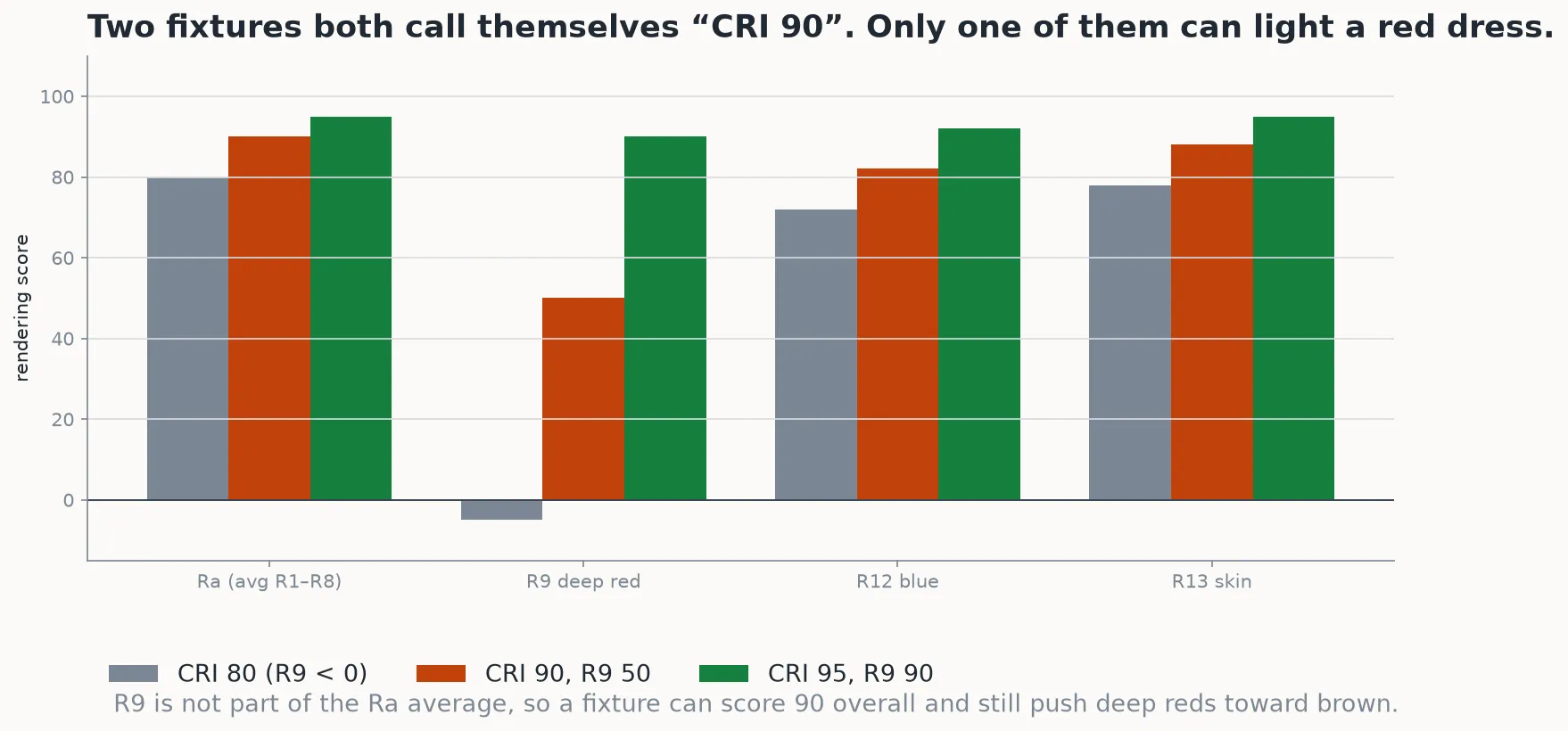
It says nothing about consistency. The line you want next to CRI is SDCM (sometimes written as a MacAdam step). 3-step means adjacent fixtures are visually indistinguishable; 5-step means they can be told apart on a wall; anything above 4-step on a single project is a complaint waiting to happen. RAB Lighting, for instance, publishes 7-step binning on their FXLED flood, which is fine for car parks and wrong for a handbag display.
What to ask for, by application:
- Gallery and museum: CRI ≥ 95, R9 ≥ 80, SDCM ≤ 3, plus EN 62471 photobiological safety because the light is aimed at people and objects.
- Fashion and food retail: CRI ≥ 90, R9 ≥ 50, SDCM ≤ 3.
- Office and education: CRI ≥ 80 is defensible, UGR matters far more.
- Warehouse and industrial: CRI ≥ 70, efficacy and L70 matter more.

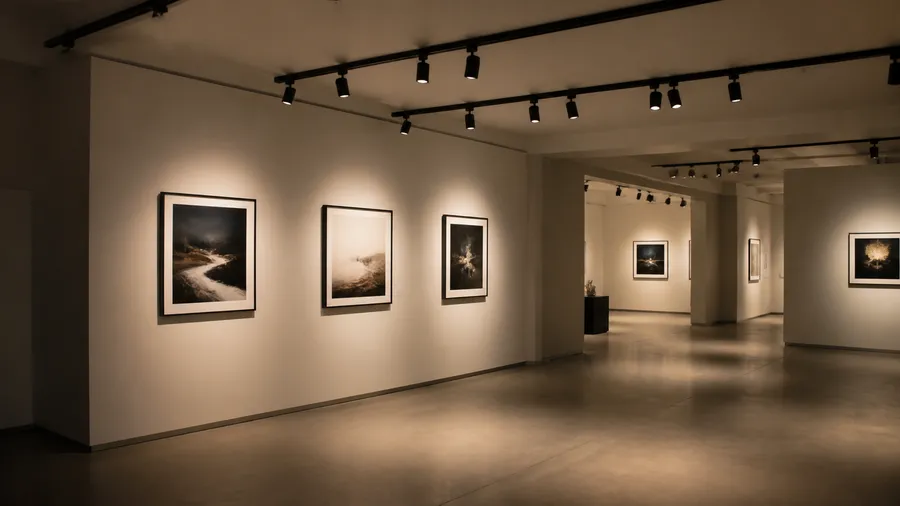
Gallery lighting is the application that punishes a bad R9 fastest: skin tones and deep reds are the first things a visitor notices going wrong.
The CRI guide shows the same object under CRI 80, 90 and 95 side by side if you want to see the difference before you argue about it in a submittal meeting. Colour temperature is a separate decision entirely — CCT guide covers 2700 K vs 3000 K vs 4000 K and where each one belongs.
Beam angle: two numbers, and only one of them is on the marketing page
Every sheet gives a beam angle. Better sheets also give peak intensity in candela, and the candela figure is the one that predicts how the spot behaves.
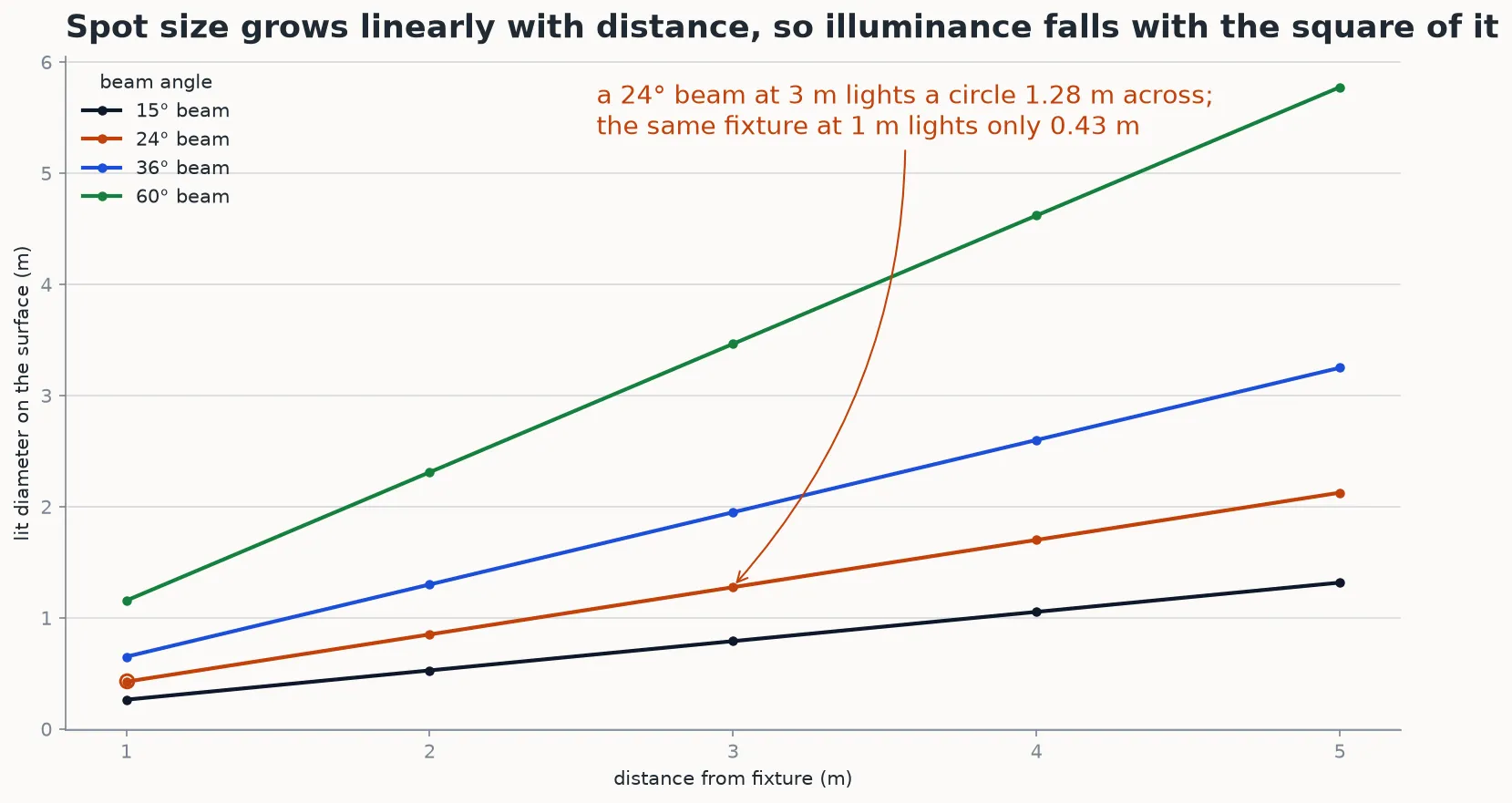
Spot diameter is linear in distance, so illuminance falls with the square of distance. A 24° spot doubles its footprint between 2 m and 4 m and lands a quarter of the lux on it. That single relationship explains most “the sample looked much brighter in the showroom” conversations.
The angles, and where they earn their place:
| Beam angle | Circle at 3 m | Typical use |
|---|---|---|
| 10–15° | 0.5–0.8 m | Museum object, jewellery case, logo wall, high-ceiling accent |
| 24° | 1.28 m | Default retail accent: mannequin, table, shelf end |
| 36° | 1.95 m | Wall wash on a 1.2 m artwork, hotel corridor, bar back |
| 50–60° | 2.8–3.5 m | General ambient fill, low ceilings, circulation areas |
A wall wash usually wants an asymmetric optic rather than a wide symmetric beam. If a supplier only offers 15/24/36, ask how they wash a 1.2 m painting from 0.8 m off the wall — the answer tells you whether they have the optic or just the catalogue.
Beam angle arithmetic in both directions is on the beam angle calculator, and distribution, curves and IES files are explained in the photometric data guide.
The other eight lines, in the order they will bite you
Once the four decisions are settled, the remaining lines decide whether the fixture survives the project.
Ordering code. A cut sheet with an ordering matrix is a good sign and a trap: it means every combination is not the same product. The certification usually names the base article, not every bracket. Ask which configuration the ETL or CE file actually covers.
Voltage and input current. 220–240 V for EU/UK/AU, 120 V for North America, 120–277 V for universal. The line that matters is the current at your voltage, because that is what sizes the circuit and the dimmer load.
Dimming. “Dimmable” is not a specification. The sheet must say which protocol the driver speaks — phase-cut (TRIAC/ELV), 0–10 V, DALI-2, or wireless. A 0–10 V driver on a phase-cut dimmer flickers or drops out at the bottom of the range, and no amount of dimmer-brand upgrading fixes a protocol mismatch.
Driver make and part number. On a track spot the driver lives in the head or the canopy, and it is the part that fails. A spec sheet that does not name the driver make is telling you the driver is negotiable — which is fine for a sample, expensive for 2,000 pieces.
Operating ambient (Ta). 40 °C is the usual commercial interior rating. A 25 °C rating in an insulated ceiling void, or above a shop’s heat line, is a shortened life written into the sheet.
IP and IK. IP20 indoors is normal for track. IP44–IP65 for bathrooms, canopies and exteriors. IK rating matters where the fixture can be hit — a gym, a corridor with luggage trolleys, a carpark.
L70, LM-80 and TM-21. Lifetime is a projection, not a promise. LM-80 is the measurement of how the LED ages in a test chamber; TM-21 is the mathematical projection from that data; L70 is the point at which output reaches 70% of initial. “100,000 hours” without an L70/TM-21 basis is marketing. And L70 is not the end of life — it is the point where the design has to have had margin.
Certification and photobiological safety. ETL/UL for North America, CE (LVD + EMC) for Europe, SAA/RCM for Australia, plus RoHS and, on high-intensity spots, EN 62471 for blue-light risk. The certifications page lists what each one actually covers, and ETL vs CE is the article if you are shopping across both markets.
The lines that are usually missing, and what their absence means
A spec sheet is also readable by omission. In our experience reviewing competitors’ cut sheets alongside our own, four absences are diagnostic:
- No R9 value. The fixture is likely a standard 80 CRI chip relabelled as “high CRI”, or the supplier has never been asked.
- No SDCM / binning. Fixture-to-fixture colour variation will be visible on a long wall.
- No driver make. The driver will change between orders.
- No photometric file. The distribution was never measured, so beam angle is a nominal value from the optic catalogue rather than a tested one. This matters most on asymmetric and wall-wash optics.
None of these absences makes a fixture bad for every job. All of them make it a bad fit for a job where colour, glare or repeatability is the point.
How to compare two spec sheets without being fooled
Here is the same 20 W track spot described two ways. Both are on real sheets we have seen from suppliers.
| Line | Sheet A | Sheet B | How to read it |
|---|---|---|---|
| Light output | ”1,600 lm" | "1,340 lm delivered” | Sheet A is likely source lumens; discount it before comparing |
| Power | ”20 W" | "23 W input” | A’s efficacy is on LED watts, B’s on system watts |
| Efficacy | ”80 lm/W" | "58 lm/W” | The lower number describes the better-lit floor |
| CCT / CRI | ”3000 K, CRI > 90" | "3000 K, CRI 92, R9 62, 3-step SDCM” | B lets you verify; A asks you to trust |
| Beam / intensity | ”24°" | "24°, 2,900 cd” | Candela predicts the spot; degrees only describe it |
| Driver | not stated | ”Tridonic, 0–10 V, PF 0.95, THD < 15%“ | If it is not named, it will change |
| Rated life | ”50,000 h" | "L70 > 54,000 h, LM-80 + TM-21” | Only B’s number has a method behind it |
| Ambient / IP | ”IP20" | "IP20, Ta 40 °C” | Ta is the line that explains summer failures |
| Certifications | ”CE, RoHS" | "CE (LVD/EMC), EN 62471 RG1, RoHS” | Photobiological safety is the one high-intensity spots forget |
Sheet B is not automatically the right fixture. It is the sheet you can make a decision with. Sheet A requires three questions before it becomes comparable, and if the supplier cannot answer them, that is the answer.
What this looks like in our own products
Since the point of a datasheet is that somebody has to stand behind the numbers, here is the same logic applied to the fixtures we build.
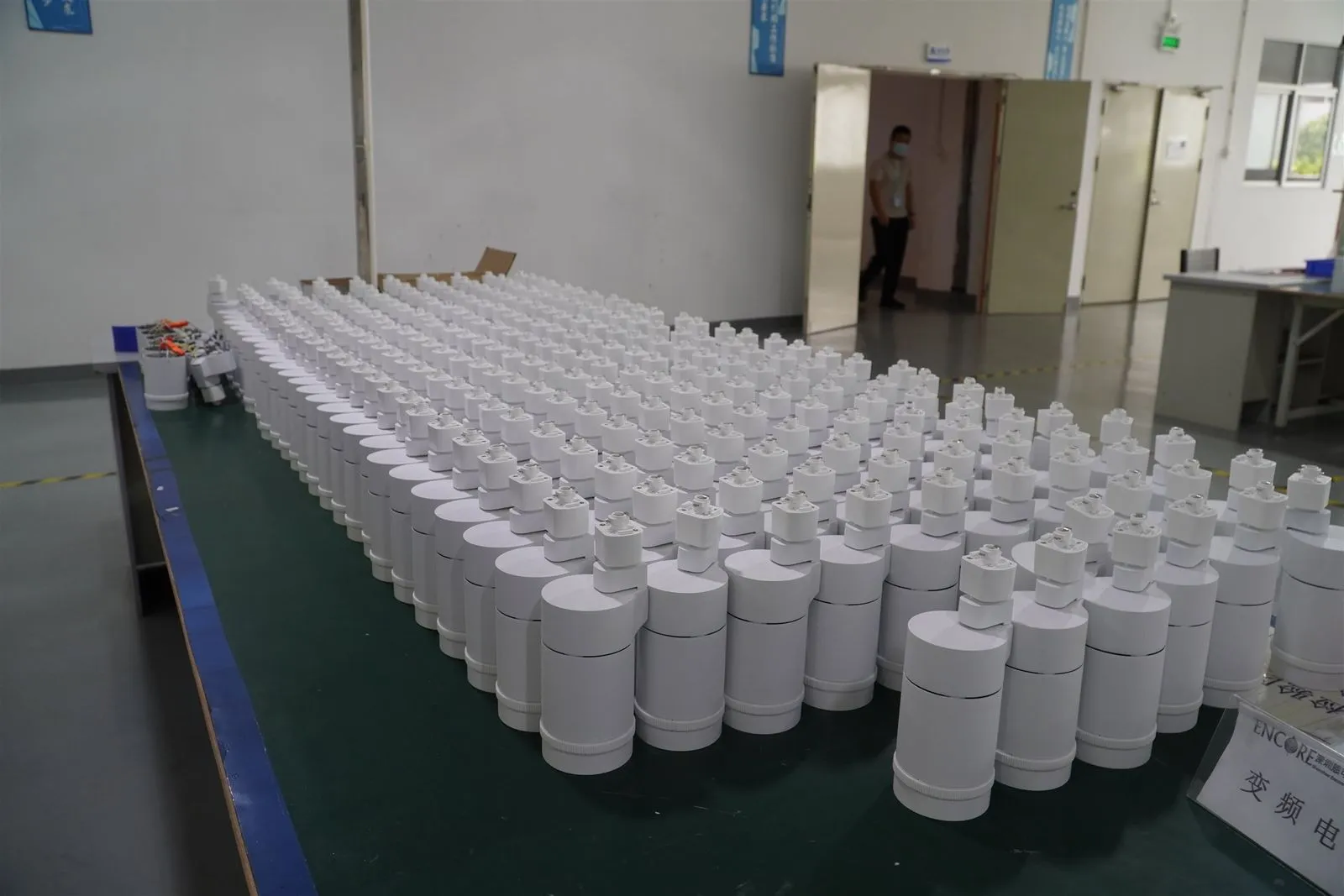
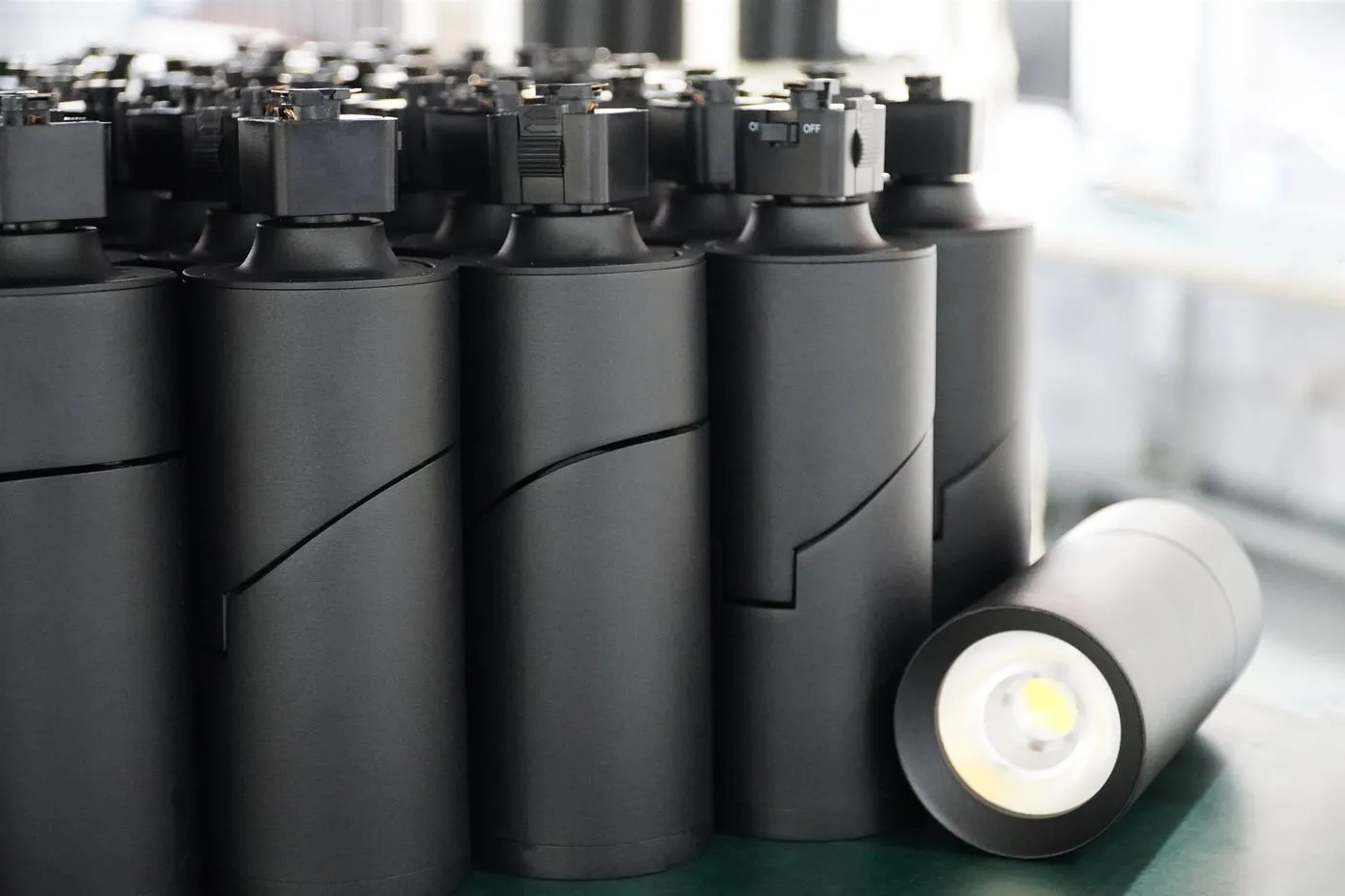
A spec sheet becomes real at this table. The driver, the binning and the CCT tolerance are three decisions someone made before the aluminium was machined.
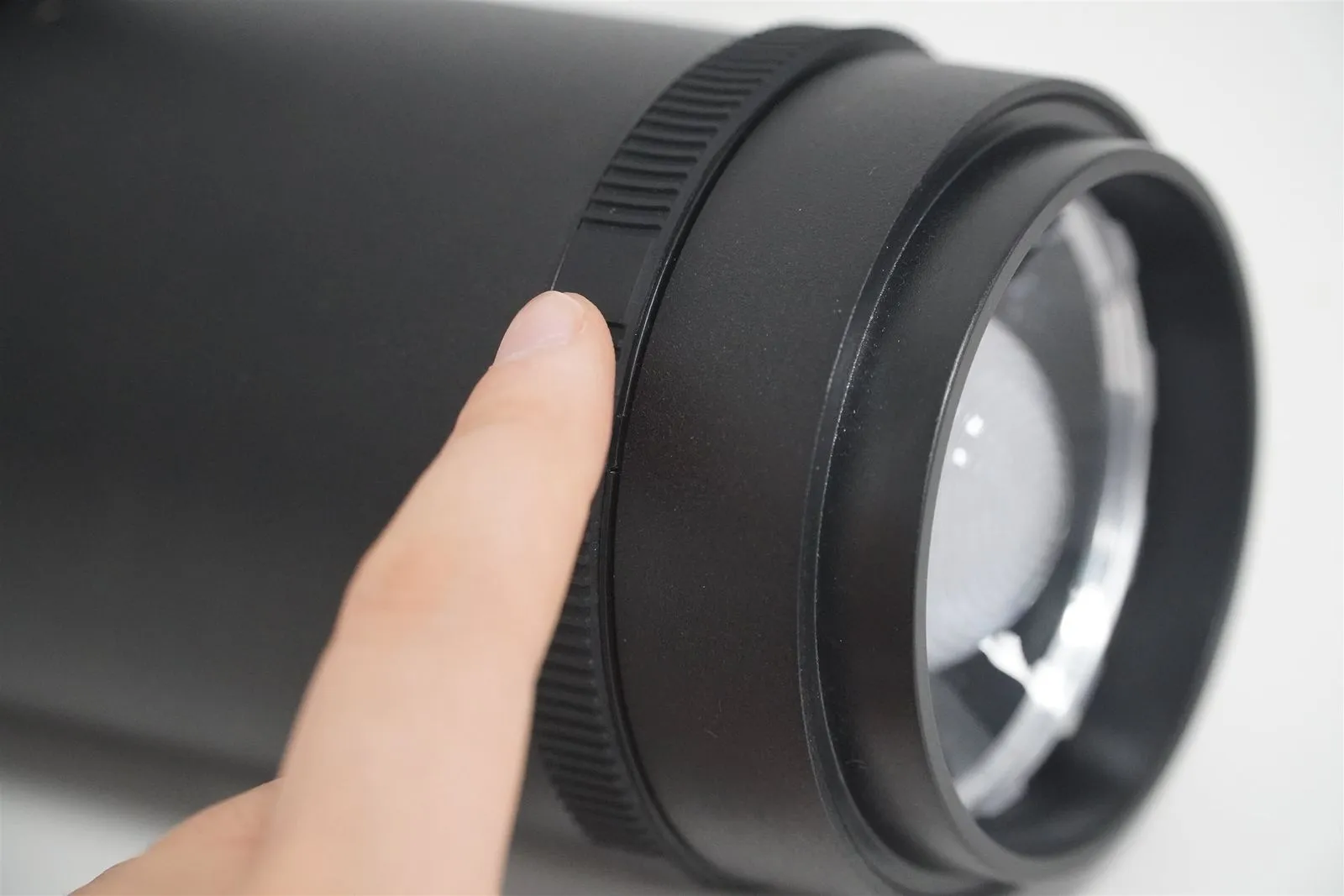
On our VEGA track head the optic is a zoom or interchangeable lens, which is why the sheet carries both a beam range and a peak intensity, and why the photometric file changes when the lens does. A nominal “24°” on a fixed optic and a measured “24°” on an adjustable one are not the same claim, and only one of them survives a mock-up.
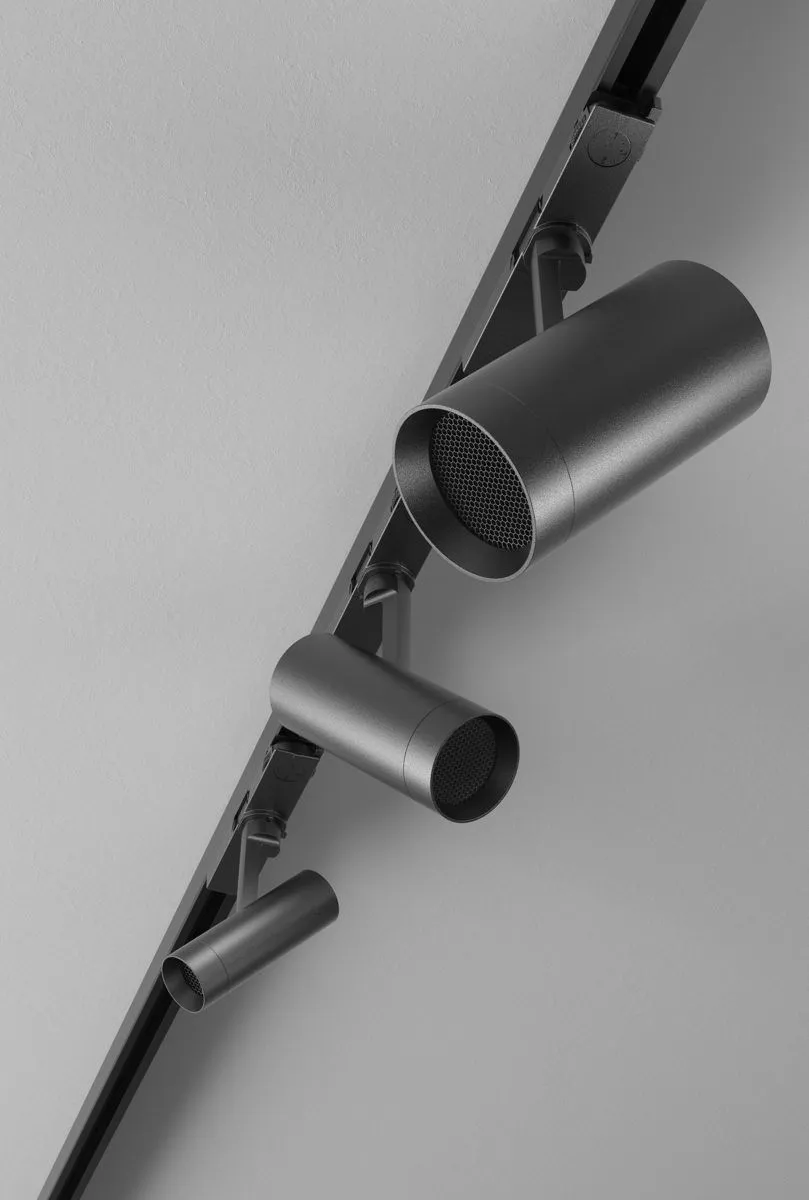
Track systems live or die on accessory tolerance rather than on lumens: adapter play, the angle the head actually holds after a year, and whether the track is rated for the number of heads you drew on the plan. The full range and the accessories are on the track lighting page, and the OEM layer — what can be changed without new tooling, and what cannot — is on custom track lighting.
On the magnetic track systems the equivalent question is not beam angle but system voltage and driver placement: 48 V track, remote or integrated driver, and what happens to the lumen line when you add the modules. The magnetic track lighting guide walks through it.
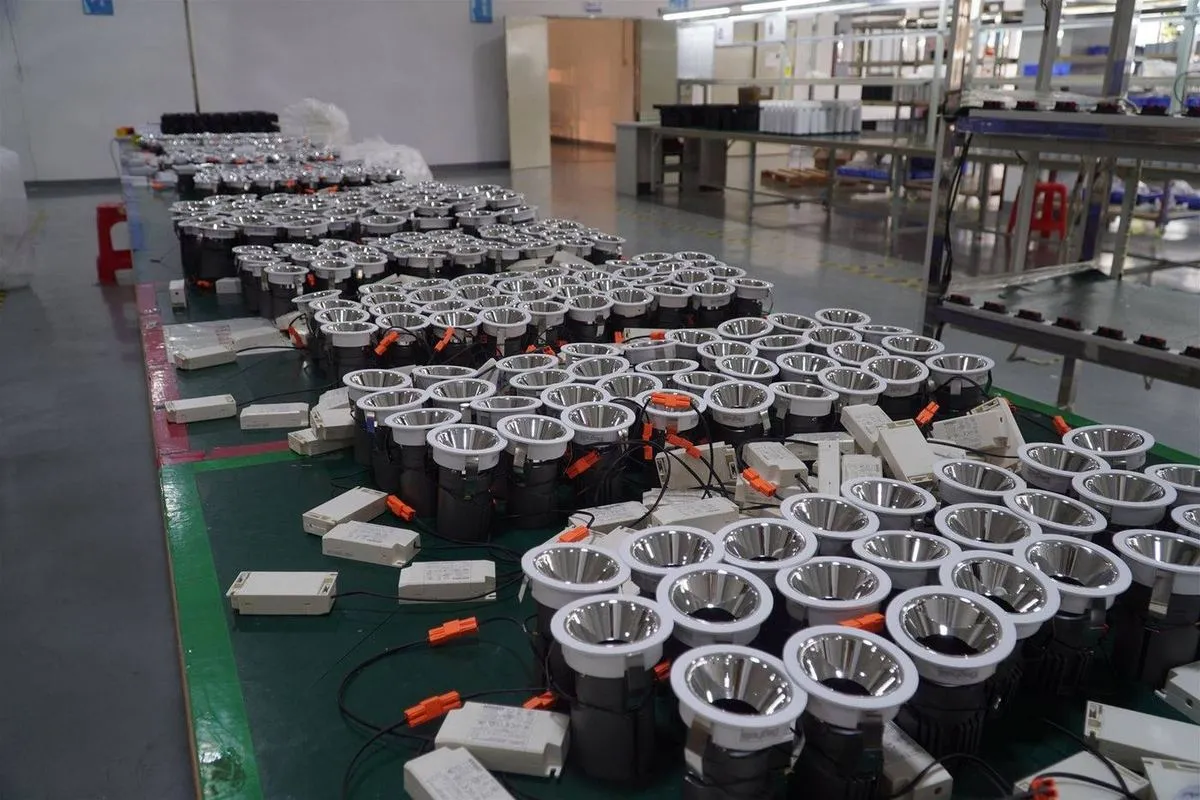
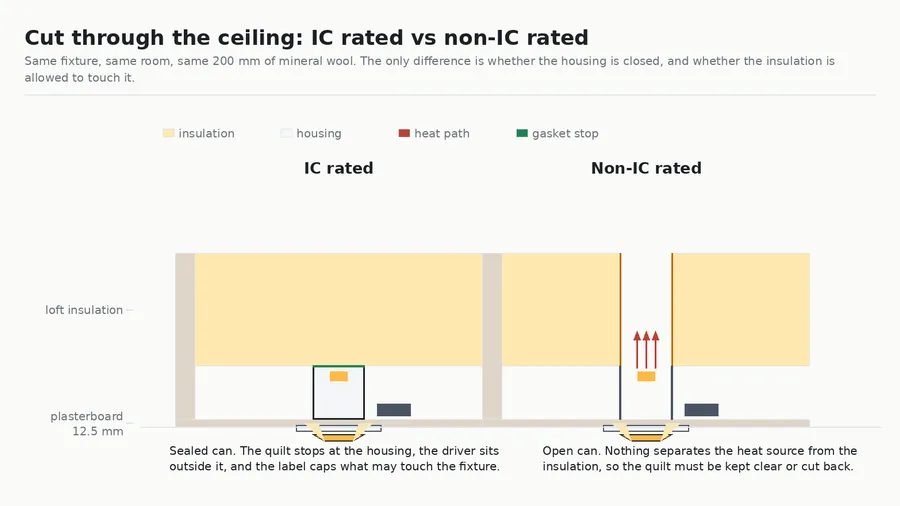
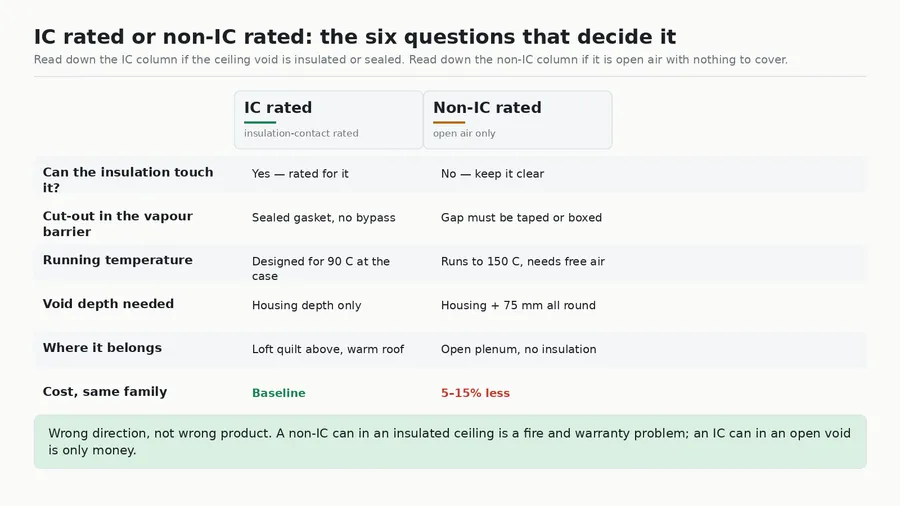
For LED downlights the sheet problem is the reverse: cut-out tolerance, IP rating against the ceiling void, and the fact that a downlight’s delivered lumens fall further than a spot’s once the trim and diffuser are in the light path. That is why we publish the tested figure and the IES file rather than a nominal chip output, and why IC vs non-IC is a specification line, not a footnote.
A spec sheet review you can do in ten minutes
Print the sheet, get a pen, and work down this list. Ten minutes, one fixture at a time, and most of the arguments disappear before the purchase order.
- Find the ordering code. Confirm the code matches what is being quoted. Note which bracket, CCT and beam you are actually buying.
- Lumens. Is it delivered or source? Is the wattage input or LED? Divide one by the other and sanity-check the efficacy.
- Lux. Ignore any lux number without a stated distance, area, maintenance factor and surface. Convert it yourself with the formula above.
- CRI. Take Ra, R9 and SDCM as a group of three. Two out of three is a question, not an answer.
- Beam angle and candela. Plot the circle at your real mounting distance. Check the candela against a mock-up if the surface is more than 4 m away.
- Driver. Get the make and part number in writing, and the dimming protocol your control system speaks.
- Thermal and environmental. Ta, IP, IK. Match them to where the fixture is going, not to where the sample was shown.
- Life. Accept only L70 with LM-80/TM-21 behind it, and read the warranty terms: driver included, or not?
- Certification. Which exact configuration is covered, and does the file number match the model on the quote?
- Photometric file. Ask for the IES/LDT. If the fixture matters, run it in DIALux or AGi32 before you approve.
The photometric data guide covers how to read the resulting curve and what UGR does to a room, and the UGR guide is the one to send to a client who has started worrying about glare in a screen-facing layout.
FAQ
What is the difference between lumens and lux on an LED spec sheet? Lumens measure the light a fixture emits; lux measures the light arriving on one square metre of surface. A datasheet can state lumens because that is a property of the fixture. It can only estimate lux, because lux depends on distance, beam angle, the surface and everything else in the room.
How do I convert lux to lumens? Multiply the lux target by the lit area in square metres, then divide by the losses: lumens = lux × area ÷ (maintenance factor × share of flux in the task area). For a room-scale estimate, divide by a utilisation factor of 0.5–0.7 and a maintenance factor of 0.7–0.85. For a single spot, use the beam footprint at your mounting distance and assume roughly 60% of the flux lands inside the task area.
How many lumens do I need per square metre? As a rough rule, 100–300 lumens per m² of delivered light gives 100–300 lux on that surface, which covers corridors and ambient circulation. Retail floors want 400–700 lux (roughly 400–700 delivered lumens per m²), and accent or focal lighting wants 750–1,500 lux on a small area rather than a room-wide figure.
Is a higher lumen number always a brighter fixture? No. A sheet quoting 1,600 “LED lumens” can deliver less light than one quoting 1,340 “delivered lumens”. Always compare delivered lumens at the same beam angle, and compare efficacy using system input watts.
What CRI do I need for retail and galleries? CRI 90 with R9 ≥ 50 for retail, and CRI 95 with R9 ≥ 80 plus SDCM ≤ 3 for galleries and museums. The R9 value matters more than the headline CRI for reds, skin tones, timber and food.
Does beam angle change brightness? It changes concentration. A 15° beam puts the same lumens into a much smaller circle, so the centre is much brighter in candela; a 60° beam spreads them over four times the area and looks flatter. Beam angle does not change the total lumens unless the optic loses more light.
Why does my fixture look dimmer than the sample? Usually three reasons: the sample used source lumens in its claim, the installed distance is greater than the mock-up distance (lux falls with distance squared), or the ceiling void is hotter than the test ambient and the fixture is thermally de-rating.
What does L70 mean and is 50,000 hours real? L70 is the projected number of hours until the fixture’s output reaches 70% of its initial value. It is only meaningful when based on LM-80 measurement and TM-21 projection. 50,000 hours at four hours a day is about 34 years of operation, so L70 is rarely the reason a fixture leaves a building — the driver, the controls or the design usually is.
What is EN 62471 and do I need it? EN 62471 is the photobiological safety standard for lamps and luminaires. For high-intensity accent and track spots it produces a risk group (RG0, RG1, RG2, RG3) covering blue light and retinal exposure. Projects with spots aimed at eye level, or near artwork and people, increasingly ask for it, and it is one of the lines most often missing from a cut sheet.
Can one spec sheet cover a whole product family? Rarely. The certification, the photometric file and the driver approval usually attach to a specific configuration. If a supplier sends one sheet for a family of twelve SKUs, ask which SKU was tested and what changes between them.
The short version
An LED spec sheet is a compression of decisions. Four of them are yours: configuration, delivered lumens, colour quality, and beam. The other eight tell you how reliably the first four will hold up in a real ceiling.
- Lumens are quoted two ways. “Delivered” or “luminaire” is the only one you can design with.
- Lux belongs to your room, not the datasheet. Convert it yourself: lux × m² ÷ losses.
- CRI without R9 is half a number, and CRI without SDCM is a promise about one fixture, not a project.
- Beam angle is geometry. The spot grows linearly, the lux falls with distance squared — and a 24° spot at 3 m is 1.28 m wide.
- The driver line is the reliability line. If it has no make and no part number, it will change.
Send us a spec sheet you are reviewing and we will mark it up line by line — what is a decision, what is a consequence, and what is missing. That is usually faster than a sample box. Ask our engineers to review your spec sheet →
Read next: Photometric Data Explained for UGR, IP, IK and how to read an IES curve; CRI Guide and CCT Guide for the colour decisions in detail; and ODM vs OEM LED Lighting for when the sheet stops describing a product and starts describing a project.
- led lighting datasheet
- how to read led spec sheet
- lux to lumens
- led spec sheet
- delivered lumens
- lumens per watt
- cri and r9
- beam angle
- iec 62471
- led track light specifications

ENCORE Lighting Team · ENCORE
LED Lighting Manufacturer & OEM/ODM Partner
The ENCORE engineering and sourcing team writes about LED track lighting, downlights, magnetic systems, certifications and OEM/ODM manufacturing for B2B buyers and specifiers.