· Buying Guides · 8 min read

Written by ENCORE Lighting Team
LED Lighting Manufacturer & OEM/ODM Partner ·
IC and Non-IC LED Downlights: the Full Spec Reference
The full reference on IC and non-IC LED recessed downlights: what each rating legally means, the standards behind the label, housing construction, insulation clearance, thermal protection, and how to spec the right version for a project.
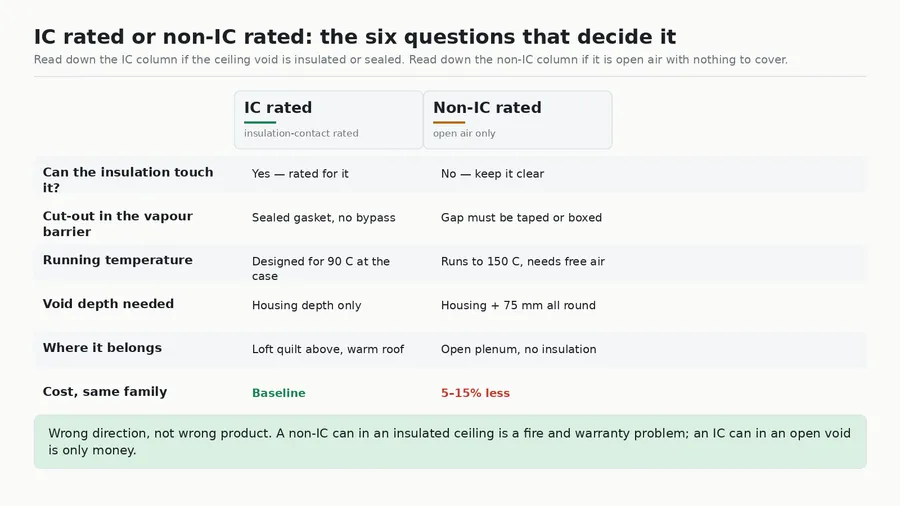
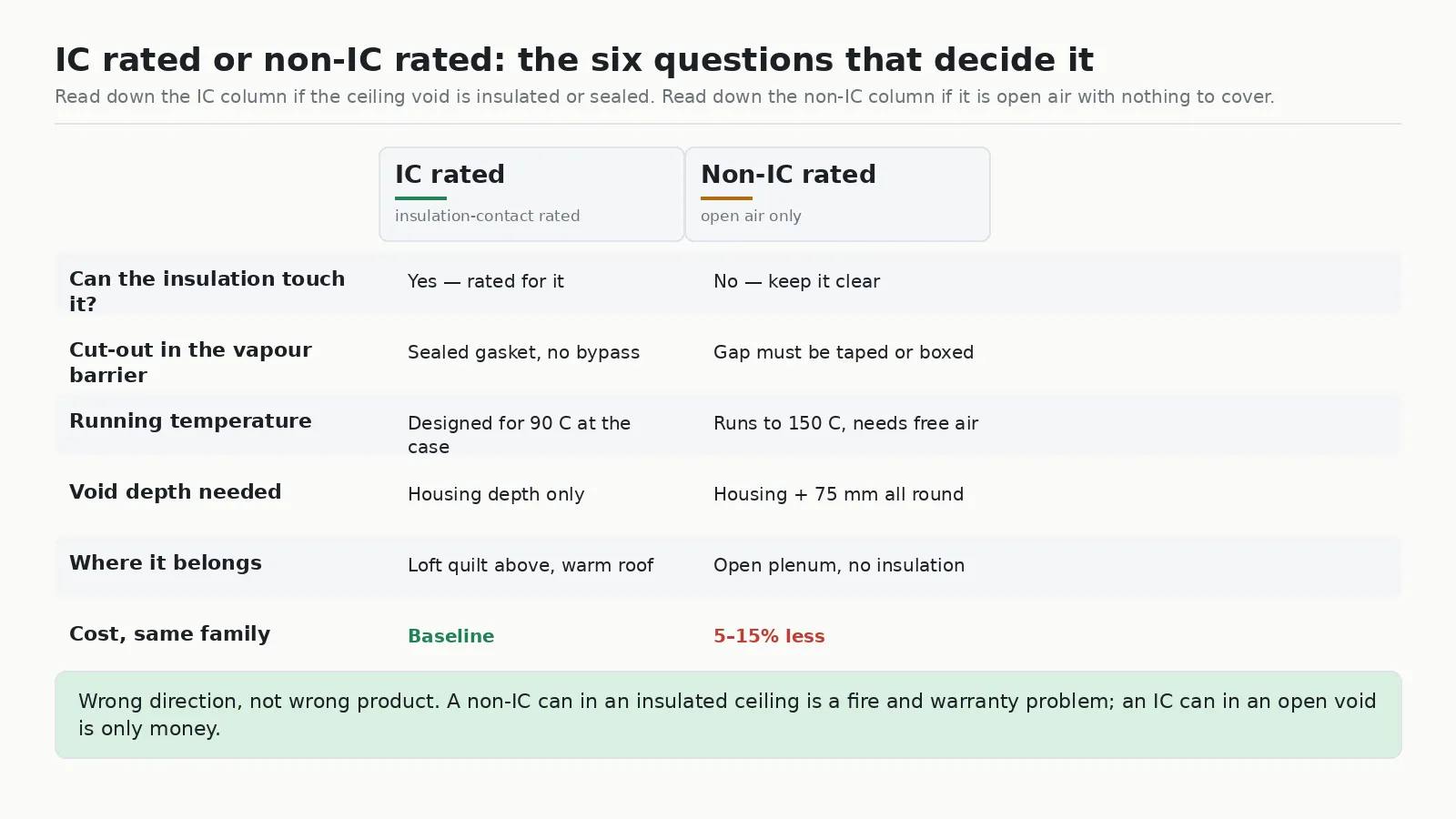
This is the reference page. It defines both ratings from the label backwards: the standards that produce them, the housing details that earn them, and the installation conditions that keep them true. If you are choosing a fixture for a specific ceiling right now, the decision version of this topic — with the site checks and the purchase-order clauses — is IC rated vs non-IC downlights: which does your project need?.
Definitions
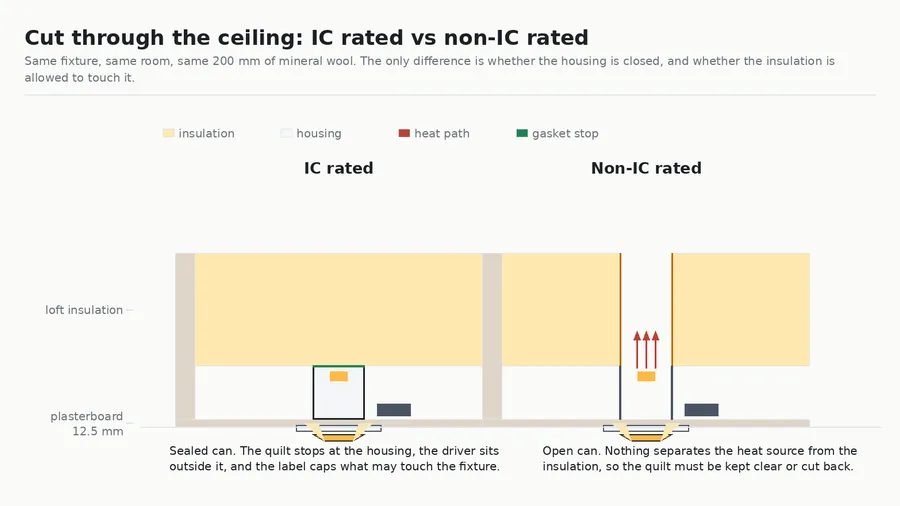
IC (insulation contact). A recessed luminaire rated to be installed in contact with, or covered by, thermal insulation without exceeding the temperature limits of the luminaire, the insulation or the building assembly. The rating appears on the housing label and in the installation instructions as a permitted coverage condition.
Non-IC. A recessed luminaire intended for installation in free air, where no insulation is in contact with or over the housing. Its instructions require a clearance — commonly expressed as a distance from the housing to combustible material and to insulation.
Neither word describes light output, ingress protection or fire resistance. All three are separate ratings that can be combined in one fixture or omitted.
What the Label Actually Says
Four pieces of information turn “IC rated” from a marketing phrase into an engineering fact:
- The rating statement itself, marked on the housing where an installer can read it after the carton is discarded.
- The maximum permitted insulation thickness or coverage — sometimes “may be covered,” sometimes a specific depth.
- The maximum ambient temperature and the position of the thermal measurement.
- The lamp or LED engine the rating was granted with, including wattage and, on retrofit fixtures, the lamp type allowed.
The fourth item is where most substitutions go wrong. An IC housing approved with a 9 W engine is not an IC housing when a 20 W engine is fitted, even though the metal is identical.
The Standards Behind the Rating
In North America, recessed luminaires are certified to UL 1598 (with CSA C22.2 No. 250 in Canada), and the IC distinction is expressed through temperature testing with insulation present plus the marking requirements that follow from it. In Europe, the equivalent statement lives inside IEC/EN 60598 and its national adoptions, where a luminaire suitable for covering by insulation carries a symbol rather than the letters IC.
The point of listing the standards is practical. When a buyer asks a supplier to “prove” an IC rating, the answer is not a datasheet sentence — it is a certificate entry and a test report that reference the model, the engine and the standard together.
Housing Design: What Earns the Rating
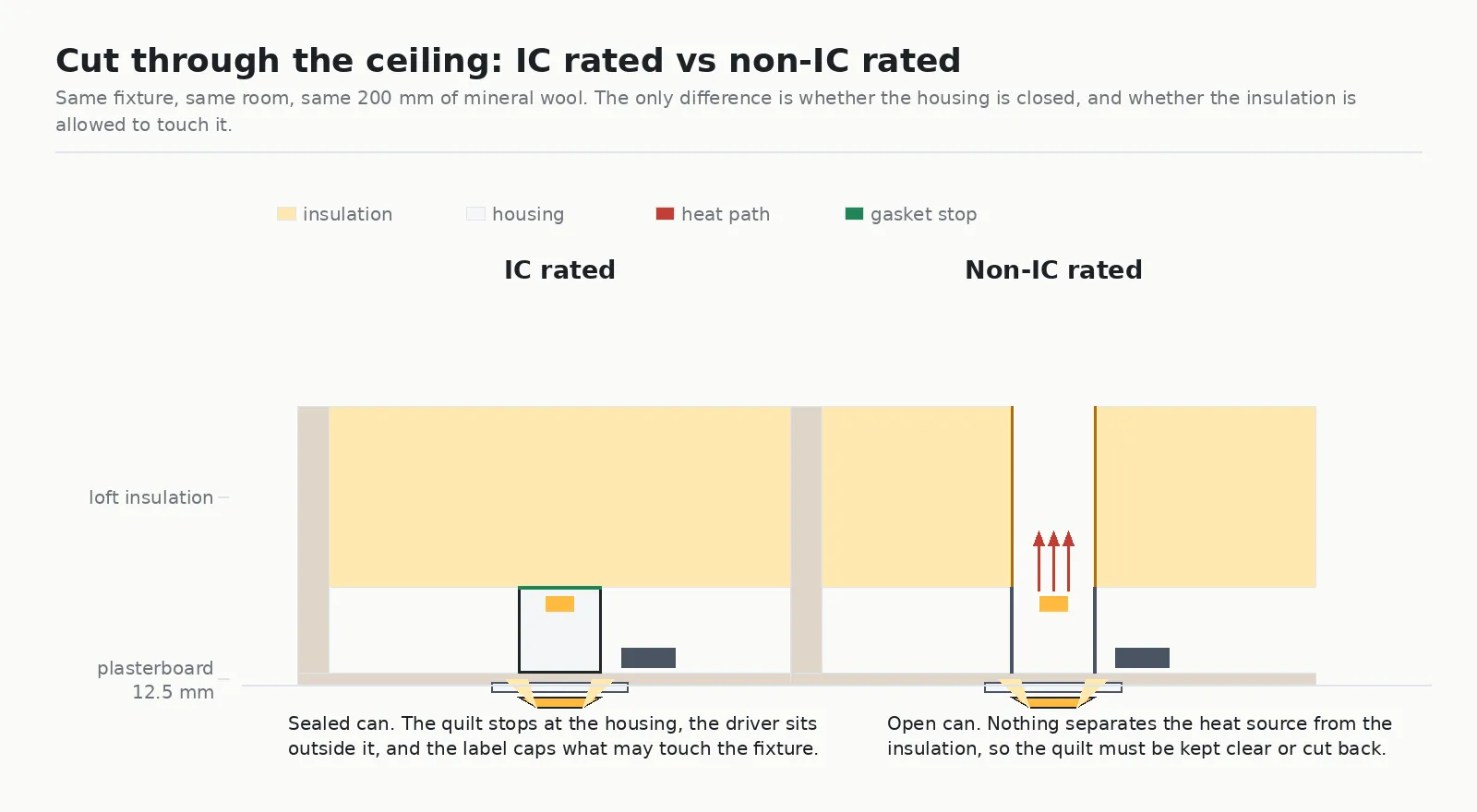
An IC housing differs from a non-IC housing of the same family in four structural ways.
Closed crown. The top of the housing is closed, with a defined thermal contact area. On many designs a thermal protector is mounted there.
Thermal path through metal, not air. Heat travels by conduction into the housing wall and then into the surrounding volume. A housing intended to be covered cannot rely on convective airflow to carry heat away, because covering removes it.
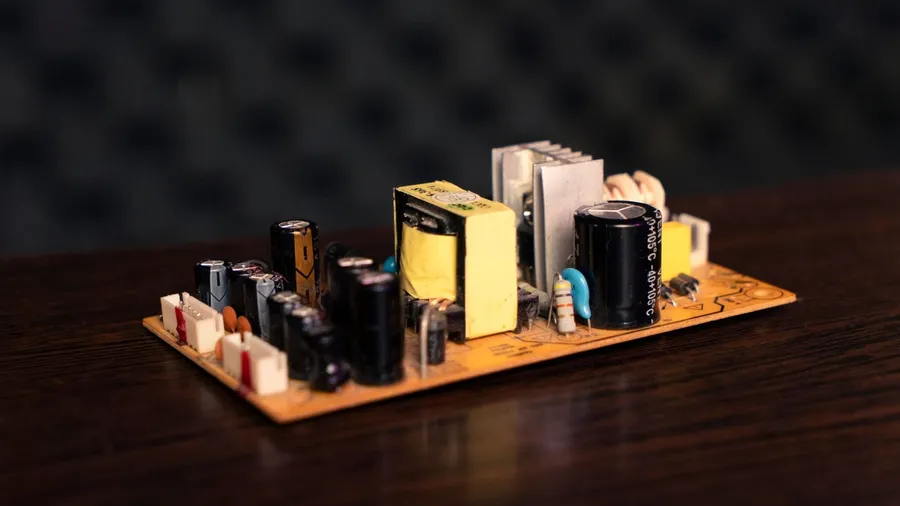
Driver placement. Either the driver sits outside the thermal path in its own compartment, or the engine wattage is reduced for the same can volume. Wattage per litre is the number that quietly changes between two otherwise similar fixtures.
Sealing at the cut-out. A gasket, a sealed trim ring or a captive seal lets the ceiling membrane be closed around the fixture. Air leakage is a comfort and condensation problem well before it is a temperature problem.
Thermal Protection: Two Different Jobs
A thermal protector on a recessed fixture and an insulation-contact rating are related but not identical.
The protector is a device — usually a bimetallic or electronic cut-out — that interrupts or limits the circuit when the fixture gets hotter than intended. It protects the fixture, the wiring and the building assembly in a fault condition.
The IC rating is the demonstrated normal operation: with insulation present, at the rated engine, temperatures stay under the limits. A fixture can have a protector without being IC, and an IC fixture will normally also have a protector. Buying on the strength of the protector alone is buying the safety net, not the approval.
Clearance in Practice
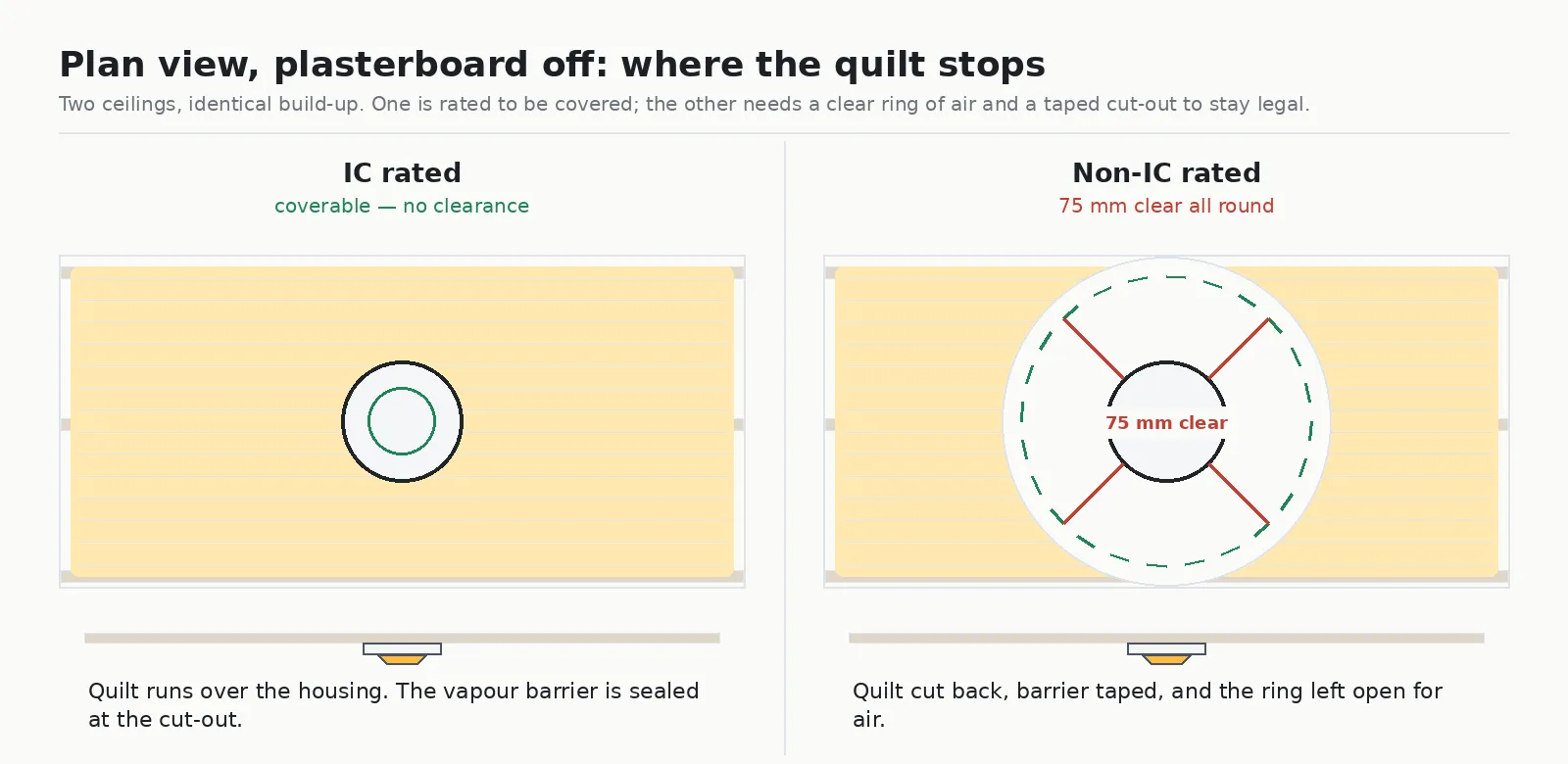
Non-IC clearance appears in three places, in order of authority: the fixture’s installation instructions, the local electrical or building code, and the insulation manufacturer’s guidance. Numbers such as 75 mm (3 in) around and above the housing appear commonly in instructions; they are a starting point, not a universal constant.
Two installation realities matter more than the number itself:
- Trade sequence. Electricians cut the holes; insulation contractors arrive later. Any clearance that depends on a subsequent trade remembering it will be closed over sooner or later.
- Vapour barrier continuity. A clearance ring in an airtight ceiling interrupts the membrane. The gap has to be taped or boxed, or the assembly loses the airtightness it was designed for.
Fire Rating Is Separate
In apartment ceilings, corridors and any assembly with a fire separation, the ceiling itself is rated, and the downlight must be part of a tested assembly for that rating. IC and fire rated are independent properties: an IC fixture in an unprotected opening does not preserve a fire rating, and a fire-rated housing is not automatically insulation-contact rated.
Retrofit and Conversion
Turning a non-IC fixture into an IC fixture is a manufacturing change, not an accessory: different housing, different thermal path, a new temperature-rise test, and a new model entry in the listing. Field conversion is not a recognised path, and any claim that a sticker or a heat shield achieves it should be tested by asking for the model number on the certificate.
Specifier Checklist
- Model code of the IC variant, not the family name.
- Coverage statement from the instruction sheet, copied into the order.
- Engine wattage and maximum ambient the rating was granted with.
- Gasket, sealed trim and accessories listed as included.
- Fire rating, where the ceiling has one, as a separate line.
- Instruction sheet in the language of the site.
- Certificate entry that names the model you are buying.
Conclusion
IC and non-IC are not good and cheap. They are two answers to one question asked at the cut-out: is there insulation above this hole, and will it still be there in ten years?
Answer it honestly, write the answer into the purchase order, and the fixture never becomes the reason a ceiling fails an inspection.
FAQ
Is IC rated better than non-IC? Neither is better. IC is required where insulation touches or covers the housing; non-IC is the correct and cheaper choice in free air. Using non-IC in an insulated ceiling is the only genuinely wrong combination.
How do I know if my existing downlights are IC rated? Read the label on the housing, not the box. If it is not visible, look up the model number in the manufacturer’s certification listing. Assume non-IC until proven otherwise.
Can I cover a non-IC downlight with insulation if I use an LED lamp? No. The rating belongs to the housing and its approved engine combination, not to the lamp generation. A cooler lamp still leaves the driver and the housing at temperatures the fixture was not tested for in a covered condition.
Do IC downlights need a clearance? No clearance to insulation is required — that is the point of the rating. They still need the void depth stated in the instructions, and the space the wiring needs.
Are IC downlights legal in a fire-rated ceiling? Only as part of a tested fire-rated assembly. IC says nothing about fire resistance, so both ratings must be present when both conditions exist.
Does the IC rating expire? The listing stays valid while the product is unchanged and under the manufacturer’s surveillance. It stops applying to your fixture the moment the engine, the driver or the housing changes without re-testing.
- ic and non ic led recessed downlight
- ic rated led downlight
- non ic recessed lighting
- recessed downlight guide
- insulation contact rating
- downlight thermal protection
- insulated ceiling lighting
- recessed can light guide

ENCORE Lighting Team · ENCORE
LED Lighting Manufacturer & OEM/ODM Partner
The ENCORE engineering and sourcing team writes about LED track lighting, downlights, magnetic systems, certifications and OEM/ODM manufacturing for B2B buyers and specifiers.