· ENCORE · Custom & OEM Lighting · 11 min read
OEM LED Track Lighting: A Complete Guide to Private Label Track Lights
A complete OEM LED track lighting guide: the 6-step OEM process, what you can customize (housing color, CCT, CRI, beam angle, wattage, dimming), packaging and branding options, lead times and payment terms for private label track lights.
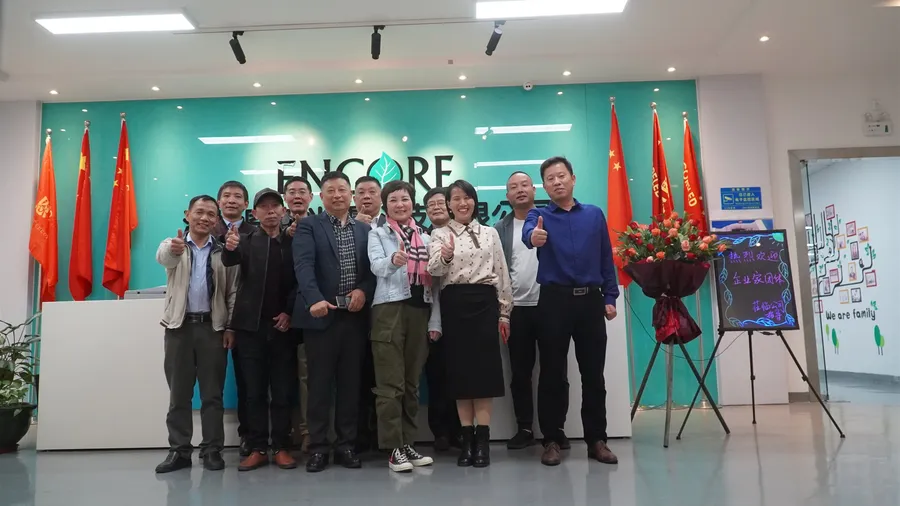
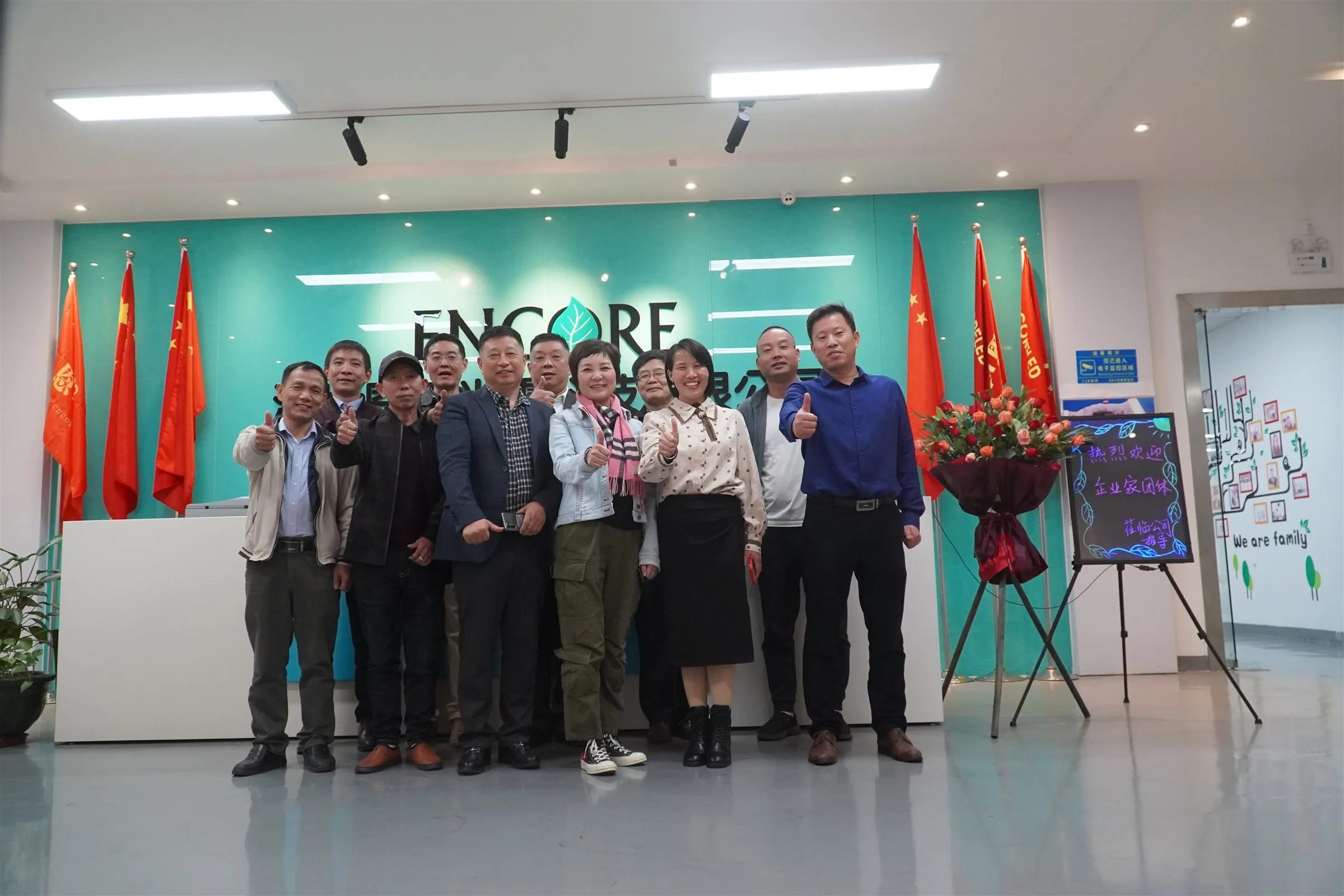
If you sell lighting under your own brand — a showroom, a retail chain, an e-commerce store, a lighting spec house — OEM LED track lighting is how you get a product line without building a factory. You bring the brand and the market; the manufacturer brings the engineering, the tooling, the certifications, and the production line. The result is a private label track light that carries your logo, your color, your specs — and your margin.
This is the complete guide to OEM LED track lighting: the 6-step OEM process from brief to shipment, everything you can customize on a track light, packaging and branding options, realistic lead times and payment terms, and why this keyword is one of the lowest-competition B2B opportunities in lighting right now.
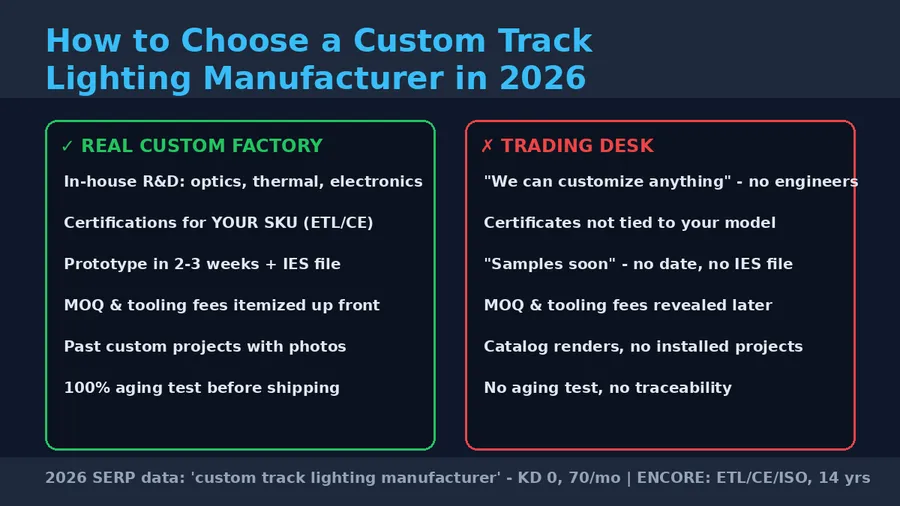
If you have not read it yet, our custom track lighting manufacturer buyer guide covers how to vet a custom factory versus a trading desk — the sourcing-models context this OEM guide is built on.
What Is OEM LED Track Lighting?
OEM (Original Equipment Manufacturer) means a manufacturer produces a track lighting product to your specification, and you sell it under your brand. The product is yours to market; the factory handles the engineering, production, quality control, and compliance.
There are three common sourcing models — knowing which one you are asking for saves weeks of back-and-forth:
| Model | What you own | Best for |
|---|---|---|
| OEM | Your specs, your brand, your packaging | Brands that know exactly what they want to sell |
| ODM | A modified catalog design, your brand | Brands that want a proven design adapted fast |
| Private label | A standard product, your logo on it | Resellers launching a brand at minimum cost |
Most “OEM LED track lighting” searches are really asking for private label track lights — your brand on a well-engineered, certifiable product with a few meaningful customizations. That is exactly what this guide covers.
The 6-Step OEM Track Lighting Process
A reliable OEM track light project follows a defined sequence. Skip steps and you inherit the risk; follow them and you get a product that is buildable, certifiable, and on time.
1. Requirement communication (需求沟通)
Everything starts with a clear spec sheet. The more concrete you are here, the fewer costly surprises later. At minimum, send the factory:
- Application — retail, museum, hospitality, residential, office
- Photometrics — beam angle, lumens, CCT, CRI, target lux
- Electrical — voltage, wattage, dimming protocol
- Mechanical — track type (3-wire, 1-circuit, magnetic), housing style, finish, dimensions
- Compliance market — North America (ETL/UL), EU (CE), Australia (SAA), etc.
If you are unsure what your spec numbers should be, use our color temperature guide to pick CCT and our CRI guide to set a color-rendering target before you write the RFQ.
2. Prototyping (打样)
The factory builds an engineered prototype — not a catalog sample with your logo pasted on. A serious OEM prototype comes with:
- A photometric (IES/LDT) file so you can verify beam angle and distribution in your own lighting design software
- Measured beam angle, lumens, CRI, and SDCM data
- A physical sample you can evaluate for finish, thermal behavior, and driver quality
Prototyping typically takes 2–3 weeks. Expect one or two revision rounds before you approve.
3. Approval (确认)
You sign off on the prototype — appearance, photometric data, performance, and any sample test results. This is the point where the spec is frozen. After approval, changes get expensive because tooling and production parameters are locked in. Read the checklist in our custom manufacturer buyer guide so you know exactly what to verify before you say yes.
4. Mass production (量产)
Once approved, the factory runs the order. During mass production a real OEM factory follows IQC → IPQC → OQC:
- IQC — incoming quality control on components (LED bins, drivers, housings)
- IPQC — in-process quality control on the line
- OQC — outgoing quality control, including a 100% aging test (burn-in) before packing
5. Quality control (质检)
Beyond the in-line QC above, finished goods should pass a final inspection: electrical safety test, lumen and CCT verification against the approved sample, and a carton drop-test on packaging. If you use a third-party inspection company, the factory should accommodate the visit or the pre-shipment inspection.
6. Shipping (发货)
The order is packed, labeled, and shipped per your terms — FOB, CIF, EXW, or DDP depending on your logistics setup. You receive the compliance documents (certificates naming your SKU, test reports) alongside the shipment so customs clearance is smooth.
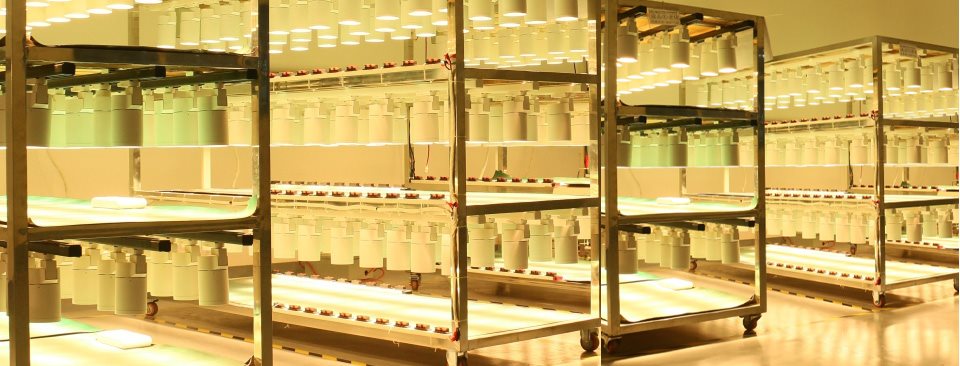
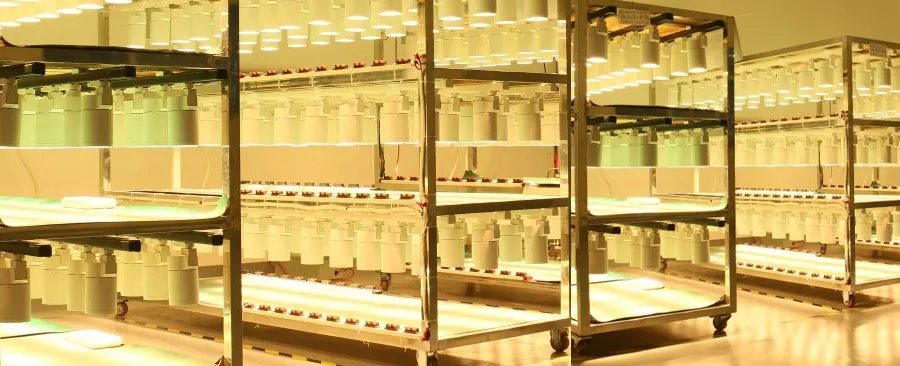
OEM production of private label track lights — the factory line, not a showroom, is what you are buying into.
What You Can Customize on OEM Track Lights
This is where OEM LED track lighting earns its cost. A real OEM manufacturer customizes the light itself, not just the label. Here is the full menu:
Housing color & material (外壳颜色/材质)
- Colors — any RAL/pantone: black, white, silver, matte, anodized, custom brand colors
- Finishes — powder coat, anodizing, electroplating, textured, sandblasted
- Materials — die-cast aluminum (standard), extruded aluminum, or custom profiles for architectural or magnetic track
Color temperature — CCT (色温)
Choose from standard bins or ask for a custom CCT in between:
- 2700K (warm hospitality/residential), 3000K (retail/hotel), 3500K (mixed), 4000K (retail/commercial), 5000K–6500K (supermarket/daylight)
- Custom CCT binning and SDCM ≤ 3 for color consistency across a project — critical for retail chains where fixtures sit side by side
CRI (显色指数)
- Standard: CRI 80–90
- Premium: CRI 90+, CRI 95+ with strong R9 (reds) — the baseline for retail, museum, and hospitality in 2026
- Optional UV/IR filtering for artwork and merchandise protection
Use the color temperature guide and CRI guide to dial in the exact spec before you ask for a quote.
Beam angle (光束角)
- Narrow spot (15°–24°) for accent and display lighting
- Medium flood (30°–40°) for general retail
- Wide flood / wall-wash (45°–60° and asymmetric) for grazing and ambient
- Custom reflector + lens engineering with an IES file — this is the sign of a true OEM factory, not a re-labeler
Wattage & electrical (功率)
- Typical range for track heads: 5W–50W per head
- Custom driver selection for constant current (CC) or constant voltage (CV) platforms
- Voltage options: 120V, 220–240V, 277V, or low-voltage (24V) magnetic track systems
Dimming protocols (调光协议)
- TRIAC — standard for North American residential dimmers
- 0–10V — commercial and architectural standard
- DALI / DALI-2 — building-management and control-system integration
- PWM / Zigbee / Casambi / Matter — smart-home and wireless control for e-commerce brands
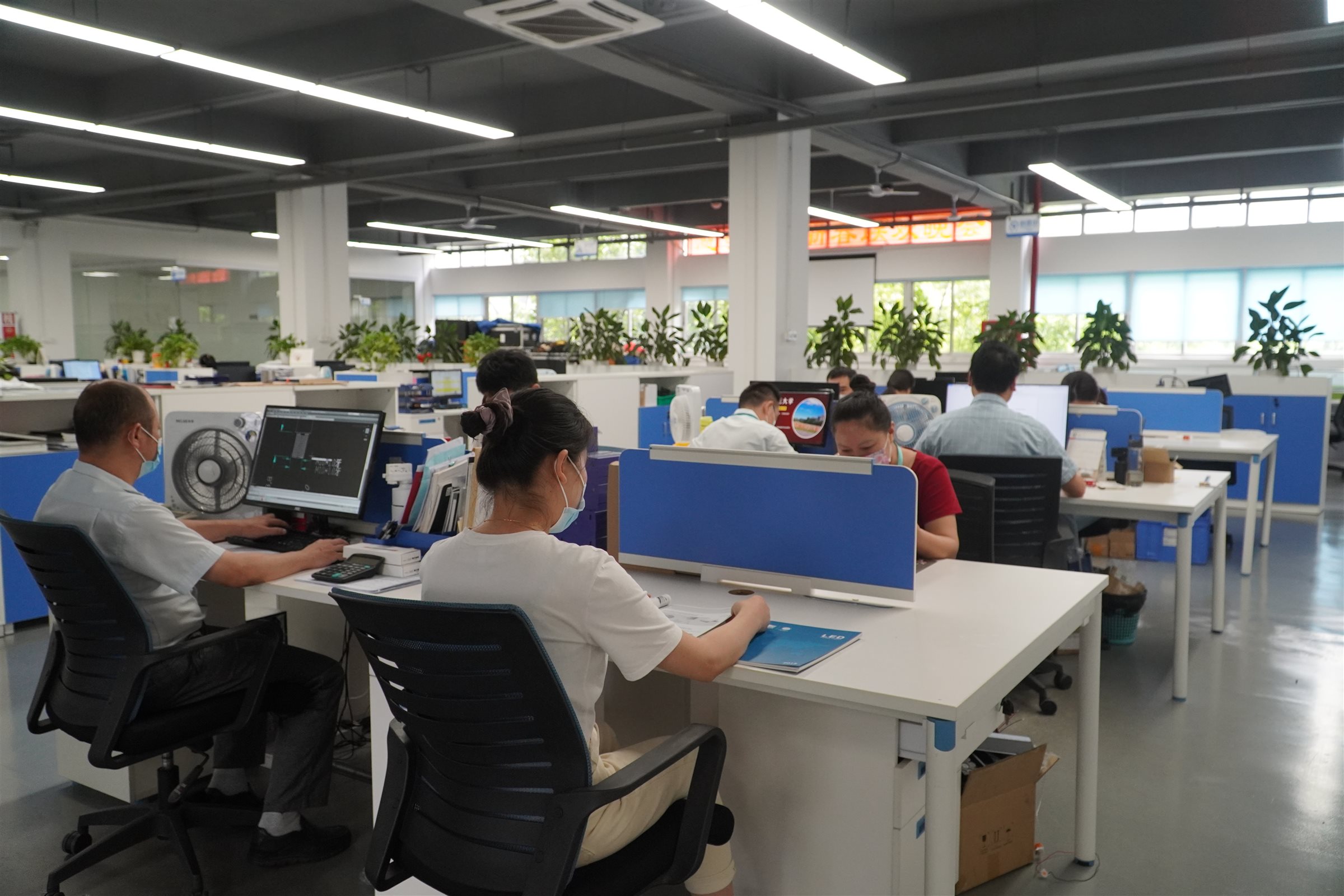
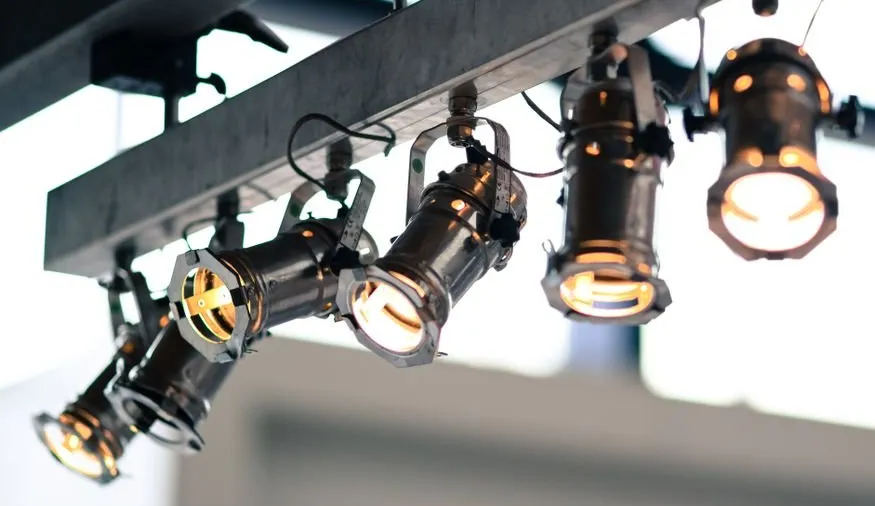
Custom OEM track light engineering — optics, thermal, and electronics reviewed before tooling is committed.
Packaging & Branding Options (包装与品牌定制)
For a private label product, packaging is part of the product. A complete OEM packaging program includes:
- Custom logo printing on the housing (laser engraving, silk screen, pad printing, or brand-color finishing)
- Retail-ready box with your brand, EAN/UPC barcode, spec sticker, and inserts
- Carton & outer packaging — custom corrugated cartons, foam inserts, retail display-ready options
- User manual & compliance labels — multilingual manuals, wiring diagrams, certification marks for your market
- MOQ on packaging — usually lower than the product MOQ; itemize it separately so you can test a market with a small run before scaling
Lead Times & Payment Terms (交期与付款方式)
Realistic lead times
| Stage | Time |
|---|---|
| Prototype | 2–3 weeks (with IES file) |
| Tooling + certification | 3–6 weeks |
| Mass production + QC | 3–5 weeks |
| Full OEM cycle | 8–14 weeks |
A factory that quotes “samples in a few days, no problem” without an IES file or a dated production plan is telling you it does not engineer. For repeat orders after the first production run, lead times usually compress to 4–6 weeks because tooling is already done.
Common payment terms
- 30% deposit / 70% balance before shipment — the industry standard for OEM/ODM
- Deposit before tooling, balance split across production milestones for large tooling projects
- Letter of credit (L/C) for large or long-standing accounts
- Payment via T/T (bank transfer) most common; PayPal and credit card often available for sample orders
Always get itemized MOQ and tooling costs in writing before you pay a deposit — see the vetting checklist in our custom track lighting manufacturer guide.
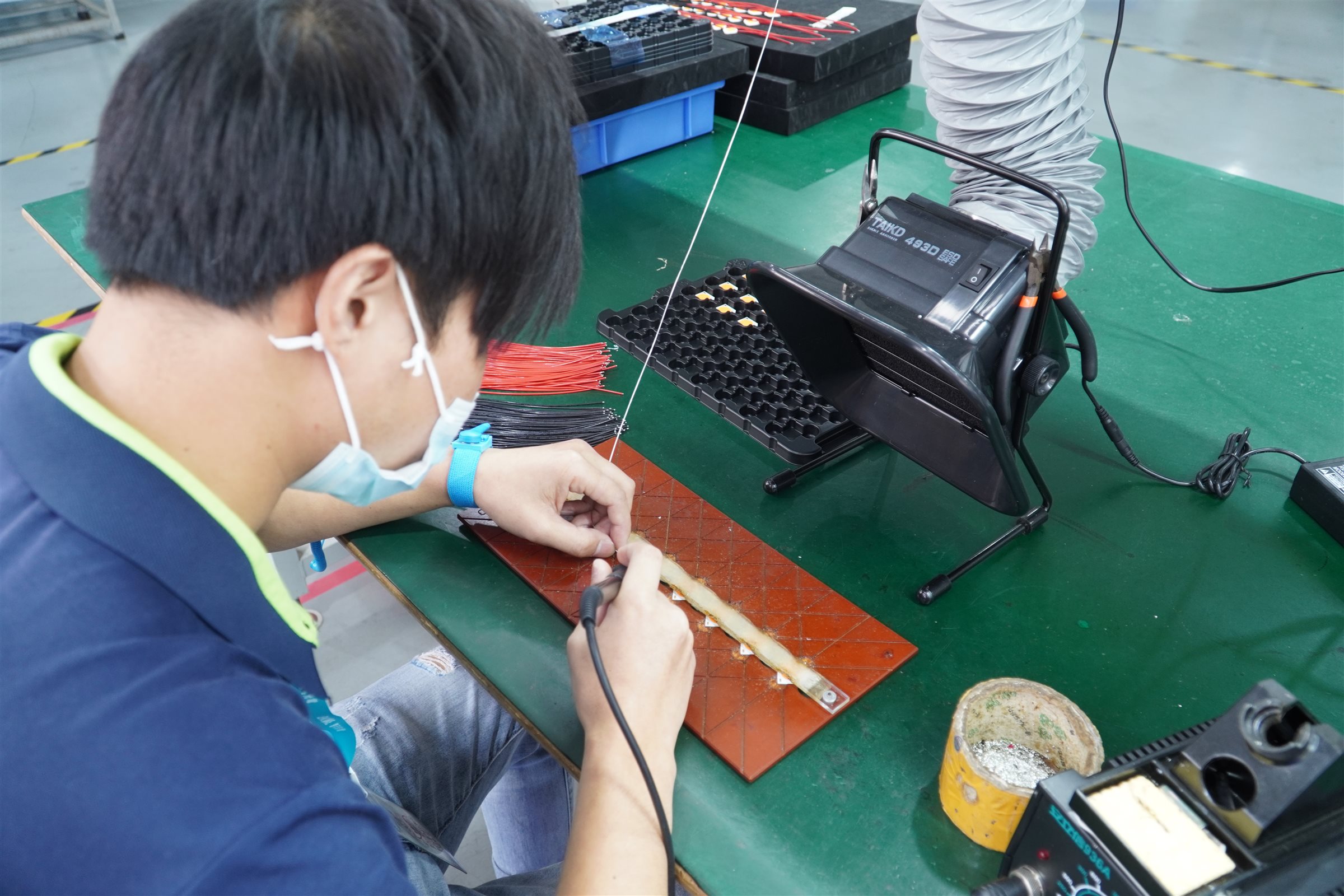
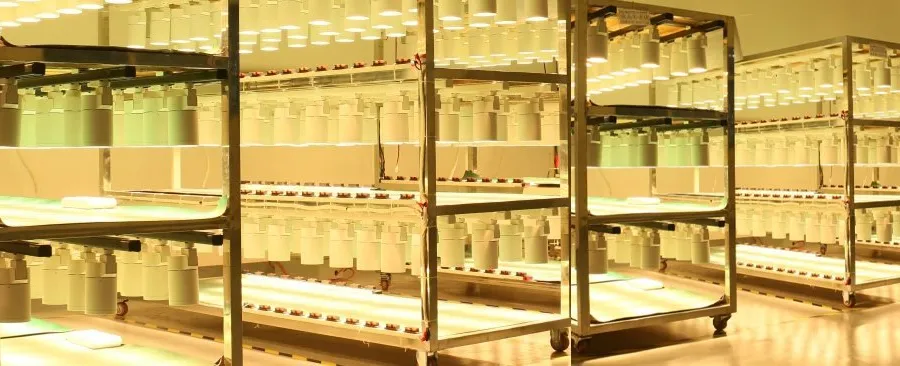
100% aging test and final QC before OEM track lights are packed — this is what protects your brand on delivery day.
Why This Keyword Is Worth Going After
The keyword OEM LED track lighting is a rare near-empty B2B keyword. At the time of writing, the SERP shows roughly 4 results on page one — and they are almost all weak pages: generic lighting retailers, thin Alibaba-style listings, and directories that answer nothing about the OEM process. Nobody has written the authoritative, structured guide a sourcing team actually wants.
That is the opportunity. If you are a lighting brand or a spec house reading this, a well-structured page on the OEM process, customization menu, and private-label packaging — exactly what this guide covers — is content that ranks first and converts searches into RFQs.
Related long-tail searches this guide and its buyer-guide companion feed into:
- private label track lights — the reseller phrasing of the same intent
- OEM track lighting manufacturer / OEM track light factory China
- white label track lighting
- private label lighting manufacturer
- custom LED track light
FAQ
What is the difference between OEM and ODM for track lighting? OEM means the product is built to your exact specification and branded for you. ODM means you take one of the manufacturer’s existing (catalog) designs, customize it, and brand it. OEM gives you more control but usually needs tooling; ODM is faster and cheaper to start.
What is the minimum order quantity (MOQ) for OEM track lighting? It depends on the design. True bespoke OEM with new tooling often starts at 1,000+ units to absorb tooling cost; ODM modifications may start at 300–500; private-label on a standard product can be even lower. MOQ should be negotiated per design and itemized with tooling separately.
How long does an OEM track light order take? A prototype takes 2–3 weeks with an IES file; tooling and certification add 3–6 weeks; mass production and QC run 3–5 weeks. A realistic full OEM cycle is 8–14 weeks, compressing to 4–6 weeks for repeat orders.
What can I customize on a private label track light? Housing color and material, CCT (2700K–6500K), CRI (80/90/95+ with optional UV/IR filtering), beam angle (15°–60° and asymmetric, with custom optics), wattage, dimming protocol (TRIAC, 0–10V, DALI, wireless), plus your logo, packaging, and manual.
What payment terms are typical for OEM lighting? The standard is 30% deposit and 70% balance before shipment (T/T). Large tooling projects may be split across milestones, and L/C is available for large accounts. Samples are usually paid upfront.
How do I verify an OEM track lighting factory is not a trading desk? Ask for workshop photos (not showroom), an IES file with your prototype, certificates naming your exact SKU, itemized MOQ and tooling before deposit, and installed-project references. Then audit in person for a material order — the full checklist is in our custom manufacturer guide.
Conclusion
OEM LED track lighting lets you launch a branded, certified, private-label track light line without owning a factory — as long as you pick the right process and the right partner. Nail the spec sheet, insist on an engineered prototype with photometric data, lock the terms (MOQ, tooling, lead time, payment) in writing, and demand documented QC before shipment.
The keyword is near-empty and the buyers are searching. If you are ready to put your brand on track lights, send us your spec sheet and we will tell you honestly what is buildable, what is not, and what it costs. Request a custom lighting quote →
Read next: Custom Track Lighting Manufacturer 2026: B2B Buyer Guide — how to vet a factory vs a trading desk, with a full certification, MOQ, and QC checklist.