· ENCORE · Custom & OEM Lighting · 8 min read
Custom Track Lighting Manufacturer: What Custom Really Means
Learn what a real custom track lighting manufacturer does. Compare OEM, ODM, and bespoke models, see the custom order process, and get a vetting checklist.
Every track lighting supplier on Alibaba claims to be a custom track lighting manufacturer. Most of them are not. The word “custom” has quietly become a sales default — a sticker slapped on the same catalog product that every other factory in the building also sells. If you are sourcing lighting for a retail chain, a hotel, or a museum, the gap between what “custom” promises and what a factory can actually deliver is exactly where projects go over budget and miss their opening date.
This guide breaks down what a real custom track lighting manufacturer does, the four sourcing models hiding behind the word, the actual step-by-step process of a custom order, and the questions that separate a manufacturer from a trading desk.

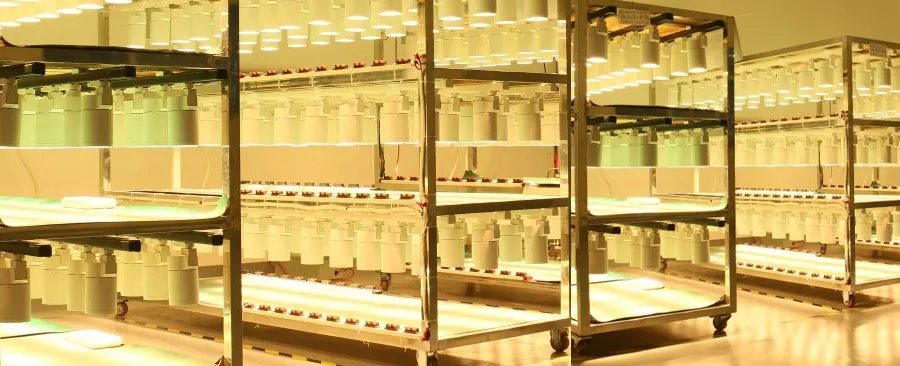
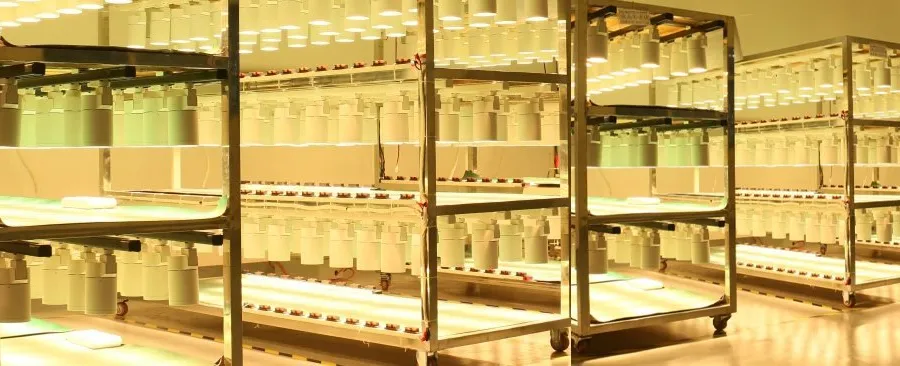
ENCORE LED lighting manufacturing facility in Shenzhen, China.
Why “Custom” Means Three Different Things
The first problem is not capability — it is vocabulary. Three people can say “we do custom track lighting” and mean three completely different businesses:
- The buyer’s “custom”: change the color temperature, cut the track to length, swap the finish, or pick a different beam angle on a product that already exists.
- The factory’s “custom”: OEM (build to your design), ODM (design it and build it under your brand), or full bespoke engineering for a specific architecture.
- The trader’s “custom”: re-label a catalog item and maybe change the surface treatment. No engineering involved.
All three use the same word. You cannot compare two quotes until you know which definition you are actually buying. A $40 “custom” track head from a trader and a $40 engineered sample from a factory are not the same product, even when the spreadsheet looks identical.
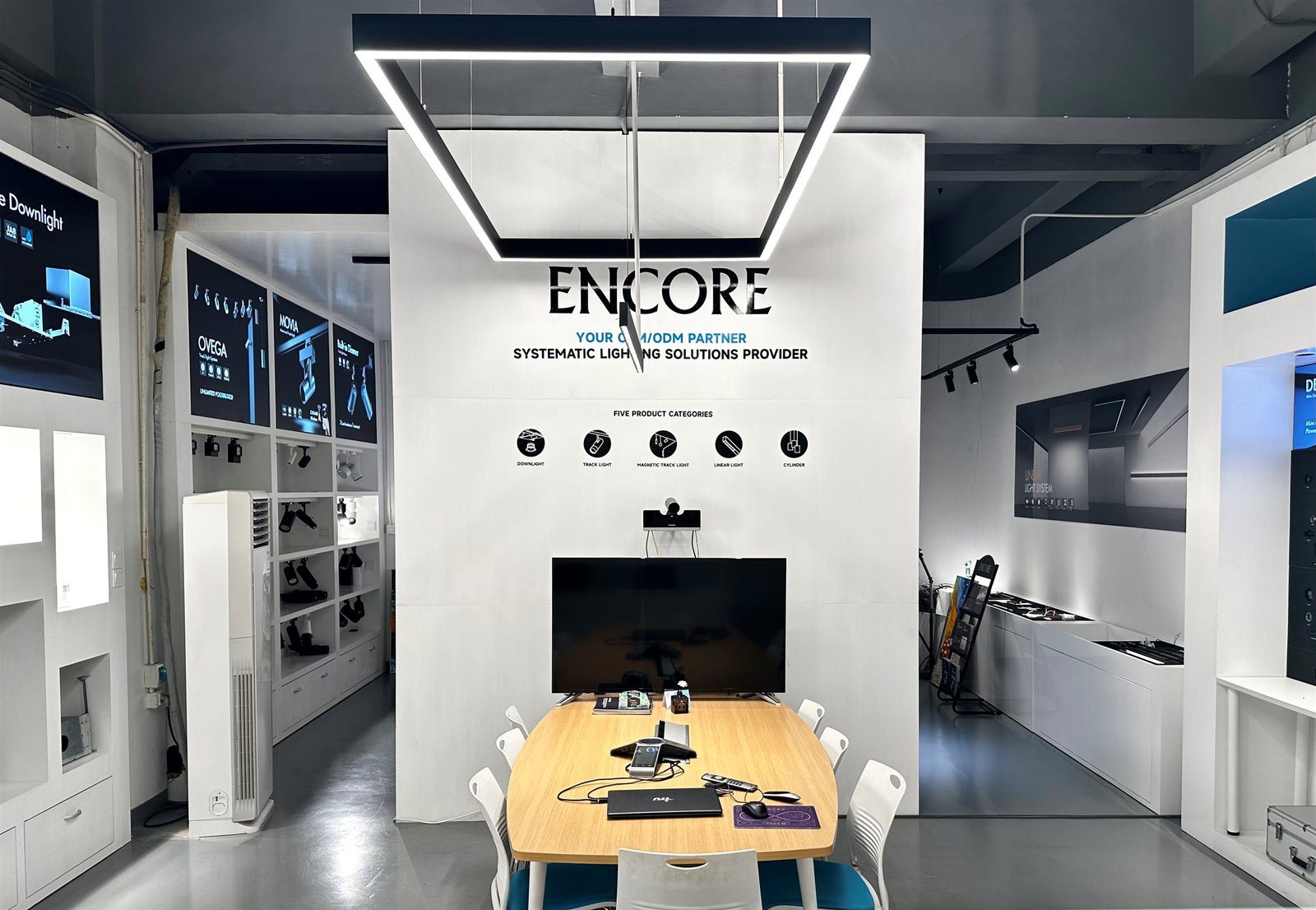
Showroom and consultation space for track lighting and downlight solutions.
The Four Sourcing Models
Once you strip the word “custom” down, a custom track lighting manufacturer is really offering one of four models. Knowing which one you need changes your MOQ, your lead time, and who owns the intellectual property.
| Model | Who designs | Who owns tooling | Best for | Main risk |
|---|---|---|---|---|
| OEM | You | You (or shared) | Brands with their own IP and drawings | High upfront cost; low unit cost only at scale |
| ODM | Factory | Factory | Brands that need speed and lower MOQ | Less differentiation from competitors |
| OBM | Factory | Factory | You resell the factory’s own brand | You compete with their direct sales |
| Bespoke | Joint | Shared / joint | Unique architectural or museum projects | Longest lead time, highest engineering cost |
Most mixed-mode factories — the kind that actually survive — run OEM and ODM at the same time. They will build your design if you have one, and offer a ready platform if you do not. That flexibility is what “custom” should mean at the factory level.
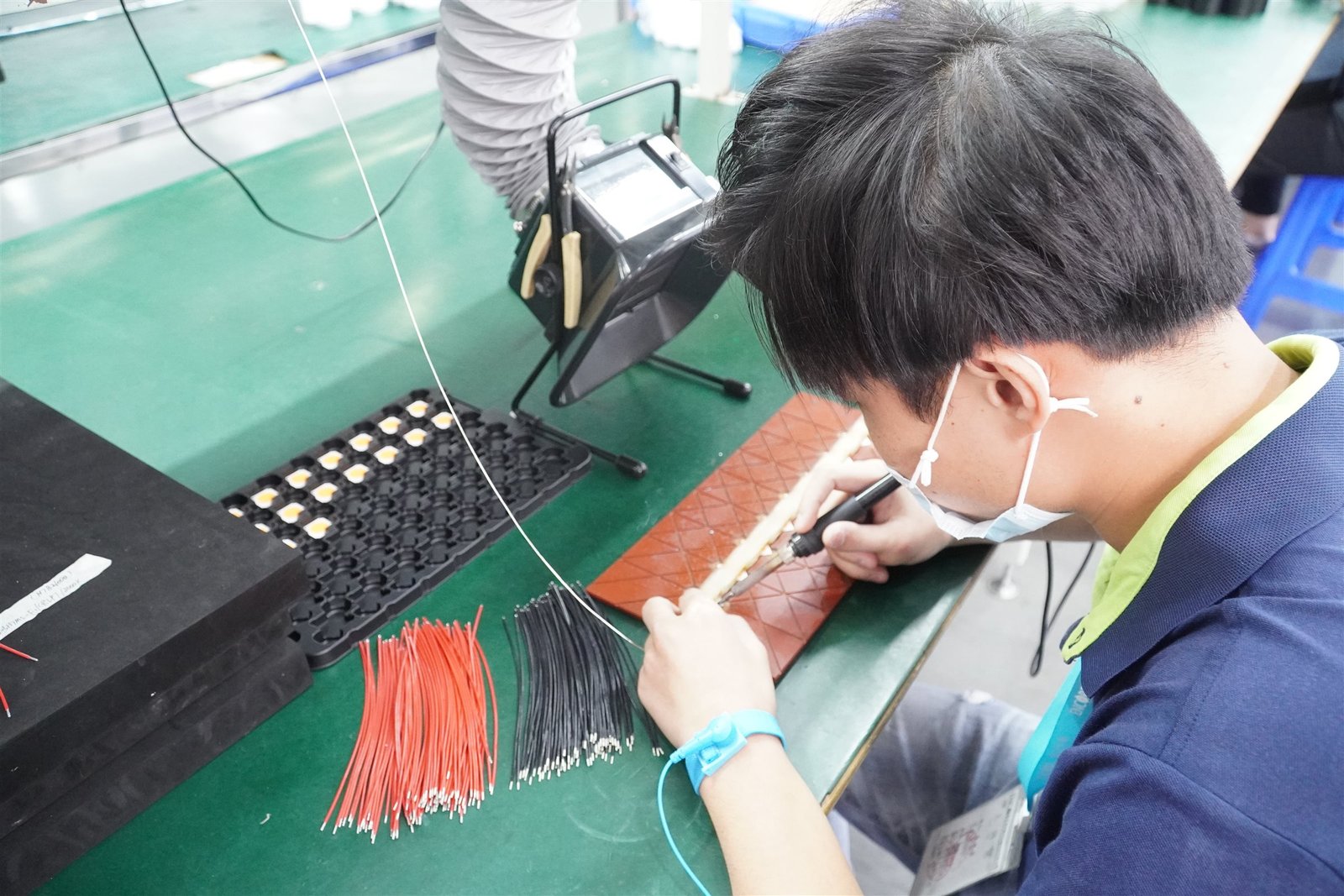
Hand assembly and soldering of LED modules at an ESD-protected workstation.
What a Real Custom Order Actually Looks Like
A genuine custom track lighting manufacturer runs a defined process. If a supplier says “no problem, we can do anything” with no process behind it, that is the red flag, not the selling point.
Spec & RFQ. Photometrics, beam angle, CRI, dimming protocol (DALI, 0–10V, TRIAC), housing material, and IP rating for the target environment.
Engineering review. Design-for-manufacturing check, thermal simulation, and optical simulation before a single sample is cut.
Prototype. Typically 3–5 pieces with an IES file and, for serious projects, an on-site mock-up so you see the light, not just the spec.
Tooling & certification. Injection molds or extrusion tooling, plus safety certification for your market — ETL or UL for North America, CE for the EU.
Pilot run (DVT). A small batch to validate the production line, with 100% aging test before mass production.
Mass production. Incoming inspection (IQC), in-process control (IPQC), and outgoing inspection (OQC), with per-order traceability.
QC & shipment. Burn-in, full functional and electrical test, and carton drop-test before the container leaves.
Notice that none of these steps is “send us your logo.” Customization is engineering, not stickers.
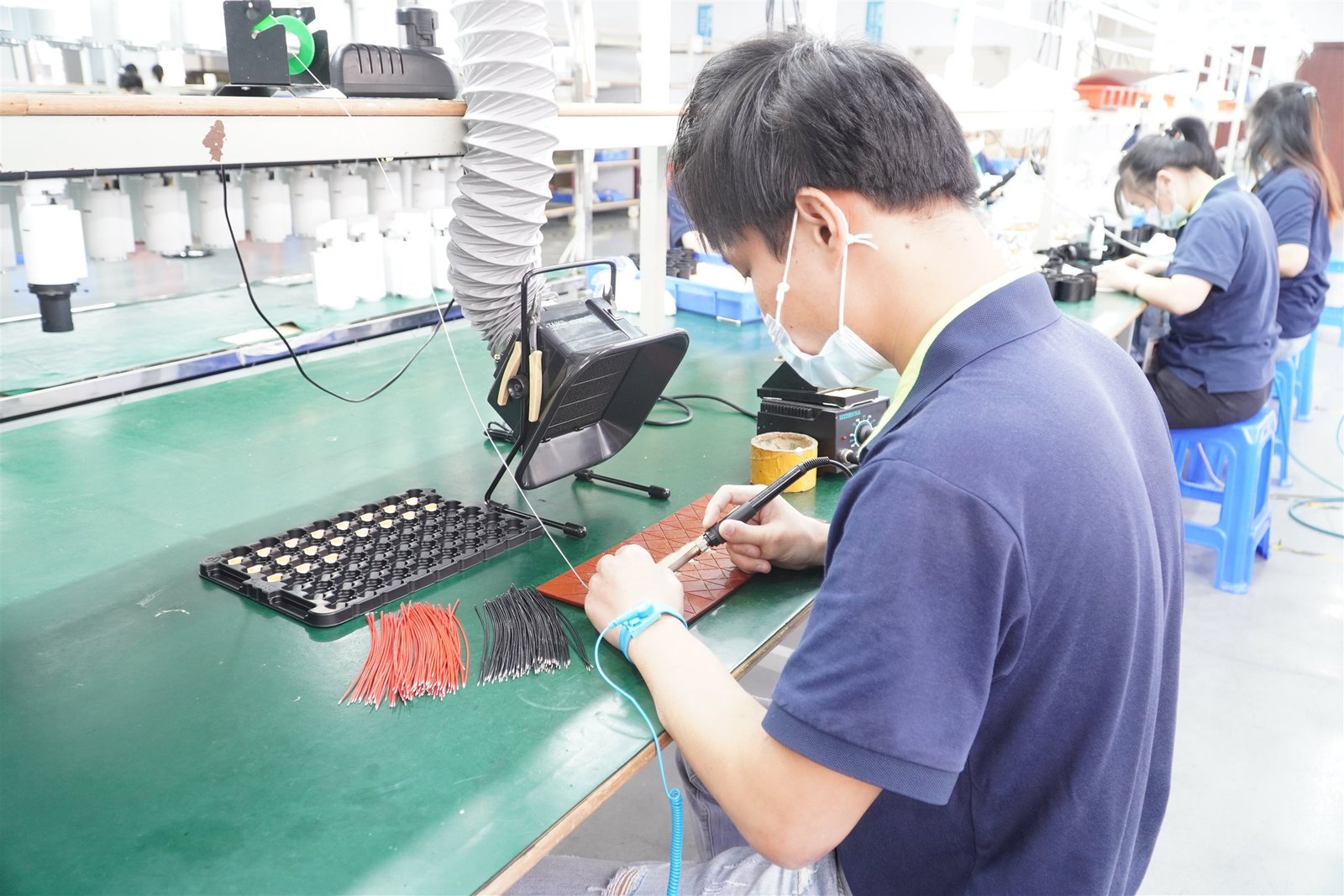
In-house production line with multiple assembly and testing workstations.
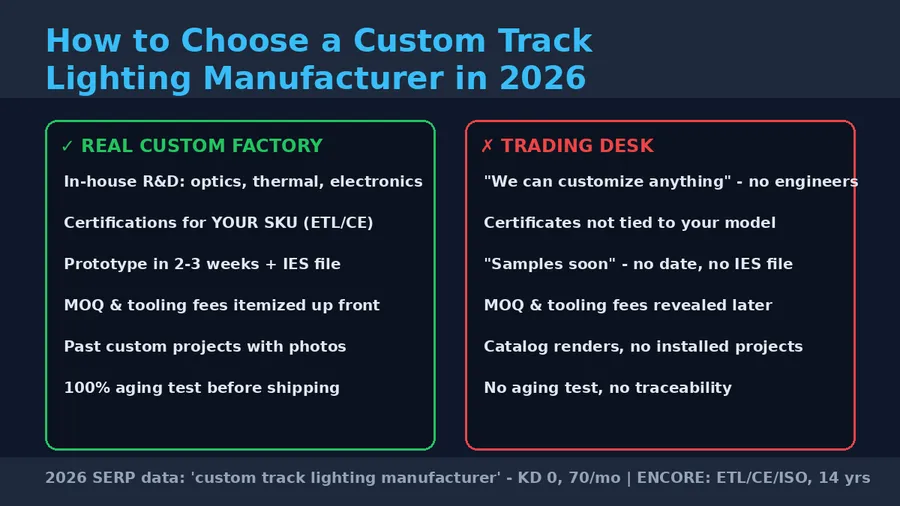
How to Tell If a Factory Can Actually Customize
Before you send a deposit, vet the manufacturer against six signals:
- In-house R&D across five disciplines — industrial design, optics, thermal, electronics, and structure. A sales team without engineers behind it cannot customize; it can only reconfigure.
- An owned factory, not a trading desk. Ask for the workshop photo, not the showroom photo.
- Certifications for YOUR market. ETL matters for North America; CE for Europe; SAA for Australia. A certificate the factory holds for a different SKU does not cover yours.
- Prototype lead time you can verify. Two to three weeks with an IES file signals real capability. “No problem, we’ll send samples” with no date and no file signals a middleman.
- Past custom cases with photos. Catalog renders are easy. A photo of a finished installed project is proof.
- MOQ and tooling transparency. You should see both line items before you commit, not after.
The “Custom” Traps to Avoid
- Trap 1 — “We can customize anything.” Said by a company with no engineering team. Capability is built, not promised.
- Trap 2 — The MOQ is so high it is not custom. At 5,000 units with one fixed design, you are buying private label at volume, not customization.
- Trap 3 — Hidden tooling fees. Revealed only after the deposit clears. Itemize everything up front.
- Trap 4 — Certifications “available” but not for your SKU. The certificate must name the exact model you will import, or customs and inspectors will not accept it.
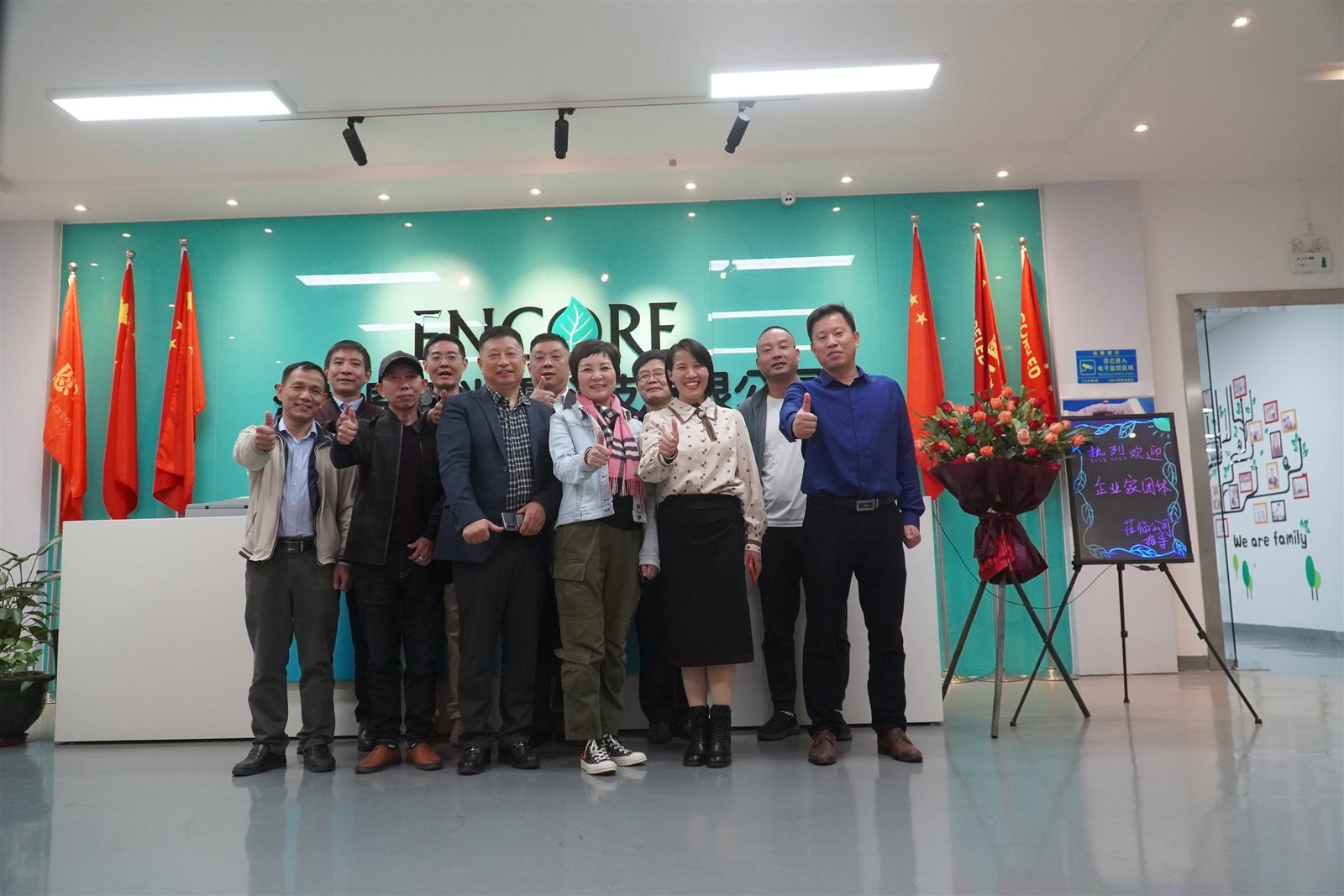
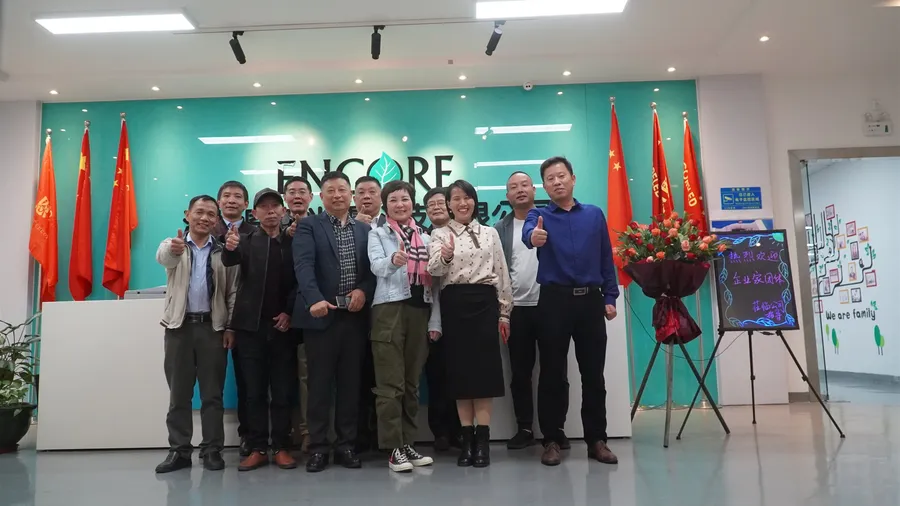
Clients visiting the factory to audit capability before committing to an order.
Questions to Ask Before You Commit
Send this checklist with every RFQ. The answers tell you more than the price:
Who owns the design IP after production — you, or the factory?
What is the real prototype lead time, and what does it cost?
Which certifications ship with MY specific SKU, not the factory’s general range?
What are the MOQ and tooling fee, itemized separately?
Can you show a past custom project photo, not a catalog render?
What is your OQC failure rate, and what is your replacement policy?
FAQ
What is the difference between OEM and ODM track lighting?
In OEM, you provide the design and the factory builds it. In ODM, the factory provides the design and builds it under your brand. OEM protects your differentiation but costs more up front; ODM is faster and needs lower MOQ but is easier for competitors to copy.
How long does a custom track lighting order take?
A prototype typically takes 2–3 weeks. Tooling and certification add 3–6 weeks. Mass production and QC usually run 3–5 weeks. A realistic full custom cycle is roughly 8–14 weeks, not 2–3, despite what a sales call might imply.
What MOQ should I expect from a custom track lighting manufacturer?
It depends on the model. True bespoke engineering may start at a single project. ODM platforms often run 300–500 units. OEM with new tooling usually starts at 1,000+ units to absorb tooling cost. Treat any “custom” claim with an MOQ of 50 as re-labeling.
Do I need ETL or just CE for the US market?
For the US and Canada you need a North American safety certification — ETL or UL (cUL for Canada). CE alone does not satisfy US inspectors or most commercial insurers. Specify the market before you ask for a quote.
Conclusion
“Custom” is not a feature a factory either has or lacks — it is a set of sourcing models, a defined engineering process, and a paper trail of certifications. The best way to vet a custom track lighting manufacturer is to stop asking whether they “do custom” and start asking which model, which process, and which certificate applies to your exact SKU.
If you are scoping a custom track lighting project and want an engineering review before you commit budget, reach out with your spec sheet and we will tell you honestly what is buildable, what is not, and what it costs. Request a custom lighting quote →