· ENCORE · Custom & OEM Lighting · 9 min read
Custom Track Lighting Manufacturer 2026: B2B Buyer Guide
A B2B buyer guide to choosing a custom track lighting manufacturer in 2026: factory vs trading desk, certification, MOQ, samples, QC checklist, CRI 95+.
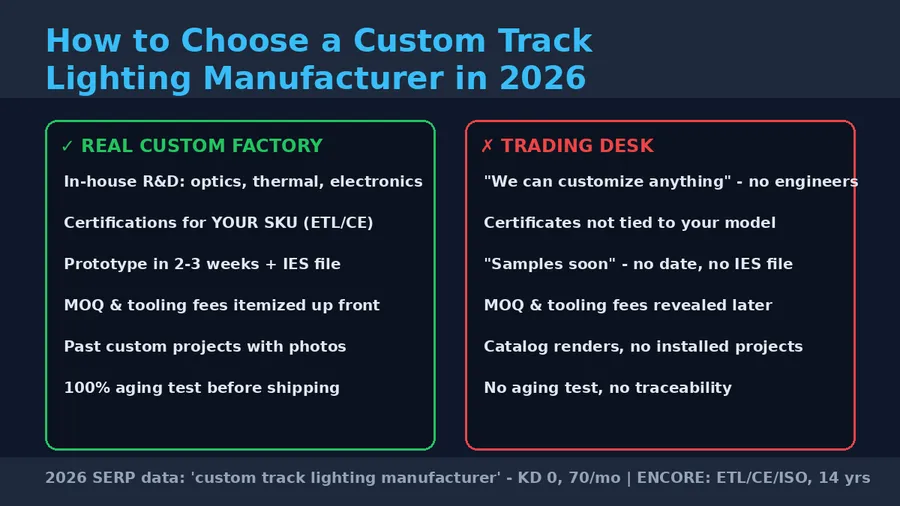
Searching for a custom track lighting manufacturer in 2026 is a different game than it was even three years ago. The keyword is nearly empty — low competition, almost no serious B2B guides ranking for it — which means the buyer who reads this guide and then verifies a factory against the checklist below is already ahead of most sourcing teams.
This guide covers: how a real custom factory differs from a standard product factory, a vetting checklist (certification, MOQ, lead time, samples, QC), why CRI ≥ 95 with UV/IR filtering is now a baseline requirement for custom track lighting, and what ENCORE’s custom capability looks like in practice.
Custom Factory vs Standard Product Factory: What Actually Differs
Most suppliers that call themselves a custom track lighting manufacturer are running a catalog business. The difference is not whether they say yes to your email — it is whether they can change the product at the engineering level.
| Capability | Standard product factory | Real custom factory |
|---|---|---|
| Design changes | Re-label, recolor, maybe cut track length | Re-engineer optics, thermal, electronics, housing |
| Beam angle control | Fixed catalog angles | Custom reflector + lens design with IES file |
| CRI | 80–90 commodity bins | 95+ with certified binning and UV/IR filtering |
| Certification | ”Available” in general | ETL/UL/CE named on your exact SKU |
| Prototype | Catalog sample | 3–5 piece engineered prototype with photometric data |
| MOQ | Fixed, high (often 500–1000+) | Negotiated per design complexity, tooling itemized |
A standard product factory can customize a finish. A custom factory customizes the light itself — the beam, the spectrum, the thermal path, the driver. When you are sourcing track lighting for a retail chain or a museum, that distinction decides whether your project meets its photometric specification or just its purchase order.
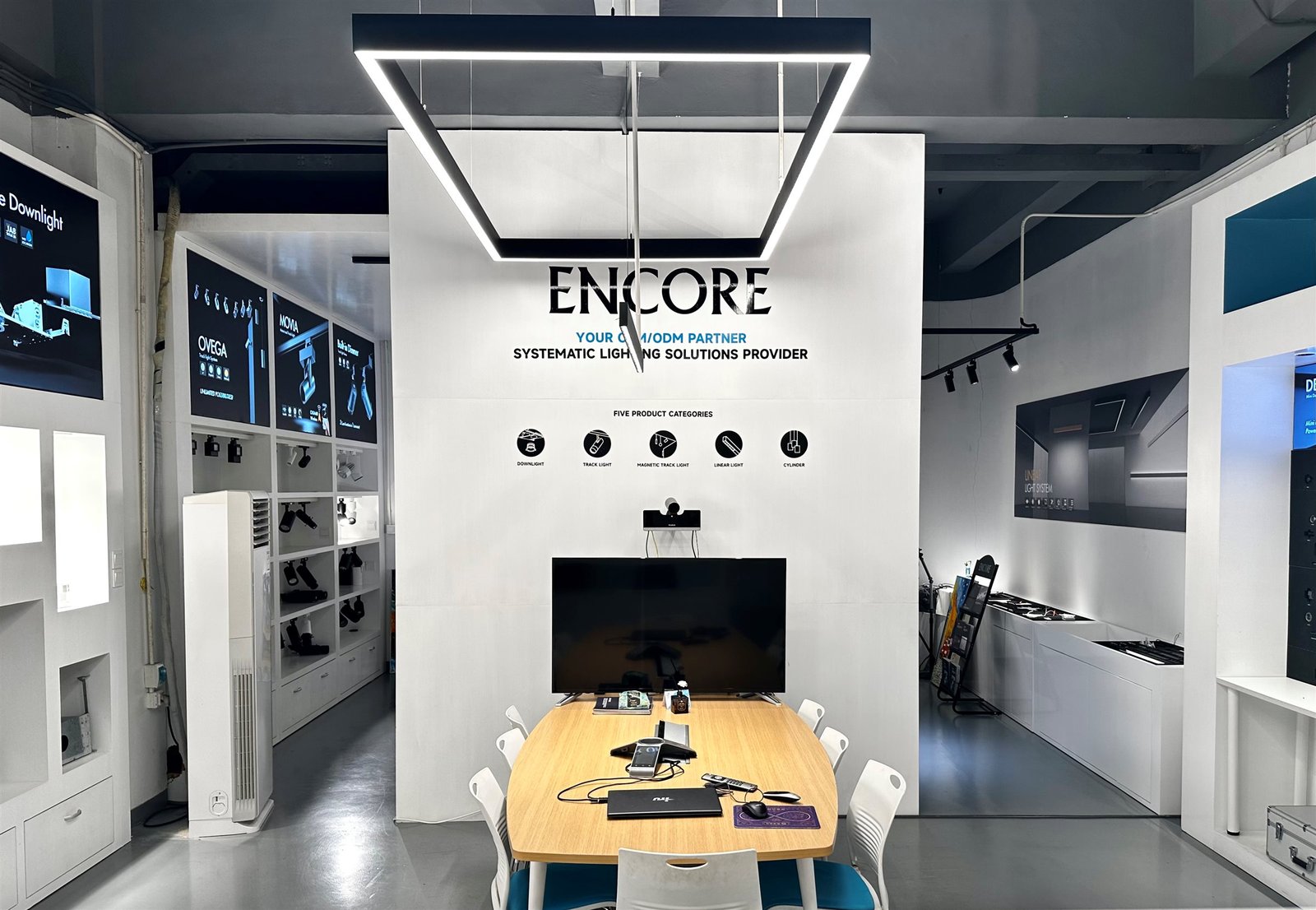
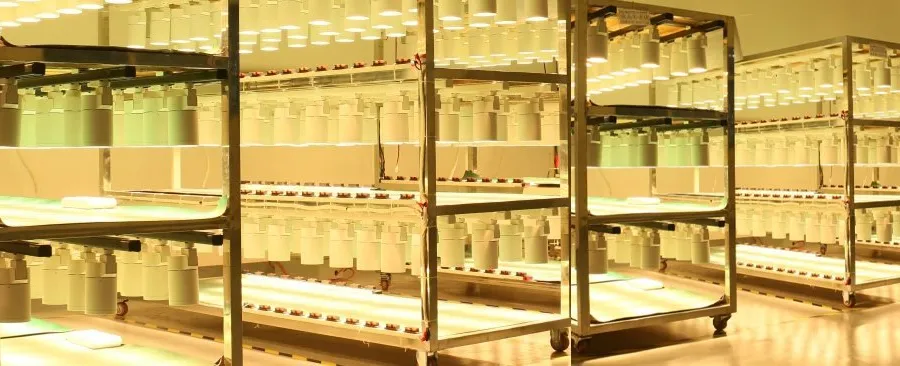
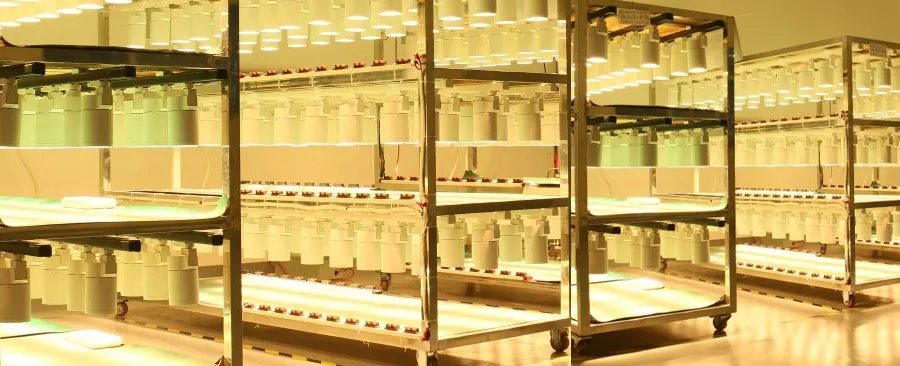
ENCORE LED lighting manufacturing facility in Shenzhen, China — owned production, not a trading desk.
The 2026 B2B Vet Checklist (Certification, MOQ, Lead Time, Samples, QC)
Use this checklist on every supplier that calls itself a custom track lighting manufacturer. Score each item; a factory that fails more than two is a trading desk wearing a factory costume.
Before you compare quotes, spec the optics first. Use our free beam angle calculator (tabs for beam angle ↔ beam diameter) and fixture count estimator to turn your room size and mounting height into a concrete lumens and head-count number you can hand any supplier. A custom factory can hit that number; a catalog trader cannot.
1. Certification — named on YOUR SKU
Ask for the certificate that names the exact model number you will import. ETL or UL for North America, CE for the EU, SAA for Australia. A general “we have ETL” without your SKU on the certificate will not pass customs or your insurer.
2. MOQ and tooling — itemized up front
You should see both line items before you commit, not after the deposit clears. If MOQ is fixed at 5,000 units with one locked design, you are buying private-label at volume — not customization. A real custom factory negotiates MOQ per design complexity and itemizes tooling separately.
3. Lead time — with dates and deliverables
- Prototype: 2–3 weeks with an IES file
- Tooling + certification: 3–6 weeks
- Mass production + QC: 3–5 weeks
- Full custom cycle: roughly 8–14 weeks
A supplier that says “no problem, samples soon” with no date and no IES file is telling you they do not engineer.
4. Samples — engineered, not catalog
A custom sample should arrive with photometric data (IES/LDT), a measured beam angle, and a CRI report. If the “sample” is a stock unit with your logo added, that is not a custom prototype.
5. QC — traceable and documented
Real custom work needs incoming inspection (IQC), in-process control (IPQC), outgoing inspection (OQC), and a 100% aging test before shipment. Ask for the factory’s OQC failure rate and replacement policy — the answers tell you more than the price.
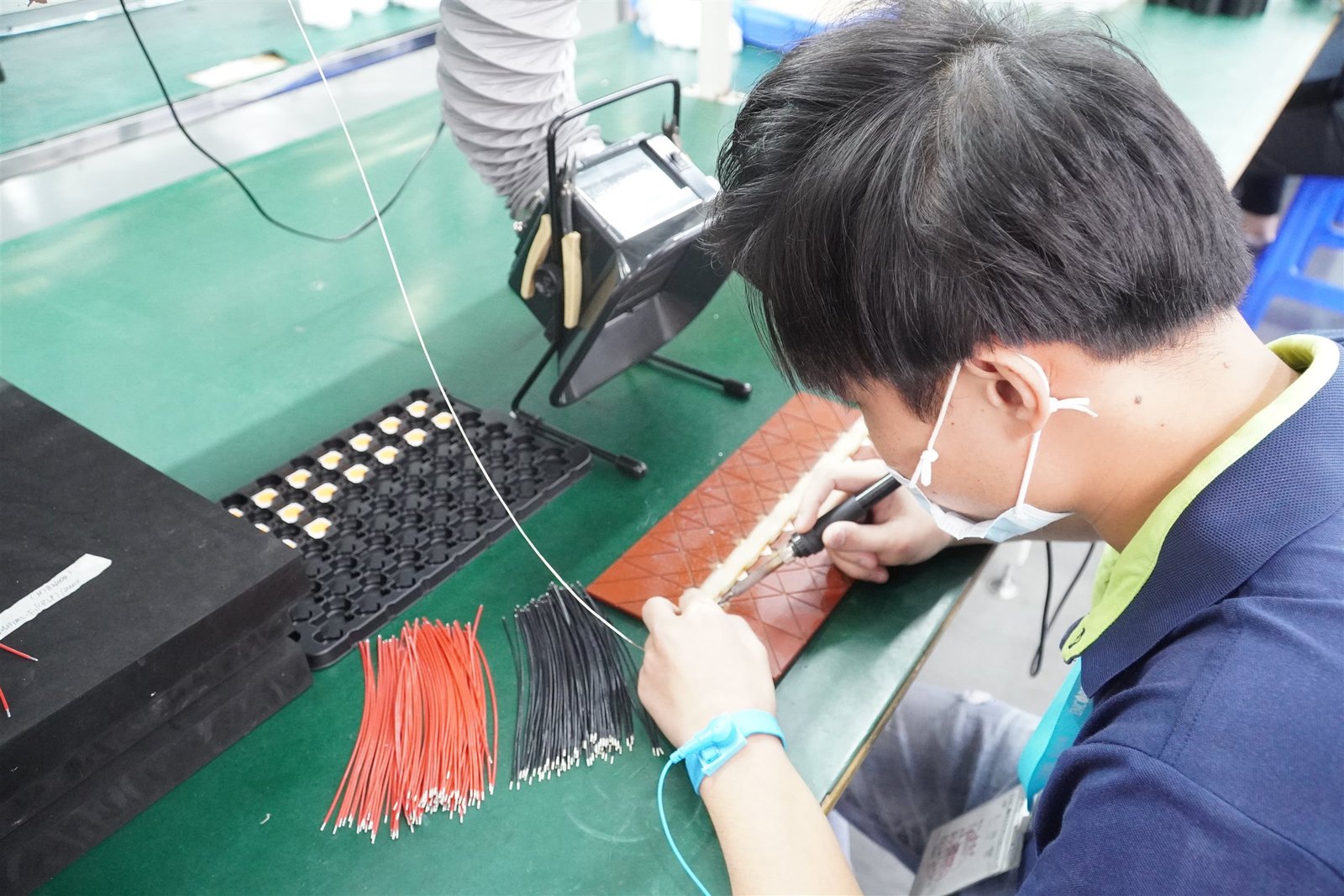
Hand assembly and soldering of LED modules at an ESD-protected workstation.
Why CRI ≥ 95 + UV/IR Filtering Is Now the Baseline for Custom Track Lighting
Three years ago, CRI 90 was a premium spec. In 2026, if you are paying for custom engineering, CRI ≥ 95 is the baseline — and UV/IR filtering is no longer optional for the applications where custom track lighting actually earns its cost.
What CRI 95 actually buys you
- Retail: merchandise colors render correctly; a red garment looks red, not brick. CRI 90 vs 95 is visible on saturated colors (R9 reds especially).
- Museums & galleries: CRI 95+ with UV/IR filtering protects artwork while showing it accurately.
- Hospitality: skin tones look natural in 3000K CRI 95, which is what guests remember.
When you spec CRI 95, you also need to pick the right color temperature for the space — a museum needs 3000K warm light for art, while a supermarket wants 4000K. Drag the temperature slider below to see how the same high-CRI fixture shifts the mood of the light:
Color Temperature (CCT) Guide
Soft, premium, welcoming — ideal for fashion retail, hospitality lobbies and art walls.
| Color temperature | Name | Feel | Best for |
|---|---|---|---|
| 2700K | Warm White | Cozy, intimate, golden | Hotels · Restaurants · Lounges · Bedrooms |
| 3000K | Warm Neutral | Soft, premium, welcoming | Fashion retail · Hospitality lobbies · Dining · Art walls |
| 3500K | Neutral White | Balanced, crisp but warm | Offices · Reception areas · Multi-purpose |
| 4000K | Cool White | Bright, clean, alert | Offices · Supermarkets · Clinics · Workshops |
| 5000K | Daylight | Crisp, high contrast | Factories · Garages · Gyms · Inspection |
| 6500K | Cool Daylight | Sterile, very bright | Industrial halls · Security · Inspection lines |
Prefer to see the numbers first? Our color temperature guide and CRI guide explain 2700K–6500K, CRI 80/90/95 and R9 in depth — both SSR-friendly and easy to share with your spec team.
Why UV/IR filtering matters
Custom track lighting is specified for spaces where light damage is a real cost — artwork, fabric, food, cosmetics. A high-CRI LED without UV/IR filtering still emits trace UV and infrared. Filtering them is a physical layer (coatings or lens absorption), not a marketing claim. When you request a custom fixture, ask for the UV/IR filtration spec in writing, not just “low UV”.
The spec you should write into your RFQ
CRI: ≥ 95 (R9 ≥ 90 preferred)
UV/IR: filtered (specify mW/lm or % transmission)
Beam angle: custom per application (15°–60° or asymmetric)
SDCM: ≤ 3 (color consistency binning)
Dimming: DALI / 0–10V / TRIAC as required
If a factory cannot quote these lines with numbers, it cannot build the light your project specifies.
ENCORE’s Custom Capability — What It Looks Like
ENCORE is a factory, not a trading desk. Custom track lighting at ENCORE runs through a defined engineering process:
- Spec & RFQ — photometrics, beam angle, CRI, dimming protocol, housing, IP rating.
- Engineering review — design-for-manufacturing, thermal simulation, optical simulation.
- Prototype — 3–5 engineered pieces with an IES file; on-site mock-ups for serious projects.
- Tooling & certification — injection/extrusion tooling plus ETL/UL/CE named on your SKU.
- Pilot run (DVT) — small batch validation with 100% aging test.
- Mass production — IQC, IPQC, OQC with per-order traceability.
- QC & shipment — burn-in, full electrical test, carton drop-test before the container leaves.
We publish photometric data for our standard ranges — track lighting, magnetic track, downlights — and engineer custom optics, spectra, and housings beyond them. Since 2011, ETL/CE/ISO certified.
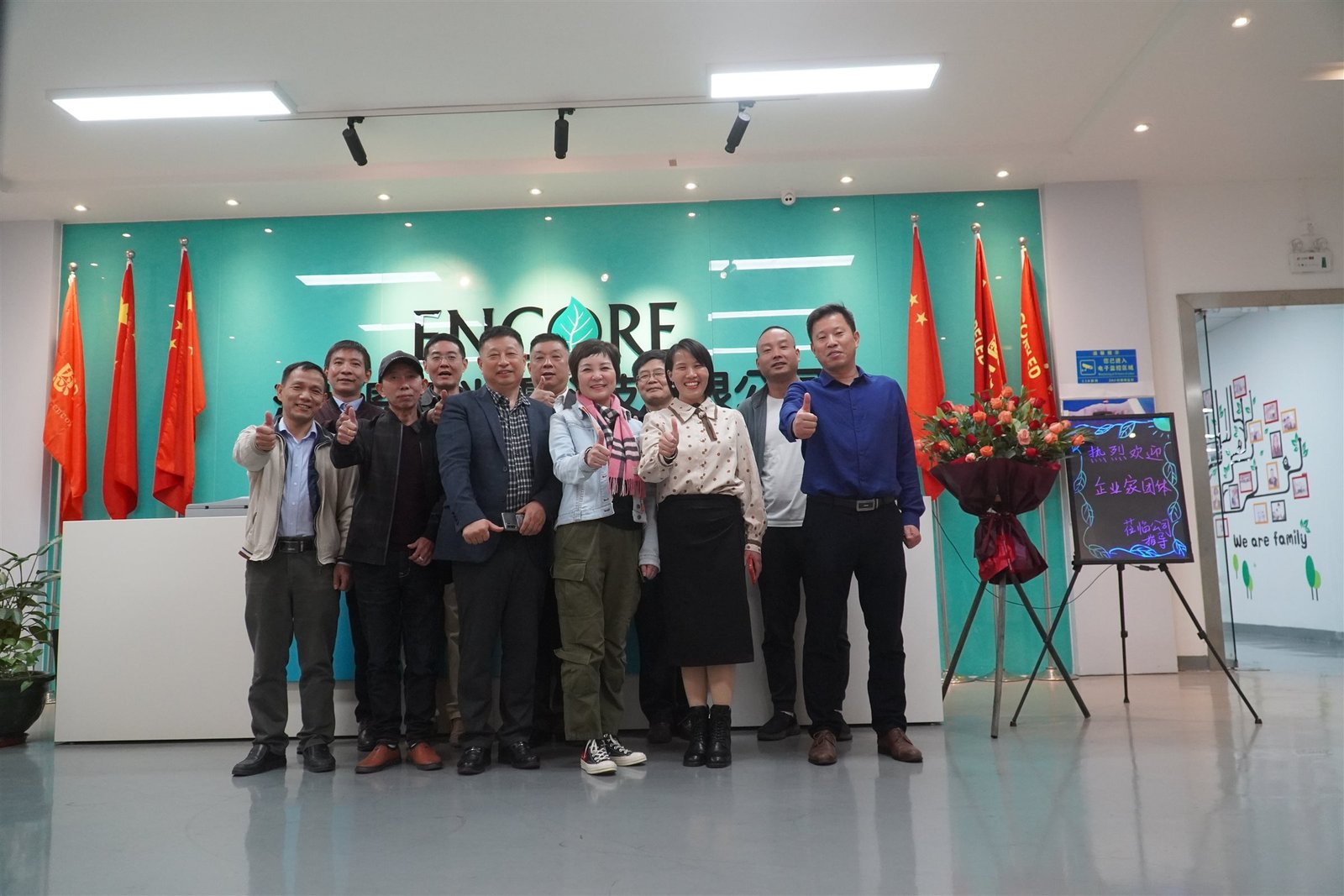
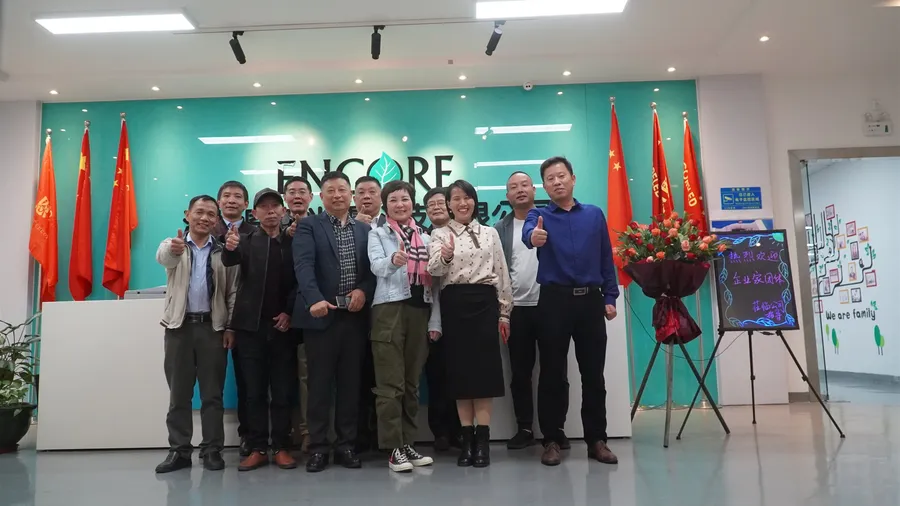
Clients auditing the factory before committing to an order — the only reliable way to vet a custom manufacturer.
Why This Keyword Is Worth Ranking For in 2026
The keyword custom track lighting manufacturer has near-zero competition (KD 0, roughly 70 monthly searches). The current SERP is dominated by general lighting retailers and Alibaba/Amazon listings — nobody has written the authoritative B2B buying guide. For a sourcing team searching this term, a guide that explains factory vs trading desk, the vetting checklist, and the CRI/UV spec baseline is exactly the content that converts a search into an RFQ.
Related, higher-volume searches that this guide feeds into:
- custom track lighting manufacturer usa / online — long-tail variants
- best custom track lighting manufacturer — comparison intent
- OEM track lighting / ODM lighting factory — the sourcing models behind “custom”
FAQ
What is the difference between a custom track lighting manufacturer and a standard factory? A standard factory customizes finishes and labels; a real custom manufacturer re-engineers optics, spectrum, thermal, and electronics, and delivers an engineered prototype with photometric data. The capability difference shows up in the IES file and the certificate, not the sales email.
What MOQ should I expect from a custom track lighting manufacturer? It depends on the design. True bespoke engineering may start at a single project; ODM platforms often run 300–500 units; OEM with new tooling usually starts at 1,000+ to absorb tooling cost. MOQ should be negotiated per design complexity with tooling itemized separately.
How long does a custom track lighting order take? A prototype typically takes 2–3 weeks with an IES file. Tooling and certification add 3–6 weeks. Mass production and QC run 3–5 weeks. A realistic full custom cycle is 8–14 weeks.
Why do I need CRI ≥ 95 and UV/IR filtering for custom track lighting? CRI 95 renders merchandise, artwork, and skin tones accurately (R9 reds especially), and UV/IR filtering prevents light damage in retail, museum, and hospitality spaces. Both are measurable specifications — ask for them in writing on your RFQ.
How do I verify a factory is not a trading desk? Ask for workshop photos (not showroom), an IES file with your prototype, certificates naming your exact SKU, itemized MOQ and tooling before deposit, and past installed project photos. Then audit in person if the order is material.
Conclusion
Choosing a custom track lighting manufacturer in 2026 comes down to engineering capability, transparent terms, and measurable specs — not who answers the email fastest. Use the checklist above: certification named on your SKU, itemized MOQ and tooling, prototype with IES data, documented QC, and CRI ≥ 95 with UV/IR filtering written into your RFQ.
If you are scoping a custom track lighting project, send your spec sheet and we will tell you honestly what is buildable, what is not, and what it costs. Request a custom lighting quote →
Read next: Custom Track Lighting Manufacturer: What Custom Really Means — the sourcing-models deep dive this guide’s checklist is built on.